







 Language


 No results found
Living in Indonesia as a foreigner: What is it really like?
Come live in Indonesia, one of the most affordable countries in Asia. Learn about all the services, advantages, and disadvantages!

For many foreigners, the idea of living for a while in one of Southeast Asia’s most attractive countries is a dream, especially among digital nomads who often choose it as their destination. If you are considering it too and want to understand what it is really like to live in Indonesia, this guide explains everything you need to know step by step.
One of the country’s most distinctive features is its low cost of living, and recent international rankings show high satisfaction among expats who live there. In this guide, we will look at what it is like to live in Indonesia, including its education and healthcare systems, the safest areas to live, job opportunities for foreigners, the basis of its economy, and whether its technological infrastructure supports stable and efficient remote work.
To finish, we’ll highlight the key advantages and drawbacks of living in Indonesia. If moving there is on your mind, this is everything you need to know before making the leap
Quality of life in Indonesia
Living in Indonesia gives you a chance to enjoy a lifestyle unlike anywhere else, with warm weather, affordable living, friendly communities, and stunning natural landscapes. You can dive into the energy of a big city like Jakarta or enjoy the calm of a smaller island like Flores, depending on what suits you. While some services are more limited than in Europe and local job options can be scarce, the question remains: is living in Indonesia worth it? We explore everything in detail below.
How their education system works
While a few of Indonesia’s top universities are respected regionally, they don’t quite match the rankings of leading Western institutions. International schools follow programs like the IB, British, or American curricula, but tuition can be very expensive. If you want to study in Indonesia, you’ll need to apply to a university and get a student visa through the Indonesian embassy in your country. Some of the best universities include:
- Universitas Airlangga: Located in Surabaya, it is one of the oldest and most prestigious universities, offering a variety of programs in medical, business, and scientific studies.
- University of Indonesia: Located in Jakarta, it is internationally recognized and ranks highly in Asian academic rankings.
- Bandung Institute of Technology (ITB): This school has a strong focus on engineering and technology.
Where to live in Indonesia with greater safety
If you’re thinking about living in Indonesia, safety is an important factor to consider. According to the Central Statistics Agency (BPS), the country scores around 53 out of 100 for overall safety, and crime has been steadily declining in recent years. The cities with the lowest crime rates include:
- Bali: Considered the safest province in the country, with a very low proportion of crime victims.
- Aceh: With rates below the national average, although socially more conservative, it is also among the areas with the fewest reported crimes.
- East Java and Banten: Both of these provinces also have relatively low indicators compared to other regions.
- Yogyakarta and Semarang: Cities with good safety scores in independent rankings, with low violent crime rates.
- Balikpapan (Kalimantan): One of the safest cities in Indonesia with the best quality of urban life.

This is how their healthcare system works
Indonesia’s healthcare system, BPJS Kesehatan, operates on a mixed model with low fees for residents or employees of local companies. However, most foreigners prefer private health insurance to have access to a wider range of clinics. Some hospitals, like RS Premier Jatinegara and Siloam Hospitals Denpasar, are internationally accredited and well-regarded, but medical care can be limited in more remote areas. For better coverage and quality of care, having a private health plan is highly recommended.
Economy and salaries
If you plan to live in Indonesia and work for a local company, keep in mind that wages for unskilled jobs are very low, typically between $238 and $417 per month. That’s why most people moving to the country do so to work remotely for international clients or are skilled professionals in fields like tech, engineering, or finance, where salaries are much higher.
Indonesia has a varied economy, but its main drivers are natural resources like palm oil, coal, nickel, and natural gas, along with manufacturing, trade, and tourism, particularly in Bali. For foreigners, the best chances of finding work are usually in education, digital marketing, hospitality, or leadership positions in international companies.
Internet connection
A major consideration for living in Indonesia is having a reliable internet connection, especially if you work online. The country has seen a surge of digital nomads in recent years, which has helped boost connectivity. Cities like Bali, Jakarta, Surabaya, Bandung, and Yogyakarta now enjoy solid 4G coverage, though remote areas can still be patchy. To address this, the government launched the Palapa Ring, a nationwide fiber optic network aimed at improving internet access throughout Indonesia.
According to Speedtest Global Index, mobile internet in Indonesia averages between 25 and 40 Mbps, while fixed broadband sits around 20 to 35 Mbps. For remote work, the top spots are Canggu and Ubud in Bali, which offer plenty of coworking spaces and internet speeds that can reach up to 100 Mbps.

When it comes to e-commerce, Indonesia has one of Asia’s largest digital markets, with popular platforms like Tokopedia, Shopee, Lazada, and Bukalapak. They support international digital payments, making online shopping and shipping to the islands much easier.
For reliable internet anywhere in Indonesia, Holafly’s monthly plans are a smart choice. They provide stable coverage and let you use the same eSIM in over 160 destinations without switching plans. Whether you’re working from a café in Ubud, relaxing on a beach in Canggu, or exploring the island’s nature, you can stay connected starting at $49.90 per month, with flexible plans from 25 GB up to unlimited data and no long-term commitments. If your stay is short, Holafly also offers an Indonesia eSIM with unlimited data just for the days you need.
Important: If you are a frequent traveler and want to stay connected without worrying about expensive roaming or looking for a new SIM at every destination, Holafly’s subscription plans are for you. With a single eSIM, enjoy internet in more than 160 countries for a fixed price and no surprises on your bill. Travel without limits and connect easily and securely! 🚀🌍

5 advantages of living in Indonesia
By now, you probably have a sense of what living in Indonesia is like, balancing its low cost of living, vibrant culture, and stunning nature against some limitations compared to Western countries. If you’re still unsure about making the move, here are some additional benefits you can enjoy while living there:
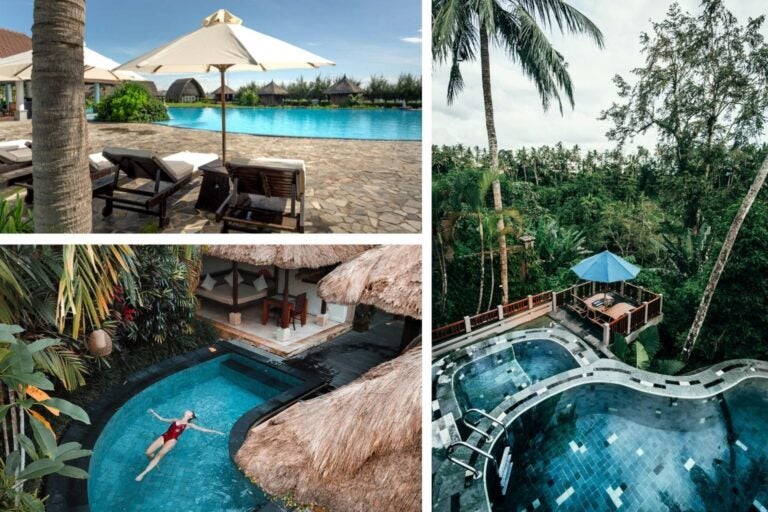
- Very low rents and high quality: Here, you can rent a villa with your own pool for less than the cost of an apartment in a European capital, around $715 per month, or a studio in Jakarta for just $119 a month.
- Tropical climate: You can enjoy warm weather year-round while exploring beaches, jungles, and volcanoes, and taking part in activities like surfing, diving, or hiking.
- Cultural diversity: Experience a culture shaped by over 300 ethnic groups, where the spirit of “gotong royong” (community cooperation) is central to daily life and makes it easier to feel part of the community.
- Strategic location: From Indonesia, it’s easy to visit nearby countries like Singapore, Malaysia, Thailand, Vietnam, or Australia, thanks to affordable flights.
- International community: In cities like Canggu, Ubud, and Seminyak, you’ll find thriving communities of digital nomads, students, and entrepreneurs, along with plenty of coliving and coworking spaces.
Disadvantages of living in Indonesia as a foreigner
As we’ve seen, life in Indonesia comes with some challenges and limitations in services that can take getting used to. Adapting takes time, so it helps to know the most common drawbacks reported by those who have already made the move. Here are the main ones:
- Uneven infrastructure: Outside the major cities, roads can be in poor condition, power outages happen occasionally, and public services are often limited.
- Heavy traffic: In places like Jakarta, traffic congestion is heavy, leading to frequent jams and high air pollution. This is something to keep in mind if you need to commute to work.
- Language barrier: Although many people speak English in tourist areas, Indonesians use Bahasa Indonesia as the official language. In more remote regions, it’s helpful to know at least some basic phrases.
- Natural hazards: Indonesia sits within the Pacific “Ring of Fire,” an area known for volcanic activity, frequent earthquakes, and the potential for tsunamis along coastal regions.
- Cultural and religious differences: Indonesia is home to both Muslim and Hindu communities, so being mindful of conservative social customs and showing respect for local traditions is essential. It may take some time to fully adapt.
Frequently asked questions about living in Indonesia
Indonesia is far more affordable than Europe, the US, or Australia, whether it’s rent, food, transport, or entertainment. Depending on your lifestyle, you can live comfortably while still saving money.
To live in Indonesia, you’ll need a visa that fits your situation, whether it’s for remote work, a local job, investment, or retirement. You’ll have to apply for it at the Indonesian embassy or consulate in your country.
Bali is ideal for digital nomads, Jakarta is best for working in multinational companies, and Yogyakarta offers a more affordable, cultural, and relaxed lifestyle. If you want to be closer to nature and escape the crowds, Lombok or Flores are great options.
The island has a warm, tropical climate all year, with temperatures typically between 25°C and 32°C. It experiences a wet season and a dry season, and humidity remains high across the island.
Yes, especially in Bali and Jakarta, where there’s a rental market catering to expats. Some leases require several months’ rent upfront as a security deposit, so it’s important to carefully check the terms before signing.
Plans that may interest you


Hi! I'm a Spanish-English translator working with Holafly, helping bring travel content to life for curious travelers. As a digital nomad with a passion for exploring, I'm always adding new spots to my bucket list. If you love to travel like me, stick around because you're in the right place to find inspiration for your next trip! ✈️🌍
