Language


 No results found
Living in Georgia as a foreigner: What is it really like?
Living in Georgia offers a high standard of living thanks to its low cost of living, safety, and hospitality. Find out more!

Set between Eastern Europe and Western Asia on the shores of the Black Sea, this country is quickly gaining attention among people seeking a more affordable lifestyle without giving up cultural richness. If you’re thinking about living in Georgia, you’ll find it offers a low cost of living and remarkably relaxed residency rules. In fact, citizens of many countries can stay for up to a year without a visa. It’s also a great fit for digital nomads and entrepreneurs, thanks to how easy it is to settle in and work remotely.
In this article, you will get a complete overview of what to expect, from the healthcare system and top universities to the safest cities, economy, and the job opportunities available. We will also look at internet quality, which is essential if you plan to work remotely or study online. Finally, we will go over the main advantages and disadvantages so you can decide whether living in Georgia is the right choice for you.
Quality of life in Georgia
Although it is not part of the European Union, the country has introduced a range of reforms in recent years to modernize public services, including education and healthcare, strengthen security, encourage foreign investment, and improve its digital infrastructure. Through these efforts, the government aims to attract international talent and boost the economy.
Whether you are a digital nomad looking for a peaceful and affordable place to work remotely for a while, a student curious about the quality of education, or a traveler planning a longer stay, here is everything you need to know.
The education system in Georgia
According to the Social Progress Index, Georgia has been improving access to basic education and stands out for offering much more affordable university tuition than Western Europe, with fees starting at around $2,718 per year. It also has a range of English language programs designed for international students, and the application process is generally quite simple. Most universities are located in Tbilisi, although there are also notable options in Kutaisi and Batumi. Here are some of the most well known institutions:
- Tbilisi State University: The oldest and most prestigious university in the country, offering degrees in economics, law, international relations, science, and technology.
- Ilia State University: With an international focus, it offers programs taught in English in fields such as business, computer science, and the social sciences.
- Georgian Technical University: Recommended for engineering, architecture, or technology programs.
- Tbilisi State Medical University: One of the best institutions for studying medicine in English.
Safety in Georgia
Living in Georgia means settling in one of the safest countries in the region, with low rates of violent crime compared to other European nations, according to data from the Georgian Ministry of Internal Affairs. International reports on global safety, like the Global Peace Index, also highlight Georgia’s positive reputation among both residents and visitors. If you’re looking for a peaceful place to live, these areas come highly recommended:
- Tbilisi: The largest and most tourist-friendly city, with an international atmosphere and a strong police presence. The safest neighborhoods here are Vake, Saburtalo, and Vera.
- Batumi: Located on the Black Sea coast, with a peaceful atmosphere, close to the sea and nature.
- Kutaisi: A small city with a lower cost of living, little traffic, and a very welcoming local community.

How the healthcare system works
If you’re thinking about living in Georgia, healthcare is an important factor to consider. Over the past decade, the system has been updated to modernize hospitals and extend access to care. Today, it combines a government-funded public system with a robust private sector in the bigger cities. Since 2013, the Universal Health Coverage program has guaranteed basic medical services for both citizens and permanent residents.
If you’re visiting Georgia as a tourist, it’s a good idea to get travel insurance to help cover medical costs. On the other hand, if you’re coming for work or study, you can register with the state system to access public healthcare. Most hospitals are located in the capital, including Tbilisi Central Hospital, New Hospitals, Evex Hospitals, and Kutaisi Regional Hospital.
Georgia’s economy: Key sectors and salaries
Georgia’s strategic location between Europe and Asia makes it a key hub for transport, logistics, and regional business. On top of that, government reforms have made it easier for foreign investment, entrepreneurship, and international trade. While the local job market is relatively small, if you’re planning to live in Georgia and work for a local company, the main opportunities for foreigners tend to be in:
- Language teaching
- Technology
- Tourism
- Hospitality
Salaries in Georgia are much lower than in Western Europe, but the cost of living is also significantly lower, allowing for a comfortable lifestyle. The national average salary is around $600 per month, and with a more specialized profession, you can earn more than twice that. If you work as a digital nomad with clients abroad, you can enjoy a very high standard of living in the country.
Internet access in Georgia
If you plan to work remotely, it’s important to know what internet connectivity is like in Georgia. Overall, the country has upgraded its tech infrastructure, with providers like MagtiCom, Silknet, and Cellfie offering fiber optic connections, 4G data, and wide coverage across the main cities.
In Tbilisi and Batumi, internet in central neighborhoods can easily reach 50–100 Mbps, which is plenty for remote work, video calls, or HD streaming. While there are local online shopping options with home delivery in the capital, the variety and convenience are still behind what you’d expect in much of Europe.
While you can get by working remotely in cafés, coworking spaces, or hotels, relying solely on Wi‑Fi isn’t always enough for jobs that need a strong, consistent connection. For reliable internet anywhere in the country, Holafly offers monthly plans with either unlimited data or 25 GB, starting at $49.90 and with no long-term contract. You can connect several devices at once and use the same eSIM in over 160 destinations without changing your plan.
On the other hand, if you’re only staying in Georgia for a few days, you can get Holafly’s eSIM with unlimited data just for the days you need, starting at $3.90 per day.
Important: If you are a frequent traveler and want to stay connected without worrying about expensive roaming or looking for a new SIM at every destination, Holafly’s subscription plans are for you. With a single eSIM, enjoy internet in more than 160 countries for a fixed price and no surprises on your bill. Travel without limits and connect easily and securely! 🚀🌍

5 advantages of living in Georgia
If you’re looking for a peaceful and affordable place to live in Europe, Georgia is definitely worth considering. As we’ve seen throughout this article, it offers many benefits in terms of services, safety, and digital connectivity. On top of that, there are other factors that can make daily life easier and more enjoyable, both financially and personally. Here are five key advantages:
- Affordable visas: Georgia offers a welcoming and flexible approach to immigration for many countries. In fact, visitors can stay for up to a year as tourists without needing a visa.
- Low cost of living: Rent, food, transportation, and entertainment are all far more affordable than in most of Western Europe. You can enjoy a comfortable lifestyle, especially if your income comes from abroad.
- Hospitality and local culture: Georgians are famous for their warm hospitality, and you’ll feel welcome from the moment you arrive. Social life is lively, with traditions like Tbilisoba in the capital, a festival celebrating the city’s history with music, dancing, food, and wine.
- Delicious cuisine and the birthplace of wine: For wine lovers, living in Georgia puts you right in the heart of the world’s oldest winemaking region, with a history spanning over 8,000 years. You can explore well-known wine routes like Kakheti and join in traditional grape harvests. The local food is just as impressive, featuring specialties like khachapuri, a cheesy bread, and khinkali, juicy dumplings eaten the traditional way with your hands.
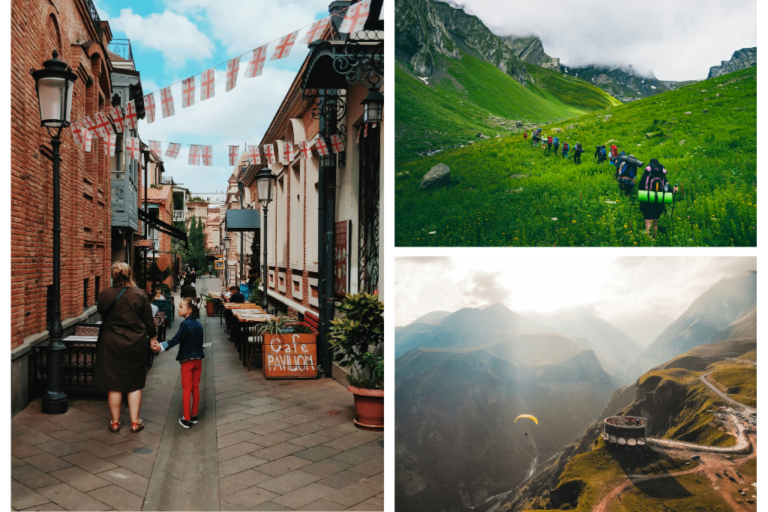
- Nature and quality of life: In your free time, you can explore the Caucasus Mountains in Svaneti, hike through the Truso Valley, stroll along the Black Sea coast, or enjoy the country’s natural parks, like Borjomi-Kharagauli.
5 disadvantages of living in Georgia as a foreigner
While Georgia has plenty of advantages, moving there can come with its challenges. Knowing what to expect beforehand can make settling in much easier, since assuming everything will be perfect can lead to frustration. Consider both the benefits and the drawbacks to make a well-informed decision.
- Language barrier: In certain regions, speaking Georgian or Russian is essential, which can make settling in more challenging if you don’t know either language.
- Limited job market: Job opportunities are more limited than in other European countries, and salaries are significantly lower. On top of that, you’ll be competing with local workers in certain industries.
- Uneven infrastructure: Outside major cities like Tbilisi and Batumi, public transportation is limited or even nonexistent. Internet coverage can be patchy in rural areas, and some basic services may be harder to find.
- Administrative procedures: Visas are fairly easy to obtain, but tasks like registering your address or opening a bank account usually need to be done in person and can take longer.
- Extreme weather: The climate in Georgia varies widely depending on the region. In Svaneti and the mountainous areas, winters are very cold with heavy snowfall. Meanwhile, in Batumi, high humidity and frequent rain can feel uncomfortable if you’re used to a warmer, drier climate.
Frequently asked questions about living in Georgia
Yes, living in Georgia is generally safe, especially in major cities like Tbilisi and Batumi, where crime rates are low. If you’re looking for a good place to live, areas like Vake, Saburtalo, or Vera are ideal.
You don’t have to, but picking up a few basic phrases can make settling in much easier. In big cities, you’ll often find people who speak English, but in smaller towns most locals speak Georgian or Russian.
On the Propestar platform, you can find one-bedroom apartments in Batumi starting at $314 per month, or two-bedroom apartments in Tbilisi starting at $449.
Yes, Georgia is well connected, with international airports in Tbilisi, Batumi, and Kutaisi offering flights to Europe, Asia, and the Middle East. The main roads are also in good condition, making it easy to explore different parts of the country.
Georgian culture is very welcoming, and people are generally warm and friendly toward newcomers. Take the opportunity to attend festivals, explore wine regions, or visit local markets to experience the traditions and meet new people.
Plans that may interest you


Hi! I'm a Spanish-English translator working with Holafly, helping bring travel content to life for curious travelers. As a digital nomad with a passion for exploring, I'm always adding new spots to my bucket list. If you love to travel like me, stick around because you're in the right place to find inspiration for your next trip! ✈️🌍