







 Language
Living in Geneva as a foreigner: What is it really like?
If you're wondering what living in Geneva is like or what the pros and cons are, you've come to the right place. We'll tell you everything!

Nestled on the shores of Lake Geneva and surrounded by the Alps, Geneva is much more than a global hub for finance and diplomacy. It blends stunning natural surroundings with a highly functional urban lifestyle. If you’re planning a move, it’s worth knowing that Geneva consistently ranks among the world’s top cities for quality of life.
But as with any major life change, there are important nuances to consider before packing your bags.
In this article, we’ll break down everything you need to know for your new life in Switzerland, from how the healthcare and education systems work to the real cost of living in Geneva.
Geneva may be a small city, but it has a very international feel, with people from all over the world making up nearly half the population. That mix of cultures makes it easier to feel at home and meet new people. If you’re thinking about moving to this part of Switzerland, keep reading to find out what life there is really like.
What is the quality of life like in Geneva?
Geneva isn’t just a picture-perfect Alpine city. Everything runs with remarkable precision. One of the first things you’ll notice when you move is that comfort and well-being are simply part of everyday life.
According to the Global Social Progress Index, Switzerland ranks at the top when it comes to basic human needs and overall well-being. The city strikes a rare balance between a global metropolis and the calm of an enviable natural setting.
Safety and social environment
Geneva is, quite possibly, one of the safest cities in the world. You can stroll through Parc des Bastions or along the lakeside late at night with complete peace of mind. The OECD’s Better Life Index gives Switzerland top marks for personal safety, highlighting how crime rates are extremely low compared to other European cities.
Beyond the stats, what stands out in Geneva is how safe and orderly everyday life feels. With the UN and the Red Cross based there, it’s a very international city, so it doesn’t take long for newcomers to feel like they fit in. Almost half the residents are from abroad. At the same time, it’s a place where privacy and quiet are strongly respected.
Living in apartment buildings comes with strict rules, like keeping noise down after 10 p.m. so everyone can rest properly.
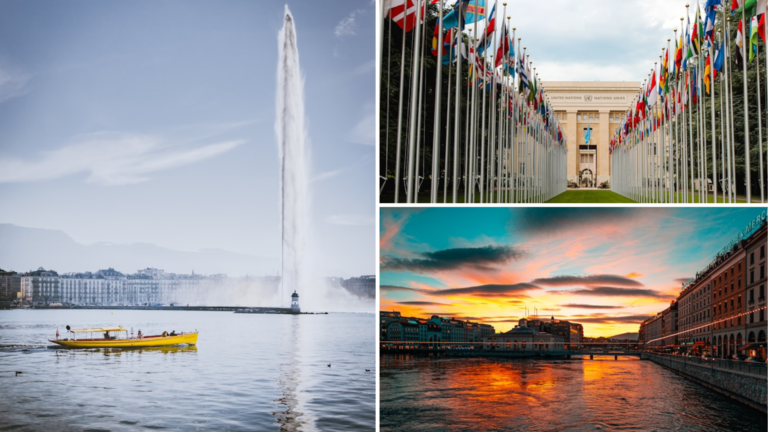
Economy, wages, and the cost of living
Geneva frequently tops Mercer’s ranking as one of the most expensive cities in the country (and in Europe).
To live comfortably in Geneva, it’s important to understand the balance between income and expenses. While a coffee in a central area might cost around $5.60 to $6.80, salaries are generally structured to match the high cost of living.
In fact, Geneva has one of the highest minimum wages in the world, at around $5,000 per month. The biggest financial challenge is housing. A small one-bedroom apartment can easily cost around $2,270 or more.
Because of this, it’s very common for residents to shop at discount supermarket chains or cross over to nearby towns in France, where food prices can be up to 40% cheaper.
The healthcare system
When you move to Geneva, one of the first things you’ll need to sort out to live there legally is getting health insurance (LAMal). You have up to three months after arriving to arrange it. It’s not a free public healthcare system funded by taxes, but a mandatory, tightly regulated private insurance system.
Companies like Assura, Mutuel Assurance, or CSS offer different plans. On average, monthly costs for a young adult range from about $395 to $565, depending on the deductible you choose.
The deductible is the amount you pay out of pocket before your insurance starts covering 100% of the costs. In return for these higher upfront expenses, you get fast access to care and top-tier medical technology, without the long waiting lists common in other countries.
Cutting-edge education and bilingualism
If you’re moving with your family, education is a big advantage. The public school system is free and of excellent quality, with a strong focus on language learning. From an early age, students are introduced to French (the local language), as well as German and English.
For those who prefer an international curriculum, the city is home to well-known schools such as the International School of Geneva (Ecolint). These schools offer the International Baccalaureate and are a popular choice among diplomatic families.
Vocational training is also a highly respected path in Switzerland, allowing young people to enter the job market with strong technical skills and competitive salaries right from the start of their careers.
Internet access and a digital nomad’s paradise
For remote workers, the tech infrastructure is flawless. Switzerland not only has some of the fastest internet speeds in Europe, but the connection is also extremely reliable.
5G coverage is virtually everywhere, even in underground train stations. In the city, there are plenty of coworking spaces like Voisins or Impact Hub, making it easy to connect with other freelancers and professionals.
On top of that, public services are highly digitalized, which makes life much easier. You can handle things like taxes or permit renewals entirely online, without ever having to go to an office.
To make the most of all of this, it’s worth considering connectivity options like those offered by Holafly, whether that’s their Switzerland eSIM or their monthly data plans (limited or unlimited). Arriving in a new country and having to track down a physical store just to get a local SIM card can be a real hassle, especially with Swiss prices.
If you’re planning to live in Geneva for a while, you’ll need internet access right from the start so you can use maps, order a ride, or contact your new landlord.
For that, your best option is the Holafly Switzerland eSIM. You just choose how many days you need internet for, pay, and scan a QR code to install it before you even get on the plane. You’ll have unlimited data as soon as you land.
For longer stays, or if you’re a student, digital nomad, or even working in aviation, Holafly’s monthly plans are an even better fit. You can choose between 25 GB or unlimited data, with coverage in over 160 countries under a single subscription.
The plans renew automatically each month, and you can cancel whenever you want. This makes it easy to move between Switzerland, France, and Germany, or even travel around Europe without ever losing your internet connection.

What are the advantages of living in Geneva?
If you’re thinking about making the move, you’ll quickly see that Geneva offers much more than just financial stability. It’s a place where you can reshape your lifestyle, gaining more time and peace of mind in a truly international setting.
Here are the most significant advantages:
A strategic location in the heart of Europe
Geneva is a dream for any traveler. Its location means you can be skiing in the Alps in under an hour, or hop on a 20-minute tram ride and be across the border in France.
Its international airport, Cointrin, is very well connected across Europe, so weekend trips are easy. You can fly to cities like London, Barcelona, or Rome for quite cheap fares, often around $68 to $136 round trip if you book early.
Surrounded by nature and fresh air
One of the greatest advantages of living in Geneva is being surrounded by nature.
Lake Geneva is the heart of social life. In summer, you can swim at Bains des Pâquis, and in winter you can walk along the shore with views of Mont Blanc. The air in Geneva feels noticeably cleaner than in most European cities, and parks make up nearly a quarter of the urban area.
For a digital nomad spending long hours in front of a computer, working with these views is a real privilege that helps take the edge off stress. On top of that, being able to step outside and breathe in fresh air after work makes a big difference to overall quality of life.

Extreme efficiency in public transportation
Forget about needing a car. In Geneva, public transport (TPG) quickly becomes your best friend. Trains, trams, and buses are extremely punctual and cover the entire city and surrounding areas.
A monthly pass for the city zone costs around $80, and the system is so efficient you can cross the entire city in under 30 minutes. Geneva is also very bike-friendly, with clearly marked lanes that encourage an active, sustainable lifestyle.
A truly global environment
As home to organizations like the UN, the WTO, and the WHO, the city has a unique diplomatic, cosmopolitan energy. That’s a big plus for foreigners, since English is widely spoken and there’s a strong support network and services tailored to expats.
It’s easy to find networking groups, cultural events from all over the world, and a food scene that reflects that diversity, from traditional fondue to top-quality sushi or Ethiopian cuisine.
Political and economic stability
Switzerland is known for being neutral and stable. In Geneva, you benefit from a strong currency and a political system based on consensus. The economy is very steady, and there are no sudden changes in laws that affect residents.
This stability is very valuable if you plan to stay for a while or long term. It gives you peace of mind knowing that a strong system protects your savings and legal status.
What challenges does living in Geneva as a foreigner entail?
While the quality of life is excellent, moving to Calvin’s city does come with some challenges. It’s not all smooth sailing, and knowing this in advance will help you settle in much more easily.
Now that we’ve mentioned the positives, it’s time to talk about the challenges of living in Geneva:
The housing market
Finding a place to live is, without a doubt, the hardest part of living in Geneva.
Unemployment is very low, which means there’s a lot of competition for every apartment. Landlords often require a flawless application file, including a Swiss work contract and references.
Even for a small studio, prices rarely drop below $2,040. As a result, many expats end up living just across the border in France, in towns like Annemasse or Ferney-Voltaire, where rent is more affordable.
The high cost of services and leisure
While salaries are high, the cost of going out can be a bit shocking at first. A simple dinner for two with a glass of wine can easily go over $136.
Basic expenses, like mandatory health insurance or a gym membership (usually around $113 per month), also add up to a significant fixed cost.
If you’re coming from a country with a lower cost of living, it’s normal at first to feel like your money goes quickly on everyday expenses. That’s why, if you move to Geneva, it’s important to manage your budget carefully so your salary stretches as much as possible.
Social barriers and the culture of order
Swiss people really value privacy and order. While that contributes to the country’s safety, it can make social life feel a bit more reserved. At first, people may seem somewhat distant or hard to approach. If you’re coming from a more expressive culture like Argentina, where hugs are common, the contrast with Geneva can feel quite strong in the beginning.
It’s not the kind of place where you make close friends overnight in a café. On top of that, the rules of daily living are quite strict. Even simple things like taking out the trash at the wrong time or using the wrong bin can lead to fines or complaints from neighbors.
Adapting to this level of strictness requires patience and a very respectful attitude.
The pace of the city on Sundays
If you come from a busy city, Geneva’s quiet can be surprising. On Sundays, most places are closed, and the city becomes very calm.
It’s great if you want to relax or head to the mountains, but for someone who needs to grab something urgently or is looking for a lively weekend atmosphere, it can feel a bit quiet or repetitive.
When you live in Geneva, you quickly learn that Saturday is the day to run all your errands, because on Sunday the city simply comes to a standstill.
The gray weather during the winter
While summers by the lake are beautiful, winters in Geneva can feel long and quite grey. There’s even a local weather phenomenon called “La Bise,” a cold wind that blows in from the northeast and can make it feel much colder than the actual temperature.
On top of that, it’s common for a layer of low clouds to hang over the city for weeks at a time, blocking out the sun. To keep your mood up, it’s almost essential to head into the nearby mountains to get above the clouds or make the most of the ski resorts, which can add extra costs to your monthly budget.
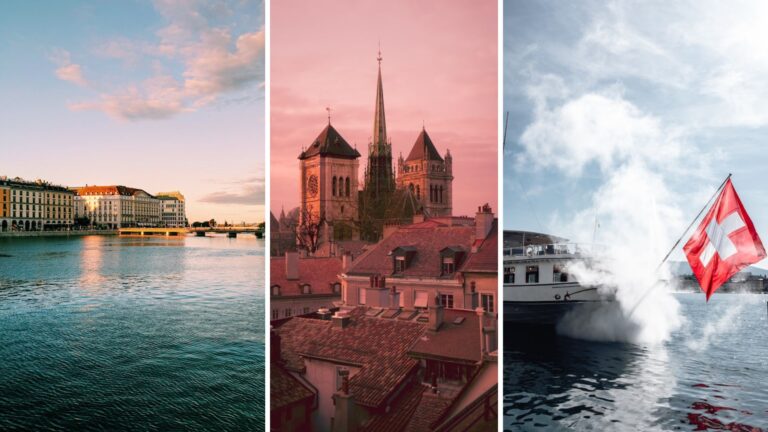
After taking everything about this city into account, whether living in Switzerland is worth it really depends on what matters most to you. If safety, order, and incredible natural surroundings matter to you, Geneva can be a great fit. And if you like the idea of waking up to views of Mont Blanc and a place where everything just works efficiently, you’ll probably feel right at home here.
It’s true that the cost of living requires some planning. However, competitive salaries and top-tier infrastructure help balance out the higher expenses. For a digital nomad, having a stable internet connection and the ease of traveling across Europe from the heart of the continent are real advantages that make everyday work life much simpler.
Geneva gives you the chance to be part of a global community without giving up the calm of a smaller city. If you’re willing to adapt to its rules and embrace the quiet of its Sundays, you’ll find there’s much more here than just banks and watches. It’s a place where quality of life is present in every street.
Frequently asked questions about living in Geneva
Although Geneva is very international and English is widely used in professional settings (especially in NGOs and finance), French is the official language. For dealing with paperwork, shopping, or simply fitting into daily life, knowing some French will make a big difference. Locals also really appreciate the effort to speak their language.
The climate is continental. Summers are warm and pleasant, perfect for swimming in the lake, with temperatures around 25°C to 30°C. Winters are cold and often grey due to fog, with temperatures ranging from -2°C to 5°C. If you enjoy snow, you’ll be just a short distance from some of Europe’s best ski resorts.
If you’re an EU/EFTA citizen, the process is fairly straightforward thanks to free movement agreements, although you still need to show proof of employment or sufficient financial resources. For non-EU citizens, the process is more restrictive and usually requires a job offer from a Swiss employer before you can move.
As mentioned earlier, health insurance is mandatory. For a young adult choosing a high deductible (the amount you pay before coverage kicks in), monthly costs are usually between $395-510. It’s a fixed expense you’ll need to factor into your monthly budget no matter what.
Geneva has an unfair reputation for being too serious. While it doesn’t have the nightlife of Berlin or Madrid, neighbourhoods like Carouge or Plainpalais are full of bars, art galleries, and a lively atmosphere. On top of that, there’s a strong outdoor sports scene and summer festivals by the lake, so there’s always something going on.
Plans that may interest you


Hi! I'm a Spanish-English copywriter working with Holafly, helping bring travel content to life for curious travelers. As a digital nomad with a passion for exploring, I'm always adding new spots to my bucket list. If you love to travel like me, stick around because you're in the right place to find inspiration for your next trip! ✈️🌍
