Language


 No results found
Living in Chile as a foreigner: What is it really like?
Are you wondering what living in Chile will be like? Here we will give you an overview of what life is like in 2026.

Discover what living in Chile is like, one of the safest countries in Latin America and the southernmost nation in the world. Here are a few reasons why it could be a great place to move.
We’ll look at the main factors you should know about, including Chile’s healthcare and education systems, how safe the country is, and how easy it is to find a job. We’ll also explore the advantages and challenges you may encounter when living in this country. Let’s get started!
Quality of life in Chile
Quality of life in Chile is generally considered fairly good. The country has made significant progress in some areas, while still facing major challenges in others.
Public health
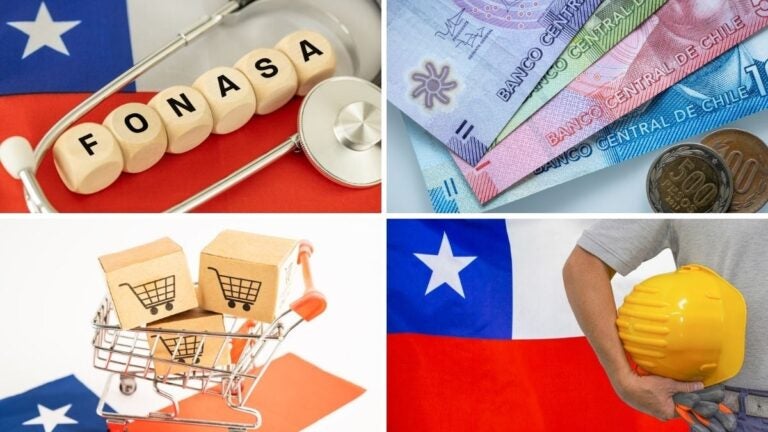
In Chile, you have two main options for accessing healthcare. One is the National Health Fund (FONASA), the public system and the one that covers most people in the country. Although it is the main healthcare system in Chile, it still faces major challenges, including long waiting lists for surgeries and general medical appointments.
However, the system has been gradually strengthened through increased government funding, which has helped improve hospital facilities. When it comes to mental health, demand for appointments is high, but the available medical capacity is still not enough to meet patients’ needs.
On the other hand, there is the Health Insurance Institutions (ISAPRE), private insurers typically used by individuals or families with higher incomes. However, the government is still working on regulations for how they operate.
These private insurers offer more advantages in healthcare, providing access to both public and private hospitals depending on the plan you choose. Despite the challenges and ongoing adjustments, Chile’s healthcare system performs better than the OECD average, making it one of the best in Latin America.
University education with free programs
Education is one of the key aspects highlighted when it comes to quality of life in Chile. The country has a strong school infrastructure across much of its territory, including both public and private institutions supported by the government.
Universities are not free, but there is a scholarship system that allows more people to pursue technical and professional degrees at public and private institutions. This support is generally granted to students from low-income backgrounds, including foreigners, as long as they completed high school in Chile.
Security: Perception vs. data in Chile
Chile ranks among the safest countries in Latin America, even if citizens’ perceptions don’t always reflect the statistics. While crime levels are low according to the 2025 Global Peace Index, in some cities the numbers don’t fully match people’s experiences, as many Chileans still express concern about crimes like theft and homicide.
Even so, safety remains an important factor in measuring a country’s quality of life, and Chile continues to rank above most Latin American countries alongside Uruguay. Citizens who experience theft or other crimes can even file reports online, reducing bureaucracy and making it easier to access justice.
Access to work
Finding a job in Chile can take longer for foreigners because of the paperwork and legal requirements, but the country still attracts many expats thanks to its strong opportunities for career and professional development.
This is partly because Chile has one of the highest minimum wages in the region at $597 per month. Combined with the country’s other quality-of-life benefits, it makes Chile an attractive place to find good job opportunities and enjoy a more comfortable lifestyle.
Even for professionals, salaries can be quite high depending on the role and industry, showing that having a university degree can make a significant difference in both earnings and career opportunities.
Cost of living
Chile, being the southernmost country in South America, has a high cost of living, but its relatively strong salaries help balance expenses. The biggest burden for workers is housing, which can take up 40–50% of income in cities like Santiago, Antofagasta, and Viña del Mar.
Other expenses, like food and utilities, have risen somewhat due to inflation, but technology and clothing tend to be more affordable thanks to Chile’s trade agreements with other countries.
On average, a couple needs over $1,200 to cover all expenses in typical neighborhoods, while professionals often spend more than $2,000 a month, depending on their lifestyle.
Internet connection
Internet in Chile covers up to 96% of the country, with some of the best fiber-optic connections in the world. This makes Chile a digital leader in the region.
When it comes to mobile networks, companies like Movistar, Entel, and WOM provide 5G service with speeds over 160 Mbps. With high-speed internet at both home and on mobile devices, Chileans can shop and access services conveniently.
To stay connected from the moment you arrive in Chile, Holafly’s eSIM is a great option, offering unlimited data for the duration of your stay. It makes it easy to get online and adapt quickly to life in the country.
If you want to spend a month without worrying about your mobile service, you can opt for one of Holafly’s monthly plans. Choose between 25 GB or unlimited data, which lets you connect multiple devices and even use it in over 160 destinations worldwide.
Important: If you are a frequent traveler and want to stay connected without worrying about expensive roaming or looking for a new SIM at every destination, Holafly’s subscription plans are for you. With a single eSIM, enjoy internet in more than 160 countries for a fixed price and no surprises on your bill. Travel without limits and connect easily and securely! 🚀🌍

Advantages of living in Chile
Chile is more than just incredible landscapes and cities. It is a country that offers real opportunities to start a new life. Let’s explore the benefits and quality-of-life factors that make it an ideal place to live.
Economic stability
Chile’s low inflation helps build trust in investments and gives consumers peace of mind. It also makes saving easier, since consistent economic policies reduce the risk of sudden shifts that could affect financial stability.
At the same time, competitive salaries help people cover their basic needs and lower poverty rates. This economic strength has also attracted major multinational companies, boosting job opportunities across the country.
High-quality basic services
Utilities like water and electricity are reliable and of high quality, so shortages are uncommon in cities. This is definitely one of the key quality-of-life factors to consider before moving to a new country.
Other services, like public transportation, are also top-notch. Santiago’s metro is one of the most modern and well-organized systems in the region, seamlessly connected with the city’s bus network. This makes it easier to get around and encourages people to rely less on cars.
Strong promotion of entrepreneurship
The Chilean government encourages entrepreneurship through programs like ‘Tu empresa en un día,’ an online portal that lets you set up a business in just 24 hours with minimal administrative costs.
By cutting red tape for entrepreneurs, more Chileans are officially registering their businesses to hire employees, manage invoices, and access other benefits. If you’re planning to bring your own business idea, keep in mind that the country offers all the digital tools you need to get started.
Disadvantages of living in Chile as a foreigner
Living in Chile also comes with some challenges, from a cost of living similar to European standards, to the concentration of economic opportunities in Santiago, and getting used to frequent seismic activity. Below, we break down each of these points so you know what to expect.
High cost of living
Although salaries in Chile are relatively high, the cost of living is too. Without a steady income, you may face some financial challenges. Housing is the biggest expense, with rent being especially expensive in the cities.
Finding a good place at a reasonable price can be both a financial and logistical challenge. On top of that, utility bills, especially electricity, tend to rise in winter because heating becomes necessary at home.
On the other hand, groceries can be more expensive at some chain stores. If you usually shop at these places, you may need a bigger budget compared to shopping at smaller, local markets.
Everything is in Santiago, the capital
If you want full access to services and better job opportunities, settling in Santiago, Chile’s capital, is key. With most companies based there, the city offers a higher quality of life and a more dynamic professional environment than other parts of the country.
It’s important to note that Santiago has the best healthcare, as well as the most prestigious universities and companies. This centralization means that essential processes, like paperwork, immigration procedures, and major medical treatments, are handled mostly in the capital.
Constant earthquakes
Chile experiences frequent earthquakes because it sits on the Pacific Ring of Fire, a region known for constant seismic activity. Be prepared for these events and try to adapt as quickly as possible.
Even though Chileans tend to handle these situations calmly, it’s important to be prepared for emergencies. A basic emergency kit should include water, a flashlight, extra batteries, and some canned food.
Frequently asked questions about living in Chile
The minimum wage in Chile for 2026 is CLP 539,000, equivalent to $597 per month.
Concerns about violent crime and homicides have made some people in Chile feel less safe. Even so, the country is still considered one of the safest in South America based on overall statistics.
The amount of money needed to live in Chile’s capital depends on your lifestyle and whether you’re single, with a partner, or have children. On average, a single person will need just over $1,000 a month to cover living expenses. The final cost can vary, mainly depending on the type of housing you rent, which is usually the largest monthly expense.
Chile offers several ways to travel between cities and towns. For long trips, flying is the most convenient option due to the country’s long, narrow shape. For shorter or medium-distance journeys, buses are a practical choice.
Chile experiences a wide range of climates throughout the year, following the seasonal cycle. Summers can be very hot in northern and central cities, while the southern regions tend to be milder or cooler.
Plans that may interest you

Hi! I'm a Spanish-English translator working with Holafly, helping bring travel content to life for curious travelers. As a digital nomad with a passion for exploring, I'm always adding new spots to my bucket list. If you love to travel like me, stick around because you're in the right place to find inspiration for your next trip! ✈️🌍