Language


 No results found
Living in Budapest as a foreigner: What is it really like?
Are you looking for an affordable in Europe? We’ll tell you what living in Budapest is like and the benefits this destination has to offer.

Thinking about living in Budapest but not sure what life there is like? This article gives you everything you need to make a confident decision, whether you are a digital nomad working remotely, an international student, or a traveler exploring at a relaxed pace, covering key aspects such as healthcare, education, the safest neighborhoods, and what drives the local economy.
Hungary’s capital stands out for offering excellent services to residents while maintaining a lower cost of living than other European capitals like London or Paris. It also boasts a rich historical heritage, with iconic landmarks such as the Parliament and its famous thermal baths. There are plenty of advantages to living in Budapest, though it’s also worth considering some of the challenges foreigners may face when settling in the city.
Quality of life in Budapest
According to various international studies, Budapest ranks as a European city with a good quality of life and a much lower cost than many other destinations on the continent. Major benchmarks such as the OECD’s Better Life Index highlight strong performance in areas like safety, work life balance, access to healthcare, and education. In addition, the Global Social Progress Index places the country in a mid to high position within Europe. Let’s take a closer look at each of these factors.
Education: Access and top universities
If you’re considering studying and living in Budapest for an academic year, it’s worth knowing that its education system is one of the most developed in Eastern Europe. The country offers a strong mix of public and private education, along with international schools and universities that run programs in English, French, or German. As a foreigner, you can enroll in public institutions if you have legal residency, or apply for a student visa through the Hungarian embassy in your home country to stay for the full academic year. Here are some of the most prestigious universities in the capital:
- Eötvös Loránd University: One of the oldest universities in the country.
- Budapest University of Technology and Economics: Renowned for its engineering and science programs.
- Central European University: With an international focus and programs taught in English.
Safety: Official data and recommended neighborhoods
Another key factor to consider when living in Budapest is safety. Official Mercer statistics show that crime levels are generally low, though petty theft and pickpocketing can occur in the most touristy areas. According to other expats, the neighborhoods considered best for living due to their calm atmosphere, good services, and convenient connections include:
- District V (Belváros): A central area with excellent transportation links and a high quality of life.
- Districts II and XII (Buda): Quiet residential areas with green spaces and good safety.
- District XIII (Angyalföld and Újlipótváros): Modern, well-connected, and offering a high quality of urban life.
Healthcare system in Budapest
Living in Budapest gives you access to both public healthcare, funded by the state, and private medical services. OECD studies highlight universal basic coverage, including primary care, specialists, hospitalization, emergencies, and subsidized medications, though infrastructure and wait times can be limited. Top public hospitals include Semmelweis University Hospital, Szent János Hospital, and Honvéd Hospital. How you access the system depends on your nationality:
- EU citizens: You can access public healthcare either by contributing to social security or by obtaining a European Health Insurance Card (EHIC) in your home country for temporary stays.
- Non-EU citizens: If you don’t contribute to social security or aren’t from the EU, you’ll need to take out private health insurance, which is a mandatory requirement for obtaining a visa.
- Emergency care: You are entitled to emergency care even if you do not have any type of insurance, but you will have to pay for the service.
Economy and job opportunities for foreigners
Budapest’s economy is one of the most dynamic in Central and Eastern Europe, driven by strong financial, tech, and industrial sectors that make it the country’s main economic engine. The city is also a hub for startups, with thriving companies in software development, AI, fintech, and cybersecurity.
The average salary in Budapest is around $1,489 per month, though more specialized roles can earn between $1,870 and $3,527 depending on experience and industry. While wages are lower than in many other European countries, the cost of living is also more affordable, making it easier to balance income and expenses. Some of the most in-demand jobs for foreigners include:
- Multilingual customer service and technical support
- Finance, accounting, and human resources
- Digital marketing and e-commerce
- Information technology and software development
- Engineering and technical roles
- Tourism, hospitality, and hotel management
Internet connection quality
When choosing a city to work or study remotely, internet quality is key. In Budapest, you can access high-speed fiber connections ranging from 300 Mbps to 1 Gbps, especially in the city center and modern neighborhoods. The main providers are Magyar Telekom, Vodafone Hungary, and Yettel, offering fiber, mobile internet, and bundled TV packages.
In some outer districts, internet can be less reliable. For smooth video calls, streaming, and remote work, Holafly’s monthly plans are a great option for digital nomads in Hungary. You can pick between 25 GB or unlimited data, connect several devices at once, starting from $49.90 per month with no contract, and use it in over 160 countries without swapping your eSIM or plan.
Alternatively, if you’re only going to be in the city for a few days, you can sign up for Holafly’s Budapest eSIM, which offers unlimited data starting at $3.90 per day.
Important: If you are a frequent traveler and want to stay connected without worrying about expensive roaming or looking for a new SIM at every destination, Holafly’s subscription plans are for you. With a single eSIM, enjoy internet in more than 160 countries for a fixed price and no surprises on your bill. Travel without limits and connect easily and securely! 🚀🌍

5 advantages of living in Budapest
If you’re looking for a safe European city with a good quality of life and a reasonable cost of living, Budapest is a fantastic choice. As we’ve seen throughout this article, the city offers many advantages. Beyond what we’ve already covered, here are a few more reasons why this city could be the right choice for you:
- More affordable cost of living: You’ll spend less on transportation, food, entertainment, and housing than in Western European cities like Vienna or Munich, making it possible to enjoy a comfortable lifestyle on an average income.
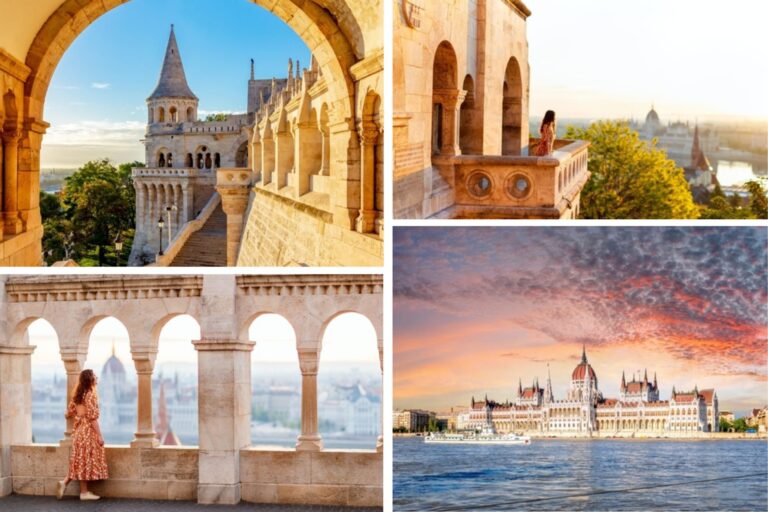
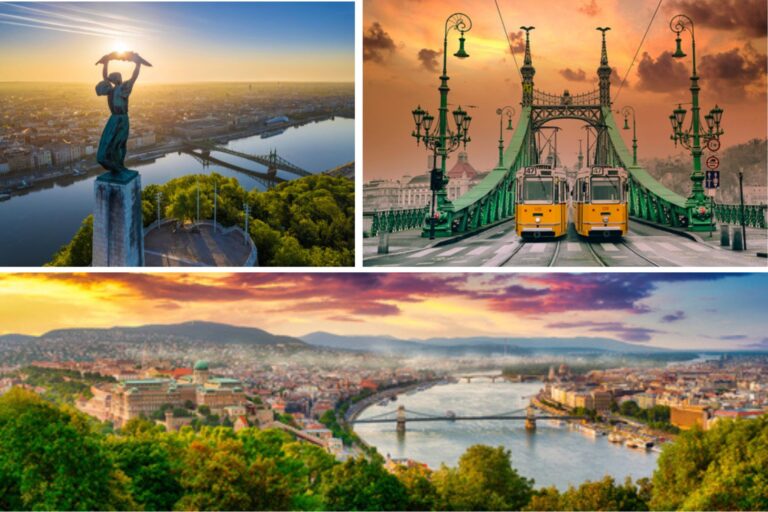
- Historical heritage: Living in Budapest means being surrounded by world-renowned architecture and cultural landmarks, including the Hungarian Parliament, Buda Castle, and the Fisherman’s Bastion.
- Extensive green spaces: Having access to green spaces for walking, relaxing, or exercising is essential, with options like Margaret Island, City Park (Városliget), and Gellért Hill offering plenty of outdoor opportunities.
- Active and vibrant social life: Social life thrives in spots like the Great Market Hall, a popular gathering place for expats, or the famous ruin pubs set in historic buildings, such as Szimpla Kert.
- Excellent public transportation network: You’ll have access to an efficient and reliable public transport system, including metro, trams, and buses that connect the entire city. One tram route runs along the Danube and is considered one of the most scenic rides in Europe.
5 disadvantages of living in Budapest as a foreigner
Although Budapest offers many advantages, there are some challenges that can affect your mood, social life, and how quickly you adapt. Being aware of them beforehand can help you settle in more easily. Here are a few drawbacks that might impact you the most:
- Language barrier: Hungarian is one of the most challenging languages in Europe and very different from other European languages. While English is common in tourist areas, communicating outside those zones can be difficult and may make settling in a bit harder.
- Low wages: If you work for a local company, your salary will likely be lower than in cities like Madrid or London, which can be surprising if you’re used to higher pay.
- Cold, dark winters: The weather is another downside to living in Budapest, with long winters, freezing temperatures, and short daylight hours. If you’re used to a warmer climate, it may take some time to adjust.
- Cultural differences: Hungarian culture is friendly but also quite reserved, so building a local social network may take a bit more time.
- Bureaucracy and administrative procedures: If you need to handle any administrative tasks, most official documents are in Hungarian, and there isn’t a highly developed system for digital processing.
In short, living in Budapest is a rewarding experience, blending history, culture, nature, and professional opportunities with a cost of living lower than many other European capitals. Now it’s up to you to weigh these benefits against the challenges we’ve discussed and decide if this city fits your lifestyle and what you’re looking for. Could Budapest be your next home?
Frequently asked questions about living in Budapest
Yes, Budapest is a safe, calm, and affordable city with opportunities to work for local companies. You can also work remotely as a digital nomad using Holafly’s monthly plans.
It’s not required, as English is widely spoken in central areas, universities, and international companies. However, knowing some basic Hungarian will make social life and accessing public services much easier.
Yes, the city is well connected with trains, buses, and frequent flights to destinations like Vienna, Prague, and Bratislava, making it easy and affordable to travel around Central Europe.
Yes, especially in fields like technology, finance, multilingual customer service, digital marketing, and tourism. Being fluent in multiple languages will also boost your job prospects.
Yes, many residential areas, such as districts II, XII, and XIII, are quiet and family-friendly, with parks, schools, and plenty of green spaces, making them ideal for raising children.
Plans that may interest you


Hi! I'm a Spanish-English translator working with Holafly, helping bring travel content to life for curious travelers. As a digital nomad with a passion for exploring, I'm always adding new spots to my bucket list. If you love to travel like me, stick around because you're in the right place to find inspiration for your next trip! ✈️🌍