Language


 No results found
Living in Brazil as a foreigner: What is it really like?
Discover what living in Brazil is like: the pros and cons you’ll encounter when moving to this South American giant.

If you are considering living in Brazil, this guide gives you a clear and complete picture of what life is like in this vast South American country, known as one of the largest economies in the world. You will learn about how the healthcare system works in general, what to expect from the education system, and the typical salaries for both operational workers and professionals.
You will also get a sense of how advanced the country is when it comes to connectivity and everyday technology, as well as how accessible housing is for foreigners. By the end, you will have a clear view of the main pros and cons to help you decide whether moving to Brazil is the right choice for you.
Quality of life in Brazil
Overall, quality of life in Brazil is fairly stable, but it can vary greatly depending on the city or region you live in. Your lifestyle and access to essential services often depend on your socioeconomic status, which plays a key role in how comfortable your day to day life will be.
To give you a clearer picture of the country, here is an overview of its education system, healthcare, housing access, and the kinds of salaries workers can expect.
Education
The education system includes free public institutions with strong academic standards and a solid reputation across Latin America. There are also well regarded private schools and universities which tend to be more expensive, but often stand out for their focus on teaching a second language.
Foreigners can access public universities, often without paying tuition, but the main requirement is having legal residency. After that, you will need to pass a series of entrance exams that act as a selection process before you can begin a university degree.
It is worth noting that Brazilian universities rank among the strongest in the region, often outperforming countries like Chile, Colombia, and even Mexico. They also enjoy solid international recognition, which can boost graduates’ job prospects.
Healthcare system
In Brazil, healthcare is free and universal, provided through the Sistema Único de Saúde. As a foreigner, you can access public healthcare services as long as you have legal resident status.
While emergency care and disease prevention programs are generally reliable, there are still challenges when it comes to getting appointments with specialist doctors.
If you want smooth, thorough medical care without long waits and access to the best hospitals and clinics in Brazil, the smartest option is to have private health insurance to supplement the public system.
Regionally, Brazil’s healthcare system falls around the Latin American average, but it scores high for doctor expertise and advanced equipment for complex treatments, according to Numbeo. The country also stands out for its hospital infrastructure.

Housing
Finding housing in Brazil is usually manageable, particularly when renting, but it can be tricky at first. Landlords typically ask for financial proof or guarantees, which can be tough to provide if you’re new to the country.
Landlords often require a local guarantor or rental insurance, which increases costs, and you will usually need to pay a large deposit, sometimes as much as three months rent in advance.
All of this, combined with the need to have your Tax Identification Number in order, can make the process feel very bureaucratic. On top of that, finding a comfortable, well-located home can take at least two months, so it’s best to start early.
Wages
Brazil has labor laws that safeguard workers’ rights and provide benefits such as a 13th month salary and paid vacation. To work in the country, you need either a work visa or legal residency.
The highest salaries are usually found in the major cities, and pay can vary depending on your field or position. For example, someone in an entry-level operational role might earn around $300, but with experience and time on the job, it’s possible to increase earnings to over $500.
For professional workers, it’s important to provide all academic qualifications and work experience to secure a job in Brazil. Salaries typically start above $600 per month and can reach around $1,200 or more, depending on the industry.
Cost of living
The cost of living in Brazil is quite high, so earning just the minimum wage won’t be enough. To cover basic expenses and have a small amount left for savings, you would need a monthly income of around $900.
This would allow you to live in a one-bedroom house or apartment in a well-connected area, giving you easy access to public services like transportation, hospitals, and universities.
With that budget, you can shop for groceries at local or international supermarkets and cover all your monthly needs. It also allows for healthcare, leisure, and transportation, making $900 a reasonable amount to live comfortably in one of Brazil’s main cities.
Internet connection
Internet coverage in Brazil is on par with developed countries, supported by strong connectivity infrastructure. High-speed connections are available throughout urban areas, more than enough for remote work or online study.
Fixed internet is delivered through fiber optic networks, extending coverage to smaller towns and cities across the country. Speeds typically range from 500 Mbps to 1 Gbps, with prices that remain affordable for most Brazilians.
When it comes to mobile networks, 5G is widely available across the country through major providers like Vivo, Claro, and TIM, which dominate the Brazilian market. This widespread connectivity makes online shopping, banking, and both domestic and international transfers fast and convenient.
Agriculture and public services are also embracing IoT technology to improve efficiency, from monitoring crops and livestock to managing street lighting in big cities. Although the system is still developing, progress has been significant.
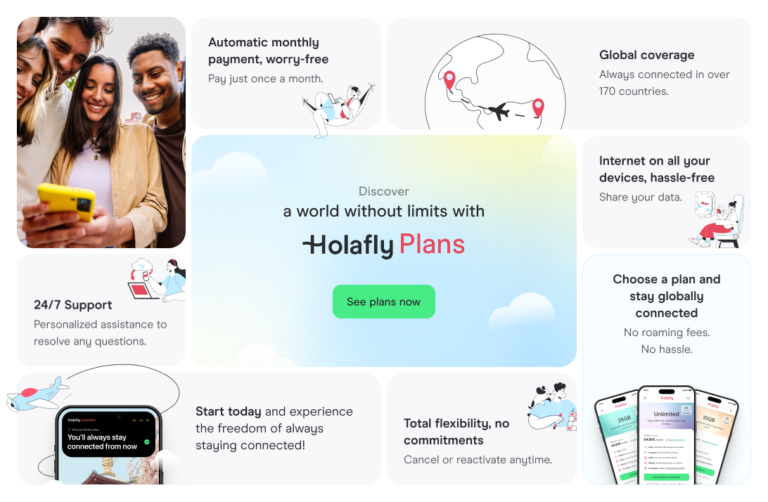
If you want to arrive in Brazil with a reliable and stable internet connection, you can sign up for a monthly plan from Holafly. Options include 25 GB or unlimited data that can be shared with other devices, and it also works in over 160 destinations worldwide.
You can also get Holafly’s Brazil eSIM, which provides unlimited data for as long as you need. It’s perfect for your first days in the country, so you stay connected while settling into the city.
Important: If you are a frequent traveler and want to stay connected without worrying about expensive roaming or looking for a new SIM at every destination, Holafly’s subscription plans are for you. With a single eSIM, enjoy internet in more than 160 countries for a fixed price and no surprises on your bill. Travel without limits and connect easily and securely! 🚀🌍
Advantages of living in Brazil
Brazil has a lot to offer foreigners, making it an attractive place to live for people from nearby countries as well as from around the world. Here are some of the main benefits of living there:
Easy integration into Brazilian social life
One of the biggest advantages for foreigners moving to Brazil is the warm and welcoming nature of the people. This friendliness makes it easier to adapt to local customs and also helps you improve your Portuguese more quickly.
Being socially active also opens up more job opportunities and helps you build a network of friends and contacts who can support you in everyday life.
Access to a high quality of life as a professional
If you are a professional with strong work experience, moving to Brazil can help you land a job that matches your skills, allowing you to start off with a good salary that covers a comfortable lifestyle.
This way, you can settle in a central, convenient area of a major Brazilian city while still having enough money to cover your basic expenses and save a little.
You’ll live in a country with world-class tourist attractions
Tourism plays a major role in Brazil’s economy, so it’s common to travel around the country to explore beaches, nature, and popular attractions. Since costs are in the local currency, the Brazilian real, these trips are often more budget-friendly for locals.
For residents, exploring Brazil is far more affordable than traveling as a tourist. This means you can enjoy a long list of destinations throughout the year without overspending.

Disadvantages of living in Brazil as a foreigner
Even as South America’s largest country, Brazil comes with a few challenges for those planning to move. Here’s a realistic look at the issues foreigners might face when settling there.
High cost of living relative to local wages
This is an important point to keep in mind, because without a well-paying job, covering your basic needs in Brazil can be quite challenging.
Minimum or mid-level wages often aren’t enough to cover all your monthly living expenses, which can make it difficult to live in a safe area with reliable public services.
Insecurity in cities
Safety can be an issue across Brazilian cities, though it varies by location and neighborhood. Your socioeconomic status often determines whether you can live in areas with better security.
Even so, you’ll need to adjust certain habits to stay safer, like knowing which areas are more risky, the safest times to be out, and which personal items to keep out of sight.
Bureaucracy in various administrative procedures
One of the main challenges for foreigners seeking residency in Brazil is dealing with bureaucracy. Navigating immigration and tax procedures, and even finding the right information, can be complicated and time-consuming.
Settling in Brazil usually requires patience and professional help, as navigating some procedures can be tricky and mistakes can set back your plans. This can make the process longer and more expensive than you might expect.
Frequently asked questions about what it’s like to live in Brazil
No, legal residents in Brazil can use the country’s free public healthcare system. Still, private health insurance is a good idea to fill in any gaps in public services, even though it isn’t required.
Whether it makes sense to buy a car depends on the city. In larger cities, public transport can be more efficient for getting around quickly, while in smaller towns having a car can be much more practical.
If you plan to live in Brazil, knowing Portuguese is very important since it makes everyday life and official paperwork much easier. English is mainly helpful in tourist hotspots, such as hotels, agencies, and stores.
Cities with the highest quality of life and safety in Brazil include Maringá, Florianópolis, and Curitiba. However, larger cities like São Paulo and the capital, Brasília, tend to offer higher salaries and more job opportunities.
Yes, there are affordable travel options by plane and bus, but getting around by land can take longer due to the country’s size. Planning your trips in advance is the best way to secure cheaper flights.
Plans that may interest you


Hi! I'm a Spanish-English translator working with Holafly, helping bring travel content to life for curious travelers. As a digital nomad with a passion for exploring, I'm always adding new spots to my bucket list. If you love to travel like me, stick around because you're in the right place to find inspiration for your next trip! ✈️🌍