Language
Living in Belgium as a foreigner: What is it really like?
A comprehensive guide to the quality of life, benefits, and challenges of living in Belgium. Read to the end and decide if it’s worth it.

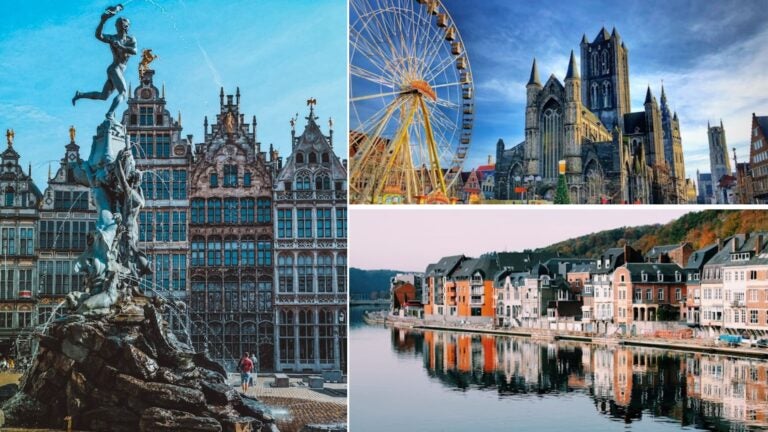
If you’re looking for a place where the modern edge of European institutions blends seamlessly with fairytale canals and some of the world’s finest cuisine, living in Belgium might just be the perfect choice.
Right between France, Germany, and the Netherlands, this small country is a place where thousands of expats find stability and a great quality of life.
But what is it really like to settle in cities like Brussels, Antwerp, or Ghent? That’s what we’ll look at today. We’ll go over everything, from Belgium’s strong social system to its mix of languages. We’ll also talk clearly about housing costs and how to deal with a tax system that, while high, gives a lot back through public services.
Belgium is said to have more castles per square kilometre than anywhere else in the world. But what really attracts people isn’t just its past, it’s the lifestyle. There’s a real focus on enjoying life, with a strong respect for work–life balance as something essential.
Keep reading to find out if this corner of the Benelux is the destination you’ve been looking for.
What is the quality of life like in Belgium?
Moving to Belgium means choosing one of the countries with the best work-life balance in the world.
According to the OECD’s Better Life Index, Belgium ranks above average in income, health, and safety. Living there means benefiting from a strong infrastructure where people’s well-being is the top priority.
Economy and wages
Belgium’s job market is quite dynamic, especially in fields like logistics, the pharmaceutical industry, and of course the international institutions based in Brussels.
The average gross monthly salary is around €3,900 ($4,200), although a skilled professional can easily earn over €5,000 ($5,400–5,500). It’s also worth noting that Belgium uses automatic wage indexation, meaning salaries are adjusted every year in line with inflation and the rising cost of living.
That said, taxes are something you can’t ignore. Belgium has one of the highest tax burdens in Europe, with income tax rates going up to around 50%. Even so, housing costs are generally more affordable than in countries like France or the Netherlands.
A one-bedroom apartment in a good area of Brussels or Antwerp typically costs between €850 and €1,100 ($920–1,190). This helps keep living costs manageable, so even with high taxes, purchasing power remains quite strong for those who choose to live in Belgium.
Healthcare system
The Belgian healthcare system is recognized as one of the best and most accessible in the world.
The system is based on mandatory health insurance, known as a mutuelle. As a legal resident, you sign up with a provider of your choice, pay a small monthly fee (around €10–15), and get roughly 75% of your medical, dental, and pharmacy costs reimbursed.
There are no long waiting lists, and you can choose your own doctor or specialist. Hospitals are modern, and staff usually speak French, Dutch, and English, making things much easier for foreigners.
Safety
Belgium is among the countries with the lowest levels of violent crime in Europe. Overall, there’s a strong sense of calm and order, especially in cities across Flanders and in residential areas of Wallonia. That said, because of its global political importance, security measures in Belgium tend to be quite visible and focused on prevention.
In Brussels, it’s normal to see police and sometimes even military presence in the European Quarter and around government buildings. There’s no need to worry, it’s simply part of the security measures for the EU’s capital. For residents, this means a constant level of protection that helps prevent serious crime, making Belgian cities very safe for both families and people living on their own.
Still, as in any big European city, it’s wise to stay alert for pickpockets. They tend to operate around major train stations in Brussels and in crowded places like the Grand Place. Keep your belongings close on public transport and avoid leaving your phone or bag in plain sight at cafés or terraces.
One thing people often overlook is road safety. Belgium has invested heavily in dedicated bike lanes and pedestrian-friendly areas. In cities like Ghent or Leuven, city centres are largely car-free, allowing children and older people to move around safely and freely, which greatly improves everyday quality of life.
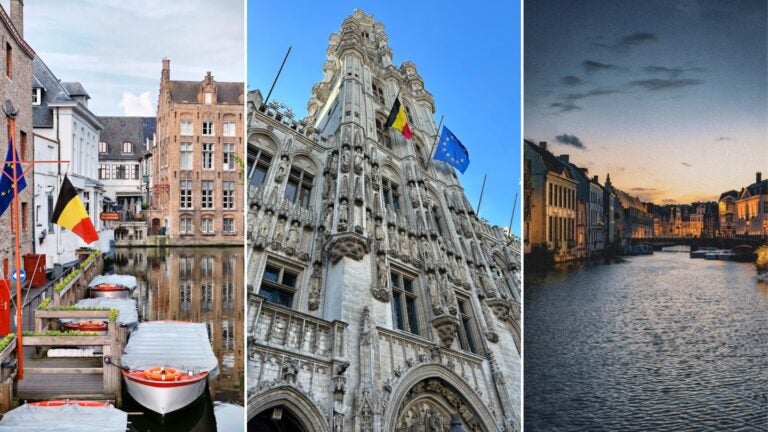
The linguistic puzzle
This is probably the most unique part of living in Belgium. The country is split into three main communities: Flanders, where Dutch (Flemish) is spoken; Wallonia, where French is the main language; and a small German-speaking region. Brussels is officially bilingual, although French is what you’ll hear most in everyday life.
For foreigners, this makes location really important. If you work in the north (Antwerp, Ghent), Dutch is essential, while in the south (Liège, Namur), French is a must. In Brussels, you can get by just fine with English in international professional settings, but learning the local language of your area is what really helps you integrate into social and cultural life.
Education
One of the biggest advantages for those who decide to move to Belgium with their families is that public education is free and of the highest quality.
It’s split between the Flemish system, which is quite rigorous and strong in sciences, and the French-speaking system, which tends to focus more on the humanities. That said, many expat families choose bilingual schools so their children can grow up fluent in both languages from an early age.
On the other hand, Brussels has a high concentration of international and European schools, largely because of NATO and the EU. These schools offer multilingual curricula, but they come at a high price, usually around €15,000 to €25,000 ($16,200 to $27,000) per year.
That said, for anyone planning to stay in Belgium long term, the public education system is so strong that private schooling isn’t really a necessity, but more of a lifestyle choice. By the way, if you want to learn more, check out our guide on studying in Belgium as a foreigner.
International connectivity with Holafly
Belgium is a highly connected country, but setting up internet or a mobile plan at home can be surprisingly slow. You often need a Belgian bank account (local IBAN) and proof of address, which can take time to get. In the first few weeks, while you’re finding a place and handling your municipal registration, you can’t really afford to be offline.
A Holafly eSIM for Belgium is your best ally during this stage. It gives you unlimited high-speed data as soon as you land at Zaventem or Charleroi airport.
You can also choose Holafly’s monthly plans, which give you internet not only in Belgium but in over 160 countries. They’re a simple all-in-one solution: you subscribe once and don’t have to worry about any paperwork. The plan renews automatically each month and you can cancel anytime without penalties.
In fact, they’re a top choice for digital nomads, international students, long-term travellers, and airline staff. Being able to work from anywhere in the country and travel freely across Europe and other countries is a huge advantage.
With either of Holafly’s options, you can use Google Maps to get around medieval streets, translation apps for official paperwork, and stay in touch with your family without relying on café Wi-Fi. It’s the peace of mind of having reliable internet while you settle into your new life in Europe.

What are the benefits of living in Belgium?
Belgium is a place you really come to appreciate over time. Its strengths aren’t always obvious at first, but once you settle in, you start to see a high quality of life shaped by safety, culture, and a location that puts you close to cities like Paris or Amsterdam within just a few hours.
Strategic location
If you love traveling, living in Belgium is like having a VIP pass to the whole continent. Thanks to its excellent high-speed rail network (Thalys, Eurostar, and ICE), Brussels is just about 1 hour 20 minutes from Paris, 2 hours from London, and under 2 hours from Amsterdam.
This level of connectivity isn’t just great for leisure, it also makes the country a major hub for logistics and business. For expats, being able to travel for work or pleasure without spending hours in airports is one of the biggest freedoms Belgium offers.
Work-life balance
Unlike the more work-heavy cultures in Asia or the United States, personal time in Belgium is highly valued. The standard work week is around 38 hours, and there’s a strong respect for switching off after work. It’s also common for companies to offer remote work options and flexible schedules, making it easier to pick up children from school or enjoy cultural activities.
This mindset leads to less stress and better mental well-being. You quickly realize that productivity isn’t about how many hours you spend at your desk, but about what you accomplish, and this gives you more free time to enjoy local markets, music festivals, and the lively social life in town squares.
Social security and safety net
The Belgian system is built to make sure no one is left behind. As a resident, you pay into a social security system that provides some of the most comprehensive protection in the world. This includes generous unemployment benefits, paid sick leave, and family allowances for children.
This safety net brings a huge sense of security. Knowing that the state will support you in case of financial or health-related setbacks lets you plan the future with a level of confidence few countries can offer. It’s a system based on solidarity, where the high taxes mentioned earlier translate into real, tangible collective well-being.
A culinary and cultural paradise
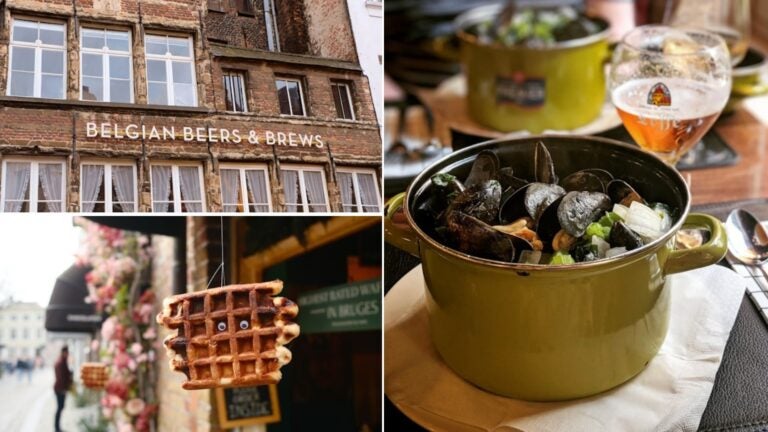
Beyond the usual clichés of chocolate, waffles, and fries, living in Belgium is a constant treat for the senses. The country has one of the highest numbers of Michelin-starred restaurants per capita and a beer culture recognised by UNESCO as Intangible Cultural Heritage, with more than 1,500 different varieties.
Culturally, Belgium is alive with creativity. From Magritte’s surrealism to comic books (Tintin, The Smurfs), Belgium exudes art at every turn.
Every city, from the elegant Bruges to the more modern Antwerp, offers a packed calendar of festivals, museums, and architecture, so there’s always something new to discover just around the corner.
Diversity and internationalism
Belgium is a country used to diversity. In Brussels in particular, where over 30% of the population is foreign-born, you’ll feel welcome from day one. This mix of cultures also makes society generally open-minded and welcoming.
For expats, this makes settling in much easier at the start. You’ll find lots of international communities, networking events, and services geared towards people who don’t yet speak the local languages well. Living in Belgium feels like a small snapshot of the world, where different cultures come together as part of everyday life.
Remarkable nature
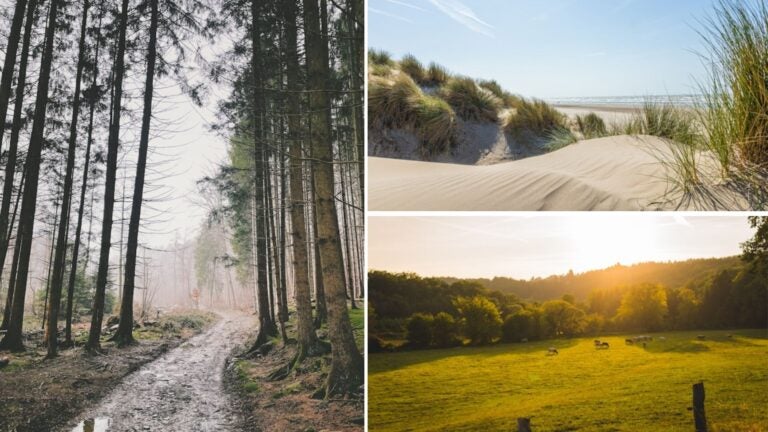
People often see Belgium as a purely urban country, but living there gives you easy access to a wide range of natural landscapes in a short time. In less than two hours, you can go from endless sandy beaches to dense, hilly forests.
If you enjoy hiking, kayaking, or mountain biking, the Ardennes in Wallonia will quickly become your favourite getaway. With its rolling hills, deep forests, and winding rivers, it’s the perfect spot for a weekend escape.
At the other end of the country, Belgium’s coastline stretches for about 65 kilometres of fine sandy beaches. Towns like Knokke-Heist and the Zwin nature park are perfect for birdwatching and long walks along the North Sea. Best of all, you can travel the entire coast on the Kusttram, the world’s longest coastal tram, making it incredibly easy to enjoy the seaside without any hassle.
A special mention goes to Hallerbos forest, just a short drive from Brussels. Seeing the wild bluebells bloom in April is almost a ritual. For about two weeks, the forest floor turns into a deep purple carpet that feels straight out of a fairytale. It’s the perfect example of how Belgium’s nature, while carefully maintained, still keeps a wild beauty that’s truly breathtaking.
Being so close to nature encourages a very active, outdoor lifestyle in Belgium. Even if you live in the city centre, there’s always a historic park or protected forest just 20 minutes away, which really adds to everyday well-being.
What challenges do foreigners face when they decide to live in Belgium?
It’s not just chocolate and picture-perfect canals. Life in Belgium also comes with its fair share of challenges, from unpredictable weather to a public system that can sometimes feel quite complicated to navigate.
Here are some practical considerations to keep in mind before packing your bags.
Climate
If there’s one thing all residents in Belgium agree on, it’s the weather. It’s not extreme cold, but rather a persistent grey sky for much of the year. Rain is a constant companion too, often as a light drizzle that can last for days.
You’ll find that winters are long and daylight is limited, which can be tough for people coming from Mediterranean or tropical climates. In fact, vitamin D often becomes a daily essential for many expats.
However, this also means that Belgians celebrate every ray of sunshine by gathering en masse on outdoor terraces as soon as the temperature rises above 15°C.
One of the highest tax burdens in the world
We’ve touched on this already, but it’s worth going into more detail: Belgium is known for its high income taxes. If your gross salary is €4,500 ($4,850), after social security contributions and income tax (which can quickly reach up to 50%), you’ll likely take home around €2,600 to €2,700 ($2,800 to $2,900).
While this high tax level supports strong public services, it can feel limiting for young professionals who want to save quickly. That’s why negotiating extra benefits like a company car, meal vouchers, or private insurance is so important. These perks are how employers help balance out the tax pressure and keep working in Belgium financially appealing.
Slow and fragmented bureaucracy
Belgium is a federal state with several layers of government (federal, regional, and community), which can sometimes make things feel slow and a bit complicated. Everyday tasks like registering at the local town hall (maison communale), getting a driving licence, or even setting up internet can take longer than you’d expect.
Often, the rules differ depending on whether you live in Flanders or Wallonia, and finding the right information can be tricky if you don’t speak the local language. Patience becomes your best ally when dealing with paperwork.
The social barrier
Although Belgians are polite and tolerant, they’re not usually as openly sociable at first as people from Latin America or the United States. There’s a clear line between work life and private life. Local friend groups are often quite closed off, and people usually form them in childhood or during university.
As a foreigner, you may feel a bit lonely at first, and locals can seem a little reserved. Making friends takes time, effort, and learning the language. It’s possible, but it usually happens slowly, not as quickly as in other countries.
The cost of energy and utilities
Although rent is fairly reasonable compared to neighbouring countries, housing maintenance costs have increased significantly. Electricity and, especially, heating can be expensive, as many buildings in historic city centres are old and not well insulated.
It’s common to get a yearly bill at the end of the year that can be a surprise if you haven’t tracked your energy use during winter. You should include this extra cost in your monthly budget to avoid unexpected expenses.
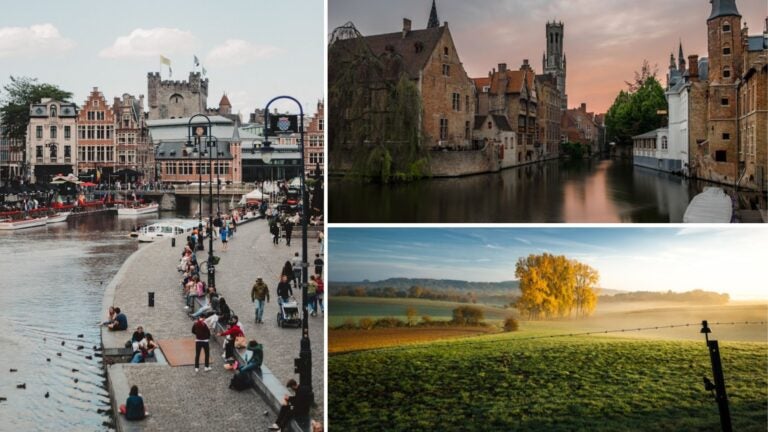
How appealing is it to live in Belgium?
You could say it’s choosing a life with real depth. Belgium isn’t about big skylines, but about strong institutions, respect for free time, and enjoying the simple things in life.
If you don’t mind grey skies in exchange for a strong social safety net and the chance to cross countries in the time it takes a metro ride elsewhere, Belgium is well worth it.
It’s not just a place to work in the heart of Europe; it’s a place that teaches you that true quality of life comes from balance. With the right preparation around language and taxes, landing in Magritte’s homeland can be the start of a fascinating new chapter.
Frequently asked questions about living in Belgium
In Brussels and Antwerp, this is very possible, especially in tech, finance, engineering, and EU-related jobs where English is widely used. But for customer-facing roles or smaller local companies, you’ll usually need French or Dutch. English helps you get started, but the local language is key for career growth and real integration.
The system is excellent and very well integrated. In Brussels, the STIB network (metro, tram, and bus) offers monthly passes for around €60 ($65), but the best part is that many Belgian employers are legally required to cover part or even all of their employees’ transport costs. For travel between cities, trains (SNCB/NMBS) are the main option. They’re punctual, clean, and offer special fares for young people or weekend passes with discounts of up to 50%.
A few days after arriving, you need to go to your local town hall (maison communale) to register. This is required to get your national ID number and residence card. After that, a police officer will visit your home in the following weeks to check that you live there. Your registration is only finished after this visit. It takes some time, but you need it to open a bank account, set up internet, and access the healthcare system.
Food costs are fairly moderate. It’s more expensive than in Spain or Portugal, but similar to France and cheaper than the Netherlands or the UK. A monthly shop is usually around €300–400 ($325–435). To save money, locals often use discount stores like Colruyt, Aldi, or Lidl, and weekend markets for fresh, cheaper produce.e at much better prices than in big supermarkets.
Unless you live in rural Wallonia or a remote industrial area, you don’t really need a car. Belgium designs its cities for walking, cycling (especially in Flanders), and public transport. Traffic in Brussels and Antwerp can be heavy at rush hour, so many people rely on trains or fast electric bikes with dedicated cycling routes between towns.
Plans that may interest you


Hi! I'm a Spanish-English copywriter working with Holafly, helping bring travel content to life for curious travelers. As a digital nomad with a passion for exploring, I'm always adding new spots to my bucket list. If you love to travel like me, stick around because you're in the right place to find inspiration for your next trip! ✈️🌍