Language


 No results found
Living in Austria as a foreigner: What is it really like?
Find out what living in Austria is like in 2026, including its pros and cons and all the details about the quality of life there.

Living in Austria can be a great experience, but before moving there it helps to understand what life in the country is really like. In this article, you will find details about salaries, the education system, and how to access healthcare, which is considered one of the most efficient in Europe.
We’ll also weigh the pros and cons you’ll encounter when moving to this alpine country, so you can get a clear picture of what to expect. Stick around until the end, and you’ll have a better understanding of what a country like Austria has to offer.
Quality of life in Austria
Austria is one of the countries with the highest quality of life in the world, according to data from the OECD’s Better Life Index, which evaluates social well-being based on factors like education, healthcare, safety, and personal income levels.
Austria ranks among the most prosperous and stable countries in Europe, though like any nation, it still has areas that are developing and improving. In this article, we’ll take a closer look at the key factors that make it such an attractive place to live.
Free education for residents and high standards
Education in Austria is widely accessible and mandatory for children up to age 15, after which they can continue on to public universities. There are also high-quality private schools and universities, all offering programs with international recognition.
Tuition can be free or very affordable, depending on your immigration status and the program you choose. This not only helps keep the overall cost of living lower, but it also strengthens the workforce by giving people better access to education and training.
A stable economy and high wages
Although the cost of living in Austria is relatively high, average salaries are slightly higher than in many other European countries. This makes it possible to manage monthly expenses for a variety of lifestyles, usually covering all the essentials for a comfortable life.
For example, professionals typically earn more than the average citizen, with gross monthly salaries around $4,300, depending on their field. This gives them the opportunity to live in more upscale neighborhoods in cities like Vienna, Austria’s capital.
A person without a university degree in Austria can still earn a competitive salary, and their jobs provide a stable income that allows for a comfortable lifestyle.
In other words, while these jobs may not allow for living in upscale or central neighborhoods, splurging on extra purchases, or building significant savings, they do provide enough to cover all monthly expenses in more affordable areas.
If you want a closer look at the cost of living in Austria, here’s an up-to-date guide for 2026.

High-quality healthcare
Austria’s public healthcare system is strong, funded through citizens’ work contributions. It provides high-quality, easily accessible care for residents, and the hospitals and medical services meet some of the highest international standards.
You gain access to social security as soon as you sign an employment contract, since your employer must register you. Once enrolled, you receive an e-Card, which you need to show when visiting a doctor or picking up medication at any pharmacy.
Austria offers different types of healthcare coverage, and in some cases, public and private care are combined. You can choose your own doctor under any plan, but keep in mind that most of them speak German.
Internet access
Austria has 5G coverage across much of the country, making it easy to work remotely from almost anywhere.
Some providers, such as A1, Telekom, and Magenta, have earned a reputation for reliable coverage and affordable high-speed internet plans, which make digital payments, transfers, and online shopping easy.
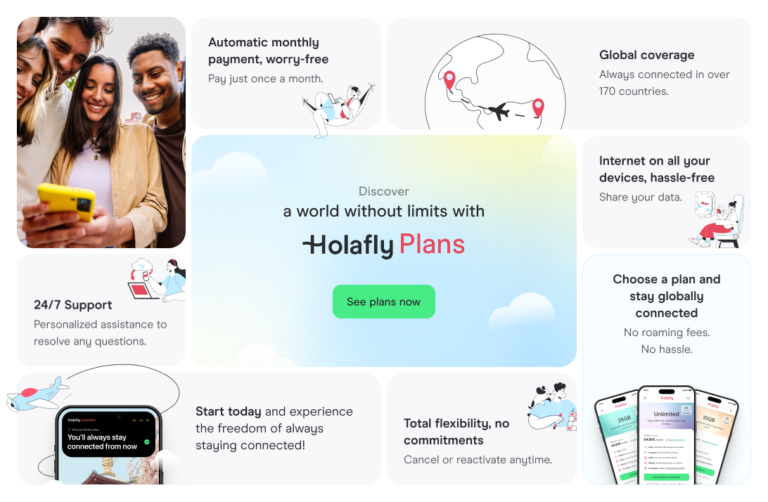
Another convenient option, which you can set up even before arriving in Austria, is Holafly’s monthly plans. The plans let you share data across multiple devices and provide coverage in over 160 countries. You can choose between 25 GB or unlimited data.
You can also use Holafly’s eSIM for Austria, which keeps you connected from the very first day. It offers unlimited data and lets you pay only for the days you actually use it while settling into your new home in the country.
Important: If you are a frequent traveler and want to stay connected without worrying about expensive roaming or looking for a new SIM at every destination, Holafly’s subscription plans are for you. With a single eSIM, enjoy internet in more than 160 countries for a fixed price and no surprises on your bill. Travel without limits and connect easily and securely! 🚀🌍
Advantages of living in Austria
There are many benefits to living in Austria, including the high level of social well-being the country has built over the years. Today, this makes it an attractive destination for both immigrants and digital nomads looking for a great place to live.
Low crime rates in cities
This is reassuring, as Austria is considered one of the safest countries in the world. With a very low crime rate, you can walk around the cities at any time without much worry. Of course, it’s always wise to stay aware of your surroundings.
Rest and relaxation are part of the culture
Austrians place a high value on their time off. Leisure is an important part of everyday life, and with up to 25 days of paid vacation, they have plenty of opportunity to enjoy the country’s many tourist attractions.
In addition, there are several public holidays throughout the year, and Sundays are typically spent with family and friends or enjoying outdoor activities.
Public transportation: Diverse, fast, and efficient
Transportation is definitely a key factor when choosing Austria as a place to live. The country boasts a high-speed rail network that efficiently connects all the major cities.
You can also rely on other forms of public transport, such as the metro, trams, and buses, which run on time with intervals of 2 to 5 minutes and cover many areas of the cities. On weekends, the metro even runs all night, making it easy to get home safely no matter the hour.
Good air quality and clean drinking water
One of the major benefits of moving to Austria is its clean air. The OECD highlights the country’s strong efforts to control air pollution, resulting in air quality that is far better than in many other European nations.
In addition, the water in cities like Vienna is safe to drink and very reliable, coming straight from the Alps. Combined with the eco-friendly habits of its residents, this helps keep cities clean and healthy, contributing to the overall well-being of Austrians.
Disadvantages of living in Austria as a foreigner
Moving to Austria or staying there for a while isn’t always simple, and you may face some challenges as you settle in. Here are a few drawbacks to keep in mind before making Austria your home.
Language barrier: English is spoken, but German is required
In Austria, English is commonly used in business and the workplace. However, German is the language you’ll use for everyday tasks like grocery shopping, visiting the doctor, and talking with neighbors. Having at least an intermediate-to-advanced level is essential to handle daily life in the country.
In some regions, you may even encounter dialects that differ from the standard German spoken in the larger cities, making it necessary to learn them if you plan to live in those areas.
Businesses being closed on Sundays and holidays can disrupt your plans
As mentioned earlier, Austrians highly value their time off. But if you’re new to the country, this can be a bit frustrating at first, since most shops are closed on Sundays and public holidays.
If you’re used to doing your grocery shopping on weekends, you’ll need to rethink your routine, since many stores close and you can easily run out of essentials.
Social integration can be a challenge
In Austria, friendships take time to develop, and locals can come across as reserved at first. It may take a while to feel fully accepted and to build meaningful connections.
Long periods without sunny days and with low temperatures
During months like December and January, the days are shorter and there’s less sunlight. This can take some getting used to and may affect your mood, especially if you come from a tropical or generally warm country.
Some cities can experience several days of cloudy skies and cold temperatures, so it’s important to dress appropriately and be ready to handle Austria’s characteristic climate.
Frequently asked questions about living in Austria
If you’re working in a company with mostly Austrian employees, knowing German is essential since it’s the main language. In more international or professional settings, however, you’ll often be able to use English more than German.
Most shops in Austria close on Sundays and holidays, leaving only a few convenience stores, usually at gas stations, open. While you can still buy what you need, expect prices to be noticeably higher.
You can expect to take home around €2,600 per month after deductions like social security and income tax. In months like July and December, you’ll also receive extra payments thanks to Austria’s system of 14 salaries per year, which reduces the tax burden during those months.
Living in rural or industrial areas may require a car, since public transportation doesn’t always reach these places. In cities and towns with good connections, a car isn’t necessary because buses, trams, and trains run quickly and efficiently.
Austria experiences all four seasons distinctly. Summers can get quite hot, reaching up to 30°C, while winters in major cities can drop to around -5°C. Spring and autumn are generally milder, with temperatures ranging between 10°C and 20°C.
Plans that may interest you


Hi! I'm a Spanish-English translator working with Holafly, helping bring travel content to life for curious travelers. As a digital nomad with a passion for exploring, I'm always adding new spots to my bucket list. If you love to travel like me, stick around because you're in the right place to find inspiration for your next trip! ✈️🌍