Language


 No results found
Volunteering in Sri Lanka: Get ready to go
Learn how to prepare for volunteering in Sri Lanka: requirements, practical advice, types of projects, and everything else you need to know.

Volunteering in Sri Lanka is not just about helping; it’s also an opportunity to experience a vibrant culture, live with local communities, discover dreamlike landscapes, and, above all, grow as a person. Each day becomes a lesson in empathy and human connection, and in the end, you’ll realise that you get much more than you give.
Sri Lanka is known as “the tear of India” because of its shape and proximity to this country. It’s an island located in Southern Asia with a variety of landscapes: paradise beaches, tropical jungles, mountains, and vast tea plantations. But beyond its beauty, what makes it unique is its cultural blend, with Buddhist and Hindu roots and a history marked by European influences such as Portuguese, Dutch, and British, which are reflected in its architecture, cuisine, and lifestyle. In this article, we’ll tell you everything you need to know about volunteering in Sri Lanka: from how to choose the right project, to practical tips, requirements, and how to make the most of this experience. If you’re looking for a purposeful adventure, you’re in the right place.
Why Volunteer in Sri Lanka?
Volunteering in Sri Lanka is much more than a trip: it’s a way to contribute meaningfully while immersing yourself in a deeply spiritual, warm, and resilient culture. This country offers a unique combination of real need and genuine hospitality. Whether working with children, supporting rural communities, or collaborating on environmental conservation projects, every task has a concrete and visible impact.
Moreover, its pace of life teaches you to live more calmly, and its people and cultural diversity open your eyes to new ways of understanding the world. If you’re looking for a volunteering opportunity that combines purpose, adventure, and learning, Sri Lanka is an unforgettable choice. Here are some benefits worth considering for this destination:
- Real impact with local communities: By collaborating on educational, social, health, or environmental projects, you directly contribute to the development of communities facing economic or social challenges. Your help can lead to an improvement in the quality of life for children, families, or the natural environment.
- Connection with different cultures: Sri Lanka has a rich culture rooted in spirituality, with strong Buddhist and Hindu foundations. Living day-to-day with local people allows you to understand customs, values, and ways of life completely different from your own. It’s an authentic way to experience the country from the inside, not as a tourist.
- Personal and emotional growth: Volunteering challenges you to step out of your comfort zone: you face the unknown, unexpected situations, and realities that are very different. This helps you develop patience, empathy, humility, and greater adaptability.
- Development of social and professional skills: You’ll learn how to work in teams, communicate even with language barriers, lead, make decisions, and solve problems. These skills are valuable both in life and in the workplace, and many volunteers discover new vocations through this experience.
- Exploring an incredible country: Volunteering gives you the opportunity to discover these landscapes while living consciously and with purpose. It’s not superficial tourism; it’s travelling while leaving a mark.
- Improving language skills: Although people widely speak English, living with locals lets you improve your communication skills and learn other languages.
- Lasting bonds: During your volunteering, you’ll share intense experiences with people from different countries and with the local community. It’s common to form very strong friendships, with whom you share values, lessons, and unforgettable memories.
Requirements for Volunteering in Sri Lanka
Understanding the requirements to volunteer in Sri Lanka is important. Here’s what you need to know to prepare:
- Volunteer visa: Volunteering with a tourist visa is not allowed. You must obtain an Entry visa for volunteering purposes, managed by the organisation in Sri Lanka. The organisation must submit the application to the Sri Lankan Immigration Department. A letter of invitation, passport valid for at least six months, and payment of the corresponding fees are required. Once approved, the volunteer must apply for the visa at the embassy or consulate.
- Minimum age is usually 18. Some programs allow minors under 18 if accompanied by an adult or in educational programs. There is usually no maximum age limit, although recommendations may apply depending on the type of activity.
- Studies and skills: Most programs don’t require specific academic qualifications. For specialized volunteering, such as in health, teaching, veterinary, or construction, studies or experience are valued. A good level of English is necessary, as it’s the working language in most organisations.
- Health and travel insurance: Having an international health insurance policy is mandatory.It must include medical care, hospitalisation, and repatriation in case of emergency. It’s recommended that it also covers theft, luggage loss, and cancellations. Some organisations include it in the programme, but generally, it’s contracted independently.
- Permits and additional documentation: It’s mandatory to register with local immigration authorities upon arrival in Sri Lanka. The organisation usually takes care of this process. Another requirement is a criminal record certificate from your home country.
- Vaccines and health: There are no mandatory vaccines to enter the country. However, hepatitis A and B, tetanus, typhoid fever, and rabies are recommended, especially if working with animals. We advise you to consult a specialised medical centre before your trip.
- Costs and payments: Although volunteering is free, most programmes involve certain costs. These can include registration fees, visas, accommodation, meals, local transport, and health insurance. Monthly costs usually range from $300 to $1,000 (€276–920) Some organisations offer accommodation with local families and typical meals as part of the package.
- Volunteer duration: The recommended minimum duration is two weeks. The maximum duration depends on the visa, which usually allows a stay of between three and six months. The visa can be extended if required by the programme.
- Behaviour and local regulations: You must respect local culture and traditions. It’s important to dress modestly, especially in temples or rural areas. Do not take photographs of people or temples without permission.
Holafly Monthly Plans
If you volunteer in Sri Lanka, a good internet connection is essential for staying in touch and handling matters. The Holafly monthly plans offer unlimited data for Sri Lanka, ideal if you’re staying for an extended period. Additionally, the eSIM allows you to connect without needing to change your physical SIM card, which is very practical when you arrive in the country.
Important: If you are a frequent traveler and want to stay connected without worrying about expensive roaming or looking for a new SIM at every destination, Holafly’s subscription plans are for you. With a single eSIM, enjoy internet in more than 170 countries for a fixed price and no surprises on your bill. Travel without limits and connect easily and securely! 🚀🌍

Alternatively, for short-term volunteering, Holafly’s eSIM for Sri Lanka is another option, offering unlimited data only on the days you need it.
Best Volunteering Programmes in Sri Lanka
Sri Lanka is an increasingly popular destination for those seeking to combine responsible tourism with a meaningful volunteering experience. With its rich culture, the country offers a wide range of programmes designed to create a real impact. From turtle conservation to teaching at Buddhist monasteries or rescuing street animals in cities, each opportunity lets volunteers integrate into local life and contribute their skills.
Here are five of the best volunteering programs in Sri Lanka, chosen for their community impact and enriching experiences:
1. Sea Turtle Conservation (Ambalangoda)
One of the most recognised and popular programmes for volunteers in Sri Lanka is the sea turtle conservation project offered by International Volunteer HQ (IVHQ). This project takes place on the southern coast of the country, near the town of Ambalangoda. Volunteers collaborate in a rescue centre dedicated to the care, rehabilitation, and release of injured or rescued sea turtles. Tasks can include tank cleaning, food collection, animal care, beach cleaning, and environmental education in nearby communities. No prior experience is required, and a basic level of English is enough. The program starts from one week and includes accommodation, meals, and 24-hour assistance. Estimated costs start from $300 (€276) per week
2. Volunteering Journeys: Teaching English at Buddhist Monasteries (Galle and Kandy)
This programme offers a deep cultural experience for those interested in education and Buddhist philosophy. Volunteers teach English to young Buddhist monks at temples in the cities of Galle and Kandy. The classes typically focus on improving basic communication skills, using simple teaching methods, games, and conversations. In addition to teaching, volunteers have the opportunity to learn about monastic life and participate in cultural activities. The programme is available from two weeks and usually includes accommodation, meals, and cultural orientation sessions. Approximate costs start from $900 (€828) for two weeks
3. Projects Abroad: Environmental Conservation and Biodiversity (Wasgamuwa)
For those looking for a more technical, ecology-related approach, Projects Abroad offers an environmental conservation programme in Wasgamuwa National Park. This project involves protecting local biodiversity through tasks like wildlife monitoring, reforestation, data collection, and community environmental education. It’s open to both volunteers with no experience and university students in environmental fields. The programme provides accommodation in eco-camps, internal transport, and pre-programme training. Minimum duration is two weeks, with estimated costs around $2,000 (€1,840) for that period
4. Street Dog Rescue and Welfare (Colombo and Surroundings)
Embark is a local organisation dedicated to the rescue, care, and adoption of street dogs in urban areas of Sri Lanka, primarily in Colombo and surrounding areas. Volunteers assist with feeding, hygiene, basic veterinary care, and community awareness activities on animal welfare. Although the volunteering is free and no fee is charged to participate, the organisation doesn’t include accommodation or meals, so volunteers must cover their own personal expenses. It’s an excellent option for those already in Sri Lanka or looking for a flexible experience focused on a love for animals.
Types of Volunteering Projects in Sri Lanka
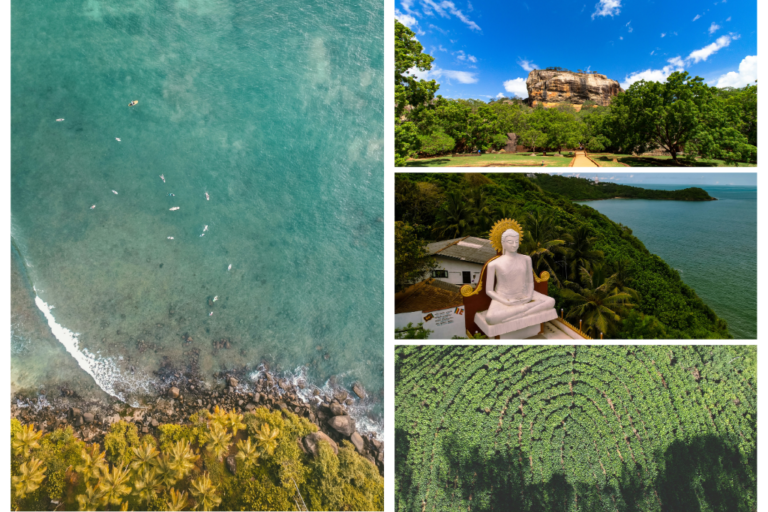
If you’re thinking of volunteering in Sri Lanka, many beautiful and meaningful options await you! This country offers a wide range of needs and opportunities, allowing you to choose what best suits your personality, interests, or skills. Here are the most common types of projects:
- Wildlife and environmental conservation: Sri Lanka is a natural paradise, so it’s no surprise there are projects focused on protecting its animals and ecosystem. You can help protect sea turtles, care for rescued elephants, or collaborate on reforestation and beach cleaning programmes. There are also campaigns against plastic and educational activities on the environment. If you love nature, you’ll love this type of volunteering.
- Teaching and education: English is a key tool for the future of many children and young people in Sri Lanka. As a volunteer, you can teach in rural schools, nurseries, or even at Buddhist monasteries where young monks study. You don’t need to be a professional teacher; with a good attitude and willingness to teach, you can make a big difference. Plus, you’ll learn a lot about their culture!
- Childcare and community support: If you enjoy working with children or helping directly in communities, there are projects where you can collaborate in orphanages, care centres or community activities. You’ll be able to play with the children, help them learn, assist in women’s workshops, or take part in social events. It’s a very human and enriching experience.
- Health and medical volunteering: If you study medicine, nursing, or a health-related field, there’s also space for you. You’ll be able to do internships or help in hospitals and clinics, observing and supporting local staff. Sometimes, health campaigns are also held in villages. This is ideal if you’re in medical training or have professional experience.
- Street animal care: In cities like Colombo, there are organisations that rescue abandoned dogs and cats. If you love animals, you can help with their care, feeding, hygiene, and participate in adoption events or awareness campaigns. It’s very rewarding to see how these animals’ lives improve with your help!
- Construction and renovation projects: Do you enjoy working with your hands? There are also volunteering opportunities where you can help improve schools, temples, or community houses. You don’t need to be a construction expert: just have the willingness, good energy, and be ready to get your hands dirty. Painting, repairing, planting… every little bit helps.
How Much Does Volunteering in Sri Lanka Cost?
Volunteering in Sri Lanka requires an economic investment, which varies based on the programme, organisation, and length of stay. It’s important to consider expenses like recommended vaccines, personal items, and potential excursions or trips during your free time. However, volunteering in Sri Lanka also allows you to avoid many costs typically associated with conventional tourist travel, so here’s a list of the most common expenses.
- Programme fees range between $200 and $700 (€184–644) per week, depending on the organisation, the type of project (social, educational, environmental, etc.) and the length of the placement.
- International Round-Trip Flights: Costs range between $900 and $1,500 (€828–1,380) depending on your country of origin, how far in advance you book, and the time of year.
- ETA Visa: Short stays (up to 30 days): $50–60 (€46–55); Longer stays (over 30 days): you may need a visa extension costing $100–150 (€92–138).
- International Travel and Health Insurance: The approximate cost is $50–150 (€46–138) per month, depending on the coverage (health, accidents, repatriation, lost luggage, etc.).
Vaccinations and Medical Check-Ups: Depending on your country of origin and medical advice, you may need vaccines such as typhoid fever, hepatitis A and B, tetanus, and in some cases prophylaxis against malaria or dengue. Estimated cost: $100–300 (€92–276) depending on the required vaccines. - Local transport (if not included in the programme): Bus, tuk-tuks, or trains within the country. The recommended monthly budget for basic expenses is $30–80 (€28–74).
- Personal Expenses and Leisure: Excursions, souvenirs, restaurants, activities outside the programme, etc. Estimated cost: $100–300 (€92–276) depending on your lifestyle.
| Category | Approximate cost in USD |
|---|---|
| Programme fee (4 weeks) | $800 – 2,000 (€736 – 1,840) |
| Round-trip flight | $900 – 1,500 (€828 – 1,380) |
| Visa and immigration fees | $50 – 150 |
| Medical and travel insurance | $50 – 150 |
| Vaccines and preventive health | $100 –300 (€92 – 276) |
| Local transportation | $30 – 80 |
| Personal expenses and leisure | $100 –300 (€92 – 276) |
Frequently Asked Questions about Volunteering in Sri Lanka
Definitely. Not only do you help others, but you also grow as a person. You live another culture from the inside, make international friends, and take lifelong lessons with you.
Your presence, support, and energy have enormous value, especially in social or educational projects. If you approach it with respect and a desire to learn, the exchange will be valuable for both you and the community.
They speak Sinhalese and Tamil, but it’s not necessary to be fluent. English is widely spoken, especially in volunteering programmes, so with a basic or intermediate level, you’ll communicate well.
Sri Lanka is generally a safe country, and the people are very friendly. As with anywhere, the key is using common sense, following programme guidelines, and looking after your personal belongings.
Not necessarily. Many programs suit people with a good attitude, a willingness to help, and a desire to learn. If you have experience in education, health, or community work, it’s a plus, but it’s not a requirement.