Language


 No results found
Volunteering in Senegal: Get ready to go
Volunteering in Senegal can be a very enriching experience, but it is important to be well prepared. We will tell you everything you need to know.

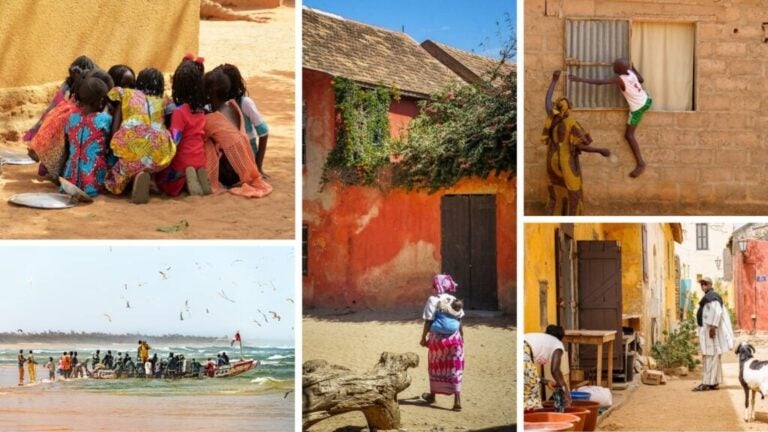
Senegal isn’t just a point on the African map. It’s the vibrant streets of Dakar, the endless hospitality of the locals, and the strength of a community that resists, dreams, and reinvents itself every day. Volunteering in Senegal means experiencing Africa from within, not as a spectator, but as an active part of the everyday life of a country full of challenges.
The Senegalese reality is marked by deep contrasts: structural poverty, difficulties in accessing healthcare and education, and harsh living conditions in many rural areas. But it’s also marked by a powerful cultural identity, strong community networks, and a tremendous will for change. This is where the work of volunteers comes in: not to “save” but to accompany processes, share knowledge, and, above all, learn.
Do you want to volunteer in Senegal? Keep reading and take note of everything we have to share with you: the tangible benefits of this experience, the requirements to meet, from visas to health insurance, the most recommended volunteer programs and what they offer, the types of projects available, and how to choose the one that best aligns with your interests, how much it really costs to volunteer in Senegal and how much you can save by doing so.
If you’re looking for more than just a trip, if you want to be part of a real, human experience with an impact, stay with us. What follows might change your life.
What do I gain by volunteering in Senegal?
The shortest answer would be: A lot! Senegal is a country that embraces you with its warmth and, at the same time, invites you to rethink many things. Volunteering is not just about helping: It’s about living together, learning, making mistakes, and getting excited. It’s about discovering yourself in a completely different place and leaving transformed.
In other words, living this experience translates into a concrete gain:
1- It’s a deep cultural immersion
This country, with African, Arab, and French roots, has a unique identity. What does this mean? You’ll go from hearing a sabar drum at a traditional ceremony to sharing an ataya (Senegalese tea) under a hut in a village in the Sahel. What seems foreign becomes everyday. And what you thought would be a cultural shock transforms into a bridge.
2- It’s feeling a close human connection with the locals
Another aspect that makes a difference is human connection. In Senegal, the concept of teranga (generous and sincere hospitality) is not a slogan: it’s a way of life. You’ll quickly feel like part of it. Communities open their doors to you and integrate you. You’re not a stranger passing through: you’re a guest who becomes a friend, a brother, a companion.
3- It lets you see the other side of the country
Volunteering gives you the chance to experience realities silenced by traditional tourism. Walking through the streets of Saint-Louis, visiting villages in Casamance, or working on education projects in the suburbs of Dakar are experiences that the average traveler doesn’t get. You, as a volunteer, will do so, but not as a mere spectator, but from within, sharing the day-to-day, the challenges, the achievements, and the smiles.
4 – Deep personal changes
On a personal level, living in Senegal means adjusting to a different rhythm. Slower, more communal, less individualistic. You learn to listen before speaking, to appreciate the small gestures, to live with fewer things and more connections. For many volunteers, this experience becomes a silent revolution that changes the way they relate to the world.
5- Professional growth
Lastly, let’s not underestimate professional growth. Whether you work on educational, healthcare, environmental, or social projects, you’ll gain valuable tools: problem-solving in contexts of scarcity, intercultural empathy, teamwork in challenging environments. And, above all, the certainty that real impact is not always in what’s visible but in what stays.
What requirements do I need to meet to volunteer in Senegal?
Volunteering in Senegal doesn’t require academic qualifications, prior experience, or an impressive CV. What’s most valued is the willingness to adapt, respect for local customs, and a real desire to get involved. Still, there are several aspects you should keep in mind to prepare responsibly.
1- Visa
The first thing you need to sort out is the visa. For short stays (less than 90 days), many countries from Latin America and Europe don’t need this document to enter Senegal as tourists. However, if you’re going to volunteer with a formal organisation, it’s often recommended or required to enter with a “Mission” visa or a letter of invitation from the NGO.
In any case, to clear up any doubts, it’s best to talk to the volunteer program before you travel, as they can guide you through the paperwork and let you know what the correct type of visa is for your case. In general, the process is simple, and you can do it at the nearest embassy or consulate.
2- Minimum age to volunteer
If you’re 18 or older, you can travel as a volunteer to Senegal without any issues. What if you’re younger? Some programs accept teenagers from 16 years old, as long as they travel with parental consent or as part of a group. And what if you’re over 50? You’ll be able to go, as there’s no upper age limit. What matters is your motivation, your openness to adapting to a very different culture, and being in good health.
3- Language
The language level is another important point. Although French is the official language, many people in rural communities don’t speak it fluently and instead use their own language. For this reason, some NGOs offer short courses in local languages like Wolof, and in most cases, you don’t need an advanced level of French, but a basic level that allows you to manage in daily life.
As for English, speaking some of the language (even the basics) will help you communicate with other international volunteers.
4- Health requirements
We’ve seen that there are no strict requirements regarding age. Something similar happens with health, but you should be aware of some points. The most important: the yellow fever vaccine is mandatory to enter Senegal. It must be administered at least 10 days before travel and presented with the international certificate upon arrival in the country.
It’s also recommended to have up-to-date vaccines for hepatitis A and B, tetanus, typhoid fever, and, in some areas, consider malaria prevention. The best decision is to consult with a travel health clinic before departure, as they can provide personalized recommendations based on your itinerary.
5- International Medical Insurance
Another essential requirement is international health insurance, both for bureaucratic reasons and common sense: no one should travel abroad without health insurance, especially if they plan to volunteer.
The insurance you purchase should cover medical care, hospitalisation, emergencies, evacuation, and, if possible, theft or loss of luggage. In large cities like Dakar, there are good private clinics, but if your project takes place in rural areas, having insurance is crucial. Also, most organisations require you to present the insurance when you start.
6- Internet connection
The internet connection in Senegal is another aspect you shouldn’t overlook. Keep in mind that in many areas of the country, access to WiFi is limited, unstable, or doesn’t exist at all. For this, Holafly’s monthly plans are the most effective solution.
With any of them, you’ll get a global eSIM with limited or unlimited data (depending on the plan you choose) that will allow you to stay in touch with your family, access maps, translators, and contact your local coordinator quickly if necessary.
Important: If you are a frequent traveler and want to stay connected without worrying about expensive roaming or looking for a new SIM at every destination, Holafly’s subscription plans are for you. With a single eSIM, enjoy internet in more than 170 countries for a fixed price and no surprises on your bill. Travel without limits and connect easily and securely! 🚀🌍

On the other hand, for short-term volunteer stays, the eSIM for Senegal from Holafly is another option, with unlimited data only for the days you need.
What are the best volunteer programs in Senegal?
Senegal is not only one of the most hospitable countries in West Africa, but it’s also a place where volunteer work has a tangible and direct impact. There are both local and international organisations that have been working with communities for years in areas like education, healthcare, women’s empowerment, sustainable agriculture, and childcare.
Many of these programs are located in cities like Saint-Louis or Dakar, but also in rural villages, where access to basic services is limited, and the role of volunteers is even more meaningful. If you’re looking for an experience with guidance, structure, and a real possibility to integrate into local life, these two programs we present could be a great starting point.
1- Cooperating Volunteers
Cooperating Volunteers has been running volunteer programs worldwide since 2010, with projects across all continents. Their mission is to build bridges between different cultures and travellers from all over the world through projects in education, childcare, environmental conservation, construction, and animal protection.
In Senegal, their programs are based in M´Bour, a coastal city located 80 km from Dakar, the capital of the country. Although it has great tourist appeal, there’s still much work to do, whether it’s participating in childcare projects, teaching, or medical programs.
Requirements to participate include:
- – Be over 16 years old
– Intermediate French for teaching and medical programmes.
For childcare programmes this level is not required, but recommended to improve the experience - Criminal background check (must be submitted before the programme begins)
Travellers from Central or South America must obtain an online visa (recommended to apply at least three months in advance)
What do the programs include?
- – Accommodation in a volunteer house in M’Bour
– Pickup at Blaise Diagne International Airport in Dakar
– Three meals per day
– One orientation day
– City tour
– Introduction to Senegalese culture
– 24/7 staff support
– Volunteer certificate upon completion
Cost
- €300 per week ($327) + €280 ($305) for each additional week
- Medical programme: extra €150 ($164) as a donation to the medical centre
2- Adventure Volunteer
Adventure Volunteer is a non-profit organisation offering international volunteering in social and environmental projects. Their programs in Senegal take place in Dakar or the Casamance area, and include teaching, sports, care in social orphanages, and medical programs.
The requirements to join some of their projects are:
- Be of legal age.
- Have a basic level of French (spoken and written).
- Show respect for local culture and people.
- Be proactive and creative.
- Good willingness to work in a team.
- Criminal record certificate.
The projects they offer are:
- Teaching in Casamance: Lasts between 2 to 12 weeks. Work of 15-20 hours per week. Various tasks, including reviewing basic subjects, spelling and handwriting, reading habits, recreational activities, and more. Where to apply? In schools in the Bignona area, south of the country. Program costs: €650 ($709) for two weeks, €860 ($937) for three weeks, and €210 ($229) per additional week
- School reinforcement: Lasts between 2 to 8 weeks. Work of 15-20 hours per week. Helping children with special needs develop skills through activities and workshops, music, dance, arts, theatre, and more. Where to apply? In underprivileged neighbourhoods of Dakar. Cost example: €650 ($709) for two weeks + €210 ($229) per additional week
- Healthcare volunteering: Lasts between 2 to 12 weeks. Work of 15-20 hours per week. This program involves providing general medical care to children attending the schools the NGO collaborates with and members of their local communities. Tasks include pregnancy tests, hepatitis B tests, and weight measurements. Experience in healthcare and being a medical student or related is required. Cost example: €650 ($709) for two weeks + €210 ($229) per additional week
Generally, the programs include:
- Orientation and introduction to the project or program.
- 24/7 support from the Adventure Volunteer team.
- Program follow-up and evaluation.
- Volunteer certificate.
- Accommodation.
- Three meals a day.
What types of volunteer projects are there in Senegal?
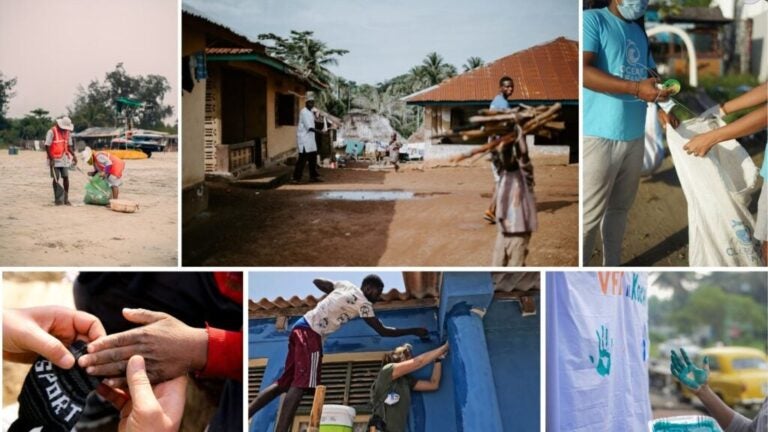
Each volunteer project in Senegal is born out of a specific need and supports communities facing structural challenges in areas such as healthcare, education, access to water, or basic rights. Therefore, more than choosing based on affinity, it’s important to understand the impact your role can have in each type of initiative. In general, these are the most common projects you can join:
1- Primary education and school reinforcement
One of the most widespread fields in volunteering is primary education and school reinforcement. In Senegal’s public schools, especially in rural areas and peripheral neighbourhoods, the lack of trained teachers, limited resources, and high student-to-teacher ratios mean that thousands of children fall behind.
Your mission as a volunteer won’t be to replace a teacher, but to provide support by explaining basic content, organising educational games, teaching French or English, or simply attending to those who need it most. Often, just being there, listening, and encouraging already makes a difference.
2- Working with children in vulnerable situations
Another key focus is working with children in vulnerable situations. In community centres, orphanages, or informal care structures, volunteers assist in the day-to-day lives of children who, in many cases, live without the constant presence of responsible adults.
What will your tasks be in this case? They’ll be varied, from preparing breakfast to organising recreational activities or supporting routines. This is a space where everyday affection holds immense value, and where consistency and patience are as important as any technical skill.
3- Community health projects
In recent years, interest in community health projects has grown significantly. In many villages in Senegal, access to basic information about hygiene, disease prevention, or sexual and reproductive health is very limited. Therefore, volunteers help with awareness campaigns, give talks at schools, or conduct house-to-house visits, especially working with women and teenagers.
You don’t need medical training to participate, unless the organisation specifically requires it, but what’s important is the ability to communicate, adapt to the environment, and work as part of a team with local actors.
4- Women’s empowerment
Women’s empowerment is also a key area. Many women in Senegal have not had access to formal education, lack economic independence, and face cultural barriers to developing freely. Programs focused on women often include literacy workshops, vocational training, basic financial education, or emotional support.
The approach is not to intervene from the outside but to empower skills that already exist, in spaces where sharing experiences and speaking without judgment can be profoundly transformative.
5- Environmental and sustainable agriculture projects
Finally, although less prevalent, there are also projects related to the environment and sustainable agriculture. In areas like Casamance or Kolda, volunteers work with rural communities on agroecological gardens, reforestation efforts, or water conservation. These programs are ideal for those who enjoy working outdoors, aren’t afraid to get their hands dirty, and want to understand how climate change directly affects the daily lives of Senegalese families.
How much does it cost to volunteer in Senegal?
At first glance, it may seem contradictory: why should you pay to volunteer? In reality, rather than an expense, it’s an investment in an organised, safe experience that allows you to live as part of a community, with everything sorted out from day one. In Senegal, where many projects take place in areas with limited resources, the programs are designed to ensure that volunteers are well taken care of and that their contribution is sustainable. And that comes at a cost, which is important to understand from the beginning.
What costs will I need to cover?
Most NGOs operating in Senegal charge a weekly or monthly fee. This money doesn’t go towards salaries or commercial purposes but covers accommodation, meals, local transport, coordination, and support during your stay. Some programs also include a small insurance fee, initial orientation, language lessons, or even cultural activities.
The price varies depending on the duration and type of program. For example: A two-week stay can cost €480–650 ($523–709); a one-month volunteer placement is usually €830–1,000 ($905–1,090) If you stay longer, costs tend to decrease proportionally: The second month could cost 30% less than the first.
You also need to consider the flight. Round-trip flights to Dakar from Latin America or Spain usually cost €740–1,045 ($807–1,139) depending on season and stopovers.
As for paperwork, if you’re staying less than 90 days, you likely won’t need a visa (depending on your nationality), but you’ll need to present the international yellow fever vaccination certificate, which is mandatory to enter the country. This vaccine is given only once in a lifetime and is often free or costs a nominal amount in many countries.
Finally, it’s mandatory to have international health insurance that covers accidents, illness, hospitalisation, and repatriation. Prices vary depending on coverage, but good options start from €35 ($38) per month.
What other costs might I have during my volunteering in Senegal?
Once in Senegal, there are other possible expenses that will depend on your habits, lifestyle, and where you’re assigned. If you stay in cities like Dakar or Saint-Louis, you may want to go on excursions or eat out, which would add a small extra cost.
A reasonable monthly budget for local transport, occasional outings, mobile data top-ups or personal purchases is around €80–130 ($87–142). If you travel to more rural areas, you’ll need even less, as many things are included, and the possibilities for spending are minimal.
What you’ll save by volunteering in Senegal
One of the great advantages of travelling as a volunteer is that you’re freed from most of the usual tourism expenses. You won’t need to book hotels, pay for restaurants every day, or buy expensive excursions.
Most programmes include accommodation and three meals a day, which means a saving of €260–390 ($283–425) per month. Also, by being integrated into a community, you’ll have access to cultural experiences that would otherwise be difficult or expensive: from participating in local rituals to learning how to cook traditional dishes or attending local celebrations.
You’ll also save on costs like daily transport to work (because you’ll live very close) or the need to hire tour guides. Your local coordinator becomes your reference for everything, from how to greet people to how to move around safely.
Frequently asked questions about preparing for volunteering in Senegal
Yes. Senegal is one of the most stable countries in West Africa, with a long tradition of democracy and peaceful coexistence. However, as with any destination, it’s important to be cautious with valuables, avoid travelling alone at night, and always follow your NGO’s guidance. In general, volunteers feel very welcomed, especially in rural and community areas.
Yes, although having a basic level will make the experience much easier. French is the official language, but in many areas, people speak Wolof or other local languages. While you can communicate with coordinators in English in some programs, knowing basic French (or at least learning a few phrases before the trip) will help you integrate better and form genuine connections.
It’s a big change, but not impossible. Senegalese culture is very hospitable, but also conservative in some aspects. Daily life is slower, more communal, and very marked by rituals. You’ll have to get used to new routines, respect different social norms (like the dress code in Muslim areas), and be very open to constant learning. The more you listen and observe, the better your integration will be.
Yes. Some NGOs accept groups of friends, couples, or even family volunteer programs. There are also specific programs for university students or volunteer trips organised by schools and foundations. In these cases, it’s best to coordinate in advance to ensure accommodation, tasks, and support are well-organised from the start.
Avoid any paternalistic or assistential attitudes. It’s not about “saving” anyone, but about collaborating from listening and respect. It’s also not okay to take photos of people without permission, give out meaningless gifts (like money or technology), or assume you understand a complex reality by being there for just a few weeks. The best volunteer isn’t the one who does the most, but the one who adapts best, connects, and learns.