



 Language


 No results found
Volunteering in the Philippines: Get ready to go
Would you like to volunteer in the Philippines but don't know which programme to apply for? Here are the projects you can choose from.

Doing volunteering in the Philippines is a task that requires a lot of preparation. From getting informed about the country’s issues to identifying the area where you’ll really make an impact. You also need to consider the requirements set by both the country and the program you’re applying to.
Here, we’ve created a guide where we will show you the best programs to volunteer in the Philippines, the projects you can join based on your skills, interests, and even the costs you should keep in mind.
Benefits of Volunteering in the Philippines
The Philippines is a country facing multiple issues, especially in terms of education and healthcare. The lack of state funding and skilled labour makes volunteering an alternative to help address some of these problems.
But the benefit isn’t just for the community you aim to impact. Volunteering in the Philippines also offers advantages that go beyond your travel expectations.
- Learning in medical assistance: Accompanying doctors and hospitals will give you experience in various health fields, such as applying bandages, understanding medication, taking temperatures, and treating minor injuries.
- Learning in health campaigns: You’ll not only assist in medical care but also learn about sanitation practices and best practices for schools and communities.
- Gain more tools in ecology: the Philippines has several beaches where you can learn about waste management and other environmental issues.
- Learning about adolescent rehabilitation: Many young people in the Philippines have been apprehended for minor crimes related to theft, leading to projects offering new alternatives to rehabilitate and restore youth rights.
Requirements for Volunteering in the Philippines
To volunteer in the Philippines, you need to consider a series of requirements. It’s crucial to review each program, as they may have specific conditions depending on the type of volunteering offered.
The Philippines does not require a visa for tourists staying up to 30 days or for those volunteering within that period. However, here are situations where you might need a visa and other general requirements:
- Visa: If the volunteering programme you chose lasts more than 4 weeks — that is, 6 months or more — you must apply for a Non-Immigrant Visa to remain in the Philippines.
- Passport: The passport must be valid for at least 6 months and have space for entry and exit stamps.
- English: A basic to intermediate knowledge of English is ideal for communication. It’ll also enhance your experience to learn some local words from the community you’re helping.
- Documents: Depending on the program, you may need to provide a CV, academic certificates, or a motivation letter.
- Travel Insurance: Most programs require you to have travel insurance that covers medical expenses, lost luggage, flights, or even interruptions to your volunteering work.
- Criminal Background: Many projects focus on helping children, so volunteers must provide proof of no criminal record to the organizations.
- Age: The minimum age for volunteering in the Philippines is 17 years with parental consent.
- Financial Capacity: It’s important to have the financial means to cover your expenses as a volunteer and as a tourist. Remember, you’re not just supporting a cause, you’re also exploring the country, which can incur some costs.
- Return Flight: You must have a return flight to your home country or a departure flight from the Philippines, regardless of the destination. Philippine authorities can deny entry if you don’t have a departure flight, which assures them of your planned stay duration.
- Vaccines: You may need to show proof of the COVID-19 and Yellow Fever vaccinations.
Connectivity is a key requirement, as it allows you to research your work, learn more about Filipino culture, or stay in touch with your family and friends back home.
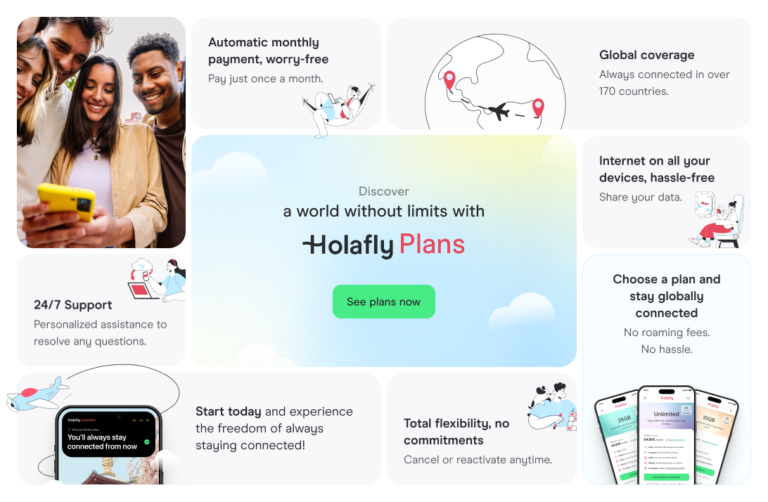
Holafly monthly plans offer the possibility of purchasing the data you need for as long as you want. From 25 GB or unlimited data that allows you to connect multiple devices simultaneously. Its coverage extends to more than 170 countries worldwide, and you can cancel it at any time.
You can also access the eSim for the Philippines, which offers unlimited data if you’ll be staying only a few days in the country. Simply activate the plans before arriving in the Philippines to enjoy them from the moment you arrive.
Important: If you are a frequent traveler and want to stay connected without worrying about expensive roaming or looking for a new SIM at every destination, Holafly’s subscription plans are for you. With a single eSIM, enjoy internet in more than 170 countries for a fixed price and no surprises on your bill. Travel without limits and connect easily and securely! 🚀🌍
Best Volunteer Programs for the Philippines
If you’re passionate about teaching children, nature, or supporting communities in areas like construction, the Philippines offers a great opportunity to develop your skills. Most programs focus on improving the educational life of children, as well as their environments.
Below, we’ll show you the most important programs you can apply to as a volunteer in the Philippines:
International Volunteer HQ
This program offers volunteering opportunities to support Palawan Island, which has faced educational accessibility issues due to a lack of resources. Support in this area is incredibly valuable for the local community. You’ll have the chance to teach English, mathematics, arts, or even reading and writing.
Additionally, you can contribute to the construction or maintenance of schools, hospitals, and community centres. Another project impacting the lives of Palawan residents is beach conservation, where you can help reforest mangroves or clean up their surroundings.
Specific requirements to apply:
- Age: +16 with parental presence or consent, no maximum age.
- Criminal Background: Those over 18 must provide criminal records, while those under 16 need two character references.
- Travel Insurance: The program provides insurance with appropriate coverage for each program.
- English: Minimum intermediate level.
Each project varies in duration depending on the community’s needs, but with IVHQ, you can support Palawan for 1 to 24 weeks with a daily commitment of 4 to 5 hours. Cost of the program: From $390 (€359) per week.
The volunteering program includes:
- Airport pick-up.
- Accommodation.
- Three meals during weekdays and two on weekends.
- 24/7 program support.
- Induction.
Volunteering Solutions
Understanding the needs of Tacloban, a coastal city in the Philippines, Volunteering Solutions created programs aimed at helping children and the population with learning and health campaigns.
For this program, you should have basic knowledge of medicine as you’ll assist medical staff with campaigns throughout the city. However, you won’t be alone, as nurses will guide you every step of the way.
Additionally, you can direct your volunteering towards child education, nutrition, and caring for Filipino children who cannot be looked after by their parents, whether due to abandonment or lack of time.
Specific requirements to apply:
- Age: +18 years old.
- Criminal Background: Must be free of any crimes or legal infractions.
- Clothing: You’ll need to wear medical clothing provided by the program.
- Passport: A copy of your passport will be required.
- CV: The program will want to know more about you, so make sure your CV is prepared in the ideal format.
- Academic Certificates: For medical assistance programs, you may need to show proof of your studies to better utilise your skills.
The program offers, for an additional cost, travel insurance, covering everything you need within the country and during your volunteer work. Minimum duration: 2 weeks, starting from $890 (€819)
What’s included:
- Accommodation with a local family.
- 2 meals per day.
- Pre-departure induction.
- 24/7 support.
- Airport pick-up and drop-off.
- Volunteer certificate upon request.
KAYA Volunteer
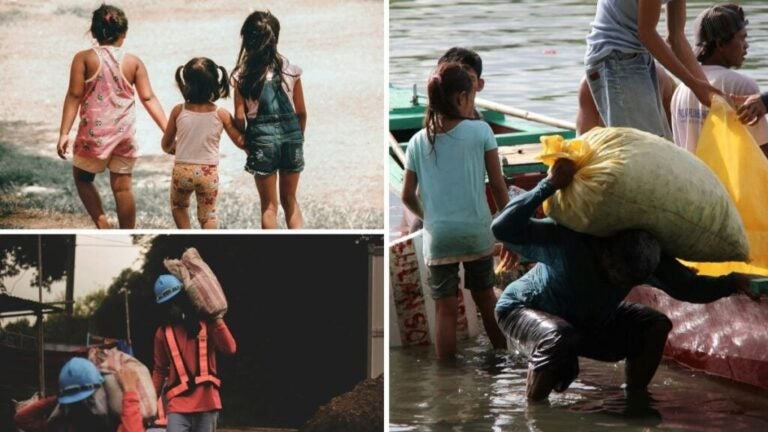
This program offers a wide range of volunteer opportunities in the Philippines, from caring for children, helping vulnerable populations, reconstructing areas devastated by natural disasters, to contributing to the rehabilitation of children and adolescents rescued from crime.
Additionally, the program includes volunteering projects aimed at raising awareness and highlighting the economic challenges faced by rural and remote areas through social communication and photography.
Requirements to apply:
- Age: +18
- Medical Insurance: Not mandatory, but highly recommended.
- Language: Basic English.
- Academic Certificates: Some programs require volunteers with specific skills.
- Good Physical and Mental Health: Health or conservation campaigns are often long and demanding.
Project durations range from 2 weeks to 1 year, with fees starting at $1,081 (€994) for the first 2 weeks.
What’s included in the program:
- Accommodation.
- 2 to 3 meals per day.
- Support during the volunteering period.
- Activities during free time.
- Induction.
Types of Volunteer Projects in the Philippines
There are at least 5 types of projects you can apply to as a volunteer in the Philippines, but also to discover the country. Here we highlight the 3 most relevant projects that have the greatest impact on Filipino communities:
Education Projects
In several rural and remote areas of the Philippines, there is little access to education due to a lack of infrastructure and a shortage of teachers. This has made volunteering in education a valuable social initiative, as it generates no costs and provides high-impact results.
The most affected populations in terms of education are children and adolescents who lack the necessary tools to develop their knowledge. These projects don’t require specific experience in education, just availability of time.
The few teachers in these areas will assist you in the process, providing guides, schedules, and times so you can prepare your lessons in the best way. The subjects that are most focused on are mathematics, English, reading, and writing.
Education projects also include the support and rehabilitation of children and adolescents involved in crime due to lack of opportunities.
The most challenging areas are coastal regions like Palawan or islands like Leyte, which have been hit by natural disasters, leaving schools, hospitals, and homes in ruins.
For many of the islands and rural areas in the Philippines, access to healthcare is limited.
Therefore, health and well-being campaigns are a relief for treating some health issues and complications within the population.
These projects generally require skilled workers or those with health knowledge to assist doctors and hospitals. Be ready to work in the rural areas, helping with vaccination and deworming campaigns.
Your role will be divided between basic medical assistance and health education, as several populations lack the information necessary to manage waste and adopt better sanitation practices.
Another key task is to train families in good nutritional habits, the importance of certain foods, and even how to prepare them.
Construction and Maintenance Projects
Schools, homes, nurseries, and hospitals often lack the budget for maintenance. Additionally, natural disasters have destroyed many of these structures, leaving nothing to repurpose.
This is why volunteers are a cost-effective and energetic alternative to recover the most important community spaces.
Some places have moderate infrastructure damage, so they only need painting or repairs with wood, tasks you will work on in these types of projects. You’ll also be able to help maintain places like nurseries and schools.
For teachers and child carers, it’s impossible to maintain bathrooms and classrooms, so volunteers can help with these essential aspects of the school environment.
How Much Does Volunteering in the Philippines Cost?
To volunteer in the Philippines, you need to consider certain expenses from the start to the end. For instance, you should account for visa fees, travel insurance, flight tickets, and even some meals.
Accommodation is an expense you’ll save on, but sometimes, even though many programs provide it, meals may be incomplete. That means you might need a budget for one of your daily meals. Let’s break it down to help you plan your budget:
| Expenses | Average cost |
| Round-trip flights | $650–1,200 (€598–1,104) depending on the country of origin |
| Visa | $30–90 (€28–83) depending on the length and purpose of the visa |
| 1 meal per day | $20–30 (€18–28) per week |
| Medical insurance | $30–120 (€28–110) per month. |
| Other expenses (leisure, tourism, entertainment) | $30–50 (€28–46) per week, depending on the activities. |
Frequently Asked Questions About Volunteering in the Philippines
It’s not a specific requirement to volunteer, but some programs may require it, such as medical or animal rescue projects where knowledge is essential.
The Philippines has several languages, but its official languages are Filipino and English.
No, you don’t need a visa to volunteer for two weeks. A visa is only necessary if a project requires more than 30 days. In that case, you must apply for a Non-Immigrant visa.
Travel insurance guarantees several aspects of your trip, including health and safety. It can cover personal belongings, medical expenses, and unforeseen events like lost luggage.
The Philippines has various volunteer projects where you can contribute your work and knowledge. Some of them are in child education, restoring schools and hospitals, health brigades, and even ecology by cleaning beaches.