Language


 No results found
Volunteering in Peru: Get ready to go
Volunteering in Peru will allow you to connect with its people, enjoy a unique travel experience and discover picture-perfect landscapes.

Can you imagine collaborating on a social project at the foot of the Andes or accompanying a rural community near the Amazon while learning about their culture and sharing your time? Volunteering in Peru is the best way to experience this, but it goes beyond that: it’s an invitation to live a deep, human, and transformative experience.
This South American country has one of the richest and most diverse cultures on the continent, as well as natural wonders not found in many parts of the world. At the same time, it faces significant social, environmental, and educational challenges, making it one of the most sought-after destinations for those wishing to put their skills to the service of others while discovering unique landscapes like Machu Picchu, Lake Titicaca, or the Amazon rainforest.
Are you motivated by the idea of volunteering in Peru? If so, stay with us, because we have a very comprehensive guide with key information to prepare you: the requirements you need to meet before applying, the best programs to make your dream possible, the types of projects you can choose based on your profile, and the costs of living this experience.
If you want to travel with purpose, do something meaningful, and grow as a person while discovering one of the most fascinating cultures in Latin America, you’re in luck: Peru is waiting for you.
Why should I volunteer in Peru?
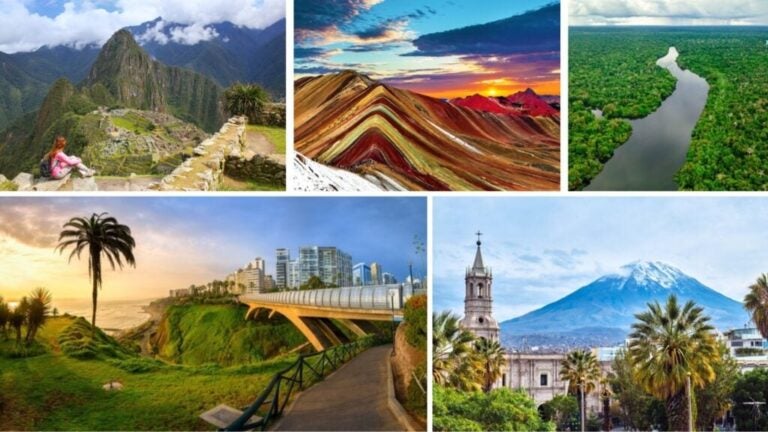
If you’ve already traveled to Peru as a tourist, you know it’s a wonderful country. Not only does its iconic Machu Picchu make it a special destination, but the presence of the Andes, the beaches along the Pacific, the jungle, its historic cities, and, above all, its people, make Peru a country you won’t forget.
Can you imagine the added value of traveling to Peru to help? Engaging with its rural and indigenous communities and witnessing the challenges they face puts you in front of a reality possibly very distant from your own. And that opens the mind, the heart, and plants the seed of gratitude. That’s why you’ll be the one who benefits from this volunteering experience. Volunteering in Peru means making a concrete difference while immersing yourself in its culture and transforming from within.
To help you see it clearly, here are the most valuable benefits of this experience:
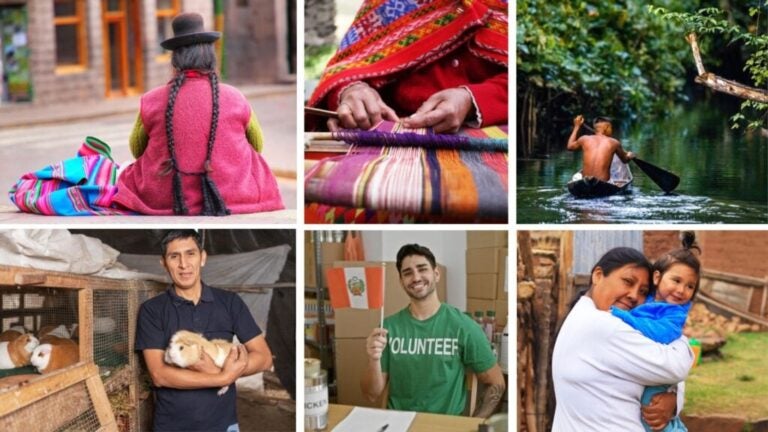
- You connect with a living ancestral culture: Peru is a country with deep roots. Through volunteering, you’ll interact with indigenous communities, traditions that remain alive, and ways of life that combine history and modernity. It’s not the same to visit Cusco as a tourist as it’s to share day-to-day life with those who’ve lived there for generations.
- Your help has a real impact: In many rural areas, Amazonian communities, or suburbs of Lima, resources are scarce, and the presence of volunteers makes a concrete difference. Whether teaching, collaborating in health projects, or helping to build houses, your time becomes a tool for transformation.
- You learn by doing: Beyond academics, in Peru, you’ll learn through practice. Helping a child with their education, assisting in a conservation centre, working in a community garden, or running a workshop for female entrepreneurs are experiences that teach empathy, resilience, and creativity.
- You build deep connections with the community: The warmth of the Peruvian people means you won’t just be an “external volunteer” but part of the group. They welcome you, integrate you, and make you feel part of something bigger. Many volunteers report returning with friends, affection, and a second family.
- You add value to your personal and professional profile: Including an international volunteering experience on your CV demonstrates social commitment, adaptability to diverse contexts, and teamwork skills. Also, if you work in areas like education, health, sustainable tourism, or social work, you’ll gain valuable skills that enrich you professionally.
- You travel with purpose, spending less: Many programs in Peru include accommodation and meals, allowing you to stay for weeks or months without spending as much as a tourist. At the same time, you’ll live a much deeper experience than any guided tour.
What are the requirements to volunteer in Peru?
Although volunteering in Peru is an enriching and accessible experience, there are certain basic requirements that need to be met before you travel. Because, for this type of travel, more than just the will and willingness to help are required. You’ll need a visa, a valid passport, up-to-date vaccination records, health insurance, and more. In short, being well-prepared from the beginning won’t just avoid surprises, it will allow you to enjoy the experience with peace of mind and focus.
1. Visa for volunteering in Peru
If you’re staying for less than 90 days and your country has an agreement with Peru (such as Argentina, Chile, Colombia, Mexico, or Spain), you can enter as a tourist without a prior visa. Many volunteering programs operate under this arrangement.
However, if your stay exceeds 90 days or if the organisation requires it, you’ll need to apply for a specific visa such as:
- Designated Resident Visa (volunteering): recommended for longer stays.
- Humanitarian or Temporary Visa: for projects with accredited NGOs.
If you have any doubts, it’s best to consult with the organisation hosting you. They’ll guide you on which visa applies to your case.
2. Minimum age and education
Most programs accept volunteers from 18 years old, although some may accept volunteers from 16 years old with written permission or if they travel in a group. As for the maximum age, there’s no clear limit, but it’s valued that the person is in good physical and mental condition to give their best.
Another question you might have is whether you need a university degree to volunteer in Peru. Well, no, it’s not an essential requirement, but it’s important to demonstrate commitment, flexibility, and respect for the local culture. Only for health or education programs is prior experience or specific training required.
3. Language:
The official language is Spanish, so you don’t need to learn another language (unless you come from a country where a different language is spoken). However, it’s useful to familiarise yourself with basic Quechua or Aymara words if you’ll be working with indigenous communities. In tourist centres or international projects, English can help you communicate with other volunteers.
4. Vaccinations and Health
There are no mandatory vaccines to enter Peru, but hepatitis A and B, typhoid, tetanus, diphtheria, and yellow fever (the latter if you’ll be travelling to jungle areas such as Iquitos or Puerto Maldonado) are recommended. It’s also important to bring mosquito repellent, especially in tropical areas.
5. Medical and travel insurance
It’s mandatory to have international health insurance that covers emergencies, hospitalisation, and repatriation. Not only will it allow you to access medical care if you have any health issues, but many NGOs require it as a condition for participation. It’s also advisable to include coverage for theft or lost luggage, as some areas are difficult to access.
6. Documentation to be submitted
Before you begin, the host organisation may ask for a range of documents:
- Copy of valid passport.
- Criminal background check certificate (apostilled if required).
- Cover letter.
- Registration form.
- Medical certificate (in some cases).
- Proof of insurance and flights.
7. Guaranteed connection from day one with Holafly
Cities like Lima, Cusco, or Arequipa offer good internet signal, but if your volunteering is in rural areas, jungles, or Andean communities, WiFi can be scarce or unstable. That’s why Holafly’s monthly plans guarantee a constant connection to communicate, translate, use maps, and keep in touch with your organisation.
You can choose between a 25 GB plan or unlimited data at a very competitive price. With either option, you’ll enjoy a global eSIM (which works in over 170 countries) and the freedom and security that, in any situation requiring internet, your data will be available.
Important: If you are a frequent traveler and want to stay connected without worrying about expensive roaming or looking for a new SIM at every destination, Holafly’s subscription plans are for you. With a single eSIM, enjoy internet in more than 170 countries for a fixed price and no surprises on your bill. Travel without limits and connect easily and securely! 🚀🌍

On the other hand, for short-term volunteer stays, the eSIM for Peru from Holafly is another option, with unlimited data only for the days you need.
What are the best volunteering programs in Peru?
Peru is one of the Latin American countries with the widest variety of volunteering programs. From local NGOs to international organisations, there are options designed for both experienced and new volunteers, with opportunities in urban, rural, jungle, or Andean areas.
Below, we share a selection of the most prominent programs for a truly impactful experience, with support and safety.
1. Máximo Nivel – Volunteering in Cusco, Lima, and the Amazon
Máximo Nivel is one of the most recognised organisations in Latin America in education and volunteering. It offers projects in Cusco, both inside and outside the city centre, in the Sacred Valley (mountains), the Amazon (tropical jungle), and Quillabamba (tropical jungle). Volunteers will have the opportunity to serve in both urban and rural communities.
| Feature | Detail |
|---|---|
| Requirements | – At least 16 years old; although some projects require a minimum age of 18; criminal background check for volunteers working with children. |
| Duration | Minimum one week (recommended: two to eight weeks). |
| Includes | Airport pick-up, host family accommodation, two daily meals (breakfast and dinner), official volunteer service certificate. |
| Price | $995 for two weeks (€915); $1,395 for one month (€1,283). |
| Popular programs | – English teaching – Support in orphanages – Dog shelter in Cusco – Alpaca farm in Huayllarcocha – Eco-agriculture in the Sacred Valley – Environmental volunteering in the Amazon rainforest |
Máximo Nivel Volunteering in Peru
2. EcoSwell – Environmental Volunteering in Northern Peru
EcoSwell is an environmental NGO based in Lobitos (Piura). They work on the sustainable development of coastal communities, combining environmental education, regenerative agriculture, and renewable energy. Their projects aim to promote the United Nations’ Sustainable Development Goals (SDGs) in vulnerable communities, with the goal of improving people’s quality of life and restoring degraded natural ecosystems.
| Feature | Detail |
|---|---|
| Requirements | From 18 years old, basic level of English or Spanish, motivation for sustainability. |
| Duration | From two to 12 weeks. |
| Includes | Accommodation, training, mentoring, and project materials. |
| Price | From $600 for two weeks (€552) |
| Popular programs | – Regenerative agriculture – Water management and solar energy – Environmental education in local schools. |
EcoSwell Volunteering in Peru
3. Otra Cosa Network – Volunteering in Northern Peruvian Communities
This Peruvian NGO works in coastal communities near Trujillo. They offer highly personalised programs, ideal for those looking for a deep cultural immersion and direct work with local communities.
Otra Cosa Network runs four projects as part of the Huanchaco Education and Learning Program (HELP), which provides educational resources and improves opportunities for low-income communities in Huanchaco and its surroundings.
| Feature | Detail |
|---|---|
| Requirements | Over 18 years old, intermediate Spanish, minimum four-week commitment. |
| Duration | From four to 24 weeks. |
| Includes | Local coordination, optional accommodation, materials, and continuous follow-up. |
| Price | From $550 for four weeks (€506) |
| Popular programs | – School support and workshops for children – Training for entrepreneurial mothers – Management of community libraries |
Otra Cosa Network Volunteering in Peru
What are the types of volunteering projects in Peru?
Peru is a country full of contrasts: mountain ranges and jungles, desert coasts and modern metropolises, millennia-old traditions, and current challenges. That’s why the volunteering opportunities are as diverse as its geography. From school support to Amazon rainforest conservation, there’s always a cause that needs you.
Below, I’ll show you the most common types of projects and what to expect from each one.
1- Education and School Support
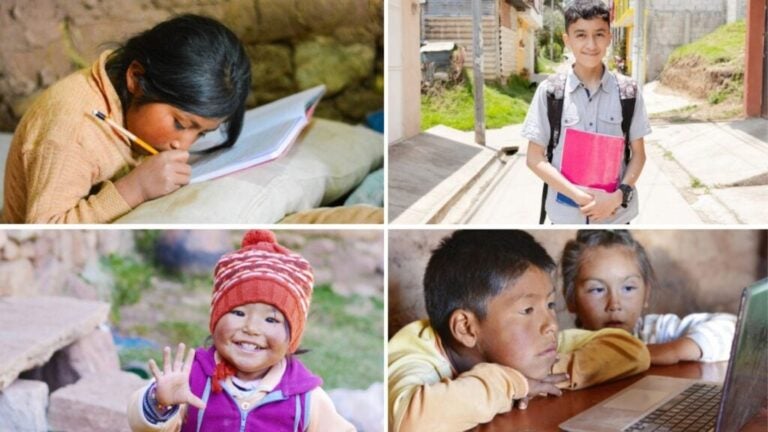
This is one of the most demanded fields, especially in rural areas or vulnerable neighbourhoods in Lima, Cusco, or Trujillo, where many children don’t have access to quality education. As a volunteer, you’ll help reduce the educational gap by supporting teachers and children. How? By reinforcing content, stimulating creative learning, and being a positive role model.
Your tasks will vary: reinforcing reading, maths, or English, doing fun and artistic activities, preparing teaching materials, offering emotional support, and more.
The outskirts of Lima, the Sacred Valley of the Incas, and the rural area of Piura are common places for these types of projects.
2- Community Health
In many areas of Peru, especially rural or Amazonian regions, access to healthcare is limited. That’s why community health projects also attract volunteers from all over the world willing to work in community health centres or mobile programmes and collaborate with professionals on health prevention and promotion. You don’t need to be a doctor, but you will need sensitivity and adaptability.
Common tasks you’ll have to do include participating in vaccination campaigns, giving workshops on hygiene and nutrition, providing support to patients, and maintaining basic medical records.
3- Environment and Conservation
Peru’s biodiversity is immense and needs protection. This type of volunteering is ideal for those wishing to collaborate in this area. From the northern coast to the Amazon, there are multiple NGOs working on sustainability. Your tasks may include planting native trees, cleaning beaches or riverbanks, teaching environmental education in schools, or supporting nature reserves or ecotourism projects.
The areas of the country where these projects commonly take place are Lobitos (Piura), Madre de Dios (Amazon), and rural areas of Arequipa.
4- Community Development and Empowerment
In Cajamarca, Huancavelica, and communities near Cusco and Puno, you can get involved in projects aimed at improving local quality of life through organisation, access to resources, and economic independence.
Your tasks will vary widely. For example, you might support and advise local businesses, run workshops for entrepreneurial mothers, or assist in community gardens or the construction of basic infrastructure.
5- Volunteering with Animals
In the Amazon or northern coast, there are wildlife rescue centres and shelters for abandoned domestic animals. In both cases, your help directly contributes to the wellbeing of animals by assisting with tasks like daily feeding and care, cleaning their spaces, providing basic veterinary care, or conducting awareness campaigns in schools on responsible pet ownership.
Iquitos, Tarapoto, Trujillo, and surrounding areas are places where these projects usually take place.
How much does it cost to volunteer in Peru?
One of the great benefits of volunteering in Peru is that you’ll be able to travel for much less money than if you were a tourist, without missing out on a rich, deep, and transformative experience. In addition, it’s not an especially expensive destination, which makes it even more accessible for travellers on a tight budget. Of course, you’ll have some expenses, such as those shown in the table below, but with good planning, you can cover them without major problems.
| Type of Expense | Estimated cost (USD/EUR) | Is it included in the programs? |
|---|---|---|
| Round-trip flight ticket | $500 – $1,000 (€460 – 920), although this depends greatly on your country of origin. | No, always paid by the volunteer. |
| Accommodation | $0 – 300 per month (€0 – 230) | Usually covered by most programmes. |
| Meals | $0 – 200 per month (€0 – 230) | Partially or fully covered depending on the programme, but you will always have at least two meals a day covered. |
| Programme Fee | $100 – 600 (€828 – 1,196) | Varies depending on duration and NGO. |
| International health insurance | $40 – 80 per month (€0 – 230) | It’s mandatory and necessary. |
| Local transportation | $30 – 70 per month (€0 – 230) | Sometimes included in rural areas or coordinated by NGOs. |
| 🪪Visa (if applicable) | $0 – $100 (€0 – 92) | Only applies in specific cases. |
| Extra documentation and processing fees | $20 – $50 (€18 – 46) | Some NGOs may request this. |
Costs of volunteering in Peru
Volunteering in Peru: Frequently Asked Questions
In most cases, yes. Reputable NGOs provide a participation certificate that you can attach to your CV or present for university studies. If you need a specific one, you can request it at the start of the project.
Yes. Many volunteers take advantage of weekends to visit Machu Picchu, Lake Titicaca, the Amazon, or the Nazca Lines. NGOs usually give them free time to rest or explore. Just make sure not to commit to activities that interfere with your project.
Peru is a country that can be enjoyed all year round, so you can go at any time. However, projects intensify in dry seasons: From April to October in the mountains and jungle, and from December to March on the coast. This is important if you want to avoid heavy rains or difficult access. In any case, check the weather conditions of the place where you will work.
It depends on the type of project. If you’re interested in social volunteering, Lima and Cusco offer many opportunities. For environmental projects, the Peruvian Amazon and northern coast (Piura, Tumbes) are key. There are also unique options in Andean areas like Puno or Cajamarca, ideal for cultural immersion.
It depends on the region, but generally, we recommend taking comfortable and versatile clothing (layers for Andean or tropical climates), trekking boots if you’ll be in rural, mountainous, or jungle areas, repellent (a must), sunscreen, and a basic first aid kit. Also, don’t forget a flashlight, universal adapter, and notebook. In rural areas, small donations (notebooks, pencils, books) are also well received.