







 Language


 No results found
Volunteering in LATAM: Get ready to go
Volunteering in LATAM: Discover projects, requirements, costs, and how to prepare for an authentic and transformative experience.

Volunteering in Latin America isn’t only about helping, as it also offers a deep experience of connection with communities, cultures and realities you don’t usually see. And this makes it truly worthwhile.
First, you must know that volunteering doesn’t start on the day you arrive. It starts earlier, when you ask why you want to do it, what you want to learn and how you can join a project responsibly. Good preparation isn’t only about logistics, as it also involves attitude and respect toward people and the contexts you’ll meet.
This article shares everything that helps you take that first step: the types of volunteer work in Latin America, how to prepare, what to consider to choose well and what to expect once you’re there. If you feel curious or simply want to explore the idea, here’s a clear guide with the essentials.
Why volunteer in Latin America?
Volunteering in Latin America transforms communities you support, and it also transforms you. Here are the most relevant benefits you may enjoy during this experience:
- You’ll discover real culture: Visiting a place isn’t the same as living within it. When you spend time with local communities, you learn from inside through customs, ways of thinking, traditions and daily challenges. It’s an authentic way to know the continent beyond tourism.
- You’ll develop personal and professional skills: You’ll adapt to new situations, work with others and solve issues quickly. Volunteering helps you practise many abilities and, before noticing, you grow in both personal and professional areas.
- You’ll improve your mental and emotional health: Helping others often boosts your wellbeing. Studies show that volunteering may reduce stress, reduce depression and support self-esteem while offering purpose and personal satisfaction.
- You’ll build real human bonds: You share time with local people and other volunteers. This creates strong connections, new friendships and an open mindset.
- You’ll support social change: Your time and energy can create real impact. Whether in education, environmental work or community projects, joining a local initiative leaves a mark, even when it seems small.
Requirements for volunteering in Latin America
Before volunteering in Latin America, you should consider several important points. You don’t need everything from the start, but you must understand that this experience, although enriching, also requires solid preparation. Below, you’ll find the main requirements to review before you begin.

1. Minimum Age
Most volunteer programmes in Latin America require volunteers to be at least 18 years old. However, some programmes accept volunteers from 17 years old when they hold signed consent from parents or legal guardians.
2. Required documentation
You must hold a valid passport. In addition, some organisations may request:
- Curriculum vitae: It helps them understand your background and experience.
- Motivation letter: You explain why you want to join the volunteer programme.
- Criminal record certificate: Organisations request it to ensure community safety.
- Recent photographs: Used for identification.
3. Visa
Your visa requirements depend on the country and the length of your stay. If your programme lasts under 90 days, many countries allow entry as a tourist. But if you plan to stay longer, you’ll likely need a specific visa.
For example, Colombia requires a Type V Visa when you collaborate with an NGO for more than three months. The organisation must issue a letter, and you’ll also need medical insurance and a few additional steps. In Mexico, for long-term volunteering, you can request a Temporary Resident Visa through the National Institute of Migration. And in countries like Peru, NGOs often help you process a special visa when your stay goes beyond 90 days.
Each country follows its own rules, so it’s always best to check directly with the embassy or consulate, as requirements may change according to your nationality and the project you choose. Reviewing everything in advance helps you travel with confidence and proper paperwork.
4. Medical insurance
You must hold international medical insurance. It should cover illnesses, accidents, hospital stays and, in some cases, repatriation. Some organisations include insurance in their programmes, but if they don’t, you’ll need to arrange it on your own.
5. Vaccines
Your required vaccinations depend on the country and region where you’ll volunteer. Some places may require yellow fever, hepatitis A and B or tetanus vaccines, among others. It’s wise to consult an international vaccination centre or your local health authority before travelling.
6. Costs and funding
Volunteering in Latin America isn’t always free, and you should consider this from the start. Some programmes include accommodation, meals and logistical support, but many also request a financial contribution to cover operational costs. Depending on the country and organisation, this fee may range from €14.65 ($17) to €21.55 ($25) per day. You should also add other expenses like flights, medical insurance, internal transport or visas when your stay exceeds 90 days.
7. Skills and training
Many programmes don’t require specific skills, but experience in education, health, construction or languages may help. Having a basic level of the local language makes communication easier and supports your integration within the community.
8. Stay connected during your volunteer work
At the end of your checklist, you should consider how you’ll stay connected. In many rural or remote areas of Latin America, having stable internet may help a lot. Holafly’s monthly plans offer a simple, practical option. They work with eSIM, offer unlimited data, allow hotspot sharing and activate easily by scanning a QR code when you arrive.
These plans also let you move across countries without roaming issues or buying new SIM cards. If you’ll collaborate across regions or need to stay reachable for coordination, holding a reliable connection offers peace of mind and flexibility. And the best part: you keep your WhatsApp number and support runs 24/7, which helps when you face issues on the road.
Important: If you are a frequent traveler and want to stay connected without worrying about expensive roaming or looking for a new SIM at every destination, Holafly’s subscription plans are for you. With a single eSIM, enjoy internet in more than 170 countries for a fixed price and no surprises on your bill. Travel without limits and connect easily and securely! 🚀🌍

Best volunteer programmes in Latin America
Below, you’ll find six programmes offering different ways to participate: from NGO-led options to independent and budget-friendly alternatives. Here’s all the key information in a clear format, so you can compare easily.
1. International Volunteer HQ (IVHQ)
It’s one of the most recognised volunteer organisations worldwide, and in Latin America it offers programmes in countries like Peru, Ecuador, Mexico and Brazil. Their projects cover education, environmental conservation, public health and community development, so you may choose one that matches your interests or skills. To join, you must be at least 17 years old, complete a simple online form and pay an enrolment fee of $299 (€257).
Programme duration is flexible. You may join from one week to six months, depending on your availability. IVHQ arranges accommodation, meals, airport pick-up, an initial orientation and 24/7 local support throughout your stay. Prices start at $285 (€245) per week, plus the enrolment fee.
2. Volunteering Solutions
They offer volunteer programmes in Peru, Ecuador and Costa Rica, focused on teaching, health, childcare and environmental conservation. It’s ideal when you want a structured project with direct impact on local communities.
You must be at least 17 years old and provide a criminal record certificate. Programmes last between 1 and 24 weeks and include accommodation, meals and airport pick-up. Prices start at $495 (€425) per week.
3. Projects Abroad
Projects Abroad works well when you want a specialised programme with professional support. They offer unique projects in Latin America, such as archaeology in Peru, environmental protection in Ecuador or social support in Argentina, using a more technical and structured approach. Requirements vary, but they often ask for a school diploma, an interview and a medical check before you start.
Programmes may last from one week to several months, and they’re quite complete. They include accommodation, meals, insurance and constant local assistance. It’s a more expensive option. Prices start at around $1,300 (€1,118) per week, depending on the project type.
4. Volunteer Latin America
This option works well when you want to volunteer in Latin America without spending much. The platform connects you with local organisations in Central and South America that offer low-cost or free opportunities. Projects cover many areas, from conservation and education to community development. Each organisation sets its own requirements, so conditions may vary.
Programme duration is flexible and depends on your agreement with the organisation. Many projects include accommodation and meals, which helps a lot when working with a tight budget. You only pay an access fee to the platform, and then you can apply directly to the programmes.
5. Workaway and WWOOF
Workaway and WWOOF work perfectly when you want a flexible and accessible cultural exchange experience. WWOOF focuses on organic farms, while Workaway offers community, ecological, hostel, school and family projects. You only need to pay an annual membership (about $25. €21) and coordinate directly with hosts. Each host sets specific conditions, so reading descriptions carefully helps a lot.
Duration is highly flexible: You may stay from one week to several months, depending on your agreement. In exchange for 4 to 6 hours of work per day, hosts usually offer accommodation and meals, which keeps this option very affordable.
6. United Planet
This programme works well when you want a deeper, long-term volunteering experience. They offer opportunities in countries like Bolivia, Brazil, Colombia, Ecuador and Mexico, focused on education, health, environmental sustainability and women’s empowerment. Requirements vary, but they often request training related to your field, which suits volunteers seeking strong commitment and deeper learning.
The minimum duration is six months, and you may stay up to one year, which helps you build real community bonds. Programmes include accommodation, orientation, local support and, in some cases, partial scholarships to reduce costs. Some plans even offer discounts of up to 20% when you apply early.
Types of volunteer projects in Latin America
Latin America offers many types of volunteer projects that match your interests and skills. Below, you’ll find a clear description, so you can picture each experience better.
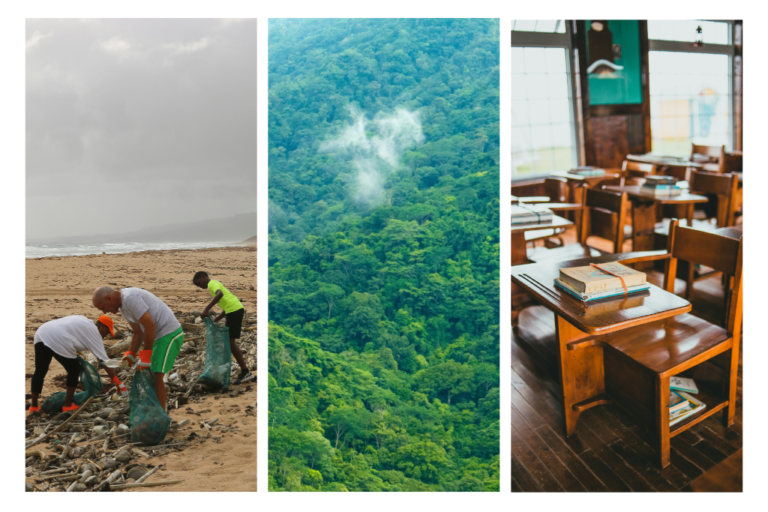
- School support: Many programmes help rural schools or vulnerable communities, especially in countries like Peru and Guatemala. You may teach English, organise activities, support homework or lead simple reading or science workshops. It’s a direct way to support the educational process of children with limited resources.
- Environmental conservation: Biodiversity-rich countries like Costa Rica and Brazil offer projects that focus on conservation. Tasks range from protecting sea turtles on the Pacific coast to reforesting tropical forests or monitoring wildlife. You may plant trees, protect nests or record data in protected areas.
- Animal care: Some shelters rescue dogs and cats in cities, while others protect wildlife in sanctuaries. You may care for rescued animals, support sterilisation campaigns or help with feeding and daily cleaning.
- Health and community support: Rural regions in Colombia or Bolivia organise health brigades where volunteers support medical fairs, vaccination campaigns or workshops about hygiene and nutrition. You don’t always need medical training. Sometimes, you help with logistics, registration or translation.
- Community development: Many programmes in Mexico and Central America strengthen women’s empowerment through leadership workshops, literacy or productive training. You may support self-help groups or lead practical skills classes linked to small enterprises.
- Communication and project visibility: Many local NGOs need help with digital communication, social media, awareness campaigns or content creation. You can write, design posts, capture images or support visibility strategies.
- Infrastructure improvement: Organisations like TECHO gather volunteers to build emergency housing and later develop social inclusion programmes. These programmes offer technical training or help organise local cooperatives.
- Workcamp-style volunteering: Workcamps gather volunteers from several countries for 1 to 3 weeks. You work on community tasks, monument cleaning, restoration or cultural activities. These projects offer intense teamwork and coexistence, without requiring previous experience.
How much does it cost to volunteer in Latin America?
Volunteering in Latin America involves several costs you should know from the start. However, it also helps you reduce many expenses you’d usually face when travelling alone. To help you understand it clearly, here’s how these costs usually break down:
- Programme fee: When you join an organised programme like Projects Abroad or GVI, costs usually range between $1,940 and $2,750 (€1670-2,365) for two weeks. This includes accommodation, meals, local transport and insurance. More accessible options exist, such as IVHQ, offering programmes from USD $285 per week plus an enrolment fee of $299 (€257).
- International flights: Prices vary depending on origin, but they usually range between $480 (€412) and $540 (€464) for a one-way flight from the US to cities like Lima or San José.
- Visas and permits: For stays over three months, visa costs may range between USD $30 and USD $150, depending on the country.
- International medical insurance: It covers emergencies, accidents and repatriation. It usually costs between $50 and $100 (€43-86) per month.
- internal transport and daily extras: Local transport (bus, taxi or bike) usually costs between $60 and $90 (€51-77) per month. Personal expenses such as mobile data, toiletries, souvenirs or outings range between $100 and $150 (€86-129) per month.
Frequently asked questions
It depends on the country and your length of stay. Many countries allow entry as a tourist when you stay under 90 days. For longer stays, you may need a specific volunteer visa.
Most programmes include accommodation, meals, airport pick-up, local support and orientation. Some also offer medical insurance and previous training.
You can choose projects in teaching, childcare, environmental conservation, community health, women’s empowerment or animal care. There are many options for different interests and profiles.
Not always. Many programmes don’t request specific experience, but some technical fields, like health or education, may need basic training.
It depends on the country and how long you plan to stay. If you stay under 90 days, many countries allow entry as a tourist. For longer stays, you’ll need a specific volunteer visa or a temporary resident visa.
You can often extend your stay when the programme has available places and you meet the requirements. You should check visa, insurance and accommodation matters with time.


