Language


 No results found
Volunteering in Kenya: Get ready to go
Volunteering in Kenya will allow you to discover its incredible nature and immerse yourself in its culture, while contributing to a variety of causes.

Volunteering in Africa can be a transformative experience. This vast continent is the poorest on the planet, with countries facing significant political, economic, and social challenges. One of them is Kenya. So, if you’ve ever dreamed of taking a trip that will leave a mark on you and others, you now know where you could start. This country is not only famous for its safaris and postcard-worthy landscapes, but it is also home to resilient communities, a vibrant culture, and real opportunities for those who want to help. A volunteer experience in Kenya will allow you to witness this up close.
Travelling as a volunteer to Kenya is more than just offering your time. It’s a complete immersive experience: living in a village, sharing rituals, learning to cook chapati with local women, or teaching English under the shade of a baobab tree. It’s about putting what you know into practice, but most importantly, opening yourself up to what you don’t know.
Feeling eager to volunteer in Kenya? If so, you’ve come to the right place: We’ll tell you everything you need to know, from the requirements to the most popular programs and projects. We want you to travel with open eyes, a prepared soul, and realistic expectations about what volunteering in Kenya really entails.
What benefits do I get from volunteering in Kenya?
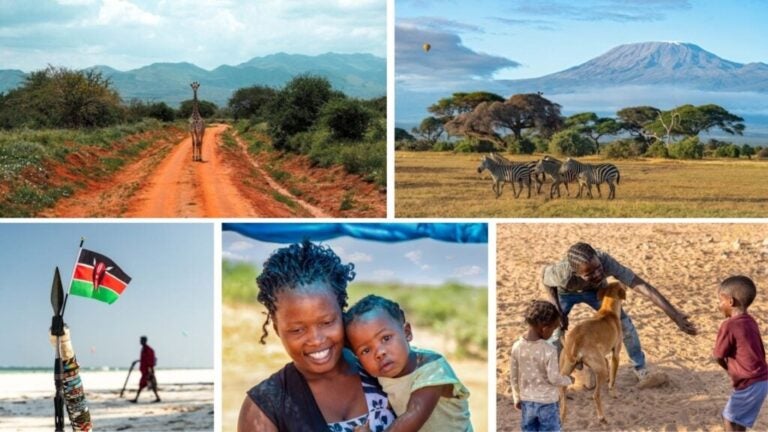
When we think of Kenya, the first things that often come to mind are safaris, the Masai Mara savannahs, and sunsets over Mount Kilimanjaro. But behind those spectacular images is a country full of contrasts: rich culture, human potential, and also deep shortages. More than a third of the population lives in poverty, and in rural areas, where many communities are concentrated, access to education, healthcare, or clean water is limited. Despite economic progress, inequality remains a structural issue.
That’s why Kenya needs volunteers, and you can be one of them. Imagine that something as simple as teaching English in a rural school could lead to an entire class passing their exams. Supporting women in entrepreneurship workshops can help an entire family get ahead. Your role can range from administrative tasks to hands-on activities. It doesn’t matter what you do, in every case, you’ll be part of the change.
This is not a minor detail. Being part of the change also transforms you from within. Because when we give, we also receive. So, what will volunteering in Kenya give you? Here’s what we’ve listed (and possibly more):
1. The opportunity to experience an authentic adventure, away from conventional tourism
Kenya is a very touristy country, but volunteering allows you to get to know it from the inside. Sharing day-to-day life with local communities, learning to greet in Swahili, and participating in family celebrations are experiences that often escape conventional tourism. As a volunteer, you’ll discover the true Kenyan culture, far from hotels and classic tourist circuits.
2. You’ll build real and lasting bonds
When you work side by side with other volunteers or live with a local family, the bonds that are formed are strong. Friendships that begin in these types of experiences often turn into support networks or even new projects. In other words, human connection will be one of the greatest gifts you’ll take from your volunteer experience in Kenya.
3. You’ll develop personal and professional skills
Whether you’re teaching, organising workshops, leading activities, or solving problems in resource-poor settings, volunteering in Kenya will help strengthen your communication, adaptability, leadership, and teamwork skills. All of that not only helps you grow as a person, but also boosts your professional profile.
4. You’ll step out of your comfort zone
In Kenya, you’ll encounter realities you might not be used to: classrooms with limited resources, dirt roads, and frequent power outages. But you’ll also witness the joy, resilience, and hospitality of the Kenyan people. That which you can’t learn in books will change your perspective and teach you to value what you once took for granted. After your time in Kenya, gratitude will likely become part of your daily life.
5. You’ll feel that your time is making an impact
Have you ever felt the need to do something truly meaningful with your time? Well, in Kenya, there are real things to be done, and that’s why your ideas, energy, and willingness to help are not just welcome, but also necessary. And you’ll feel it. You’ll see results, no matter how small, and you’ll know that your presence made a positive difference.
What requirements must I meet to volunteer in Kenya?
While anyone can have the desire to travel to Kenya to contribute to a cause, there are certain essential requirements that must be met. Therefore, before packing your bag, we suggest you stay updated on immigration, health, and logistical aspects to ensure you don’t miss anything. It’s not complicated, but it’s important to do things in advance and have everything in order.
To help you plan your trip practically, we’ve put together a clear guide with the most common requirements to volunteer in Kenya:
1. Visa to enter Kenya
In January 2024, Kenya implemented an electronic travel authorisation system (ETA) that replaces the traditional visa. It is mandatory for all international visitors, including volunteers.
The permit is processed online at least three days before your trip, costs around $30 (€27), and is approved via email. Once at the airport, you can present the document either printed or digitally.
In some cases (long stays or collaborations with formal NGOs), your hosting organization may recommend applying for a Special Pass or Work Permit, although for short-term volunteering, the ETA is sufficient.
2. Mandatory and recommended vaccinations
Kenya requires a yellow fever vaccination certificate if you are travelling from a country where the disease is endemic (such as Argentina, Brazil, Colombia, or Peru). Even if you’re not coming from a high-risk area, it is highly recommended to have this vaccination up to date.
Additionally, the WHO and international health centres recommend other vaccinations, such as hepatitis A and B, tetanus, diphtheria, typhoid fever, and rabies, especially if you plan to stay in rural areas or work with animals. There is no malaria vaccine, but preventive antimalarial medication is recommended. In any case, don’t hesitate to consult your doctor about which vaccinations you should have up to date before travelling to Kenya.
3. International health insurance
Having international health insurance is mandatory and essential for volunteering in Kenya. In general, programmes do not cover medical assistance, so you should take out a policy that includes emergency and hospital coverage, rural area assistance, tropical disease medical care, and repatriation in case of a serious accident.
Also, verify that the insurance covers the entire duration of your stay and is valid in East Africa.
4. Minimum age and educational level
Most organizations accept volunteers from 16 or 18 years old, depending on the type of project. No specific qualifications are required for general programmes (such as child care or school support), but for medical or technical volunteering, they may ask for relevant studies or certifications.
In any case, it’s always important to read the specific requirements of each programme before applying.
5. General documentation to present
In general, NGOs will ask for the following:
- Copy of your passport (with at least six months of validity).
- Criminal record certificate (in English).
- Application form with your motivation for volunteering.
- Sometimes, a letter of recommendation or virtual interview.
6. Costs to consider
Although you’re going to help, most programmes in Kenya do have a cost, as they include accommodation, food, transport, and logistical support. Prices range from $800 to $2,000 (€730 – 1,820) for two weeks, depending on the organisation and location.
7. Staying connected during your volunteering in Kenya
It’s not a requirement, but having your own mobile data in Kenya will make life much easier. The country has fairly good mobile coverage in cities like Nairobi, Mombasa, or Kisumu, but in rural areas, Wi-Fi is scarce. So, if you want to stay in touch with your NGO, your family, or even in case of an emergency, the safest option is to travel with one of Holafly’s monthly plans.
With its unlimited data plan, you can browse without worries, make all the video calls you need, download maps, use the translator, and so much more. Plus, you save the hassle of searching for Wi-Fi networks or a physical SIM card. The best part? Their eSIM is global, so if you plan to continue your volunteering journey to other African countries or worldwide, you won’t need to change your plan.
Important: If you are a frequent traveler and want to stay connected without worrying about expensive roaming or looking for a new SIM at every destination, Holafly’s subscription plans are for you. With a single eSIM, enjoy internet in more than 170 countries for a fixed price and no surprises on your bill. Travel without limits and connect easily and securely! 🚀🌍

Alternatively, for short-term volunteering, Holafly’s eSIM for Kenya is another option, with unlimited data only for the days you need.
What are the best volunteering programs in Kenya?
Finding a volunteer programme that aligns with your goals and what you wish to contribute is essential. It’s not the same to work in an animal sanctuary or reserve as it is to teach English to schoolchildren. Therefore, in addition to reviewing the requirements, we recommend taking the time to properly evaluate each programme and find the one that suits you best.
Luckily, Kenya has well-structured volunteer programmes, with a strong community commitment and the real possibility of getting involved in social, educational, and environmental projects.
Below, we share five reliable options, each with its focus, level of demand, and added value.
1. Projects Abroad: Education and child care in Nanyuki
Projects Abroad has over 30 years of experience organizing volunteering in Africa, Asia, and Latin America. In Kenya, one of its strongest programmes is school support and childcare in Nanyuki, a city located north of Nairobi. The programme is designed to support the development of children aged between two and fourteen in community nurseries, primary schools, or care centres.
The volunteer assists in English classes, games, feeding, and early stimulation activities. You’ll also receive educational guidance before starting and work alongside local teachers. It’s perfect for those who love working with children, even without prior experience.
Is Nanyuki the only volunteering option in Kenya with Projects Abroad? No, there are more. You can also join conservation programmes in the Soysambu Reserve, about three hours from Nairobi. The main focus there is the endangered Rothschild giraffe.
| Feature | Detail |
| Requirements | From 16 years old Good physical condition. Basic English. |
| Duration | From two weeks |
| Includes | Accommodation. Airport pickup. Meals. Medical insurance. 24/7 support. |
| Price | From $2,700 (€2,350) for two weeks. |
Volunteering in Kenya with Projects Abroad
2. IVHQ: Care for people with special needs in Nairobi and surroundings
International Volunteer HQ (IVHQ) is one of the most accessible and comprehensive volunteer platforms. In Kenya, it’s based in Nairobi and runs various programmes, from child care to the care of people with special needs. In this case, as a volunteer, you’ll contribute to local families and communities while providing care and support to people with disabilities.
What will your specific tasks be? They’ll depend on your experience and relevant qualifications, but they may range from teaching and general supervision to helping with meal preparation. If you are trained in physiotherapy or rehabilitation, you’ll be able to perform related tasks.
| Feature | Detail |
| Requirements | Over 18 years old. Criminal record certificate. |
| Duration | From one to 12 weeks. |
| Includes | Accommodation in local family homes. Airport pickup. Three meals a day. Local orientation and support. Pre-departure assistance from your programme manager. International Volunteer Service Certificate. |
| Price | Starting at $385 per week (€354). Registration fee $299 (€275). |
Volunteering in Kenya with International Volunteer HQ
3. Agape Volunteers: HIV prevention volunteer programme
A large number of Kenyans are affected by the HIV virus, and unfortunately, medical advances and international support do not reach everyone. Agape collaborates with various local projects to address this issue, and you, as a volunteer, will play a key role.
Your tasks will involve working in local clinics and community outreach programmes, conducting tests and analysing results, counselling patients, and participating in community education projects. In other words, you will contribute to the long-term fight against HIV.
| Feature | Detail |
| Requirements | From 18 years old Good physical condition |
| Duration | From two weeks |
| Includes | Accommodation in local homes. Two meals a day. Airport pickup and return. Travel insurance. Orientation. Visit to an internally displaced persons’ camp and a city tour of Nairobi. |
| Price | From $675 (€625) per week. |
Volunteering in Kenya: Agape Volunteers
4. Volunteering Solutions: Medical volunteering in Nairobi
Volunteering Solutions is an organization specializing in social impact projects. In Kenya, it participates in a variety of projects, including one particularly attractive to medical students or those in related fields. Its medical volunteering programme in Nairobi offers the chance to collaborate with healthcare professionals in local hospitals and clinics, providing essential medical care to underserved communities.
Your tasks will vary, from stitching wounds and administering vaccines to observing doctors during surgeries and treatments or making hospital rounds. It’ll be a unique opportunity to understand how the healthcare system functions in Kenya and learn from local professionals.
| Feature | Detail |
| Requirements | 18+ years old. Open-minded attitude and flexibility to work in a new and different environment. Clean criminal background check. Medical or nursing degree, or currently enrolled as a student in these fields. Functional English. |
| Duration | From one week |
| Includes | Accommodation. Airport pick-up. Two meals (breakfast and dinner). Local guide, orientation, and ongoing support. |
| Price | From $350 per week (€322). Application fee: $249 (€230) paid once. |
Volunteering in Kenya with Volunteering Solutions
5. Go Volunteer Africa – Environmental education and conservation in Mombasa
Go Volunteer Africa is a pan-African platform with a presence in more than 15 countries across the continent. In Mombasa, on the eastern coast of Kenya, it offers an ideal programme for environmental lovers and ecological education. The project includes visits to primary schools to give talks on recycling, climate change, local wildlife, and waste management.
You’ll also be able to participate in coastal cleanups, reforestation campaigns, or practical workshops on permaculture. It’s an excellent option for those who wish to combine community work with coastal conservation.
| Feature | Detail |
| Requirements | Over 18 years old. Environmental awareness. Basic level of English. |
| Duration | From two weeks |
| Includes | Accommodation. Meals. Logistical support. Local transport. |
| Price | From $980 (€850) for two weeks. |
Volunteering in Kenya: Go Volunteer Africa
Types of projects for volunteering in Kenya
Volunteering in Kenya means putting your heart and soul into initiatives that respond to real needs. Each project has its own characteristics depending on the region, focus, and the community it serves. Below, we’ll tell you about the most common projects, with concrete examples to help you get an idea of the type of experience they offer.
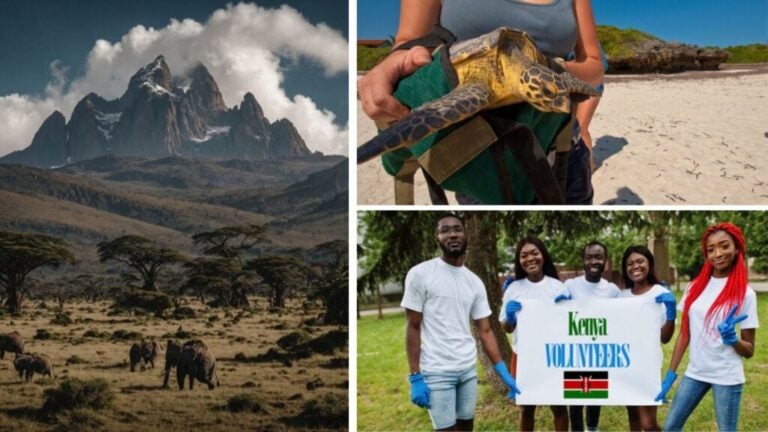
1- Education and School Support
Kenya has an expanding education system, but there are significant gaps between urban and rural areas. In the latter, classrooms are often overcrowded and poorly resourced, which is why volunteers are an essential support.
You can choose to work in public primary schools in neighbourhoods of Nairobi, Kisumu, or Mombasa, in community classrooms in villages around the Masai Mara, provide English, maths, or science tutoring, or engage in extracurricular activities: art, music, sports, reading. In some cases, you can also work with inclusive schools for children with disabilities.
The best part is that no teaching experience is necessary, but you’ll need a willingness to teach with empathy and creativity.
2. Child care and orphanages
Thousands of children in Kenya live in community homes due to the loss of their parents, abandonment, or extreme poverty. Your contribution as a volunteer is highly valuable and requires great sensitivity, consistency, and emotional support.
Where does this type of project take place? It’s common in the outskirts of Nairobi, Kisumu, and in rural communities. What will you have to do? A variety of tasks, including planning and participating in recreational activities, providing individual educational support, overseeing meals and daily routines, organizing community events, and special days. The work is demanding, but the rewards are even greater.
3. Community health and medical volunteering
Medical volunteering projects in Kenya are very popular. They mainly focus on rural areas, where many people lack regular access to health services, and they focus on basic tasks and health education.
You’ll be able to participate in mobile clinics or health posts in remote villages, vaccination and weight control programmes, give talks on hygiene, sexual health, nutrition, or HIV prevention, and support professionals in public hospitals in Nairobi or Kisumu.
If you’re studying medicine, nursing, or social work, your skills and knowledge will be highly appreciated.
4. Conservation and the environment
In Kenya, deforestation, drought, and uncontrolled tourism are damaging unique ecosystems. That’s why there are many projects focused on natural conservation and environmental education.
What tasks are involved in these types of projects? Reforestation in dry or eroded areas, beach cleaning and care in Mombasa, recycling workshops in urban schools, and awareness campaigns about climate change. You could also participate in permaculture projects, school gardens, or wildlife conservation, especially near national parks.
5. Women’s empowerment and community development
Kenya still has a long way to go regarding gender equality. That’s why there are communities where women lead social and economic projects that have a direct impact on their families. As a volunteer, you can assist in literacy workshops for women, provide computer or English classes for female groups, support productive projects such as baking, sewing, or craft selling, and run activities with adolescents to prevent school dropout or child marriage.
These programmes are common in Nairobi, rural areas of western Kenya, and coastal communities, making them ideal for those looking for a more social or cultural focus.
6. Creative, digital, or communication projects
Some NGOs work on campaigns, content production, or digital outreach, and are looking for volunteers with more creative or technical profiles. If you’re interested in this type of contribution, your skills will be very useful. You’ll be responsible for designing materials for educational campaigns, participating in photography and documentary video tasks, managing social media for local NGOs, or helping produce art and expression workshops in underprivileged areas.
This is a great option for those with knowledge in communication, design, photography, audiovisuals, or social media.
How much does it cost to volunteer in Kenya?
Although many think volunteering is free, in reality, it involves an investment. You’re not only offering your time, but also sharing resources to support the infrastructure of the projects. This translates to expenses for accommodation, meals, and airport transfers, as well as organisation and logistics. These costs are usually included in the programme fee, but visa or permit procedures, flight tickets, and health insurance are not. Despite this, Kenya remains one of the most affordable destinations for this type of experience.
Below, we’ve included a table with estimated costs you may incur during your volunteering experience in Kenya.
| Type of Expense | Estimated cost (USD/EUR) | Is it included in the programs? |
|---|---|---|
| International flight | $900 – 1,300 (€828 – 1,196) | No. Managed by the volunteer. |
| Accommodation | $0 – 250 per month (€0 – 230) | Usually included in programmes over one week. |
| Meals | $0 – 150 per month (€0 – 230) | One to three meals a day are usually included. |
| Programme Fee | $800 – 2,200 for 2 weeks (approx.) (€736 – 2,024) | Yes. Covers registration, logistics, support, and local donation. |
| Medical insurance | $40 – 90 per month (€0 – 230) | Not always included. It is recommended to arrange on your own. |
| Local transportation | $20 – 60 per month (€18 – 55) | Sometimes included in rural projects. |
| ETA application (entry authorisation) | $30 (valid for 90 days) (€28) | Not included. Managed online before travelling. |
| Vaccines | $0 – 180 (yellow fever mandatory if applicable) (€0 – 166) | Not included. Some need to be administered weeks in advance. |
| Certificates and documentation | $10 – 30 (criminal records, forms) (€9 – 28) | Depending on your country of origin. |
Costs for volunteering in Kenya
Volunteering in Kenya: Frequently Asked Questions
No. Most programmes accept people without professional experience or specific degrees. What’s most important is your commitment, willingness to collaborate, and openness to learn. Only in medical or technical projects might specific training or being a student of a related field be required.
Most programmes last a minimum of one to two weeks, though the ideal is to stay three or four weeks to better integrate into the project. The longer you stay, the greater your real impact and connection to the community.
No. Programmes are conducted in English, and an intermediate level is sufficient. However, learning a few basic phrases in Swahili (like ‘Asante’ – thank you or ‘Habari’ – hello) is a great way to connect with people. In many programmes, you’ll even be taught the basics upon arrival.
Don’t expect to stay in a five-star hotel. The accommodation offered by volunteering programmes is simple but provides the essentials for volunteer comfort. It’s usually shared housing, local family homes, or accommodations managed by the NGO. In all cases, you’ll be provided with decent, safe conditions adapted to local customs.
It usually starts early, with tasks in the morning (classes, activities, visits), followed by a midday break for lunch and rest. In the afternoon, volunteers continue with workshops or support in other project areas. Free afternoons or weekends are usually used to explore, relax, or take part in local excursions.