



 Language


 No results found
Volunteering in Hawaii: Get ready to go
Looking for a transformative experience in an incredible place? Volunteering in Hawaii might be exactly what you need!

Postcard beaches, tropical jungles, active volcanoes, and an ancient culture that is still alive in every corner. Hawaii seems like the perfect place for a holiday… but it can also be the setting for a transformative experience if you choose to travel as a volunteer. Like the idea? Stay with us, as we’ll tell you all about how to prepare for a volunteering experience in Hawaii.
Joining a program like this is much more than working a few hours in exchange for accommodation and food. It’s about immersing yourself in a community that lives connected to nature, learning from its traditions, collaborating on environmental and social projects, and being part of a movement that aims to protect the balance of these unique yet fragile islands.
Moreover, volunteering in Hawaii requires planning. It’s not as simple as buying a plane ticket and packing a few things. You’ll need to choose a program that fits what you’re willing to offer or the type of experience you want to live, ensure that you meet the basic requirements, and have an approximate idea of how much money is involved in embarking on this kind of experience.
If you want to experience Hawaii in an authentic, supportive, and enriching way, this article is for you.
What are the benefits of volunteering in Hawaii?
Hawaii is much more than a tourist destination: it is a living ecosystem, a crossroads of cultures, and a territory with environmental and social challenges that need active hands. Volunteering on these islands not only allows you to contribute to important projects, but it also changes you from within. In other words, it’s not only the communities that will benefit from your contribution; you may be the one who gains the most:
1. You’ll experience authentic Hawaiian culture
By being part of a volunteering program, you won’t be just another tourist. In fact, you’ll do everything that regular tourists don’t do: you’ll integrate into the community, learn words in the local language, take part in ancestral rituals, participate in communal meals, and engage in everyday activities that reflect the spirit of aloha. In other words, it will allow you to witness firsthand the Hawaiian connection to the land (aina) and the sea (kai).
2. You’ll contribute to the conservation of one of the world’s most fragile ecosystems
Hawaii is home to unique species and its ecosystems are under constant threat from mass tourism, invasive species, and climate change. As a volunteer, you’ll help with reforestation, beach cleanups, wildlife monitoring, or reef restoration. Your impact will be direct.
3. Your travel expenses will be lower than if you go as a tourist
Many volunteering programs in Hawaii offer accommodation and meals in exchange for a few hours of work per day. Of course, this comes at a cost, but it’s an affordable way to live in one of the most expensive places in the US, without giving up comfort or safety.
4. You’ll meet people from all over the world
Hawaii attracts volunteers from various countries, ages, and backgrounds. In these shared experiences, strong bonds, deep friendships, and a network of contacts are formed, which can accompany you on new travels, projects, or ideas.
5. It’ll contribute to your personal development
Life on the islands has a different pace. Fewer screens, more fresh air. Daily contact with nature and community life invites you to slow down, reflect, and reconnect with what truly matters. Many volunteers return with clearer ideas, healthier habits, and a new perspective.
What are the requirements for volunteering in Hawaii?
Volunteering in Hawaii sounds exciting, but it’s not just a matter of showing up. There are basic requirements you should know to avoid surprises and make the most of the experience. The best part: many of these programs are accessible, without complex paperwork or impossible-to-meet requirements. Let’s look at what it’s all about:
1. Visa and permits to enter the US
Hawaii is part of the United States, so the immigration requirements are the same as for any other state. We’ve written about the requirements for traveling to the US from Argentina, Colombia, Mexico, and many other countries. But here’s a general overview of the conditions to enter US territory:
- If you’re from a country with a visa waiver (like Spain or Chile), you can enter with the ESTA (Electronic System for Travel Authorization) for up to 90 days.
- If you don’t qualify for ESTA, you’ll need to apply for a tourist visa B2.
- For long stays or paid programs, a special visa (like J-1) may be required.
Important note: Most volunteering programs in Hawaii are framed as cultural exchanges or alternative tourism, so you don’t need a work visa, as long as you don’t receive a salary.
2. Minimum Age
Almost all programs accept volunteers from 18 years old, although this may vary. Some more community-oriented or rural programs may require greater maturity or previous experience. There are also options for teenagers, but they must be accompanied by an adult or participate in group programs.
3. Level of English
While you don’t need perfect English, you need a basic conversational level, especially to understand instructions, live with other volunteers, and participate in community activities. Many programs are international, so fluid communication is valued.
4. Medical insurance
You can’t travel to Hawaii without international health insurance. Keep in mind that healthcare in the US is private and very expensive, especially for foreigners (by the way, don’t forget to check our article on the cost of living in the US).
Therefore, having health insurance isn’t just a requirement for almost all volunteering programs in Hawaii; it’s also a way to travel with peace of mind knowing that, in case of any medical issue, you’ll receive quality care. Just make sure your insurance covers:
- Medical assistance for illness or accident
- Medical repatriation
- Coverage for outdoor activities (if you’ll be working in natural areas)
5. Good physical condition and willingness
Many volunteer programs involve physical tasks: gardening, beach cleaning, trail restoration, communal cooking, etc. You don’t need to be an athlete, but you do need energy, a willingness to learn, and an openness to living with people from different cultures.
6. Travel expenses and volunteer contributions
In most programs, the airfare is at your own expense, as is the health insurance. Some programs also ask for a small registration fee (between €90 ($95) and €270 ($290)) to cover administrative or material costs.
7. Connectivity during your trip
Although Hawaii is part of the US, many rural and natural areas have limited signal. To avoid being disconnected, especially if you’re travelling alone or to remote areas, a good option is to purchase one of the Holafly monthly plans. You can choose between 25 GB and unlimited data, and enjoy browsing the internet without paying for expensive international roaming.
Important: If you are a frequent traveler and want to stay connected without worrying about expensive roaming or looking for a new SIM at every destination, Holafly’s subscription plans are for you. With a single eSIM, enjoy internet in more than 170 countries for a fixed price and no surprises on your bill. Travel without limits and connect easily and securely! 🚀🌍

For shorter volunteer stays, Holafly’s Hawaii eSIM provides unlimited data only for the days you need.
What are the best volunteering programs in Hawaii?
Hawaii is not only a natural paradise, but it is also a place where communities and organisations work daily to protect their ecosystems, recover ancestral traditions, and foster a harmonious coexistence between tourism and the environment. If you’re thinking of volunteering on these islands, there are options for all profiles: From short stays to immersive experiences in eco-communities or wellness centres.
Below, we’ll show you the most valued programs so you can choose the one that best represents you:
1. Mālama Hawai‘i – Regenerative tourism across the islands
Mālama Hawai‘i is an official initiative that promotes responsible tourism with a positive impact. Instead of just visiting, travellers are encouraged to contribute to the care of the islands. The volunteer programs include beach cleanups, native forest restoration, and cultural site preservation. As a thank you, some hotels offer free nights or special discounts. It’s ideal if you have little time and want to have a meaningful experience without committing your entire trip.
Program details:
Requirements No prior experience required.
Suitable for tourists with ESTA or B2 visa.Duration From half a day to several days, depending on the project. Includes Participation in volunteer activities. Possible discounts or accommodation benefits. Price Free.
Some projects may require prior registration at no cost.Popular programs Native tree planting in Maui. Beach clean-ups in Kaua‘i. Restoration of traditional fishponds in O‘ahu. Volunteering programs in Hawaii: Mālama Hawai‘i
2. IVHQ – Native habitat restoration in O‘ahu
International Volunteer HQ (IVHQ) has a specific program in O‘ahu aimed at protecting Hawaii’s biodiversity through the removal of invasive species, reforestation, and trail restoration. It’s ideal for those who want a 100% ecological experience, with structure, accommodation, and international groups. Additionally, it includes educational activities to better understand the environmental impact on the islands.
Program details:
Requirements Minimum age: 18 years old.
Basic English level.Duration Two weeks. Includes Hostel accommodation.
Breakfast and lunch (Monday to Friday).
24/7 orientation and assistance.
Airport pickup.Price From €850 ($910) for two weeks. Popular programs Forest restoration in protected areas. Invasive plant control in volcanic zones. Educational talks in local schools. Volunteering programs in Hawaii: IVHQ
3. Kalani Oceanside Retreat
Kalani Retreat is a retreat centre that combines spirituality, ecology, and community life. Its volunteering programme allows participants to integrate into the centre’s daily operation by helping with gardening, cooking, maintenance, or reception. In exchange, they receive accommodation, food, and access to yoga, dance, and meditation classes. It’s an ideal option if you’re looking to combine service with personal growth, surrounded by jungle and ocean.
Program details:
Requirements Minimum age: 21 years old.
Minimum commitment: Six weeks.Duration From six weeks to three to six months. Includes Accommodation.
Three daily meals.
Access to wellness workshops and activities.Price Participation fee varies depending on the duration and type of accommodation. Popular programs Community kitchen volunteering. Agroecological gardening and landscaping. Event management and holistic workshop support. Volunteering programs in Hawaii: Kalani Oceanside Retreat
4. Westcoast Connection
Designed for high school students, this program combines volunteering activities with recreational exploration across different Hawaiian islands. Teenagers work alongside local organisations on environmental and community issues, while also enjoying experiences like surfing, kayaking, and snorkelling. It’s ideal for students looking to have a purposeful summer, under supervision and in a group.
Program details:
Requirements Students in grades 8 to 10.
Parental consent required.Duration 20 days. Includes Accommodation. Full board.
Recreational activities.
Internal transport.Price From €8,250 ($8,799) (flights not included). Popular programs Reef conservation with Eco Maui. Environmental education with Mālama na Honu. Volunteering plus surfing on O‘ahu’s North Shore. Volunteering programs in Hawaii: Westcoast Connection
5. Worldpackers
Worldpackers connects travellers with hosts in Hawaii (hostels, organic farms, retreat centres), offering free accommodation in exchange for a few hours of work per day. Volunteer tasks range from cleaning or reception to helping in community kitchens or agricultural work. It’s a flexible, affordable, and multicultural option, ideal for nomads or backpackers looking for more independent experiences.
Program details:
Requirements Minimum age: 18 years old.
Approved and active profile on the platform.Duration From two weeks to three months (depending on the host). Includes Accommodation.
Some opportunities also offer meals or local tours.Price Annual membership fee of €45 ($49).
Exchanges have no additional cost.Popular programs Volunteering in beachfront hostels in Maui. Work on organic farms on the Big Island. Support in yoga centres or spiritual retreats in O‘ahu. Volunteering programs in Hawaii: Worldpackers
What types of volunteering projects are available in Hawaii?
The Hawaiian archipelago is much more than the luxury hotels featured in the first season of the series “The White Lotus” (by the way, if you haven’t watched it yet, I recommend it). The reality is that the islands face environmental, social, and cultural challenges that require active hands and committed hearts. Volunteering in Hawaii doesn’t mean “working on holiday,” but rather joining purposeful projects, interacting with local communities, and being in unique natural surroundings.
If you’re motivated by the idea of spending weeks or months committed to the islands, learning about the main types of projects you can participate in is a great way to start bringing your dream to life:
1. Ecological restoration and native reforestation
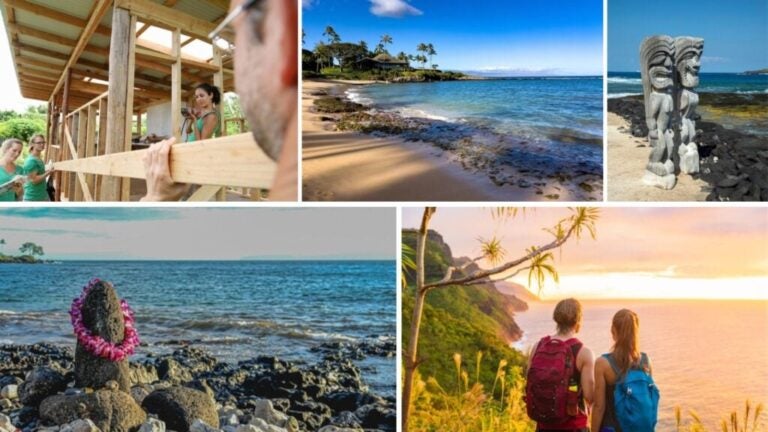
These types of projects aim to restore the balance of ecosystems affected by invasive species or deforestation. If you join one of them, you’ll work in natural areas, remove non-native plants, plant indigenous species, and help restore habitats that are crucial for local birds, insects, and mammals.
Here are some concrete examples that may inspire you:
- On the island of O‘ahu, there’s work being done on the restoration of the native Koʻolau forest.
- In Maui, areas where the invasive Guinea grass has displaced key species are being reforested.
- On Kaua‘i, volunteers help preserve the wet forests that protect freshwater springs.
2. Beach cleaning and coastal conservation
With the rise in tourism and plastic pollution, Hawaii’s coastline needs constant care. As a volunteer, you’ll help collect waste, sort recyclable materials, and raise awareness among visitors about the impact of their actions. You’ll also participate in waste monitoring to create reports and statistics on marine pollution.
For example, regular beach cleanups are organised on beaches like Lanikai or Waikīkī, with support from NGOs.

3. Marine wildlife protection
The marine biodiversity of the Hawaiian archipelago is vast. It is home to green sea turtles, monk seals, dolphins, and corals that are threatened by climate change and human activity. As a volunteer, you can participate in monitoring, rescue, cleaning marine habitats, and environmental education projects.
Do you like the idea? Here are some examples of marine wildlife protection projects:
- On the North Shore of O‘ahu, green sea turtles (honu) are monitored during their nesting.
- On Big Island, there are projects to restore coral reefs affected by bleaching.
- In Maui, some NGOs work to reduce boat collisions with humpback whales.
4. Sustainable farming and work on organic farms
Food sovereignty is a key issue in Hawaii, so many communities are working to grow their own food naturally again. As a volunteer, you’ll help in community gardens or school farms, cultivate taro (a sacred plant in Hawaiian culture that is grown in a ritual and respectful way), composting, maintaining agroecological systems, and environmental education. Additionally, it’s a unique opportunity to learn ancient techniques (used in many farms) alongside modern permaculture practices.
5. Support in retreat centres and community living
Many retreat centres, wellness centres, and eco-villages in Hawaii (often located in rural areas, close to the jungle or the ocean) offer volunteering programmes where you exchange a few hours of work for accommodation, meals, and access to yoga, dance, meditation, and vegetarian cooking classes, among others.
For these types of projects, skills like healthy cooking, customer service, organisation, cleaning, or gardening are valued. They can be perfect if you’re looking for a transformative experience while collaborating with an alternative community.
6. Environmental education and responsible tourism
These types of projects are highly valuable, as Hawaii is a destination where mass tourism is posing a serious issue. What will you do? You’ll collaborate on projects that teach visitors (and sometimes locals) how to take care of the environment. This can include giving talks, setting up signage, accompanying school groups, or participating in awareness campaigns. You’ll also work at fairs, educational centres, or cultural events with environmental messages.
A concrete example is the Mālama Hawai‘i programme, which trains volunteers to guide tourists in parks and trails.
7. Cultural and archaeological preservation
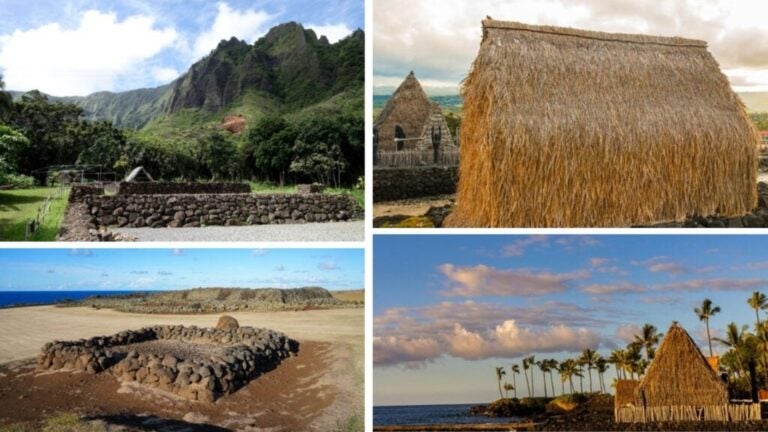
Native Hawaiians are fighting to preserve their language, customs, and sacred sites. As a volunteer, you’ll participate in local culture workshops, restoring historical sites, preserving petroglyphs, and intercultural education. Some programmes combine ecology and culture: By restoring a fish pond, an ancient technique is also recovered.
In Moloka‘i, for example, there are projects to preserve ancestral temples (heiau) and teach the Hawaiian language.
How much does it cost to volunteer in Hawaii?
Hawaii is one of the most expensive destinations in the United States, both for tourists and residents. However, if you go as a volunteer, many of those expenses are reduced or even eliminated. Still, it’s important to know that volunteering doesn’t mean everything is free. There are costs you should consider to avoid surprises and plan your trip responsibly.
Here’s a table of the main expenses you might have during your volunteering experience in Hawaii:
| Type of Expense | Estimated cost | Is it included in the programs? |
|---|---|---|
| International flight | €650 – 1,100 ($700 – 1,200) (depends heavily on your departure point) | No. It’s always at the volunteer’s expense. |
| Accommodation | €0 – 730 ($0 – 800) per month | Included in most programs (hostels, farms, retreats). |
| Meals | €0 – 730 ($0 – 400) per month | Partially or fully included in some programs. |
| Programme Fee | €0 – 7,270 ($0 – 8,000) (depending on duration/type) | Yes. In organised programs (like IVHQ or Westcoast). |
| Medical insurance | $40 – 730 ($0 – 100) per month | Sometimes included. If not, it’s recommended to purchase it independently. |
| Local transportation | $30 – 730 ($0 – 100) per month | No. In rural areas, you may need a car or bicycle. |
| Vaccinations (optional) | €0 – 180 ($0 – 200) (depending on origin) | Not mandatory, but some may be recommended. |
| Memberships (Worldpackers, etc.) | Annual membership of €45 ($49). | Only for access to exchange platforms. |
Approximate costs for volunteering in Hawaii
If you plan well and choose the right program, you could experience volunteering in Hawaii with a budget ranging from €910 ($1,000) to €2,730 ($3,000) per month, depending on the type of program and your personal expenses.
What expenses do you save by volunteering?
One of the great benefits of volunteering in Hawaii is that you save on accommodation and meals in most cases. Additionally, you don’t need to book expensive tours to explore the surroundings, and you’ll receive extra benefits like:
- Access to a network of local and international contacts.
- Wellness activities (yoga, meditation, surfing) included in some centres.
- Unique experiences like reef restoration, cultural workshops, or visits to sacred places.
In short, while it can be an investment, you may well be the one who benefits most from this experience. After all, life is about giving and receiving in equal measure.
Ready to live your volunteering experience in Hawaii?
Volunteering in Hawaii: Frequently Asked Questions
It depends on your nationality. If you are from a country that is part of the Visa Waiver Program (such as Spain, Chile, or Italy), you can enter with an ESTA valid for 90 days. If your country is not on the list, you will need to apply for a B2 tourist visa. Volunteering programs in Hawaii do not involve formal employment, so you don’t need a work visa.
You are not allowed to work for money if you enter with a tourist visa or ESTA. However, you can participate in voluntary exchange programs, where you offer your time in exchange for accommodation and meals without receiving a salary. If you want to combine your stay with paid work, you will need a special visa such as the J-1.
Yes, Hawaii is one of the safest destinations in the United States. Still, it’s important to stay alert, especially in rural or less touristy areas. Following the programme rules, moving in groups when possible, and having international health insurance will give you more peace of mind.
It depends on the programme. Some retreat centres and hostels accept volunteers with basic English, especially if tasks don’t require much interaction. However, if you’ll be working with local communities, children, or in educational activities, an intermediate level is ideal to communicate fluently.
Most programs last between two weeks and three months. If you enter with an ESTA, the maximum stay allowed is 90 days. Some centres, like Kalani Retreat, offer longer experiences, but you may need to change your visa type for extended stays.
Yes, although it depends on your program. If your volunteering experience is flexible or short-term, you can use your free days or extend your trip to explore other islands.