







 Language


 No results found
Why do flights get delayed so often? The real reasons will surprise you!
Why do flights get delayed so often? Learn the most common causes (hint: it’s not always the weather), and tips on how to handle an airport delay.

You wake up on the morning of your flight to heavy rain and strong winds. As you scramble to get ready, you have a horrible feeling that your flight will be delayed because of the bad weather.
Lo and behold, as you get through airport security and check the departure screens, you see that dreaded word — Delayed.
While it’s easy to assume the weather is to blame in a situation like this, you might be surprised to learn that, in many cases, it’s not.
In this article, we’re answering the burning question “Why do flights get delayed?” and revealing some surprising secrets… such as the fact that most delays start hours before takeoff!
The most common reasons flights get delayed

The truth is, MANY operational issues can occur and cause delays. Here are some of the most common ones:
Aircraft arriving late
This is by far one of the most common answers to “Why do flights get delayed?” Airlines, especially those that do predominantly short-haul flights, have very tight schedules.
Despite what you might assume, cabin crew don’t touch down and get half a day to explore before their next flight. Usually, as soon as one flight lands, the cabin crew deboard the passengers and then straight away start boarding the next flight.
This means that if an aircraft arrives late, the rest of the day’s schedule falls behind.
For example, if the first flight of the day at 6 am encounters a delay, it can create a domino effect and delay your 3 pm flight.
Crew availability and duty limits
Another thing most flyers don’t realize is that there are strict rules around how many hours pilots and cabin crew can work to prevent excessive fatigue. Work-hour limits are a legal requirement worldwide, but they can vary by country or airline.
For example, in the USA, flight duty limits are generally:
- 14 hours for cabin crew
- 8 or 10 hours for pilots
After this point, staff “time-out” and are mandated to have 10-12 hours of rest.
So, if a flight is delayed and the delay means they will now “time out” on their next flight, they are not allowed to work it, even though they were scheduled to.
Now, you might be wondering, why can’t airlines just “swap someone in” when this happens?
The logistics of airline crew scheduling are highly complex. In most cases, they do not have qualified, rested, nearby crew members ready to step in. Moreover, rescheduling a new crew is very expensive, and so, airlines often choose to delay the flight instead.
Some airlines will disclose this reason for a flight being delayed under the term “crew duty time limitation.” Other airlines might give a more general term, such as “operational reasons” or “industrial action.” Either way, it means there’s an issue the airline cannot resolve on-site immediately.
Air traffic congestion
Air traffic congestion is another reason why flights get delayed so often. Airports are VERY busy, and there aren’t enough runways to accommodate the number of flights, especially during peak travel seasons.
This means every flight (both landing and taking off) gets a particular runway slot. If there is a delay during boarding (or deboarding from the previous flight), the aircraft misses its takeoff slot and must wait for a new one from air traffic control.
The result? Sitting on the runway for 15-30 minutes.
Maintenance and safety checks
Many safety checks must be completed before an aircraft is permitted to take off.
If even a minor issue is found, the aircraft cannot take off, and the maintenance staff must determine whether they can resolve it or if the aircraft must be pulled from service.
Admittedly, this is very annoying because often, you’ve already boarded the plane and are then told to deboard and wait for another aircraft, resulting in a lengthy delay. However, safety checks are absolutely crucial to preventing in-flight problems.
Ground operations and airport issues
On top of these issues, many other smaller problems can occur relating to the operations of the airline or the airport, such as:
- Staff shortages in baggage handling can delay takeoff
- If the airport is busy, there can be delays in things like catering and refueling
- Likewise, during peak travel periods, there can be a lack of gate availability, resulting in a gate being assigned 10 minutes before the scheduled takeoff
Is weather ever the real reason?
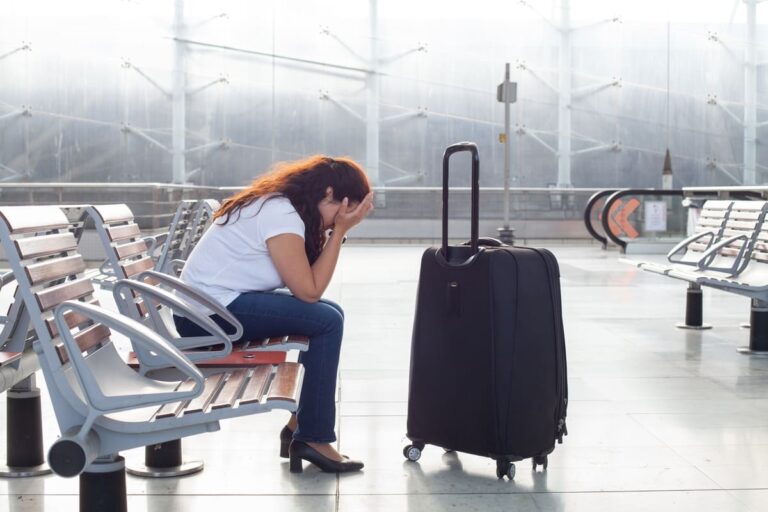
Yes, weather can be a legit reason for flight delays. However, it’s not just the weather at the departure airport that can cause delays. The weather at other airports, including the one you’re landing at, can also affect your flight.
Adverse weather conditions, such as heavy rain, storms, snow, or fog, can significantly reduce visibility. When this happens, airport traffic control limits the number of planes taking off or landing for safety precautions.
To free up airspace, airports and airlines cancel flights, resulting in network-wide disruption. This is why you might arrive at the airport and find out your flight (and 5 others) are cancelled.
What to do when your flight is delayed
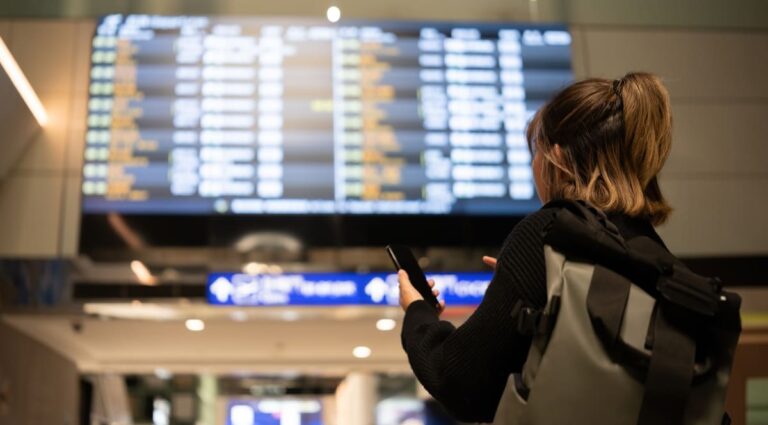
So what should you do if you arrive at the airport and find out your flight is delayed?
1. Check how the delay affects your connection
If your trip involves more than one flight, the first thing you should do is check whether the new estimated arrival time will make you miss your connecting flight.
It’s crucial to understand what a layover flight is, and what a stopover flight is, as this will determine how likely it is that you’ll miss your connecting flight.
If you have a layover flight (a short airport break between flights), you will need to decide whether to rebook the second flight or wait and see how the delay plays out.
2. Check your travel insurance and airline compensation obligations
Understanding the rules around airline compensation can be confusing, but a general rule of thumb is this:
You’re entitled to compensation if your flight is delayed by more than 3 hours and the delay is the airline’s fault.
If you have travel insurance, though, you can claim compensation through them for a 3+ hour delay for most delay reasons, including adverse weather. You will be covered for any unexpected costs caused by the delay, such as:
- Food
- Accommodation and transport
- Lost prepaid expenses like missed connection flights
3. Make the most of airport time
Once you’ve figured out the logistics, make the most of the delay by:
- Treating yourself to a nice meal (and maybe a glass of wine!)
- Buying airport lounge access – They are often quieter and more comfortable than the standard airport areas and include limited food and drink!
- Walking around the airport will help you survive your upcoming long-haul flight by reducing fatigue and stiffness
Stay connected at the airport
If you leave your gate, be sure to check for any updates on your flight. There is not always a departure screen in sight, so it’s best to download your airline’s app and turn on notifications.
You’ll likely need to message your family to let them know about the delay, as well as your accommodation and any airport transport you’ve arranged. In some cases, you might also need to rebook your flight.
Airport Wi-Fi is notoriously slow, and having the webpage crash right before rebooking your layover flight is enough to send you over the edge after an already stressful day.
It also keeps your data more secure by avoiding public airport Wi-Fi, which is often less safe for logins and bookings.
Avoid this additional hassle by getting a low-cost eSIM. With Holafly, you get instant cellular connection wherever you are, with fast, reliable, and unlimited data — for just a few dollars a day!
Explore Holafly’s eSIM shop here.
Peace of mind before you fly
Set up your eSIM before travel and get unlimited data on arrival.
Plans that may interest you


Hey, I’m Mika! I’m an SEO specialist with 7+ years of experience and a passion for travel info that actually helps you explore smarter. I write travel guides and tips backed by SEO insights so you can spend less time searching and more time adventuring.

