




 Language


 No results found
What do people eat on Easter Sunday around the world?
Wondering what people eat on Easter Sunday around the world? From Italy’s colomba cake to Greece’s Magiritsa soup, discover the symbolic dishes and festive traditions of different countries.

Chocolate eggs may be a universal Easter symbol around the world, but each country has its own unique traditions. And in many destinations, the Easter Sunday meal is more than just a feast; it’s a sacred celebration.
From slow-roasted lamb to sweet braided breads, if you’re wondering where to spend Easter this year (or simply curious how other countries celebrate), read on. Here’s how different countries celebrate Easter through food and symbolism.
Easter Sunday meals around the world: An overview
Here’s a quick look at the best Easter holiday destinations and the main dishes you’ll find there:
| Country | Traditional Easter Dish | Type of Meal | Symbolism |
|---|---|---|---|
| Italy | Roast lamb & Colomba cake | Main + Dessert | Sacrifice, renewal |
| Greece | Magiritsa soup | Midnight snack | Breaking the Lenten fast |
| United Kingdom | Roast lamb & hot cross buns | Main + Sweet treat | Christ’s sacrifice |
| United States | Glazed ham & deviled eggs | Main + Sides | Celebration, abundance |
| Spain | Torrijas | Dessert | Redemption & tradition |
| Poland | Żurek soup | Midnight snack | End of fasting |
| Australia | Roast lamb or seafood lunch | Main | Autumn gathering |
| Germany | Osterbrot (Easter bread) | Sweet treat | Rebirth |
Italy: Lamb and colomba cake
In the run-up to Easter, supermarkets in Italy fill up with extravagant chocolate eggs, many of which contain small gifts. Alongside chocolate eggs is a specific type of cake, known as Colomba cake.
Colomba cake is traditionally shaped as a dove to symbolize peace, resurrection, and renewal. Typically, the soft dough is filled with candied orange peel and topped with an almond glaze; however, there are many variations available.
While Colomba cake is the most common dessert for Easter Sunday lunch, the main dish is traditionally roast lamb, which celebrates Jesus Christ’s sacrifice and resurrection. It’s served with side dishes and sometimes as a second plate after a pasta dish or soup.
Easter in Italy is primarily a family celebration. Families gather to cook, eat, and socialize over a long lunch that goes on for hours.
Greece: Magiritsa and midnight feasting
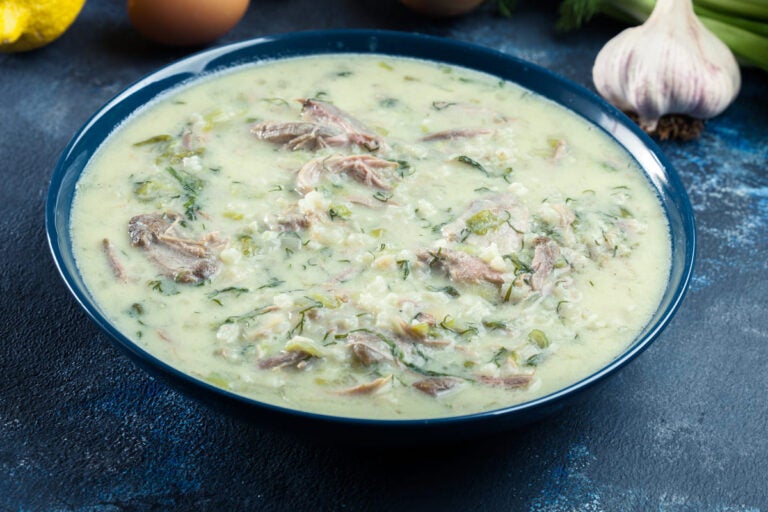
Easter in Greece features not one but two special meals. The first meal is Magiritsa, a soup made from lamb offal, herbs, and greens. Greeks eat this after midnight church service to break the 40-day fast of Lent.
Easter Sunday lunch consists of roast lamb or goat, a symbol of Jesus Christ. Then, for dessert, it’s tsoureki, a sweet, braided bread similar to brioche.
The most common symbolic food is red-dyed eggs, representing Christ’s blood and resurrection. These are used in an egg-cracking game, a communal ritual in many parts of Greece.
Like in Italy, Easter Sunday meals are long and lively, stretching across most of the afternoon. What’s more, Easter is a busy travel day, with people traveling back to their hometowns or the islands to celebrate with their families.
United Kingdom: Roast lamb and hot cross buns
The UK has a strong Sunday roast culture, and on Easter Sunday, the usual roast dinner transforms into a huge feast.
Instead of chicken or beef, many Brits opt for roast lamb for Easter lunch, as it’s a seasonal spring meat. This is served with all the trimmings, including roast potatoes, vegetables, Yorkshire puddings, and plenty of thick, rich gravy.
Like Italy, chocolate eggs are widely popular in the UK, but a uniquely British Easter snack is hot cross buns. These sweet buns have a cross on top to symbolize Jesus Christ’s crucifixion. Traditionally, they are spiced and filled with dried fruits (sultanas, raisins, or currants), but nowadays, you can find various flavors, such as chocolate.
United States: Ham, deviled eggs, and spring sides
Rather than lamb, many Americans eat ham at Easter. This is due to seasonal availability, as pigs are slaughtered in the fall, making cured hams widely available by spring.
The ham is the main dish for an early Easter lunch or “brunch,” served alongside spring salads and deviled eggs or other egg dishes. However, as Easter in the USA is less standardized than in European countries, Easter meals are very flexible. Often, they are a blend of breakfast and lunch foods, with festive treats like carrot cake and sweet breads.
Eggs (both real and chocolate) are very popular in the USA, symbolizing new life and resurrection. Alongside eating them for brunch or lunch, egg hunts are a popular Easter activity for American kids.
Spain: Torrijas and sweet traditions
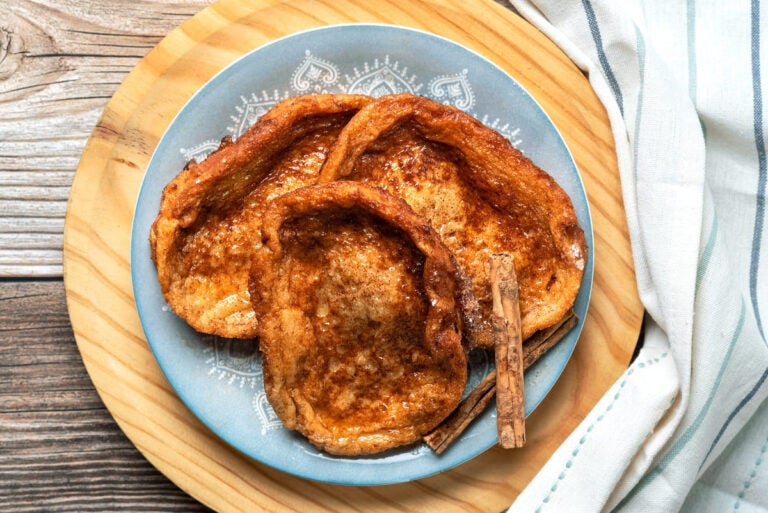
Easter in Spain is a week-long event, as many people observe Semana Santa (Holy Week), which takes place in the seven days leading up to Easter. Seafood is commonly eaten during this period, including fish stews and salted cod (bacalao).
On Easter Sunday, roast lamb is at the center of the Easter lunch table, often accompanied by roasted potatoes and spring vegetables.
But it’s the desserts where Spain’s Easter lunch really shines. There are several sweet treats eaten throughout the Easter period, such as Torrijas, which are bread soaked in milk or wine, similar to French toast.
Then there’s Monas de Pascua, a sweet bread that’s popular in Catalonia and Valencia, and Pestiños (fried sweet dough), popular in Andalusia.
Poland: Żurek and blessed baskets
In Poland, Easter is a deeply religious and family-centered holiday. There are two main food-based traditions, starting with “Święconka” (blessing of the baskets) on Saturday night.
For this tradition, families prepare baskets of bread, eggs, sausages, and other food items to be blessed during midnight mass at church. These items are then used in the Easter lunch the following day.
Each item in the basket has a specific symbolic meaning. For example, eggs symbolize new life, and sausages symbolize abundance and celebration after fasting.
Żurek, a sour rye soup made from fermented rye flour, is also commonly eaten during Sunday lunch, often incorporating ingredients from the Święconka basket.
Australia: Roast lamb or seafood
As Easter falls in autumn in Australia, Easter meals look a little different from the spring celebrations in Europe. The meals and traditions are far more relaxed here, and can take place at any point during the long weekend.
Roast lamb is a very popular choice for an Easter meal, influenced by British traditions. Alternatively, Easter lunch can be seafood-based, with prawns, grilled fish, or seafood platters. Some Aussies even opt for an outdoor barbecue rather than a sit-down indoor meal.
Another British influence is hot cross buns, which you can find everywhere, alongside chocolate eggs during Easter.
Germany: Osterbrot and festive breads
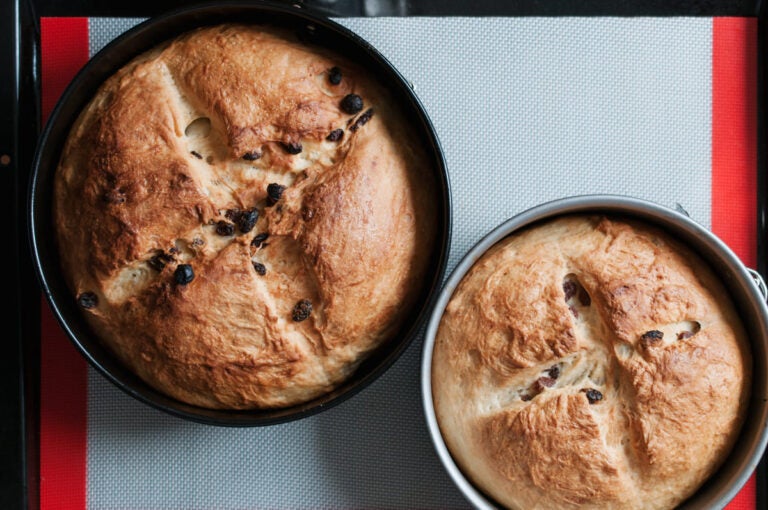
During Easter in Germany, you’ll come across many festive cakes and desserts. Osterbrot (German Easter bread) is one of the most popular. It’s a soft, sweet bread enriched with ingredients like raisins, lemon zest, and almonds.
Other Easter sweet treats include Osterlamm (a lamb-shaped cake) and Hefezopf (a braided sweet yeast bread). Germans eat these throughout the Easter period, but also as part of a large brunch on Easter Sunday.
Alongside sweet breads, Germans tuck into boiled eggs (often brightly dyed or painted) to symbolize new life, as well as smoked ham, sausages, or even roast lamb.
Stay connected while traveling this Easter
If reading about Easter feasts around the world has inspired you to experience these destinations yourself, there’s one small travel hack that can make your trip much easier: using an eSIM.
Whether you’re eating colomba cake in Italy or hot cross buns in the UK, a Holafly eSIM helps you stay connected. Simply install it before your trip, connect instantly when you land, and enjoy fast, unlimited data.
Explore Holafly’s eSIM store to stay online while navigating new cities and finding the best local Easter dishes!

Unlimited data. Peace of mind.
Make sure you have travel data that's there when you need it most.
Plans that may interest you


Hey, I’m Mika! I’m an SEO specialist with 7+ years of experience and a passion for travel info that actually helps you explore smarter. I write travel guides and tips backed by SEO insights so you can spend less time searching and more time adventuring.