Language


 No results found
Venice Carnival costumes: What to wear and where to rent
Discover Venice Carnival costumes, from traditional bauta and tabarro masks to cloaks and 18th-century outfits worn by festival goers.
The Venice Carnival is known for its traditional masks and costumes, including iconic styles such as the bauta and tabarro. While a full costume isn’t required to attend most events, knowing your options can help you decide how much you want to participate.
If you do want to dress up, Venice makes it easy. You can rent everything from a simple mask or wig to a full historical Venice Carnival costume, so you can enjoy the Carnival atmosphere without having to buy your own outfit.

An eSIM you can rely on
Join over 10 million Holafly customers and get connected with our trusted, global services.
What makes Venice Carnival costumes unique?
Venice Carnival costumes are unique because they evolved from the city’s history of social anonymity. Masks allowed Venetians to erase class, status, and identity, letting nobles and commoners mingle freely without judgment. This temporary equality made the Carnival a space for freedom, secrecy, and social experimentation.
Unlike costumes meant purely for display, Venetian masks and attire had real social functions and were worn beyond the Carnival for gambling, political dealings, and private encounters.
Traditional Venice Carnival costumes
Venice Carnival costumes fall into distinct categories shaped by history, social customs, and performance. Below are the most recognized traditional costume types, along with their meaning and visual elements.
| Costume category | Primary masks | Key clothing elements | Symbolic meaning |
|---|---|---|---|
| The mysterious anonymous | Bauta | White angular mask, black tabarro cloak, tricorn hat | Anonymity, social equality, freedom from class and identity |
| The aristocratic grandeur | Volto, Colombina (decorated) | Ornate gowns, embroidered waistcoats, lace, powdered wigs, rich fabrics | Wealth, power, refinement, Venetian high society |
| The Commedia dell’Arte characters | Arlecchino, Pantalone, Colombina | Character-specific masks, exaggerated silhouettes, colorful or patterned costumes | Satire, storytelling, social commentary |
| The historical profession | Medico della Peste, Volto | Occupational attire (robes, cloaks), props, period accessories | Everyday life, professional identity, parody of social roles |
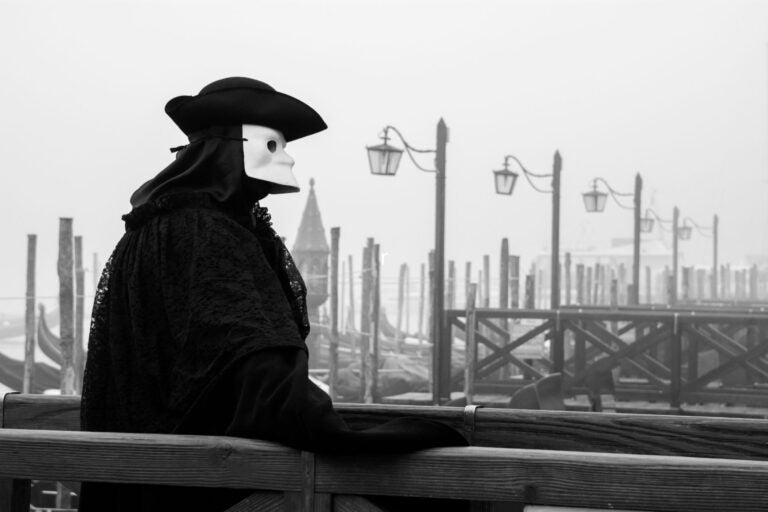
The mysterious anonymous (bauta & tabarro)
The bauta is the most iconic Venetian Carnival mask, traditionally worn with a black cloak (tabarro) and a tricorn hat. Its angular shape allowed the wearer to speak, eat, and drink while remaining unrecognizable.
This costume symbolized anonymity and social equality, enabling people from different classes to interact freely without revealing their identity. It was commonly worn not only during the Carnival but also in everyday Venetian life for political and social discretion.
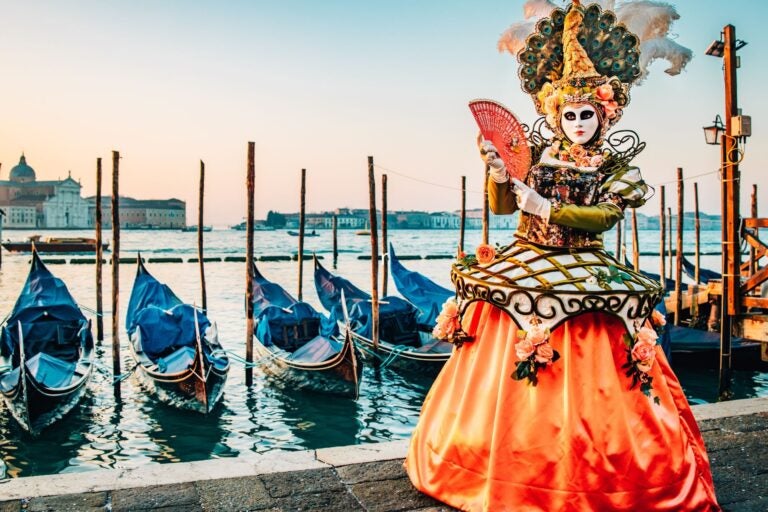
The aristocratic grandeur (18th-century Baroque & Rococo)
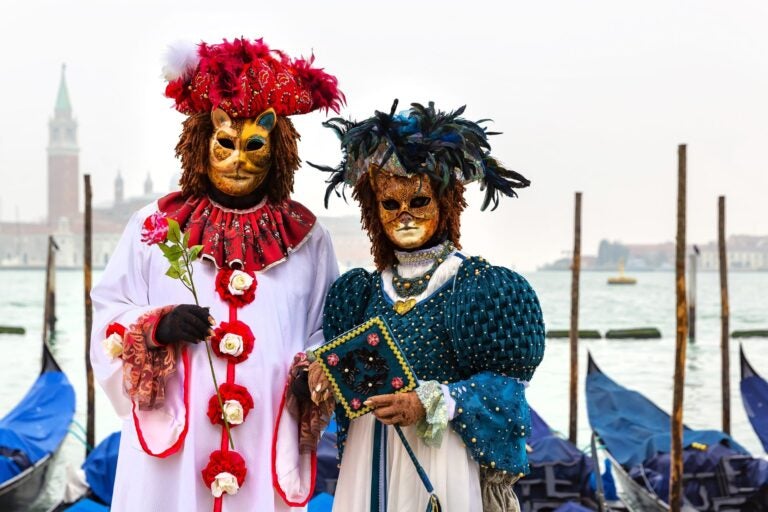
Inspired by Venice’s golden age, these costumes draw directly from Baroque and Rococo fashion, the dominant styles of the 18th century. Baroque influence is evident in dramatic silhouettes, rich fabrics, and ornate embroidery, while Rococo elements appear in lighter colors, intricate lacework, floral details, and decorative elegance.
Worn by the Venetian elite, these outfits signaled wealth, refinement, and social power, transforming the wearer into a living reflection of Venice’s aristocratic splendor.
The Commedia dell’Arte characters
These costumes are based on classic theatrical characters from Commedia dell’Arte, such as Arlecchino, Pantalone, and Colombina. Each character is defined by a specific mask, color scheme, and exaggerated clothing that reflects their personality — whether clever, greedy, flirtatious, or foolish.
This category represents satire and storytelling, using humor and exaggeration to comment on human behavior and social roles.
The historical profession
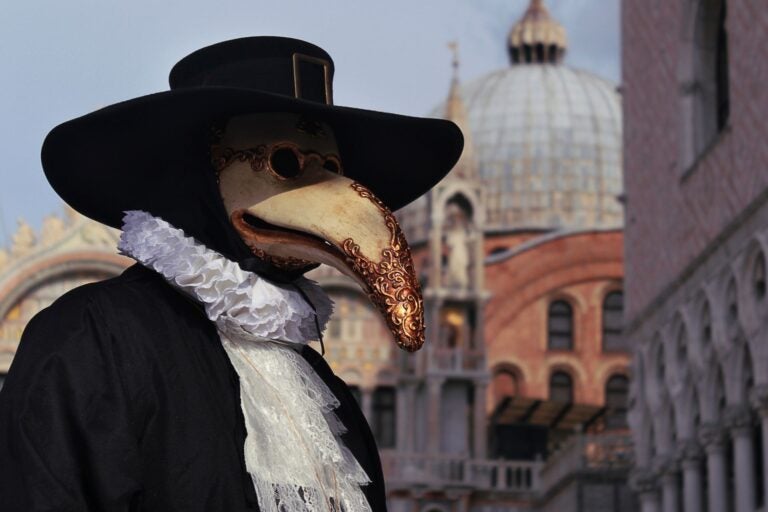
Costumes in this category depict trades and occupations common in historic Venice, such as merchants, doctors, sailors, and scholars. Often paired with distinctive masks like the Medico della Peste (plague doctor), these outfits reflect everyday life and professional identity in the Venetian Republic.
They highlight how the Carnival allowed people to step into familiar roles or parody them in a festive setting.
What to wear to the Venice Carnival as a tourist?
There’s no strict dress code for the Venice Carnival costumes, so you can always put comfort first. In fact, you don’t need a full costume to take part, and many visitors keep things simple.
A mask alone is enough to join in, but if dressing up is part of your Venice itinerary, there are easy options that let you participate at your own pace.
Mask only
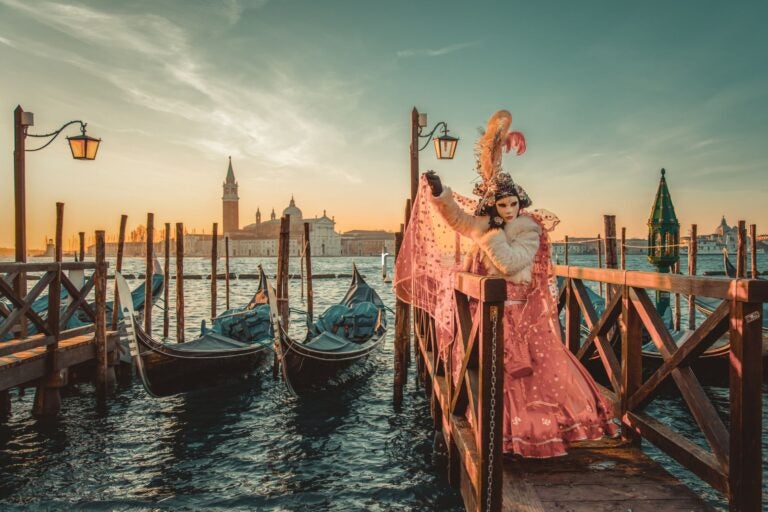
Wearing a mask is the simplest and most common way to participate. A classic volto or colombina instantly connects you to the Carnival tradition while letting you dress normally. This option is ideal if you’re sightseeing, attending public events, or want something easy to carry and remove.
Semi-costume mask (mask+cloak/dressy outfit)
A semi-costume adds flair without the commitment of a full outfit. Pair a mask with a dark cloak, elegant coat, or dressy clothing to create a refined Carnival look. This option works well for evening strolls, photos, or events where you want to feel festive but stay comfortable.
Full traditional Venice Carnival costume
A full costume includes period clothing, accessories, and a traditional mask, often inspired by historical or theatrical styles. This is the most immersive option and is popular for masquerade balls and professional photo sessions. Most travelers choose to rent these outfits for a day rather than buy them.
Where to rent Venice Carnival costumes
Venice has several established ateliers where visitors can rent traditional Carnival costumes or purchase handcrafted masks. Some studios also offer mask-making workshops so you can create your own mask as a souvenir. You can also have your costume delivered to your accommodation in Venice.
Cà del Sol Maschere
Cà del Sol Maschere has operated since 1986 and focuses on 18th-century Carnival costumes and traditional masks. Rental prices usually range from €35 to €350, based on design and detail. The atelier also offers mask-making courses for those who want to learn traditional techniques.
Address: Castello 4964, 30122 Venice, Italy
Sogno Veneziano Atelier
Sogno Veneziano Atelier specializes in high-end costume rentals inspired by Venice’s aristocratic history. Prices range from €400 to €800, with collections labeled Regular, Luxury, Royal, and Imperial. These costumes suit masquerade balls and professional photo sessions.
Address: Cannaregio, Calle delle Erbe 6423/a, 30121 Venice, Italy
San Marco 596
San Marco 596 does not rent costumes but specializes in handmade, hand-painted masks. Founded in 2003, the atelier offers masks priced from about €9 to a whopping €19,000, depending on materials and craftsmanship. The studio also hosts workshops where visitors paint their own masks.
Address: San Marco 598, 30124 Venice, Italy
How much do Venice Carnival costumes cost?
The cost of Venice Carnival costumes depends on how detailed and traditional you want to go.
Mask prices
Most masks cost between €9 and €100 for simple, decorative designs. Handcrafted artisanal masks usually range from €100 to €400, while rare or highly detailed masks made from luxury materials can cost significantly more.
Costume rental prices
Renting Venice Carnival costumes typically costs between €350 and €800, depending on the quality, historical accuracy, and level of detail.
Buying a full costume
Buying a full traditional Venice Carnival costume usually costs €2,000 to €3,000, especially for custom-made or high-end designs.
Practical tips for wearing costumes during Venice Carnival
Venice involves a lot of walking, changing weather, and crowded public spaces, so these practical tips help you enjoy the Carnival without much issue.
- Choose comfort with lightweight fabrics and breathable layers for long walks when getting around Venice.
- Prepare for the weather with warm layers and a compact rain cape.
- Wear supportive shoes suitable for cobblestones; avoid heels and thin soles.
- Maintain mobility by selecting masks that allow clear vision and movement.
- Follow dress rules by removing masks or cloaks inside churches and museums.
- Protect valuables with secure bags, especially in crowded areas.
- Plan outfit changes if you attend formal events or walk during the day.
Stay connected during Venice Carnival with Holafly
Stay connected with an eSIM for Venice from Holafly, whether you’re in costume or just sightseeing. It includes unlimited data, flexible plans from 1 to 90 days, hotspot sharing, and 24/7 customer support. If your trip goes beyond Italy, Holafly’s Global eSIM offers unlimited data and up to 5G coverage in 121 destinations worldwide.
Get an unlimited data eSIM
Use code MYESIMNOW5 for 5% off at checkout
Plans that may interest you


哈囉我是來自台灣的 Wen,平常最喜歡旅遊,也喜歡將旅遊的種種化成文字跟大家分享,希望大家能在我的文章中找到有用的資訊,加上 Holafly 的 eSIM,讓你的旅程更美好!✈️✈️✈️ Hi! I'm Wen, a passionate content writer and travel enthusiast from Taiwan. I transform my wanderlust adventures into engaging stories and practical guides, helping fellow travelers make the most of their journeys.Through my articles, I strive to provide travel tips while introducing how our eSIM technology can enhance your travel experience - keeping you connected wherever your adventures take you!