







 Language


 No results found
Travel during Ramadan 2026: Everything you need to know
Planning to travel during Ramadan? As a muslim, I break down what to expect for tourists, from daytime closures to lively Iftar nights.

Ramadan is the Islamic calendar’s holiest month. This is when we muslims believe the Holy Book was sent down to the Prophet Muhammad on the Night of Power. Throughout the month, Muslims focus on fasting from sunrise to sunset, worship, reflection, and selflessness.
If you’re headed to a muslim country during the holy month of Ramadan, you’re definitely in for a unique and wholesome experience. To help you ease into Ramadan’s adjusted societal norms, here’s a guide on what to expect when travelling during this month.
When is Ramadan 2026?
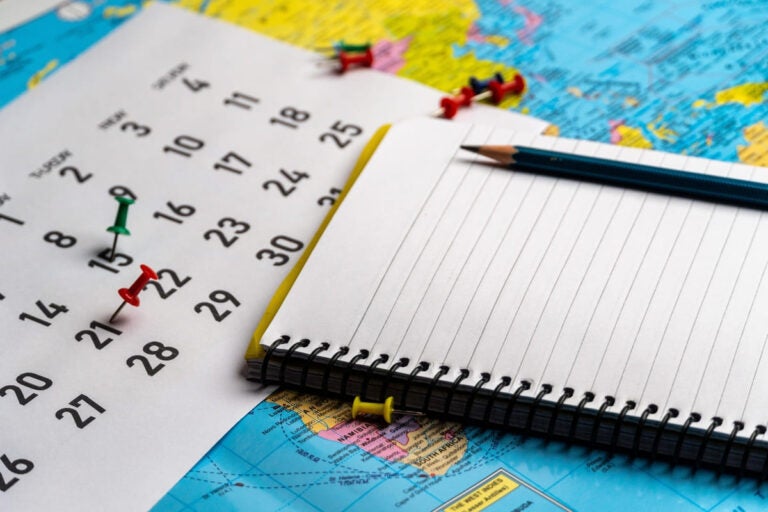
This year, Ramadan began on February 17 in some countries and on February 18 in others. The timing varies each year because it is based on the lunar calendar and when local authorities in each country sight the crescent moon.
It lasts around 29 to 30 days and is expected to end on March 18 or 19, depending on when the country began observing. At the end, we celebrate Eid-ul-Fitr, one of the two yearly Islamic religious holidays.
Where will Ramadan affect travel the most?

Countries where the majority of the population is actively fasting, such as muslim countries, will probably affect travel and plans. Daily life shifts around prayer, suhoor (eating at sunrise before the fast), and iftar (breaking the fast with food at sunset).
During Ramadan, places like Saudi Arabia, the UAE, Qatar, Kuwait, Morocco, and Jordan have different daily schedules. Restaurants tend to be closed until sunset, working hours are shorter, educational institutions close early, and things move at a slower pace. Everything seems to come alive 2-3 hours before sunset and iftar.
On the other hand, destinations like Turkey (especially Istanbul), Malaysia, and areas in Egypt may not alter daily routines as much. Many restaurants are still open, alcohol is available, and most attractions run as normal.
The table below summarises popular destinations where Ramadan affects travel and how:
| Destination | Daytime restaurant closures | Alcohol restrictions | Tourist attractions | Night activity |
|---|---|---|---|---|
| Saudia Arabia | Eateries closed or limited till sunset | Illegal year-round | Open but with shifted hours (late opening and early closing) | Lively evenings, social scenes post-iftar, night markets |
| UAE | Restaurants open for non-muslims | Limited and must be consumed in licensed venues (illegal in Sharjah) | Open but with shifted hours (late opening and early closing) | Lively evenings, social scenes post-iftar, night markets |
| Qatar | Restaurants open for non-muslims | Limited and must be consumed in licensed venues | Open but with shifted hours (late opening and early closing) | Lively evenings, social scenes post-iftar, night markets |
| Kuwait | Restaurants open for non-muslims | Illegal year-round | Open but with shifted hours (late opening and early closing) | Lively evenings, social scenes post-iftar, night markets |
| Morocco | Restaurants open for non-muslims | Available in hotels, resorts, and mainly for tourists | Operate normally with reduced crowds | Cultural events, social scenes post-iftar, night markets |
| Jordan | Restaurants open for non-muslims | Generally restricted, but may be available in some areas | Open but with shifted hours (late opening and early closing) | Cultural events, social scenes post-iftar, night markets |
| Turkey | Many restaurants are still open all day | Widely available | Operate normally with reduced crowds | Cultural events, social scenes post-iftar, night markets |
| Malaysia | Muslim eateries may close, but others are still open | Widely available | Operate normally with reduced crowds | Ramadan festivals, socials, and cultural events |
| Egypt | Restaurants outside tourist areas often shut | Available in hotels, resorts, and mainly for tourists | Open but with shifted hours (late opening and early closing) | Cultural events, social scenes post-iftar, night markets |
What actually changes for tourists?
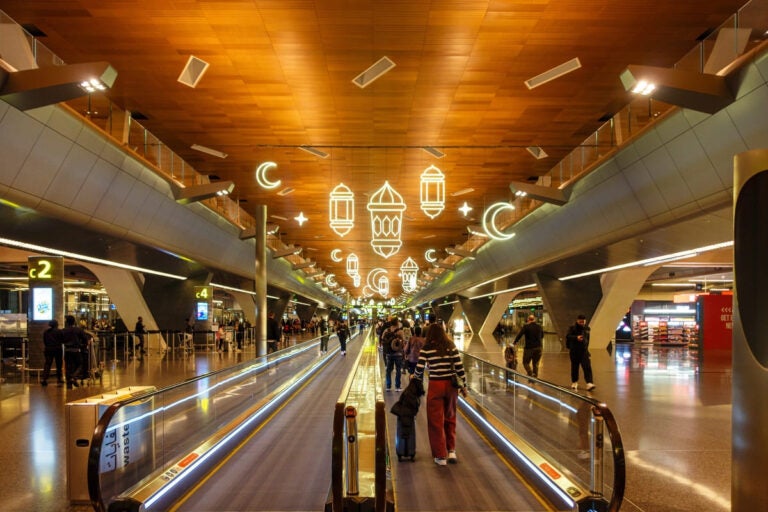
Ramadan will definitely not stop you from travelling, but it may change the day-to-day routine in muslim countries. However, this varies from country to country.
Tourist hotspots like Sharm el-Sheikh in Egypt won’t be affected by the Ramadan routine, and you’ll be able to eat and drink in public. In fact, you’ll barely even notice a difference.
However, not so touristy areas in other muslim countries like Algeria or rural parts of Indonesia have slower-paced routines, and where eating/drinking in public may not be desirable. Therefore, it’s best to plan according to the destination.
Restaurant hours
During the day, you’ll find many restaurants close until before sunset and iftar.
- Smaller, local eateries shut completely during fasting hours
- Larger restaurants may stay open, especially in major tourist areas
- International and tourist hotels operate normally and continue serving guests
- Food delivery services may be reduced
Eating or drinking in public
As previously mentioned, this depends on the country, but it is definitely something to be mindful of.
- For conservative countries, eating or drinking in public may be discouraged or restricted
- Popular tourist destinations are usually more relaxed
- Gulf countries may have formal rules
Dress expectations
While there isn’t a formal Ramadan “dress code”, many may view modesty as important during Ramadan, in line with greater piety.
To remain respectful and mindful of this:
- Modest clothing is encouraged, especially in muslim-majority areas
- Shoulders and knees should be covered in conservative/religious areas
- Research what people tend to wear in the area you’re planning to visit
Adhering to modest clothing isn’t a rule, but being discreet and mindful goes a long way.
Alcohol availability
This varies from destination to destination. In some countries, alcohol is restricted, and in others, it’s banned year-round. If you’re looking forward to nightlife during your trip, check in advance whether there will be opportunities for this.
Tourist attractions
Most major sights are open with adjustments:
- Reduced opening hours
- Government offices close earlier
- Smaller tourist attractions may close earlier
- Guided tours may shift to evening schedules
Overall, expect slower mornings, quiet afternoons, and lively and festive evenings.
Is it a bad time to travel?
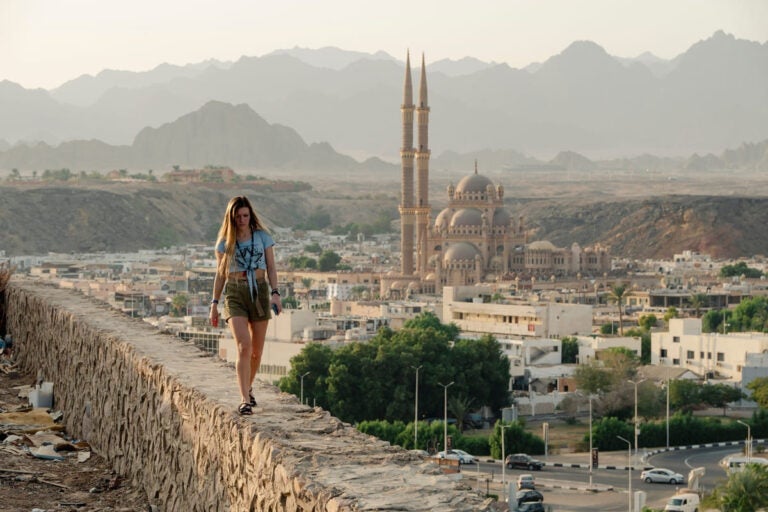
If you’re looking forward to nightlife and clubbing scenes, travelling to a muslim country during Ramadan may not be the best idea. If not, as a muslim, I’d say it’s a really special time to visit.
Here are some quick pros and cons to help you decide.
Pros:
- Fewer daytime crowds at major tourist attractions
- A unique and festive atmosphere you won’t experience any other time of the year
- Cultural iftar experiences with authentic and traditional food
- Lively night markets and Ramadan bazaars
Cons:
- Very quiet during the day (not good, if you’re looking for liveliness)
- Limited dining options during fasting hours
- Shorter operating hours for many businesses and shops
What is Iftar and can tourists join?
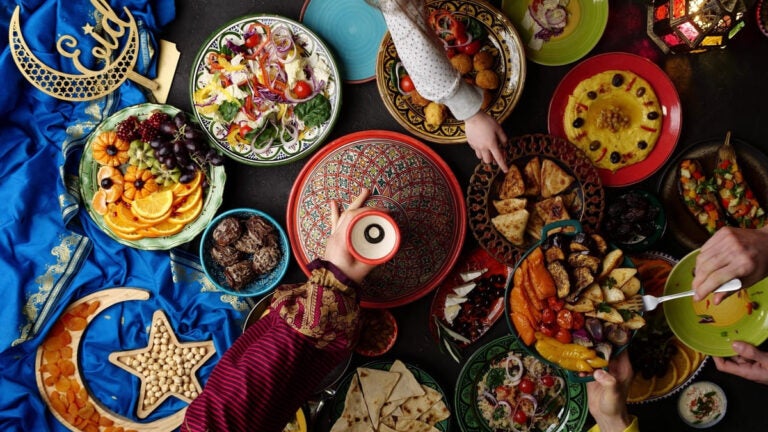
Iftar is the meal Muslims break their fasts with at sunset each day during Ramadan. We break our fast with the call to the evening prayer and traditionally with dates and water followed by a full meal.
And, yes! Tourists can absolutely join in. The more people at Iftar, the merrier. Many hotels and restaurants offer large Iftar buffets and special Ramadan menus. Cities like Dubai set up beautiful Ramadan tents with traditional decor, live cooking stations, and family-style dining.
If you’re traveling to a muslim or muslim-majority country, I’d recommend booking at least one Iftar experience! It might become one of the most memorable parts of your trip.
Smart travel tips for Ramadan 2026

Here’s how to make travel during Ramadan as smooth as possible:
- Plans meal ahead during daylight hours or stock up on essentials just in case stores are closed
- Book accommodation with in-house dining so you always have options
- Check official tourist attraction websites for updated Ramadan opening/closing times
- Avoid loud behaviour during fasting hours
- Embrace the cultural events and social evenings
One extra practical tip is to make sure you stay connected, especially since opening hours and restaurants availability can change during Ramadan. Using Holafly’s travel eSIM means you can easily check updated schedules, book last-minute Iftar spots, and navigate evening transport without hunting for WiFi.
For more insider travel tips and destination guides, check out Holafly on Google Discover.

Connect to the fastest networks
International eSIMs, local networks. Enjoy the best of both worlds with Holafly.
Plans that may interest you


Born and raised in Queens, New York, I'm a Psychology graduate with a passion for writing that I've been nurturing since 2019. Over the years, I've enjoyed creating meaningful content across various niches, including sports, hospitality, and career development. At Holafly, I focus on crafting useful and inspiring pieces to make your adventures more effortless. One of the best perks of this role? Creating travel content always seems to inspire my next vacation destination!

