Language


 No results found
Rome’s public transportation: A local expert’s guide to getting around Rome
Navigate Rome public transportation with local expert tips on the best ways to get around Rome, how to purchase tickets, and mistakes to avoid.

Getting around Rome can feel overwhelming, but if you master Rome’s public transportation system, it’ll be a breeze. The Italian capital is renowned for its narrow streets and constant movement of people and traffic, and public transportation makes it easy to explore without a car.
This guide to public transportation in Rome contains all the official modes of transport and is enriched with local insights from Riccardo Olmert, a Rome-born local and part of the Holafly team. With Riccardo’s daily experience using local transport in Rome, you’ll gain a real-life perspective of how the system really is, including the best way to travel, timings, local routines, and even common tourist mistakes to avoid. Stay connected with a travel eSIM from Holafly to ensure seamless navigation and travel abroad.

Connect to the fastest networks
International eSIMs, local networks. Enjoy the best of both worlds with Holafly.
The best way to get around Rome without a car: From a local
Rome has an extensive network of public transport services operated mainly by ATAC. The system includes metro, buses, and trams in Rome, all with the same ticket structure. To learn more about tourist passes, visit our dedicated blog on the tourist card for Rome.
Overall, getting around Rome using the public transport system is more cost-effective than relying on taxis or private transport. Many even use public transport system
According to Riccardo, “The metro is usually reliable, while buses are less predictable because Rome has a lot of traffic.”
This is probably why many tourists and locals combine metro rides with walking when moving through the historic center and city centre.
Rome’s public transportation map: How to read it
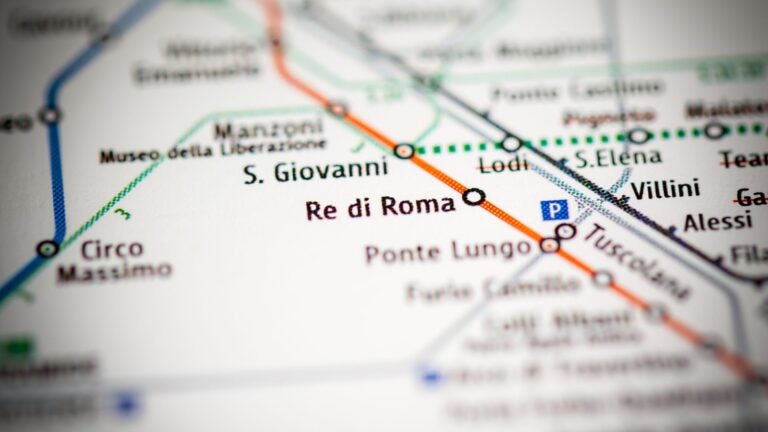
Many tourists (and even locals) rely on Google Maps or other popular navigation apps when traveling nowadays. It also doesn’t hurt to do it the old-fashioned way and familiarise yourself with Rome’s public transportation map.
Since Rome’s metro system isn’t that extensive, you’ll find it easy to learn. The metro map shows how to change lines at Termini and San Giovanni, helping you get around for Rome souvenir shopping or reach popular tourist spots like the Trevi Fountain and Piazza Venezia.
Rome’s public transportation: Rome metro

The Rome metro, also known as the Rome subway, is the fastest way to move across long distances. Although it is the smallest metro in Europe, around a million people use it daily, making it one of the most efficient ways to get around Rome.
Currently, Rome’s metro system has three lines:
- Line A 🟠: Connects Spagna station, San Giovanni, and Vatican-adjacent areas
- Line B 🔵: Serves Colosseum, Roman Forum, and suburban areas
- Line C 🟢: Newer line connecting outer districts, with interchange at San Giovanni
The first two lines cover most of the main attractions and connect key areas, including Termini, Flaminio, and Spagna stations. Familiarizing yourself with Rome’s Termini train station is important, especially if you’re interested in day trips from Rome.
Metro trains run every five to ten minutes, from early morning (5:30 AM) to late evening/night (11:30 PM). When we asked Riccardo about how punctual the metro system is, he explained, “Metro and trains are usually on time,” which is why locals rely on them during the workweek, especially outside rush hour.
Rome metro tickets
One of the most convenient things about Rome’s public transport system is that the same ticket works across the metro, buses, and trams. There’s a variety of ticket options, which include:
“Cards for 24 hours, 48 hours, 72 hours and the one-week pass.”
- One trip ticket (valid for 100 minutes)
- 24-hour, 48-hour, and 72-hour passes
- Weekly passes (valid until the seventh day)
The last option is ideal if you plan on unlimited travel.
How to buy Rome metro tickets
You can buy tickets at ticket machines in metro stations, newspaper shops, and authorised kiosks. Paper tickets must be validated before entering the metro turnstiles or once aboard buses and trams. Riccardo warns that not having a validated ticket can result in fines, even if you already purchased it.
You can also purchase tickets digitally from apps like MooneyGo and TicketAppy.
Riccardo explains, “For the metro, it’s possible to pay at the barrier with a credit card instead of presenting a ticket.”
Rome’s public transportation: Bus 🚌
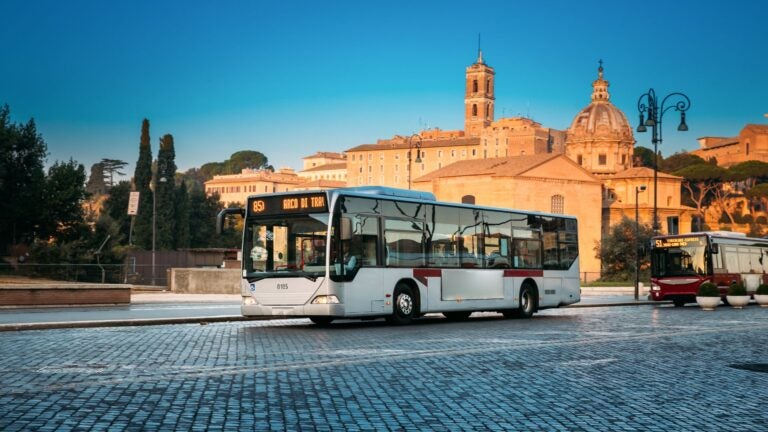
Buses are also widely used in Rome, with 338 bus lines and over 5000 stops. Buses in Rome also cover areas not served by the metro, especially in the historic centre, where subway construction is limited.
However, like with all on-road traffic, you might have problems with reliability. Avoid rush hour, especially between 8:00 and 9:00 and 17:00–19:00.
Bus stations are well marked, and bus routes are visible at stops. Google Maps helps track buses in real time, although delays still happen.
Rome’s public transportation: Trams 🚋
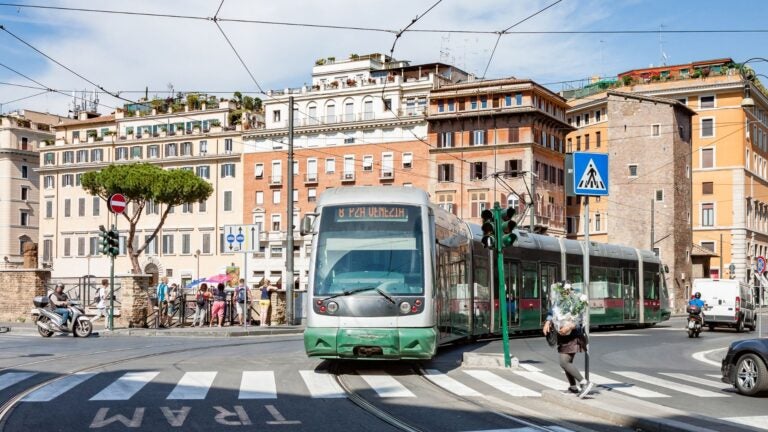
Trams aren’t as popular a public transport mode as Rome’s metro system and buses. They operate mainly outside the historic center but are reliable and less affected by traffic.
Trams run from 5:30 AM until midnight every day, but you can always find a bus service available after these hours. Since they’re part of the same public transport system, you won’t need a separate ticket.
Rome’s public transportation: Taxis, ride-hailing, and private transport 🚕

Taxis are widely available in Rome, but expensive. Riccardo highlights that “Getting a taxi for a short trip is rarely worth it.” Locals use apps like Uber, itTaxi, FreeNow, and appTaxi instead.
However, driving is strongly discouraged overall. Narrow streets, limited parking, and restricted zones make private or automobile transport impractical in the city center.
How to plan routes and navigate Rome
Navigating the Eternal City is super easy. Rome is very walkable, and most of the attractions are in close proximity to each other. This becomes even more effortless when you have a phone with reliable mobile internet. One way to ensure this is by getting a travel eSIM. Companies like Holalfy offer unlimited data travel eSIMs for over 200 destinations, including an eSIM for Italy and Rome.
With unlimited data, you can browse Google Maps freely in Rome, and it will show you the best and quickest way to reach your destination through public transport.
“Plan your movements and leave room for delays if you are using the bus,” Riccardo advises.
To get real-time updates on times and delays, Moovit is a better alternative. You can plan your route, get updates on any delays, and check new estimated arrival times. Just in case, save an image of Rome’s metro map for when you lose connection to the internet.
Top Rome public transit routes from Riccardo
- Colosseum, Roman Forum and Monti neighbourhood: Get off at the Colosseo metro station (Line B), tram stop (lines 3 or 8) or take any of the following buses: 38, 75, 175, and 271
- The Vatican: Catch metro Line A to Ottaviano, or the 62, 64, and 81 buses. If you’re traveling from Civitavecchia, you could also take an overground train that stops at St Pietro
- The Pantheon, Trevi Fountain, and Spanish Steps: Catch the metro Line A to Spagna station to reach the Spanish Steps and walk to the other attractions from there. You could also take the 51, 60, or 62 buses to stop near the Pantheon.
The bus 40 Express is a special bus for tourists that crosses many of the famous sights, including the Vatican area, St. Peter’s Basilica (stop Borgo Sant’Angelo), the City center (stop Piazza Argentina), the Colosseum (stop Piazza Venezia), and Termini Train Station (beginning/end of the line).
Stay connected on Rome’s public transport with a Holafly travel eSIM
To get the most out of public transportation in Rome, staying connected is essential. Holafly’s travel eSIM for Italy offers unlimited data and hotspot allowances to ensure you can access Rome public transportation maps, live bus routes, metro line updates, and digital Rome public transportation passes, all in real time.
With a Holafly eSIM, you can:
- Use Google Maps offline or live as you navigate metro stops, bus stations, and tram routes
- Buy digital tickets or validate Rome metro tickets on the go
- Share your connection with travel companions via hotspot
- Avoid roaming fees and SIM card hassles when you land in Rome
Having reliable data helps you confidently manage your itinerary, check real-time arrivals at major transit hubs, and stay safe as you explore this historic city. All you need is an eSIM-compatible phone!

Peace of mind before you fly
Set up your eSIM before travel and get unlimited data on arrival.
Plans that may interest you


Born and raised in Queens, New York, I'm a Psychology graduate with a passion for writing that I've been nurturing since 2019. Over the years, I've enjoyed creating meaningful content across various niches, including sports, hospitality, and career development. At Holafly, I focus on crafting useful and inspiring pieces to make your adventures more effortless. One of the best perks of this role? Creating travel content always seems to inspire my next vacation destination!