







 Language
The 8 places Europeans travel in summer that most Americans never think to visit
Discover 8 European summer destinations locals love but Americans overlook. From Albania to the Azores, here’s how to travel beyond the usual hotspots.

Every summer, your feed fills up with the same European highlights: Santorini sunsets, Amalfi Coast vistas, and Barcelona’s architecture.
It all looks beautiful, but this year, you want to go somewhere that feels less crowded and more real. Somewhere that people who live in Europe actually go, often as a way to avoid the hottest part of summer in Europe.
Well, get ready for some insider knowledge. In this article, we’re sharing 8 places where European travelers actually spend their own summer holidays, not the destinations that dominate American travel content.
If you want to vacay like the Europeans, this is how you do it.
Important: Schengen travel rules can shift unexpectedly due to unforeseen border security situations, such as Italy’s temporary border checks on travel from Sapin. Researching entry guidelines before you fly is always good practice.
Why Europeans and Americans visit completely different destinations
Most Europeans avoid the highly promoted tourist corridors in peak summer, as these destinations are crowded and overpriced. Instead, they go to lesser-known, more affordable areas where there’s a stronger local vibe and fewer crowds.
For Europeans, this isn’t hard; the continent is so well connected that it’s possible to fly to even the most remote islands in just a few hours. Moreover, they can easily drive cross-country to a lake or national park that is pretty much cut off from transcontinental crowds.
But for Americans, places like the Balkans or the Azores feel unreachable because the logistics to get there are too complex. The USA to Europe is already such a long flight, so naturally, most Americans choose destinations with direct connections from US cities, such as Barcelona, Rome, or London.
The 8 destinations Europeans keep going back to every summer
Here are 8 European destinations largely unknown to Americans, but loved by locals and Europeans:
| Destination | Country | Why Europeans love it | July temp |
|---|---|---|---|
| Sardinia | Italy | Luxurious, white sand beaches, transparent waters | 29C / 84F |
| Azores | Portugal | Volcanic islands, dramatic nature | 24C / 75F |
| Koufonisia | Greece | Unspolied island, authentic village vibe | 26C / 79F |
| Ksamil | Albania | Maldives-style scenery | 30C / 86F |
| Soča Valley | Slovenia | Emerald-green rivers, Adventure vibe | 24C / 75F |
| Bay of Kotor | Montenegro | Adriatic beauty, Medieval old town | 29C / 84F |
| Jūrmala | Estonia | Easy access from Riga | 23C / 74F |
| Ohrid | North Macedonia | UNESCO-listed lake | 28C / 83F |
1. Sardinia, Italy
This beautiful Italian island is overlooked by Americans who tend to stick to the mainland. However, it’s one of the most popular vacation destinations among Italians. It’s adored for its laid-back vibe, luxurious resorts, white-sand beaches, incredible local cuisine, and, perhaps, the most transparent waters in the world.
2. The Azores, Portugal
These volcanic islands in the Atlantic are far from the mainland and require connecting via Lisbon or another European hub. So they are often skipped by Americans, but are popular with Europeans, who can get there in just a few hours. Known as the “Hawaii of Europe,” The Azores oozes incredible scenery, from mountains to hot springs to vineyards.
3. Koufonisia, Greece
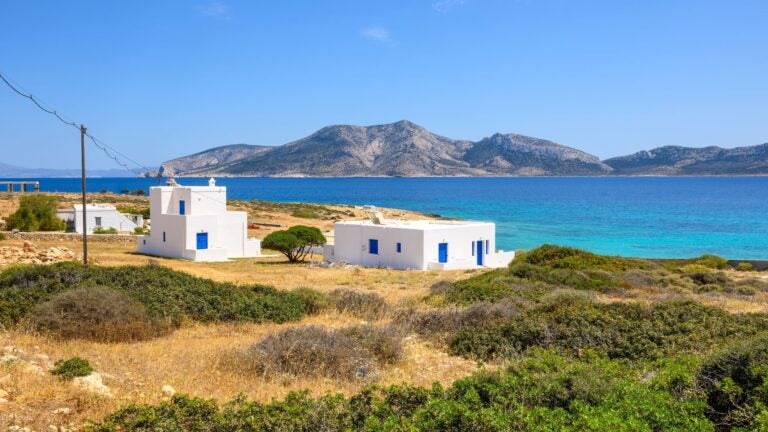
While most Americans head to the over-touristy Santorini and Mykonos, Europeans go to Koufonisia. Here, you get a truly unspoiled Greek island experience as it’s largely undeveloped. There are no big resorts, just small traditional whitewashed villas, and the water is so clear, it feels unreal.
4. Ksamil, Albania
Europeans know Ksamil as the “Maldives of Europe” but without the crowds (yet). It’s one of the favorite spots on the Albanian Riviera for Italians, due to its sandy beaches, turquoise waters, and low prices. Is one of those places included in the what is Albania known for lists!
5. Soča Valley, Slovenia
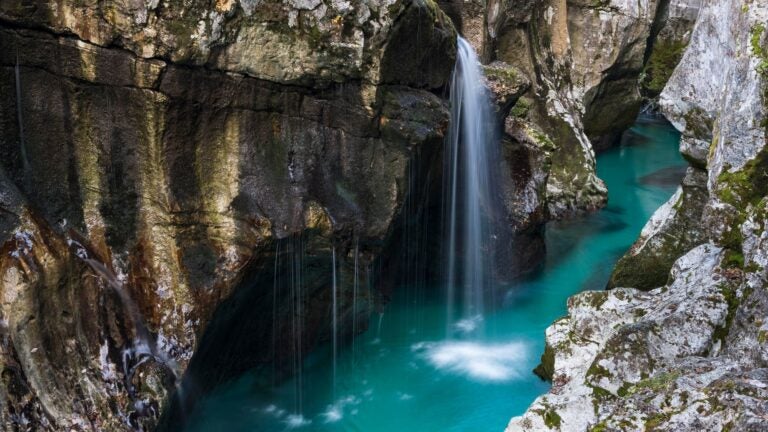
One of Europe’s most beautiful but largely unknown rivers, the emerald-green Soča Valley is incredibly picturesque, peaceful, and majestic. It’s popular with nature-loving Europeans, who come for kayaking, hiking, and wild swimming.
6. Bay of Kotor, Montenegro
Kotor is one of the best-preserved medieval towns in the Adriatic and is a UNESCO World Heritage Site with breathtaking fjord-like scenery. As a relatively young country, most Americans head to neighboring Croatia instead, but Montenegro is one of the cheapest European countries to visit.
7. Jūrmala, Estonia
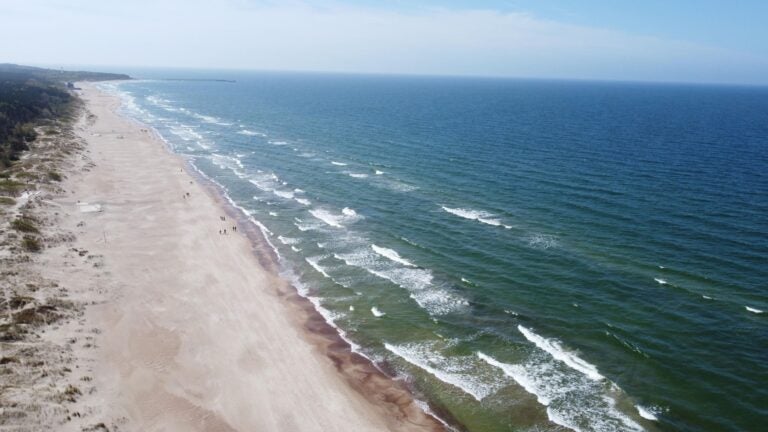
This Baltic Sea beach escape is just 30 minutes from Riga, and oozes old-school European seaside elegance. It’s extremely local, attracting mainly Latvians, and some Russians and Europeans, so you’d be unlikely to spot a fellow American here.
8. Ohrid, North Macedonia
This is the crown jewel of North Macedonia, but it’s still largely unknown. The city is set on the UNESCO-listed Lake Ohrid and has a stunning old-town charm and a mountain backdrop. It’s popular with Albanians, Greeks, and Italians, and feels like a quieter and cheaper version of Italy’s famous Lake Como.
What these 8 hidden European gems have in common
Most of these destinations are not completely remote. They have strong transport links within Europe, but non-existent direct connections from US airports, which is partly why they stay off American radar.
This is a real shame as these less-touristy places have:
- A strong local food culture
- Lower prices
- A slower pace
The good news, however, is that you can still reach these hidden gems, thanks to the well-connected train network in Europe, as well as ferries and regional flights. While you may not want to do another journey immediately after a long-haul flight, you can combine them with major European destinations as part of a wider Europe trip. In the next section, we’ll show you how.
How to combine one of these with a classic European trip
The most realistic way to visit one of these destinations is to fly into a nearby major hub, spend 3-4 days there, and then take the train, a short flight, or a ferry.
With this method, you could combine:
- Lisbon and the Azores (via flying)
- Rome and Sardinia (via flying)
- Athens and Koufonisia (via ferry)
- Venice and Soca Valley (via train)
- Helsinki, Riga, and Jūrmala (via flying and train)
- Athens, Corfu, and Ksamil (via ferry and car)
Planning a trip to Europe does become a bit more complex when multiple destinations are involved. Still, it’s totally doable if you give yourself enough time to research and map out the itinerary. Travel planning tools like Skyscanner and Rome2Rio are particularly helpful for finding the best routes.
What’s more, despite having less-developed tourist infrastructure, most of these destinations have good mobile coverage. So with a travel eSIM, you can stay connected throughout your onward journey, even if you’re changing countries.
Is summer actually the right time to go?
Most Americans head to Europe in July or August, but the truth is, June or early July can actually offer the best experience. Even though Americans don’t tend to visit these destinations, most Europeans have PTO in late July or August, so they can still get crowded with domestic tourism.
In fact, in some European countries, like Italy and Spain, August is the traditional vacation month. Many non-tourism businesses and offices close down for a few weeks, so pretty much the entire country travels in this short window. As a result, prices rise, and accommodation in places like the Azores and Montenegro fills quickly.
However, in June, most of these European summer destinations are already warm, yet there are fewer crowds and better accommodation availability.
If you start planning now, you will most likely be able to find a late June departure for a reasonable price. And 6-8 weeks, although a little tight, is generally enough time to plan a trip, even if you’re visiting multiple places.
Stay connected as you explore Europe’s hidden corners
When you’re hopping between cities and taking ferries and trains to lesser-known destinations, having reliable data isn’t just useful; it’s crucial.
With a Holafly eSIM for Europe, you can stay connected across multiple countries without switching SIM cards or worrying about roaming fees. Simply install the eSIM before you go, activate on arrival in Europe, and enjoy fast, unlimited data as you navigate and explore these hidden gems.
Learn more about Holafly’s eSIM for Europe here.

Unlimited data. Peace of mind.
Make sure you have travel data that's there when you need it most.
Plans that may interest you

Hi, I'm Mika, a South Korean writer living in the US. I cover travel and live events, focusing on the practical stuff that makes your trip smoother, whether you're navigating a new city or heading to a major international event.I'm also the founder of Search SEOul, South Korea's leading SEO conference, bringing together search marketing experts and speakers from around the world.

