Language


 No results found
12 German Christmas traditions you won’t find anywhere else
From Christkind and St. Nicholas to Stollen and Lebkuchen, here are 12 German Christmas traditions that bring a whole new chapter to the holiday season.

There is one country on Earth that every Christmas lover should visit at least once – Germany.
Many of the global holiday customs we know and love today, such as Christmas trees, Advent calendars, and festive markets, actually originated here.
But here’s the really magical part: Many Christmas traditions in Germany remain exclusive to German-speaking regions. So visiting Germany in December is like uncovering a hidden chapter of Christmas, full of stories, rituals, and flavors you won’t find anywhere else.
From the angelic Christkind to the legendary St. Nicholas, here are 12 uniquely German Christmas traditions that will inspire you to book a flight and see them for yourself.
1. Christkind as the gift-bringer
In many parts of Germany, it’s not Santa Claus who brings kids their presents but Christkind.
Traditionally depicted as an angelic figure, Christkind brings presents on the evening of December 24th and places them under the Christmas tree. Children don’t see Christkind, but a bell rings on Christmas Eve evening to signal that the gifts have arrived. This tradition is especially popular in southern regions like Bavaria and Baden-Württemberg.
Meanwhile, some parts of North Germany have Weihnachtsmann (the “Christmas Man”). While he looks like Santa Claus, he is a different figure, but he also brings gifts on Christmas Eve.
2. Christmas Eve gift-opening on Heiligabend
On December 24th (Heiligabend), families gather for a small, low-key festive meal, and then once they hear the bell signaling Christkind’s visit, they gather in front of the tree to exchange presents. This gift-giving tradition has its own name — Bescherung.
Then on Christmas Day, Germans join their extended families and have their main festive feast.
3. Nikolaustag shoes outside the door (Dec 6)

Christmas Eve is not the only time kids in Germany receive gifts. A separate tradition is a visit from St. Nicholas on December 6th (Nikolaustag).
Children leave a boot or a shoe outside their bedroom door on the night of December 5th. Then, when they wake the next morning, they find the show full of nuts, fruit, chocolate, and small gifts — only if they’ve been good, of course.
In some regions, St. Nicholas visits schools in the run-up to Nikolaustag, reminding kids to behave.
4. Krampus & Knecht Ruprecht
While Christkind and St. Nicholas are the “goodies,” Krampus and Knecht Ruprecht are their mean companions.
Krampus is most common in Southern Germany, and is depicted as a half-goat, half-demon figure. Meanwhile, you’re more likely to hear about Knecht Ruprecht in central or Northern Germany, who appears as a slightly less scary gruff farmhand or servant.
Depending on the region, if children are naughty, one of these “baddies” will visit instead of St. Nicholas on December 6th and leave a stick or twig.
5. Adventskranz (the four-candle wreath)
One of the most long-running Christmas traditions in Germany is for households to have an Adventskranz — a circular wreath made of evergreen branches that holds four candles. One candle is lit each Sunday in the run up to Christmas, celebrating the four Sundays of Advent.
6. Adventskalender (the original advent calender)
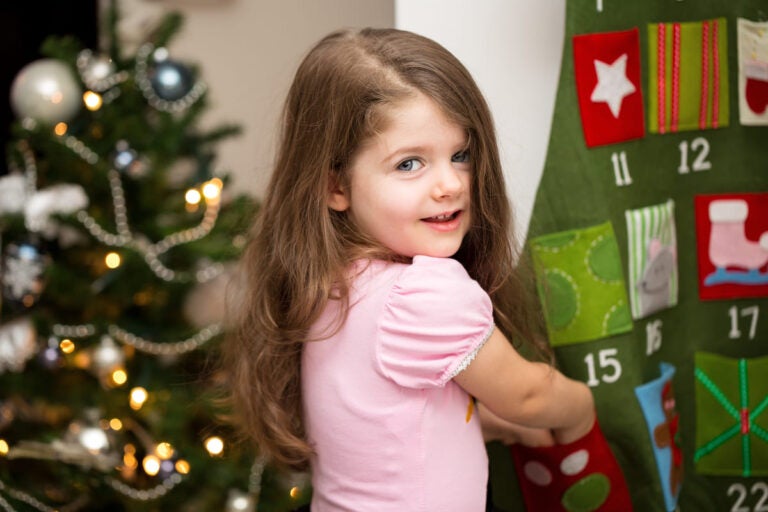
Did you know that the chocolate Advent calendars that fill supermarkets every November originated from the German tradition of Adventskalender?
Dating back to the 19th century, advent calendars were a popular tradition in Germany well before they became the global sensation they are today.
Traditionally, an Advent calendar was a festive decoration with 24 doors, one for each day from December 1st to Christmas Eve. German children use Advent calendars to count down to Christmas, opening a door each day to reveal a surprise, which is often candy or chocolate.
7. The German Christmas tree origin story
Another fun fact about Germany is that it’s where the tradition of Christmas trees began. Christmas trees are native to Germany, and in the 16th century, Germans began bringing them into their homes during the festive period.
Traditionally, trees were decorated with apples (symbolizing the Garden of Eden), nuts, paper flowers, and candles, before evolving to the flashing lights, tinsel, and modern ornaments we use today.
8. Weihnachtsmärkte (original German Christmas markets)
The Christmas markets in Germany are, without doubt, one of the most famous German Christmas traditions. In fact, tens of millions of international tourists visit Germany in December for this reason.
Germany is home to several of Europe’s oldest Christmas markets, such as Dresden Striezelmarkt, which dates back to 1434. Meanwhile, Nuremberg Christkindlesmarkt is one of the biggest and most famous Christmas markets in the world, and the Christmas markets in Cologne, Rothenburg, and Munich are just as popular.
9. Feuerzangenbowle (flaming mulled wine punch)
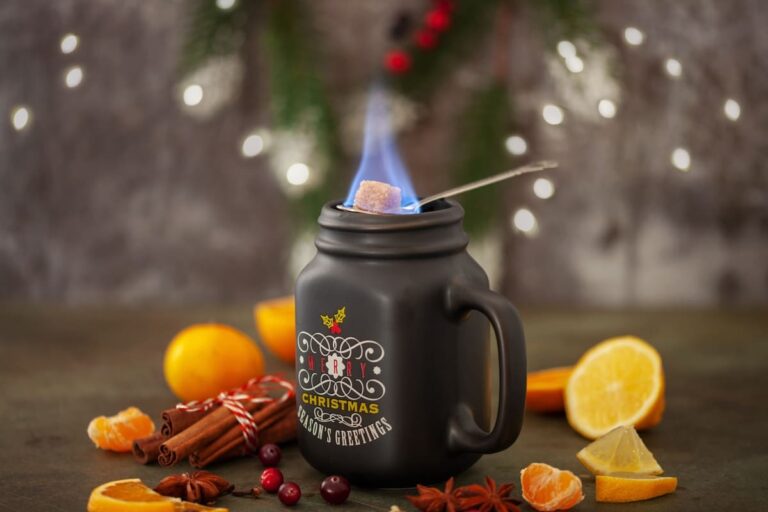
Feuerzangenbowle is one of Germany’s most festive (and theatrical) drinks, enjoyed on both Christmas and New Year’s.
Feuerzangenbowle is a warm, spiced wine punch similar to Glühwein (mulled wine), but with an added dramatic twist. A rum-soaked sugarloaf is set ablaze above the punch bowl, and the caramelized sugar drips into the drink, sweetening it.
If you’re visiting Germany around the festive season, you can try this epic holiday drink for yourself at any Christmas market.
10. Dresdner Christstollen (Stollen with centuries of tradition)
Nowadays, Stollen is a well-known Christmas food worldwide, but in Germany, this fruity bread has been consumed at Christmas for centuries.
Germans consumed a simple version of Stollen (flour, oats, and water) in the Middle Ages before butter was added in the 15th century, followed by dried fruits, nuts, and spices, transforming it into the rich, festive treat we know and love today.
Today, it’s a centerpiece at all the Christmas markets in Germany, but you can also find it in bakeries, cafes, and supermarkets.
11. Lebkuchen & Lebkuchenherzen

Aside from Stollen, eating Lebkuchen and Lebkuchenherzen are among the most iconic German Christmas traditions, especially in Nuremberg and the Bavarian regions.
Nürnberger Lebkuchen is the traditional Lebkuchen and is like Germany’s version of gingerbread, but softer and chewier (halfway between a cake and a cookie).
Meanwhile, Lebkuchenherzen is a fun and decorative variation of Lebkuchen, cut into hearts and covered with colorful icing messages like “Frohe Weihnachten” (Merry Christmas). This is the most common variation you’ll find at Christmas markets, and it’s a popular gift idea across Germany.
12. The Rauschgoldengel (gold foil Christmas angel)
The Rauschgoldengel is not just a cute tree decoration; it’s one of the most significant Christmas traditions in Germany.
The angel figurine is made of folded gold or silver foil, creating a magical effect in candlelight. The angels represent the messengers of God, linking back to the Nativity story, and the golden shimmer reflects light in the dark winter months, symbolizing hope, joy, and divine presence.
Rauschgoldengels are often placed at the top of the Christmas tree or added to nativity displays.
Ready to experience Germany’s Christmas magic for yourself?
Don’t let roaming charges or international SIM hassles get in the way of your festive adventure.
Whether you need to make calls in Germany, navigate the Christmas markets, or check public transport timetables, Holafly makes staying connected effortless.
With a Holafly eSIM for Germany, you get unlimited data and reliable coverage across the country, ensuring you never miss a moment of holiday wonder!

Peace of mind before you fly
Set up your eSIM before travel and get unlimited data on arrival.
Plans that may interest you


Hey, I’m Mika! I’m an SEO specialist with 7+ years of experience and a passion for travel info that actually helps you explore smarter. I write travel guides and tips backed by SEO insights so you can spend less time searching and more time adventuring.