




 Language


 No results found
A local’s guide to Europe’s must-try foods: 10 dishes you can’t miss!
A local’s guide to European food and the dishes worth trying.

Europe is famous for its plentiful landmarks, but European food is just as defining.
For this guide, I spoke with five Holafly employees who live in Europe (or previously did), and asked them to share their favorite dishes.
Whether you’re planning your first visit or returning to explore new regions, knowing how to plan a trip to Europe can help you organize a food-focused itinerary that covers multiple countries and cuisines. Let’s dive right in.
Cocido (Spain)
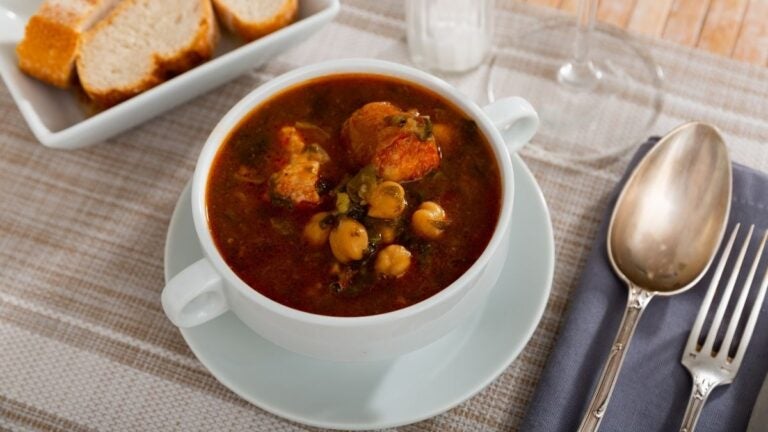
Cocido is one of the most traditional dishes in Spain, holding a particularly special place in Madrid.
According to Ana Fernández, an SEO Manager at Holafly based in Spain’s capital, Cocido is “possibly the most typical dish in the city” and one that best represents local ingredients. It combines soup, vegetables, chickpeas, and meat into a single, slow-cooked meal.
Note that Cocido is also strongly tied to season and routine. Ana explains that “it’s eaten in winter or cold weather, usually as a long Sunday lunch shared at home with family.” Interestingly, many restaurants serve it only one day a week.
Passed down through generations, Cocido remains a classic “grandma’s recipe” and is best found in traditional taverns and family-run restaurants serving the best food in Spain.
Caracoles (Spain)
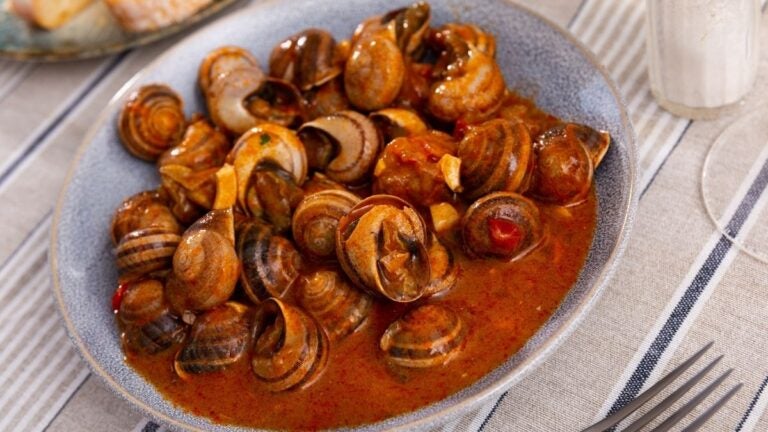
Caracoles (snails) are a traditional Spanish dish and a European delicacy with deep roots in the Iberian Peninsula, especially in southern and eastern Spain.
They are usually enjoyed as a casual tapa, shared in bars or prepared at home during spring and early summer.
The snails have a mild, earthy flavor that absorbs the sauce in which they are cooked. According to Ana, “they are often stewed in a slightly spicy tomato sauce, served hot in a clay dish, and eaten one by one with a toothpick.” Authentic versions of this European food are best found in traditional tapas bars, especially in Andalusia during peak season.
Coda alla vaccinara (Italy)

Coda alla vaccinara is a traditional Italian dish from Rome, rooted in the cucina povera tradition of the Lazio region.
It originated in the 19th century among slaughterhouse workers who used oxtail (a lesser-valued cut) to create a slow-braised stew full of depth and richness. Over time, it became a defining part of Roman cuisine.
Its flavor is bold and complex. Long cooking transforms the oxtail into tender, gelatinous meat, set in a savory tomato and wine sauce with aromatic vegetables and herbs. Many versions include pine nuts and raisins to add balance. According to Riccardo Ollmert, a Holafly writer based in Rome, it’s his favorite local meal.
Authentic versions of this European cuisine are best found in traditional Roman trattorias and osterias, especially in neighborhoods like Testaccio and Trastevere.
Amatriciana (Italy)

According to Riccardo, “Amatriciana is the most commonly eaten pasta in Rome, even if it remains less known outside Italy.” The dish originates from Amatrice, now part of the Lazio region, and evolved from gricia, a traditional shepherd’s meal later enriched with tomatoes.
Amatriciana has a bold, rustic flavor.
Crispy guanciale provides salt and smokiness, tomatoes add sweetness, and chili brings heat, finished with sharp Pecorino Romano. Authentic versions are best found in Rome and Amatrice, where the best food in Italy originates from traditional trattorias in Testaccio and Trastevere, which often feature guanciale on their menus.
Quiche Lorraine (France)

Camille Norest, born and raised in Paris and now SEO Manager at Holafly, told me about Quiche Lorraine, which is “a classic French dish that originated in the Lorraine region of northeastern France.” The recipe dates back to the 16th century and began as a simple tart made with:
- Bread dough
- Eggs
- Cream
- Smoked bacon
Over time, it evolved into the version known today, built on a buttery shortcrust pastry and a rich custard filling.
The flavor is creamy and savory, defined by smoky lardons, eggs, and crème fraîche. Camille notes that “Quiche Lorraine is a familiar everyday dish rather than a special occasion meal.” Authentic versions of this food from Europe are best found in local boulangeries and pâtisseries in Lorraine, as well as traditional cafés and bakeries across France.
Ratatouille (France)
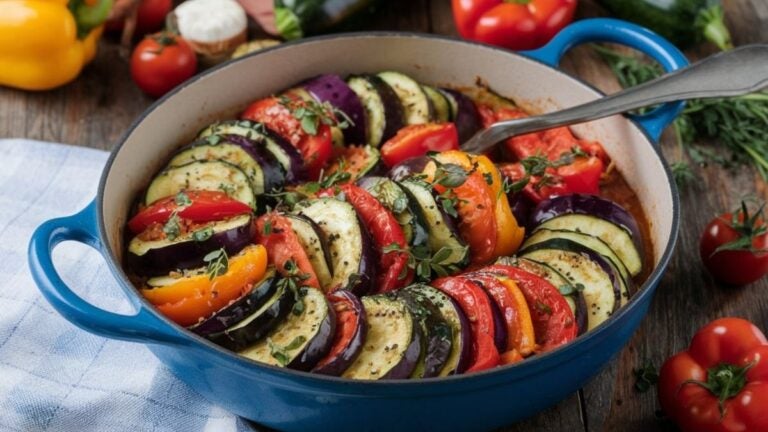
Ratatouille is a traditional French vegetable stew that comes from the Provence-Alpes-Côte d’Azur region in southern France. It’s also closely linked to the city of Nice, where it’s known as Ratatouille Niçoise.
Camille says, “Ratatouille has a balanced, savory flavor, with sweetness from tomatoes and peppers, depth from eggplant, and an aromatic finish from olive oil and local herbs.” She adds, “It’s best enjoyed in summer, when the vegetables are in season.”
You’ll find its traditional versions in Provence and along the Côte d’Azur, especially in family-run bistros and traditional restaurants.
Fish and chips (England)
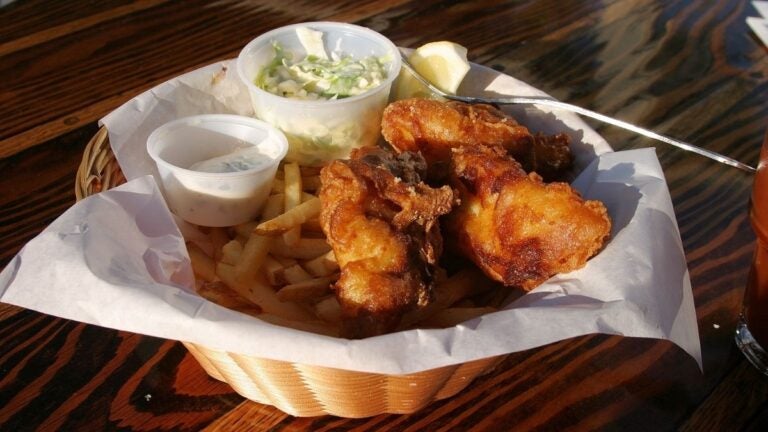
Fish and chips are widely regarded as England’s national dish, with roots in 19th-century working-class cities.
Fried fish was introduced by Jewish immigrants, while chips (or chipped potatoes) became popular in northern England. The two came together in London around 1860 and quickly spread across the country, especially in industrial areas and seaside towns.
The dish is defined by contrast: the light batter turns crisp and golden, while the fish inside remains mild and flaky. Chips are thick-cut, soft inside, and seasoned with salt and malt vinegar.
According to Mahnoor Bangush, Content Writer at Holafly, currently living in London, “Fish and chips is a non-negotiable local and European food classic whose authentic versions are best found on Golden Union on Poland Street.”
ICCO pizza (England)
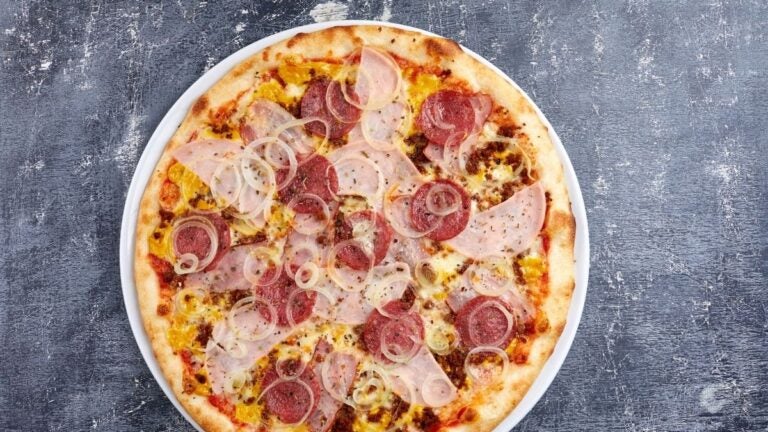
ICCO pizza isn’t a traditional English dish (nor commonly listed among famous European foods). However, it’s still a well-known London institution.
Founded in London in 1999, ICCO introduced affordable, thin-crust Italian pizza to the city, becoming a go-to spot for locals.
The pizzas are made with fresh dough and simple toppings centered around tomato sauce and cheese. According to Mahnoorm, an ICCO pizza is one of her favorite local meals, which can be found at its London locations, including Goodge Street, Camden, and Soho.
Gyro (Greece)
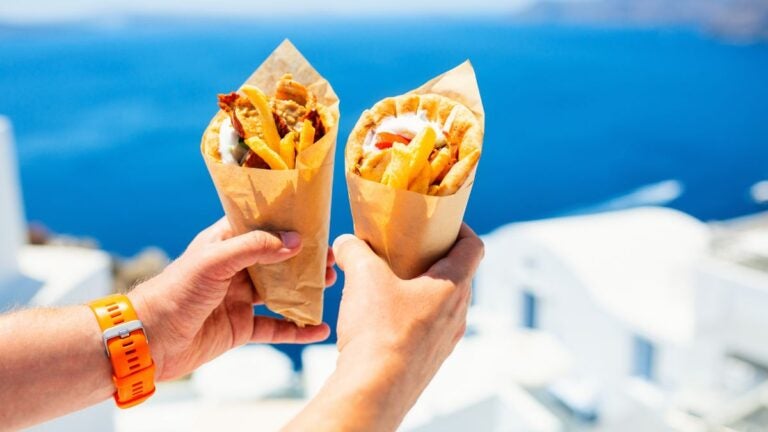
Gyro is one of Greece’s most recognizable street foods. The dish originated in Greece in the early 20th century, evolving from the Eastern Mediterranean döner kebab and gaining particular popularity in Athens and Thessaloniki.
Pork is the standard meat in most of Greece, slowly roasted on a vertical spit and sliced to order. The flavor is savory and aromatic, with seasoned meat balanced by fresh vegetables and tangy tzatziki.
According to Katarina Mirkovic Arsic, a Holafly writer who lived in Greece for several years, “a Gyro plate is a classic local favorite, and authentic Gyros are widely available across Greece, particularly in Athens and Thessaloniki, where traditional Greek food culture thrives.
Souvlaki (Greece)
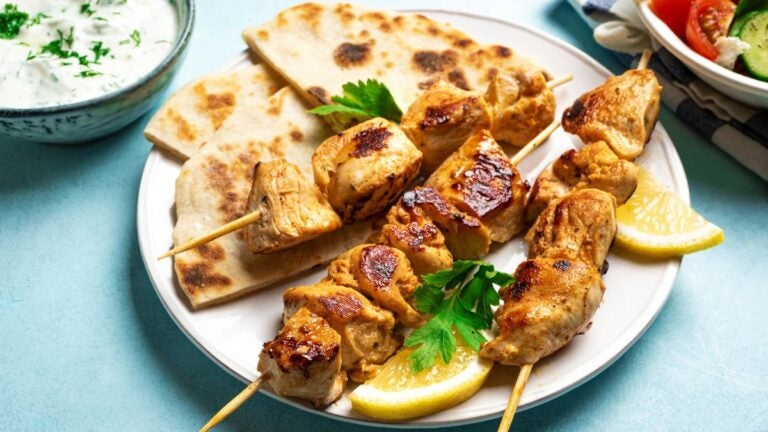
Souvlaki is one of Greece’s most iconic and enduring street foods, dating back to ancient times.
Katarina tells me you can find it pretty much everywhere, from large cities to small islands, and it’s closely tied to everyday eating. In Athens, the grilled meat skewer is often referred to as kalamaki, while in northern Greece, it’s known as Souvlaki.
The flavor is clean and direct. The meat, usually pork or chicken, is marinated with olive oil, lemon, oregano, salt, and pepper, then grilled over charcoal, Katarina notes.
Find Europe’s best food spots on the move with Holafly
Tracking down dishes like Cocido in Spain, Amatriciana in Italy, or Ratatouille in France often means checking maps and reviews on the go.
A Europe eSIM from Holafly provides mobile data across Europe, eliminating the need for public WiFi or physical SIM cards. With unlimited data and flexible plans, you can navigate, research, and share your food finds on Facebook and Instagram. Some Holafly Plans are also ideal for multi-country trips or more extended stays.
Explore the Holafly Shop and stay connected wherever you eat next.

Peace of mind before you fly
Set up your eSIM before travel and get unlimited data on arrival.
Plans that may interest you


I am a Liverpool-based SEO content specialist with years of experience crafting content that connects. I combine my love for clear communication with a passion for travel and languages (currently diving into Japanese!). At Holafly, I'm here to help you understand everything about staying connected abroad, turning technical jargon into straightforward advice you can actually use.