







 Language


 No results found
Best time to travel to Vietnam from Australia
The best time to travel to Vietnam from Australia is March–April and October–November. See weather, crowds, and travel tips.
The best time to travel to Vietnam from Australia is generally March to April or October to November, when many regions have drier weather, comfortable temperatures, and fewer weather disruptions.
Vietnam is a year-round destination, but conditions vary significantly by region, from cooler mountain towns in the north to tropical islands in the south, so timing depends on where you’re going and what you want to do.
For Australians, Vietnam is especially appealing thanks to relatively short flight times, direct routes from major cities like Sydney and Melbourne, and dry seasons that line up well with popular winter escapes.
This guide breaks down the best time to travel to Vietnam from Australia based on regional weather, travel goals, and Australian holiday periods.

An eSIM you can rely on
Join over 10 million Holafly customers and get connected with our trusted, global services.
Vietnam weather overview
Vietnam has three distinct climate zones: northern, central, and southern, each with its own dry and rainy seasons. Understanding these regional differences is key to planning the best time to visit Vietnam from Australia, especially if you’re travelling across multiple regions.
| Region | Main dry season | Main rainy season | Best travel months |
|---|---|---|---|
| North Vietnam | October – April | May – September | October – November, March – April |
| Central Vietnam | February – August | September – January | March – July |
| South Vietnam | December – April | May – November | January – March |
Best time to visit Vietnam from Australia by season
Choosing the best time to travel to Vietnam from Australia often depends on how your travel dates align with Australian school holidays, flight prices, and the type of trip you want.
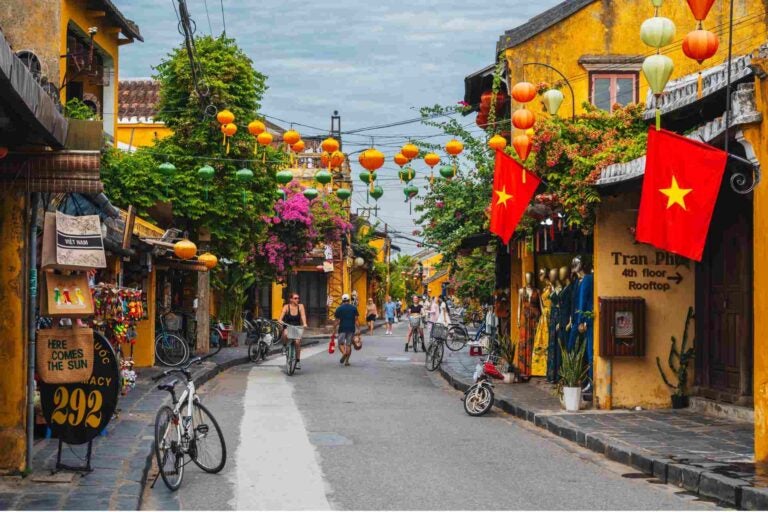
Visiting Vietnam during the Australian winter (June–August)
Australian winter is one of the most popular times to travel to Vietnam, especially for those escaping colder temperatures back home. During these months, southern Vietnam enjoys warm and somewhat humid weather, while central Vietnam remains sunny and beach-friendly.
This period is ideal for coastal destinations, island hopping, and outdoor sightseeing. Popular activities include exploring Vietnam landmarks, relaxing on the best beaches in Vietnam, and sampling Vietnamese street food in cities like Ho Chi Minh City and Da Nang.
Northern Vietnam is hotter and wetter during this time, so mountain trekking may be less comfortable.
Visiting Vietnam during the Australian shoulder seasons (March–May & September–October)
The shoulder seasons offer some of the best value and balanced weather across much of the country. March to May brings dry conditions to the north and south, making it a great time for hiking in Vietnam, city exploration, and cultural travel.
September and October are quieter months with fewer crowds and lower accommodation prices. While central Vietnam may see increased rainfall later in this period, destinations like Hanoi and Ha Long Bay remain attractive. These months suit travellers looking to avoid peak-season crowds while still enjoying good conditions.
Visiting Vietnam during the Australian summer (December–February)
December to February aligns with Vietnam’s peak travel season and Australian summer holidays. Northern Vietnam is cooler and dry, making it one of the best times to visit Hanoi, Sapa, and Ha Long Bay. Southern Vietnam also enjoys its dry season during these months.
This is a popular time for festivals in Vietnam, including Tet (Vietnamese New Year), which offers cultural insight but also brings higher prices and limited availability. Booking flights and accommodation early is essential if travelling during this period.
Best time to visit Vietnam from Australia by region
If your itinerary focuses on one region, timing your trip around local weather patterns will make a noticeable difference.

Northern Vietnam (Hanoi, Ha Long Bay, Sapa)
The best time to visit northern Vietnam is from October to April, when temperatures are cooler and rainfall is lower. This period is ideal for sightseeing, cruising in Ha Long Bay, and trekking around Sapa.
The summer months (May–September) are hot and humid, with heavy rain affecting visibility and hiking conditions. Australians planning outdoor-heavy itineraries should avoid this window if possible.
Central Vietnam (Hoi An, Da Nang, Hue)
Central Vietnam is best visited between February and July, when rainfall is minimal and temperatures are warm but manageable. These months are perfect for exploring historic towns for Vietnam souvenirs and enjoying coastal attractions.
From September onwards, typhoons and heavy rain become more common, particularly in Hue and Hoi An. While travel is still possible, beach conditions and transport reliability may be affected.
Southern Vietnam (Ho Chi Minh City, Phu Quoc)
Southern Vietnam has a more consistent tropical climate. The dry season runs from December to April, making it the best time to visit Ho Chi Minh City and Phu Quoc.
Rainy season (May–November) brings short but intense downpours, usually in the afternoon. While travel costs are lower during this time, beach conditions may be less predictable.
Vietnam weather by month
This month-by-month overview helps Australians quickly identify the best time of year to visit Vietnam based on weather and activities.
| Month | Weather overview | Best regions to visit | Good for |
|---|---|---|---|
| January | Cool north, dry south | North and south | Sightseeing, festivals |
| February | Dry nationwide | All regions | Beaches, city travel |
| March | Warm and dry | All regions | Hiking, cultural trips |
| April | Hot and dry | Central and south | Island, food tours |
| May | Rain starts | Central | Fewer crowds |
| June | Hot and wet north | Central and south | Beach trips |
| July | Rainy and humid | Central | Budget travel |
| August | Wet north | Central | Surfing, coastal towns |
| September | Rainy central | North and south | Quiet travel |
| October | Improving weather | North | Photography |
| November | Dry south | South | Island hopping |
| December | Peak season | North and south | Holiday travel |
Practical tips for Australians planning a Vietnam trip
- Check regional weather, not just national averages: Vietnam’s climate varies significantly between the north, central coast, and south, so conditions in Hanoi can be very different from Ho Chi Minh City at the same time of year.
- Plan itineraries around regional dry seasons: For example, northern Vietnam is best in March-April and October-November, while southern Vietnam is ideal during the Australian winter months when rainfall is lower.
- Check visa requirements: Make sure you have a valid passport and appropriate visa document to enter Vietnam. There are some Australian visa-free countries around Asia if you’re planning to extend your trip.
- Factor in Australian school holidays and peak periods: June–July and December are popular travel windows for Australians, which can mean higher flight prices and busier attractions.
- Consider travel insurance that covers weather disruptions: Heavy rain and storms can affect domestic flights, cruises in Ha Long Bay, or beach plans in central Vietnam.
- Pack according to the season and region: What to pack for Vietnam depends on the season and region you travel. Based on the international travel packing list, be versatile, wear layers and comfortable walking shoes for all occasions.
- Use an eSIM to stay connected without roaming fees: While international roaming plans from Australia allow you to stay connected, a travel eSIM makes it easier to navigate, check weather updates, book transport, and access maps without roaming fee.
Enjoy unlimited data in Vietnam with Holafly
Once you’ve decided the best time to travel to Vietnam from Australia, staying connected makes travelling far easier, from navigating train schedules to booking tours and finding things to do in Vietnam along the way. A Vietnam eSIM from Holafly provides unlimited data across the country without the need to swap physical SIM cards.
Holafly offers single-destination eSIMs for over 200 locations worldwide, and travellers can explore options via Holafly eSIM shop before departure. Plans activate instantly and work across major Vietnamese cities and tourist regions.
For longer trips or multi-country travel in Southeast Asia, Holafly Plans also provide a flexible monthly option with coverage in over 170 destinations, making it a practical choice for frequent travellers.

Get an unlimited data eSIM
Use code MYESIMNOW5 for 5% off at checkout
Plans that may interest you


哈囉我是來自台灣的 Wen,平常最喜歡旅遊,也喜歡將旅遊的種種化成文字跟大家分享,希望大家能在我的文章中找到有用的資訊,加上 Holafly 的 eSIM,讓你的旅程更美好!✈️✈️✈️ Hi! I'm Wen, a passionate content writer and travel enthusiast from Taiwan. I transform my wanderlust adventures into engaging stories and practical guides, helping fellow travelers make the most of their journeys.Through my articles, I strive to provide travel tips while introducing how our eSIM technology can enhance your travel experience - keeping you connected wherever your adventures take you!

