Language


 No results found
CyberGhost VPN vs IPVanish: Which is better?
Find out which VPN best suits your digital needs by reading this comparison of CyberGhost VPN vs. IPVanish.

Planning a trip abroad often mixes excitement with logistics. While you pick top landmarks and secure enough data for maps or social media, one detail often slips: Your connection security. Whether you join airport WiFi or a café hotspot, you must protect your digital footprint.
In this scenario, two names often top the list: CyberGhost VPN vs. IPVanish. Both promise anonymity and freedom, yet they take different routes. One stands out for simplicity and a huge server network. The other delivers total device freedom, without connection limits.
In this analysis, we’ll break down every technical and practical detail. The goal is to help you choose the tool that fits your lifestyle, whether you stream abroad or work remotely worldwide.
General comparison: CyberGhost VPN vs. IPVanish
So you can compare both services quickly, we’ve prepared this table with key points every traveller should consider before subscribing.
| Attribute | CyberGhost VPN | IPVanish |
| Total servers | Over 11.600 | Over 3.200 |
| Countries covered | Over 100 countries | 150 locations |
| Device limit | 7 devices | Unlimited |
| Customer Support | 24/7 (Live chat in different languages) | 24/7 (Live chat and phone in English) |
| Main protocol | WireGuard | WireGuard |
| Jurisdiction | Romania (High privacy) | US. USA (5 Eyes Alliance) |
| Money-back guarantee | 45 days (Long plans) | 30 days |
| Average monthly price | €1.87 ($2.03) – €2.01 ($2.19) (Two-year plan) | €2.01 ($2.19) – €3.03 ($3.29) (Two-year plan) |
| Specialised servers | Yes (Streaming, P2P, NoSpy) | No (general servers) |
| Privacy audit | Yes (Deloitte, 2024) | Yes (Schellman, 2025) |
| Ad blocker | Yes, built in | No (Needs extra apps) |
| Smart DNS | Yes (For consoles/TV) | Not available |
From this table, you can see two very different service mindsets. CyberGhost VPN positions itself as the “specialist”.
CyberGhost VPN positions itself as the “specialist”. Its network runs almost five times larger than its rival’s network. Therefore, whether you visit rural Europe or a major Asian capital, you’ll find a nearby server. As a result, you’ll often keep higher speeds. Moreover, its 45-day guarantee feels generous for a full trip test.
Meanwhile, IPVanish bets on total hardware freedom. It removes limits on simultaneous connections. Consequently, families with phones, tablets, and laptops save money and hassle. Although its network looks smaller, it owns many bare-metal servers. So, it reduces third-party access and often keeps strong stability for gaming or video calls.
Tip for nomads: You should protect your digital security, yet you also need constant connectivity. The other half is to ensure constant connectivity. Therefore, many travellers pair a VPN with the flexibility of Holafly Plans. This combo gives unlimited data from minute one. Plus, it helps you avoid open WiFi networks, which often weaken security.
Important: If you are a frequent traveler and want to stay connected without worrying about expensive roaming or looking for a new SIM at every destination, Holafly’s subscription plans are for you. With a single eSIM, enjoy internet in more than 170 countries for a fixed price and no surprises on your bill. Travel without limits and connect easily and securely! 🚀🌍

CyberGhost VPN vs IPVanish: Jurisdiction, no-logs policy, and independent audits
In cybersecurity, strong reputations grow through transparency and years of consistent service. CyberGhost and IPVanish both bring experience, yet they manage user privacy under very different legal frameworks.
Policy of not keeping records
Privacy drives every VPN. For travellers, you must know the provider won’t “watch” your traffic on airport WiFi.
CyberGhost benefits from Romanian jurisdiction and annual Deloitte audits. Its policy stays strict: It doesn’t store IP addresses, connection times, or browsing history. It also uses RAM-only servers, so volatile data disappears after each reboot. As a result, your activity leaves no physical trail.
IPVanish also follows a “zero logs” policy that external firms like Schellman audit. It operates from the United States, yet the audit confirms it doesn’t store session metadata. However, cautious users still debate the USA location. Even so, IPVanish has kept its privacy promise after internal changes.
The value of external audits
Those days ended when a VPN could claim security without proof. Today, travellers demand evidence.
On this front, CyberGhost VPN took a big step by undergoing regular Deloitte audits, one of the most respected global firms. The latest report confirms systems that avoid user-activity traces. Therefore, digital nomads who handle sensitive data can breathe easier. If the company stores nothing, nobody can steal it.
IPVanish, meanwhile, has changed its approach over time. After years under US jurisdiction concerns, it refreshed trust with audits from independent firms like Leviathan Security Group and Schellman. These reviews confirm that IPVanish follows its “zero logs” policy (no-logs).
However, its strongest edge comes from direct hardware control. Because it avoids third-party server rentals across many core nodes, it keeps physical control that few rivals can match.
Jurisdiction: Romania vs. USA
When you travel worldwide, you should know where your VPN sits legally:
- CyberGhost (Romania): It benefits from strict privacy laws and sits outside mass-surveillance alliances like the “14 Eyes”. Therefore, it doesn’t face legal pressure to spy or retain data.
- IPVanish (USA): It runs a solid service, yet US law applies, and the US founded the 5 Eyes alliance. However, the company argues its audited zero-logs policy acts as the final shield. So, if authorities ask for data, the answer remains: “No records exist to hand over”.
CyberGhost VPN vs IPVanish: What users say
When you review digital nomad forums and rating platforms, a clear pattern appears:
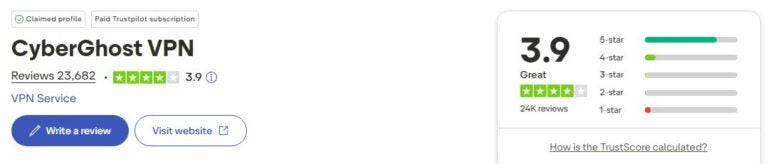
With CyberGhost, users highlight peace of mind. They like the “connect and go” app experience. So, you don’t need networking skills to stay safe on hotel WiFi. Minor complaints often target the 7-device roster, which can feel tedious if you swap phones often. Some users also report frequent disconnects, which disrupts daily use.
Here’s a selection of reviews from Trustpilot and Google Play that supports the points above:
- “The use feels intuitive and fast, for example, with the VPN proxy for Mozilla Firefox. So far, it works perfectly for streaming foreign content.” – User: Michael Wupperfeld, Trustpilot, December 2025.
- “I really value CyberGhost VPN’s ease of use and user interface. It lets me access patient portals, which my current country restricts.” – User: Victorioso Favorecido, Trustpilot, December 2025.
- “The ordering process feels simple and intuitive, and the app use feels intuitive too. The app stays stable and works reliably on every device. Setup feels easy: Download the app, enter your login, pick the target country, and you’re done. Also, the speed works for me. That’s how a VPN should work!” – User: Historia, Trustpilot, March 2025.
- “This app isn’t what it used to be. It runs extremely slow and disconnects by itself, and you won’t notice. It’s a shame because I bought two years and still have one year left. However, I won’t renew because it won’t look fixed. I always run the latest version, Android, and everything, yet it doesn’t work well. I don’t recommend it.” – User: FeriX, Google Play, April 2024.
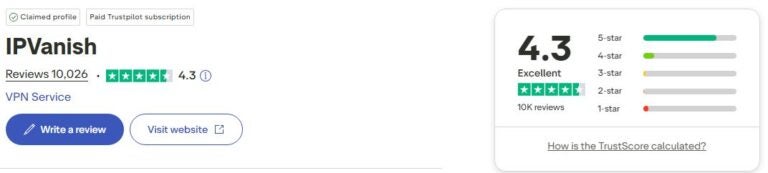
With IPVanish: Users praise its strong power. Technical users and big families love unlimited connections and flexible server choice. Also, some users in Europe report excellent speeds. On the downside, some comments mention a slightly higher subscription price.
- “Overall, I’m quite happy with the service. It looks great and feels easy to use. I had Nord through a third party (Yahoo), and they decided to cancel their service. I used Nord for over two or three years, and they left me without any customer support. Then I saw your company advertised online and started from there. Although the monthly fee costs a lot, I plan to get a plan here soon. Thanks.” – cristiano, Trustpilot, December 2025.
- “I’ve used IPVanish for three weeks, and it has felt excellent from start to finish. The app feels very easy to use. Connecting to a secure server only takes a few seconds, and choosing the best location feels simple. For performance, speed stays consistently fast, with no notable drops while streaming, browsing, or downloading. Overall, IPVanish feels reliable, secure, and fast. Highly recommended.” – Malcolm, Trustpilot, December 2025.
- “I’ve used IPVanish for over a year, and I love its speed and reliability overall. My only complaint came during renewal: The auto charge cost far more than I expected, almost double the initial promo rate. I contacted support and expected a fight, yet they offered the current promo price immediately. They also cancelled the costly renewal and refunded the difference within 48 hours. No hassle, no “loyalty tax”, just good customer service. It’s rare to see a VPN company cut a renewal price and refund you without hoops. I trust IPVanish again, and I’m staying with them.” User: Arthur Short, Trustpilot, October 2025.
Customer service So, which one wins?
Imagine you’re in a hotel in Japan and the VPN won’t connect to your banking app. In that moment, you don’t want a 24-hour email wait.
CyberGhost VPN stands out for accessibility. It offers 24/7 live chat that supports Spanish, French, German, and English. After all, explaining network issues in another language can feel frustrating.
Also, its help centre includes clear visual guides for setting up the VPN on almost any device.
IPVanish also offers 24/7 support via live chat and email. However, it stands out because it provides phone support (during US business hours). Although the support usually runs in English, speaking to a real person feels rare in VPN services.
Still, its knowledge base can feel intimidating if you don’t know terms like “tunnelling protocols” or “port settings”.
CyberGhost VPN vs. IPVanish: Streaming test
For many people, streaming becomes the main VPN use abroad. Here, both brands clash because they design for different user habits.
CyberGhost makes streaming as simple as possible. In its app, you’ll find a dedicated tab called “For streaming”. There, you won’t just see country lists. Instead, you’ll see servers labelled like: “Optimised for Netflix US”, “Optimised for Disney+ ES”, or “Optimised for BBC iPlayer”.
Because it offers dedicated servers that the CyberGhost team checks regularly, success rates stay high. Also, its recent upgrade to 10Gbps servers cuts buffering to near zero. So, you can stream 4K even on unstable hotel connections.
IPVanish doesn’t use platform-specific labelled servers, so you’ll do more trial and error. Still, it delivers strong power for Netflix and Prime Video. It also works well with USA and UK libraries.
Did you know IPVanish has long ranked as a favourite VPN for Kodi and Fire Stick users? Its lightweight app and steady throughput explain why.
Finally, because it has no connection limit, each family member can stream on their own device. So, the VPN won’t ever say “limit reached”.

Security quality
Security forms the “heart” of any VPN. Both use 256-bit AES encryption, yet several technical details can shift the decision.
CyberGhost offers automated security features that suit forgetful travellers. You can set “WiFi Protection” to turn on the VPN the moment your phone detects an unknown network. Also, it includes an ad and tracker blocker. As a result, pages load faster and use less mobile data.
IPVanish focuses on robustness. One major advantage comes from RAM-only servers across much of its network. So, no hard drives store information permanently. If you visit countries with complex internet controls, IPVanish’s “Kill Switch” offers strong configuration. Therefore, if the VPN drops, it blocks traffic instantly and won’t expose your real IP.
Countries and servers: CyberGhost VPN vs. IPVanish
VPN geography matters: The closer you sit to a server, the better your experience. Here, CyberGhost’s scale meets IPVanish’s controlled infrastructure.
CyberGhost VPN runs one of the biggest networks on the market, with over 11,600 servers across 100+ countries.
Beyond size, it also offers coverage in less common destinations. If your route includes places many VPNs ignore, CyberGhost often helps. For example, it may cover Albania, Mongolia, or several African countries.
Also, as mentioned earlier, it runs Romania servers that it manages directly. Therefore, many people value the extra privacy when they handle confidential data.
IPVanish offers around 3,200 servers across 150+ locations. Although the number looks smaller, it gains an edge through hardware ownership. Because it owns most servers, it controls who can access machines physically.
In geographic terms, its network performs strongly across North America and Western Europe. So, travellers who need stable streaming or gaming often enjoy reliable connections there.
Performance and speed
In daily use, WireGuard has become the gold standard for both providers. This protocol runs lighter and faster than older OpenVPN. Therefore, you lose less speed and drain less battery on mobile devices.
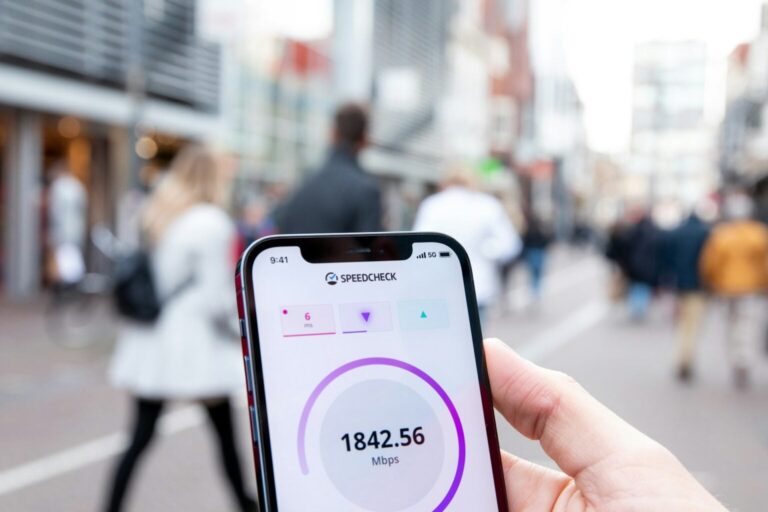
Across different speed tests, CyberGhost showed impressive consistency. On local servers, speed loss stayed near 10%. It also kept speeds above 200 Mbps, which covers demanding tasks.
IPVanish also performs strongly. Because it owns its network, it often avoids “bottlenecking” problems. According to user reports and independent tests, it can hit very high peaks, especially on US servers.
It also keeps latency (ping) notably low. So, it suits work video calls and online gaming sessions while you travel.
Dedicated IP for digital nomads
For digital nomads, a dedicated IP can decide whether work succeeds or fails. Many banking and business platforms flag constant IP changes. This often happens with shared VPN IPs, so platforms can block accounts for security.
CyberGhost offers this as an add-on. It uses anonymous tokens, so it can’t link a dedicated IP to a specific user. Therefore, you can keep a stable address in Spain, the US, or the UK, while keeping anonymity.
IPVanish doesn’t currently offer a dedicated IP service. Instead, it focuses on dynamic shared IPs to maximise group privacy.
So, if your work demands a fixed IP to access a corporate server, CyberGhost fits your needs.
CyberGhost VPN vs. IPVanish, which one to choose?
CyberGhost and IPVanish both sit among top VPN providers. However, they don’t offer identical experiences. To choose well, ask yourself: Do you travel alone with work gear, or with family and many devices?
- CyberGhost VPN wins if you want versatility and simplicity. Its streaming servers and dedicated IP option suit digital nomads who want everything to work “first time”.
- IPVanish wins for groups and families. Its unlimited connections and hardware control provide freedom and stability. So, it suits many devices at once.
As you can see, both options perform well. CyberGhost keeps its specialisation edge with 11,000+ servers. Meanwhile, IPVanish has evolved and now offers unlimited connections and threat protection.
However, if you want maximum peace of mind, at Holafly we recommend Proton VPN with our monthly plans. This combo suits worldwide travellers who want Swiss-grade security while enjoying unlimited data.