Language


 No results found
Avast VPN vs ExpressVPN: Which is better?
We help you choose between Avast SecureLine VPN vs. ExpressVPN analysing and comparing their features, plans, pricing and reputation.

Choosing a reliable VPN is no easy task, especially when you are looking for real security, good performance and stability across different networks. In this comparison, we pit two very different services: Avast SecureLine VPN vs. ExpressVPN.
Spoiler: Although Avast SecureLine VPN benefits from a popular cybersecurity brand, it keeps a basic approach. It targets users who want simple protection without advanced features. ExpressVPN, however, delivers a far stronger ecosystem. It brings a large global network, higher speeds, audited privacy features, and better performance for streaming, gaming, and travel.
Let’s look at this in more detail by comparing how both VPNs perform in terms of security, speed, servers, price, features and user experience. We help you choose the right one for your digital needs and your travels around the world.
Avast SecureLine VPN vs. ExpressVPN: General comparison
Both VPNs promise security and privacy. However, they don’t compete in the same league.
Avast SecureLine VPN offers a simple solution for basic protection and antivirus add-ons. ExpressVPN delivers a premium VPN with broader infrastructure, advanced tools, and performance for demanding users, travellers, and remote workers.
The table below summarises the key differences, so you can scan them quickly.
| Feature | Avast SecureLine VPN | ExpressVPN |
| Jurisdiction | Czech Republic (EU) | British Virgin Islands |
| No-logs policy | It claims no activity logs, but it keeps some connection metadata | Strict no-logs policy, plus independent audits |
| External audits | Not across most service components | Yes (PwC, Cure53, ongoing audits) |
| Number of servers | More than 700 servers | More than 3,000 servers |
| Available countries | Over 60 countries | 105 countries |
| Protocols | OpenVPN, WireGuard | Lightway, OpenVPN, IKEv2 |
| Encrypted | AES-256: | AES-256: |
| Specialised servers | Yes, it includes servers optimised for torrents | Yes: Obfuscated servers, streaming, Lightway, TrustedServer |
| Speed | Good over short distances; limited worldwide | Very fast and stable internationally |
| Streaming | It works with some libraries, but it isn’t reliable | Excellent access to Netflix, Disney+, BBC, and more |
| Gaming / Latency | Acceptable, yet no specific optimisation | Very good latency and stability |
| Advanced security | Basic; no extra tools | Advanced: TrustedServer, Threat Manager, obfuscation |
| Simultaneous connections | 10 devices | 8–10 devices (depending on plan) |
| Technical support | Decent, but not 24/7 in every language | 24/7 live chat with premium support |
| Ease of use | Very simple and beginner-friendly | Easy, yet more complete and professional |
| Price | Usually more affordable | More expensive, which matches its premium tier |
General comparison between Avast SecureLine VPN and ExpressVPN
This comparison shows it clearly: Avast SecureLine VPN sits in the basic tier. It suits users who want safer public Wi-Fi and simple protection.
ExpressVPN, however, delivers a complete, professional solution. It runs faster, protects better, and offers a wider network and advanced tools. For travellers, digital nomads, or remote workers across countries, ExpressVPN brings stronger reliability and versatility.

Server network and specialised servers: Avast SecureLine VPN vs. ExpressVPN
Server infrastructure matters when you choose a VPN. It shapes speed, travel stability, content access, and smooth connections across countries.
On this point, ExpressVPN clearly outperforms Avast SecureLine VPN. Still, let’s break down the differences.
| Feature | Avast SecureLine VPN | ExpressVPN |
|---|---|---|
| Total number of servers | Over 700 | Over 3,000 |
| Available countries | 60 countries | 105 countries |
| Global distribution | Limited; stronger presence in Europe and the US. | Very broad: Europe, the Americas, Asia, Africa, and Oceania |
| RAM-only servers (diskless) | It doesn’t run across the entire network | Yes, the entire network uses TrustedServer (RAM-only) |
| Physical / virtual servers | Mixed, yet it shares limited public detail | Mixed, plus full transparency on locations and architecture |
| Long-distance performance | Adequate, but not optimised | Excellent, built for global mobility |
| Streaming and gaming servers | No | Yes (optimised for Netflix, Disney+, BBC, HBO, and more) Yes (Lightway and a wider network help) |
| P2P/Torrent servers | Allowed on some servers, yet not optimised | Allowed across the entire network |
| Obfuscated servers (for high-censorship countries) | No | Yes, available in several countries |
Server network comparison: Avast SecureLine VPN vs. ExpressVPN
Let’s simplify the table. Avast SecureLine VPN offers a modest network that suits regional use and daily browsing. However, limited coverage and fewer specialised servers reduce flexibility for frequent travel. Also, it lacks advanced tools for restricted networks.
ExpressVPN, by contrast, delivers one of the most complete networks on the market. It covers 105+ countries and adds optimised streaming, obfuscation, and strong international stability. TrustedServer keeps data off physical disks and wipes it on every reboot. Therefore, you get fast connections across Asia, the Middle East, Africa, and Latin America.
In short: For global mobility, stability, and fewer restrictions, ExpressVPN clearly wins.
Security analysis and comparison
Security matters most when you choose a VPN, especially for work, travel, or public Wi-Fi. Both Avast SecureLine VPN and ExpressVPN use strong encryption. However, their security depth differs a lot. Avast offers basic, user-friendly protection, while ExpressVPN adds advanced technologies for real privacy, stability, and block resistance.
The table below summarises the most important security features in both VPNs.
| Security feature | Avast SecureLine VPN | ExpressVPN |
|---|---|---|
| Encrypted | AES-256: | AES-256: |
| Available protocols | OpenVPN, WireGuard (depending on platform) | Lightway (proprietary), OpenVPN, IKEv2 |
| Kill Switch | Yes | Yes (Network Lock) |
| DNS/IPv6/WebRTC leak protection | Yes | Yes (very strong) |
| RAM-only servers | Not across the entire network | Yes, on all servers (TrustedServer) |
| External audits | No complete public audits | Yes, multiple independent audits |
| Ad / tracker / malware blocking | Yes (built into the app) | Yes (Threat Manager) |
| Split tunnelling | Yes (limited) | Yes |
| Tor over VPN / Tor compatibility | No | It doesn’t add Tor-over-VPN, but it works very well with Tor Browser |
| Proprietary security tech | No | Yes: TrustedServer (RAM-only) and Lightway (secure, stable protocol) |
| Protection on public networks | Standard | Very high, built for stability and fast reconnection |
Security comparison: Avast SecureLine VPN vs. ExpressVPN
As you can see, both VPNs use strong encryption. In fact, they use the market’s top standard. This should come as no surprise, as it is to be expected from any VPN. Also, both services include kill switches, leak protection, and malware blocking. However, you’ll spot big differences when you look closer.
Avast delivers a simple VPN for people who want safer public Wi-Fi without advanced controls. It protects everyday browsing well, yet it doesn’t target censorship, critical remote work, or sensitive data on the move.
In contrast, ExpressVPN provides a far more complete security ecosystem. Its Lightway protocol runs fast and stays stable, even on mobile networks. In addition, its entire network runs on TrustedServertechnology, which means that the servers do not store information on physical disks and are completely erased with every reboot.
For travellers and digital nomads, this means less risk, greater privacy and an additional layer of security in restricted countries.
It also includes obfuscated servers, which help you bypass VPN blocks in places like China and Turkey. Its Threat Manager system blocks trackers and malicious connections in real time, and external audits ensure that its no-logs policy is real and verifiable.
So, what does a no-logs policy mean? Let’s take a closer look.
Jurisdiction, no-logs policy, and audits: Avast SecureLine VPN vs. ExpressVPN
Real privacy depends on more than encryption and security tools. It also depends on where the company registers, what data it keeps, and whether third parties verify those claims. Here, Avast SecureLine VPN and ExpressVPN show clear differences. These details matter most when privacy becomes your top priority.
Avast SecureLine VPN: European jurisdiction and a limited privacy approach
Avast registers in the Czech Republic, which sits in the European Union and follows GDPR rules. This framework strengthens data protection obligations. However, it also creates legal paths for certain information requests.
On its no-logs policy, Avast says it doesn’t log browsing activity. However, it keeps some connection metadata, such as timestamps or general service usage. This practice doesn’t directly expose you, but it doesn’t match strict no-logs standards.
Also, Avast doesn’t provide extensive independent audits focused on SecureLine VPN. The company has audited parts of its antivirus suite before. Still, the VPN lacks broad third-party reports that publicly validate logs policy or infrastructure.
ExpressVPN: Privacy-friendly jurisdiction and verified no-logs
ExpressVPN bases its operations in the British Virgin Islands, a jurisdiction privacy advocates often favour. It doesn’t belong to 5/9/14 Eyes surveillance alliances. Also, it doesn’t require data retention. Therefore, even under court requests, ExpressVPN won’t hand over data it never collects.
On top of that, its no-logs policy ranks among the strictest in the industry. ExpressVPN doesn’t log IP addresses, connection histories, browsing activity, or DNS queries.
Most importantly, independent audits have verified these claims multiple times. Firms such as PwC and Cure53 reviewed both the no-logs policy and TrustedServer. TrustedServer runs the entire network in RAM-only mode, without physical disks. This transparency builds stronger trust for travellers and remote workers who use public networks.
So, the conclusion stays simple. In structural privacy terms, ExpressVPN offers stronger, verifiable protection: Better jurisdiction, real no-logs, and frequent independent audits.
Speed and performance: Avast SecureLine VPN vs. ExpressVPN
Speed shapes your real VPN experience. It affects video calls, downloads, streaming, gaming, and stability on public networks. Avast SecureLine VPN and ExpressVPN both perform well, but they behave very differently.
Avast SecureLine VPN: Solid for everyday use, not ideal for streaming and gaming
For general speed, Avast performs well for browsing, basic video calls, and everyday tasks. It uses fast protocols like OpenVPN and, on some platforms, WireGuard. As a result, it can keep decent performance on nearby servers.
However, its smaller network and limited optimisation can reduce performance over long distances. Also, crowded servers can slow it down. So, it works well locally, yet it feels less consistent on international travel.
For streaming, it works with some platforms, but it won’t deliver consistent access. It can lose access to international libraries or trigger VPN detection errors. This happens often with services like Netflix or BBC iPlayer. In addition, its limited network does not help to avoid geo-blocking. As you can imagine, performance is not optimal either.
For gaming and online play, Avast delivers acceptable latency on nearby servers. However, it doesn’t target competitive gaming or cloud gaming. In other words, some games may suffer from stability swings.
Conclusion: Avast SecureLine VPN works for daily browsing and basic protection. However, it remains a more basic solution. It performs best locally, yet it lacks the stability travellers and power users often need.

ExpressVPN: One of the fastest and most stable options on the market
ExpressVPN stands out for global speed. Its proprietary Lightway protocol targets faster, more stable connections and lower battery usage. As a result, it delivers strong speeds on nearby servers and on cross-continent routes. Also, its larger infrastructure spreads load better, so it reduces congestion and keeps stability on weak public networks.
For HD streaming, ExpressVPN also shines. In fact, it ranks among the best options available. It unlocks Netflix, Disney+, Prime Video, HBO Max, Hulu, BBC iPlayer, and more with ease. It also keeps enough speed for HD and 4K playback without interruptions. If you are one of those travellers who want to see their platforms from any country, you will notice that the difference is very big.
The same goes for the gaming experience offered by ExpressVPN. Lightway keeps latency low and connections steady, which helps online and cloud gaming (GeForce Now, Xbox Cloud Gaming, Luna). Moreover, its 105+ country network helps you find servers closer to your game region.

So, on speed, stability, and global performance, ExpressVPN delivers a much better experience. It runs faster, stays steadier across countries, and performs better for streaming and gaming.
User experience: Avast SecureLine VPN vs. ExpressVPN
User experience matters for most people, especially without technical knowledge. It also matters when you need quick connections while travelling or working. Both Avast SecureLine VPN and ExpressVPN feel easy to use, but their design goals differ.
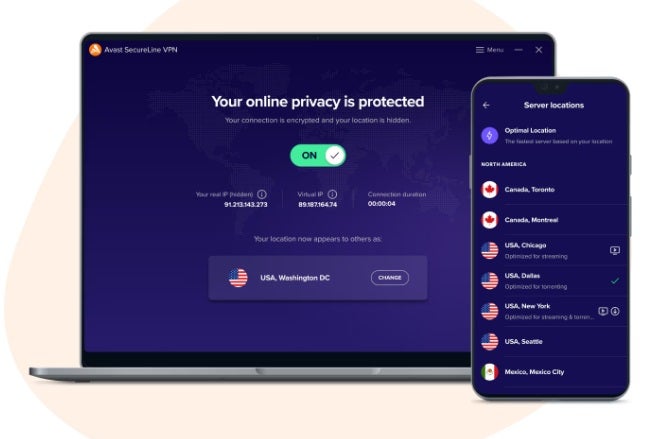
Avast SecureLine VPN focuses on a simple interface, which suits beginners. This well-known brand targets users who want something straightforward, without complex settings. The interface feels clean and direct, and it matches Avast’s wider product design. So, antivirus users often feel at home straight away.
ExpressVPN, by contrast, uses a modern, simple interface with more depth. Although it offers many more features than Avast, it still feels polished and intuitive. The app lets beginners connect quickly, yet it also gives advanced users deeper settings. Moreover, it runs smoothly across phones, computers, routers, Smart TVs, and more.
So, your choice depends on what you expect from a VPN. Avast SecureLine VPN suits people who want “connect and go”, with no extras. ExpressVPN, however, strikes a strong balance. It stays clean and accessible, yet it includes advanced tools for work, travel, and international use.
If you prioritise pure simplicity, Avast works fine. If you want a stronger, professional, adaptable experience, ExpressVPN leads in almost every scenario.
Reputation, credibility, reviews, and overall rating for each VPN
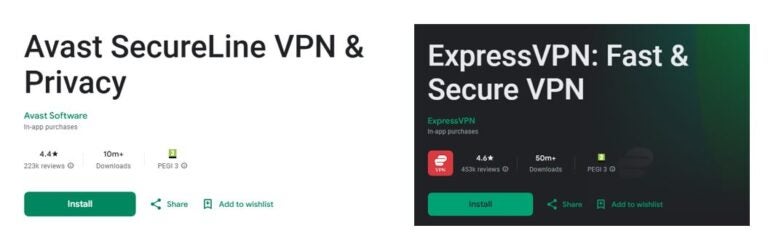
Both VPNs appear in the market, yet their reputations differ widely. ExpressVPN ranks among the most recognised brands for performance and security. Meanwhile, Avast SecureLine VPN relies more on Avast antivirus popularity than VPN-specific prestige.
ExpressVPN ranks among the most awarded and established VPNs in the industry. Over the years, tech media and cybersecurity experts have praised its stable performance. They also highlight its audited no-logs policy and high-quality infrastructure.
What do users say? On platforms like Trustpilot, Reddit, and technical forums:
- They highlight its speed, global stability, and 24/7 support.
- Many users rank the app among the easiest to use.
- Most complaints focus on its higher price, yet many users say the quality justifies it.
What about Avast’s VPN? Well, it doesn’t carry a bad reputation, but it can’t match ExpressVPN’s VPN prestige. Avast built global fame through its antivirus. So, many SecureLine users already sit inside the Avast ecosystem. Therefore, it can work well as an add-on, but it doesn’t feel built by a VPN-first specialist.
Experts agree that SecureLine delivers a basic VPN without premium tools or strong international performance. They suggest it for beginners, not for advanced streaming or global mobility.
Now, let’s look at user feedback. On Trustpilot and app stores:
- Users like that it’s simple, quick to set up, and easy to use.
- Common criticisms: Less privacy transparency than premium VPNs, limited server coverage, inconsistent streaming, and few advanced features.
Plans and pricing: Avast SecureLine VPN vs. Express VPN
Finally, we need to review Avast SecureLine VPN vs. Express VPN pricing. Express VPN. If you run a tight budget, pricing matters as much as features. Also, active promotions, refund rules, and free trials can shape your decision.
So, let’s review the plans each VPN offers:
| Plan | 1-year plan | 2-year plan | 3-year plan |
| Avast SecureLine VPN | €3.04 ($3.60)/month 60-day free trial 30-day money-back guarantee | €2.86 ($3.37)/month 60-day free trial 30-day money-back guarantee | €2.61 ($3.08)/month 60-day free trial 30-day money-back guarantee |
Avast SecureLine VPN pricing
As we can see, Avast SecureLine VPN costs less and adds a 60-day free trial. That detail matters, because two months of free testing gives you real confidence. So, if you feel unsure, you can try Avast’s VPN and security suite first. Then, you can decide whether it fits your needs.
And what plans and prices does Express VPN offer? Let’s see:
| Plans | 2 years | 12 months | 1 month |
| Express VPN Pro | €6.35 ($7.49/ month) | €7.60 ($8.99/ month) | €16.96 ($19.99/ month) |
| Express VPN Advanced | €3.82 ($4.49/ month) | €5.09 ($5.99/ month) | €11.87 ($13.99/ month) |
| Express VPN Basic | €2.97 ($3.49/ month) | €4.24 ($4.99/ month) | €11.03 ($12.99/ month) |
Express VPN plans and pricing
ExpressVPN’s plan prices run higher, especially on advanced tiers. However, on two-year subscriptions, the gap shrinks between ExpressVPN Basic and Avast SecureLine VPN. Also, long-term subscriptions include four free months. Still, ExpressVPN doesn’t offer a free trial like Avast. However, it does include a 30-day money-back guarantee.
So, for value for money, we think ExpressVPN offers the better option, because it beats Avast in almost every area. In other words, if you need real performance, the investment will feel worth it. Meanwhile, Avast suits people who only want basic protection at a lower cost.
Avast SecureLine VPN vs. ExpressVPN Who wins the battle?
We think the result speaks for itself. ExpressVPN wins today’s comparison for clear reasons. Still, if you feel unsure, let’s recap quickly.
Avast SecureLine VPN offers a simple, easy option for public Wi-Fi protection. However, it can’t match ExpressVPN on advanced security, international performance, verified privacy, content access, or network quality.
ExpressVPN, by contrast, delivers a more complete and robust experience. It combines global speed, Lightway, audited infrastructure, and a trustworthy no-logs policy. It also performs smoothly for streaming, gaming, and frequent travel. Therefore, it fits a premium VPN for users who need real stability and maximum security in any country.
So, for digital nomads, remote workers, and frequent travellers, ExpressVPN stands as the better choice.
Which VPN do we recommend at Holafly?
Although ExpressVPN ranks among the best, Holafly recommends Proton VPN for travellers and digital nomads. Pair it with our Holafly international eSIMs or our monthly plans.
Proton VPN balances privacy, advanced security, and global stability very well. So, it pairs perfectly with our data plans and keeps you protected worldwide. Also, its free plan ranks among the best available. Therefore, you can test the VPN before you commit long term.
Important: If you are a frequent traveler and want to stay connected without worrying about expensive roaming or looking for a new SIM at every destination, Holafly’s subscription plans are for you. With a single eSIM, enjoy internet in more than 170 countries for a fixed price and no surprises on your bill. Travel without limits and connect easily and securely! 🚀🌍