Language


 No results found
Opening a bank account in Germany: Requirements, prices and steps
Do you want to know the steps, requirements and costs of opening a bank account in Germany? You will find everything you need in this guide.

Not sure which bank account suits you best in Germany? Here we’ll explain how you can open a bank account in Germany for foreigners, under non-resident status, and the costs you may face.
You’ll also learn about the advantages and disadvantages of online versus in-branch bank accounts, so you can make an informed choice for your plans inside and outside Germany. Stay tuned until the end.
How to open a bank account online in Germany as a foreigner?
In Germany, you can’t open a traditional bank account with institutions like Sparkasse or Commerzbank unless you legally reside in the country. That’s why the best option is a Fintech offering a German IBAN and other benefits.
Some providers like N26 and C24 operate fully digitally, giving you a local banking identifier. This makes financial transactions in Germany easier. Platforms such as Revolut or Wise provide an IBAN from another country while operating in Germany.
What does a Fintech offer compared to a traditional bank?
A Fintech will allow you to get a bank account with a German IBAN without visiting a bank branch or being a German resident. You can handle all support through official mobile apps.
However, benefits aren’t as comprehensive as those of a traditional bank digitally. While opening an account in person and residing in Germany is required, you gain full access to services such as credit.

Steps for digital account opening
Digital bank account opening processes are entirely online. Ensure a good internet connection and check if your country supports the bank’s full digital infrastructure.
- Download the Fintech or digital bank app: Apps are usually mobile-optimized for taking photos and scanning documents.
- Address verification: Select your current country. If indicating Germany, you must provide a local address; otherwise, your application may be blocked. Non-residents must submit a bank statement from their home country issued within 3 months and a utility bill.
- Identity verification: A photo isn’t enough in Germany. A bank agent will make a video call to verify your identity. You’ll show your passport on camera to check holograms and serial number.
- Contract signature: The signature is done via a TAN (Transaction Authentication Number) code sent by text message or a push notification that you confirm with your fingerprint or facial recognition, depending on your device settings.
- Wait for activation confirmation: This can take up to 1 day. You’ll receive your IBAN and may need to transfer at least €10 ($11) as part of activation. If you need a physical card, expect up to 10 business days for delivery.
Important: If you are a frequent traveler and want to stay connected without worrying about expensive roaming or looking for a new SIM at every destination, Holafly’s subscription plans are for you. With a single eSIM, enjoy internet in more than 170 countries for a fixed price and no surprises on your bill. Travel without limits and connect easily and securely! 🚀🌍
How to open a bank account in Germany as a non-resident?
In Germany, a non-resident is someone without a local address, no tax residency, and cannot prove ties to the country. The definition considers your domicile, tax obligations, and account usage.
For example, if you live outside Germany but are from another European country, banks treat you as a non-resident and may accept or reject your application. Exceptions exist for Latin American or other continent residents if account usage is justified.
Banks accepting non-residents
We’ve explained what non-resident means for German banks. Now, here are the banks that allow these profiles to open accounts.
Traditional banks like Deutsche Bank, Commerzbank, or HypoVereinsbank (UniCredit) allow account opening, but require stricter conditions than Fintechs or neobanks.
You mainly must show ties to Germany, such as work, study, or investments. Also, you must be an international client and open the account in-branch.
Other international banks in Germany, like DAB BNP Paribas, also accept non-resident accounts. But they usually require you to have a minimum entry balance, which could be a high amount or you must be a customer who has significant wealth financially.
Wise and Revolut are more accessible options. They don’t require proof of German residence, just an address (e.g., a friend’s) for the debit card. N26 also allows accounts with a German IBAN.
Documents and in-person requirements
- Valid passport
- Proof of current residence address
- Visa
- Tax ID from your country of residence
- Letter explaining reason for opening the account
- Proof of income or funds origin
- Employment contract, investment, or economic tie to Germany
- Bank reference (in some cases)
Regarding in-person requirements, traditional banks may ask you to visit a branch for personal profile evaluation, ID verification according to German regulations, and contract signing.
Steuer ID or Tax Code
Germany issues a Steuer ID (similar to codice fiscale) which is a tax identification number. It’s required only for residents, as it allows the state to manage taxes.
Non-residents only need a tax code from their country of residence to access tax information.
Step-by-step in-branch procedure
- Appointment request: Contact a bank agent for personalised attention.
- Profile interview: The agent asks about account purpose; unclear use may result in rejection.
- Identity verification: Passport scan and validation of stamps or visas.
- Contract signing: Sign forms and foreign tax residence declaration.
- Documentation review: A supervisor verifies non-resident documents before approval.
- Approval: You’ll receive your IBAN and the physical card will be sent to your address.
- Total process time: From appointment to account activation can take up to 6 weeks.
How much does it cost to open and maintain a bank account in Germany?
Account opening costs depend on the type of bank. Below is a table comparing traditional banks versus Fintech costs.
| Fee type | Traditional banks | Fintech |
| Account opening | No cost | No cost |
| Monthly maintenance | €5-15 ($5.5-16.5); waived if monthly deposits exceed €700 ($770) | No cost |
| Minimum initial balance | Not required, but monthly activity needed to avoid fees | You don’t need experience. |
| Debit card cost | Included in maintenance fee | €10 ($11) for home delivery |
| Hidden fees | ||
| ATM withdrawals | If you withdraw at your bank’s own ATMs, there’s no charge. Free at own bank; $3.30-7.70 ($3.50-8)) at other ATMs | There’s usually a limit to the number of free withdrawals you can make per month. If you exceed the limit, the cost per withdrawal could start from 2 EUR and upwards. |
| Account usage outside SEPA/EU | Currency conversion or international fees apply | International transfer fees apply outside SEPA |
All costs are approximate and vary per client profile. Non-resident status affects hidden fees, and choosing a Fintech account provides convenience but less service coverage than traditional banks.
Online or in-branch account: Which suits you?
No single method is best for opening a bank account in Germany. It depends on your client profile (resident or non-resident) and how you plan to use the account.
Before choosing, understand the limitations of each option. Below are details for online and in-branch accounts.
Online account
An online account with a Fintech is ideal if you don’t yet reside in Germany and need a European IBAN to deposit savings or demonstrate financial stability. It also works for everyday online purchases and standard SEPA transfers.
You’ll have zero general fees and easy account opening through a mobile app. Documents can be scanned and accepted within minutes or days. Communication is convenient via chatbots or calls for more complex issues.
In-branch account
In-branch is mandatory as traditional banks rarely accept remote verification. Non-residents may need more documents and proof of residence abroad, completed in person.
You must visit a branch for full services such as credit options, tax-resident products, and financial advice. Agents can answer questions instantly.
Comparison between online and in-branch accounts in Germany
| Factor / Account type | Online account Fintech | In-branch account Traditional bank |
| German address | Not required | Local registration as resident required |
| Opening and activation time | 15 minutes to 2 days | 1–2 weeks from appointment |
| Verification process | Video call with agent checking photos, data, and passport authenticity | Verification by agent at branch |
| Maintenance fees | Usually none | €5-15 ($5,5-16.50) per month; often waived with sufficient monthly activity |
| Customer service language | Apps provide German, English, and Spanish | Agents usually speak only German |
Staying connected in Germany as a foreigner
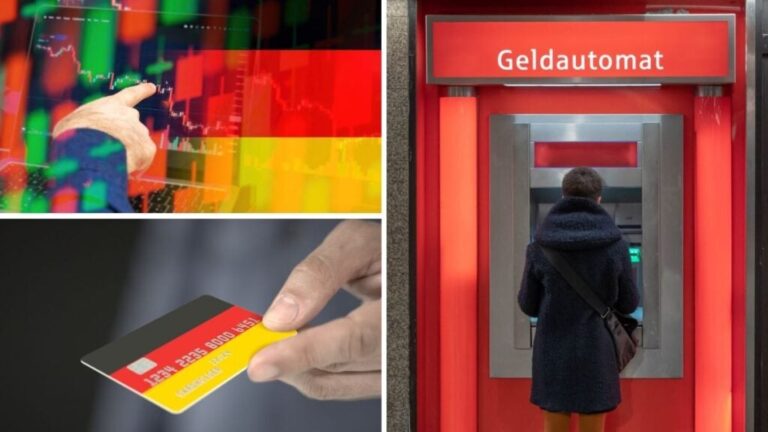
Having good internet helps you research the best Fintech or traditional German bank for opening an account. Once you choose a provider, you’ll need data to verify required documents and information.
Scanning and uploading personal information is common when opening accounts. Avoid relying on third-party Wi-Fi, which may be insecure or unstable.
For all procedures, use Holafly monthly plans offering 25 GB or unlimited data to share across devices in over 170 countries without switching SIMs or eSIMs.
If you need internet only for a few days while handling tasks in Germany, Holafly’s Germany eSIM provides unlimited data for your short stay.
FAQ on opening a bank account in Germany
You’ll generally get incomplete banking services, meaning no access to credit, phone, internet, or electricity services, and private health insurance may be complicated. Renting an apartment in Germany will also be harder.
You may face IBAN discrimination in some stores, as Lithuanian or Belgian IBANs are often not accepted by certain providers.
There are few factors that could deny you the possibility of acquiring a bank account in Germany, but enough to make it happen. Some of them are: Having a profile considered high risk, not demonstrating a close link to Germany or documentation not being sufficient to be verified.
Yes, the video ID or video call process on behalf of a bank agent is mandatory, as this ensures the verification of each customer’s official passport or ID card. The aim of this method is to check the holograms on the identity documents and to ensure that the photographs match the person applying for the account.
Opening an online bank account in Germany can take between 15 minutes and two days, depending on your client profile and document verification via the app.