Language


 No results found
Best supermarkets in Switzerland: Where to go grocery shopping?
Are you travelling to the Swiss Alps? Find out which are the 5 best supermarkets in Switzerland where you can do your shopping.

Doing the shopping becomes an action we perform almost daily, knowing where to go when we are in our city. However, when we travel for tourism or move to a different destination, we might feel a bit confused at first. For this reason, today we’ll talk about the best supermarkets in Switzerland, a country with a high cost of living that also reflects on food prices, so it’s important to know where to find the best products, deals, and promotions.
Discover the hypermarkets in this country, neighbourhood supermarkets, convenience stores, or local markets with fresh products. We’ll also tell you where they are located, their prices, hours, pros, and cons. So, if you’re planning to live in Switzerland for a while or visit for a few days, this guide will help you make a practical and smart shopping decision to save money.
What Types of Stores Are There in Switzerland?
As we mentioned at the beginning of this article, Switzerland is a country with a high cost of living across all sectors, including food. If you’re here as an international student, for tourism, or as a digital nomad, it will be very useful to know what types of supermarkets there are in Switzerland. Knowing where to go for your weekly large shopping, to find organic, gourmet products, fresh fruit, or stores open 24 hours will help you manage your savings better.
- Supermarkets: The most popular establishments in neighbourhoods where you can do weekly shopping. They offer fresh food, cleaning supplies, and personal hygiene products. Some examples in this country are Coop, Migros, or Denner.
- Discount supermarkets: Chains like Aldi or Lidl with much lower prices than other stores, with simple stores and private labels that reduce costs.
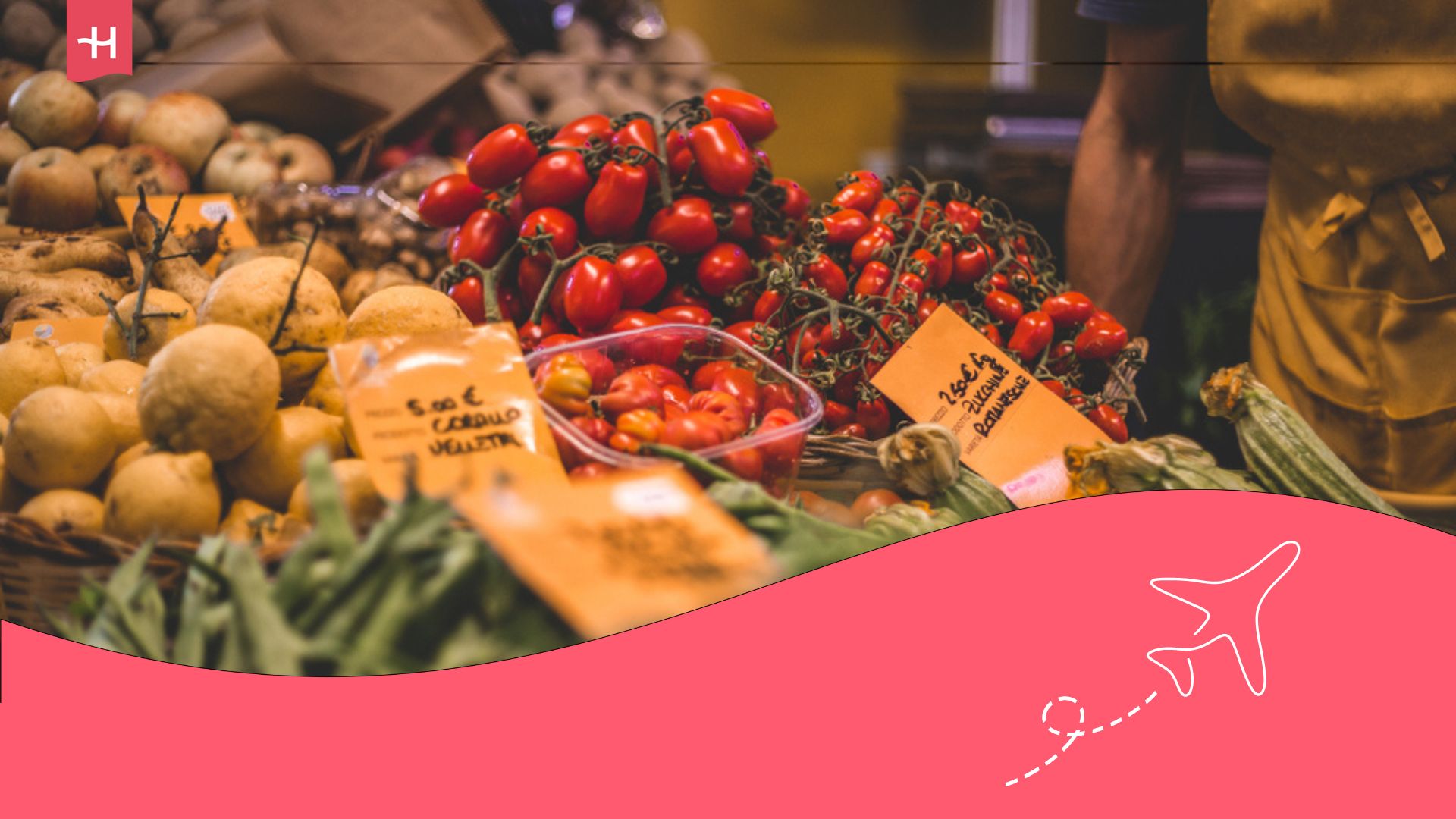
- Traditional markets: Either open-air or covered, these are the best option for buying fruit or vegetables from local producers. In Zurich, Geneva, or Bern, you can visit these markets weekly.
- Specialised stores: If you want to find bio, organic, vegan, gourmet, or artisanal products, there are stores that only sell this type of product. These are smaller establishments found in every neighbourhood.
The 5 Most Popular Supermarkets in Switzerland
To choose the best supermarkets in Switzerland, we based our selection on their popularity among residents, quality, variety, and their offers. In a country with an excellent quality of life, the promotion of sustainability and environmental care is also reflected in the philosophy of most of these supermarkets.
1. Coop, Medium-Sized Supermarket
The first supermarket in Switzerland we’re looking at is one of the largest cooperatives in the country, Coop, founded in 1890. It is known for its commitment to sustainability, organic products, and fair trade, which has earned certifications like Fairtrade or Bio Suisse. It has over 2,500 stores across the country, from supermarkets in large cities to smaller shops in rural alpine areas. Most of them are open from 8:00 AM to 7:00 PM, Monday to Saturday.
Here you can find fresh food, organic products, beverages, household items, and cosmetics. It also has its own brand, Coop Prix Garantie, which is cheaper, and Coop Naturaplan, an organic line. Its prices are on the higher end:
- Almond milk (1 L): $4.90 (€4.22)
- Organic eggs (6 pcs): $6.92 (€5.96)
- Organic feta cheese (100 GR): $4.97 (€4.28)
- Organic bananas (1 KG): $4.03 (€3.47)
- Pechugas de pollo (320 GR): $15.10 (€13)
| Pros | Cons |
|---|---|
| High quality and variety | Prices are a bit high |
| Strong commitment to sustainability | Not ideal for large weekly shopping |
| Stores in almost every city and town | Closed on Sundays |
Advantages and disadvantages of Coop.
2. Lidl, Discount Supermarket
One of the most popular supermarkets in Switzerland due to its low prices and promotions is Lidl, a German chain present in Swiss cities since 2009. Currently, you can find over 160 branches across the country, mainly in Geneva, Zurich, Bern, and Basel, with opening hours from 7:30 AM to 7:00 PM, although some stores close at 9:00 PM.
As a discount supermarket, prices are very competitive, with private labels that help reduce costs and basic food products, fresh produce, bakery items, cleaning supplies, cosmetics, and sections for Swiss and European products:
- Chicken breasts (360 GR): $6.03 (€5.19)
- Edam cheese (1 KG): $9.37 (€8.07)
- Saffron bread (360 GR): $3.14 (€2.70)
- Beef stroganoff (220 GR): $3.76 (€3.24)
| Pros | Cons |
|---|---|
| Very low prices | Less variety of premium products |
| Quality white-label brand | Fewer stores in small towns |
| Modern and well-organised stores | Doesn’t open on Sundays |
Advantages and disadvantages of Lidl.
Important: If you are a frequent traveler and want to stay connected without worrying about expensive roaming or looking for a new SIM at every destination, Holafly’s subscription plans are for you. With a single eSIM, enjoy internet in more than 170 countries for a fixed price and no surprises on your bill. Travel without limits and connect easily and securely! 🚀🌍

3. Migros, Supermarket and Hypermarket
Migros is another Swiss-origin supermarket, founded in 1925, known for its social focus, environmental commitment, and for not selling alcohol or tobacco. The country has over 700 supermarkets and 100 hypermarkets present in regions such as Interlaken, Zurich, Geneva, Ebikon, or Wilderswil, with opening hours approximately from 8:30 AM to 8:00 PM, depending on the location.
Its range includes fresh products, bakery items, ready meals, cleaning products, and electronics. It also has private labels like M-Budget and Migros Bio, with mid-range prices, slightly lower than Coop. For example, a kilo of apples costs $4.09 (€3.52), a one-litre bottle of water is $1.18 (€1.02), and a pack of bratwurst sausages is $6.92 (€5.96).
| Pros | Cons |
|---|---|
| Extensive national coverage | Doesn’t sell alcohol or tobacco |
| Mid-range prices and good quality | Reduced hours on Saturdays |
| Strong social responsibility | Closed on Sundays |
Advantages and disadvantages of Migros.
4. Traditional Markets
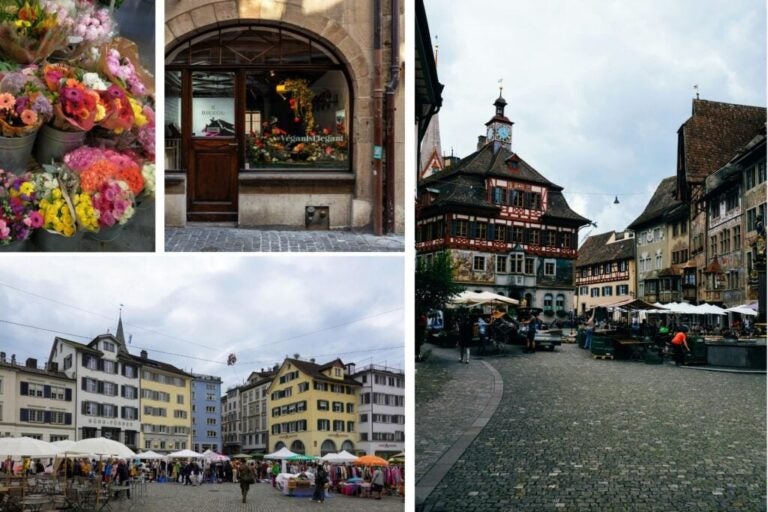
In addition to the supermarkets in Switzerland we’ve discussed so far, you can also visit outdoor markets held on certain days of the week. One of them is the Plainpalais Market in Geneva, right in the city centre, open on Wednesdays, Saturdays, and Sundays from 8:00 AM to 5:00 PM.
It’s the best place to buy fresh fruit and vegetables, artisanal bread, regional cheeses, flowers, or organic products. You can also find vintage stalls with antiques, making it a popular spot for both tourists and locals. Prices are generally similar or slightly lower than supermarkets, and you can find fruit starting from $3.23 (€2.78) per kilo.
| Pros | Cons |
|---|---|
| Fresh fruit and vegetables | Limited hours |
| Organic shopping | Outdoor markets are weather-dependent |
| Family-friendly atmosphere | Very busy stores |
Advantages and disadvantages of traditional markets.
5. Globus Delicatessa, Gourmet Store
Globus is a Swiss luxury department store chain that has a gourmet section called Delicatessa, offering premium Swiss and international products. You can find this store in major cities like Zurich, Basel, Lausanne, Geneva, and Bern, with opening hours from 9:00 AM to 7:00 PM, Monday to Saturday.
In these stores, you can buy artisanal Swiss cheeses, wines, chocolates, cold cuts, truffle products and imported foods. If you want to buy a gift at the end of your trip, this is the ideal place. The focus here is on quality and exclusivity, so prices are higher. For example, a kilo of Gruyère AOP cheese can cost $37.75 (€32.50) and artisanal chocolate costs about $8.65 (€7.44).
| Pros | Cons |
|---|---|
| High-end products | Very high prices |
| Personalised attention | Only available in major cities |
| Ideal for gifts | Not suitable for large shopping |
Advantages and disadvantages of Globus Delicatessa.
Other Notable Stores and Shops in Switzerland
Now that you have your list of the best supermarkets in Switzerland, how about continuing our shopping in other sections? In case you need home decoration, a wardrobe update, or a new computer, here are some other types of stores you might find useful.
Manor, Department Store
This Swiss department store chain was founded in 1902 in the city of Lucerne, where it still has a store, alongside over 60 other locations in cities such as Basel, Lausanne, or Zurich. It’s an establishment with various departments for clothing, cosmetics, electronics, toys, household items and a food section called Manor Food, offering local products and international brands.
Prices are on the higher end, as they sell quality products. For example, you can buy a shirt for $52 (€45), a kitchen set for $65 (€75), or a fitted sheet for $31 (€27), with general opening hours from 9:00 AM to 7:00 PM.
| Pros | Cons |
|---|---|
| Different products in one place | Prices are higher than other stores |
| Local and international brands | Not available in small towns |
| Excellent customer service | Reduced hours on Saturdays |
Advantages and disadvantages of Manor.
Interdiscount, Electronics and Home Appliances
Interdiscount is one of the largest chains in Switzerland for selling home appliances and electronics. It was founded in 1970 and has over 180 stores, plus an online website, with opening hours from 9:00 AM to 9:00 PM, depending on the location.
If you need a computer, TV, or washing machine, here you can find these products at competitive prices. For example, a coffee machine costs $269 (€232) and a mid-range smartphone costs $429 (€370).
| Pros | Cons |
|---|---|
| Wide network of physical shops | Smaller stores in villages |
| Excellent after-sales service | Limited technical service in rural areas |
| Online shopping option | Some areas close at 7:00 PM |
Advantages and disadvantages of Interdiscount.
IKEA
Although Swedish in origin, it’s very popular in Switzerland for its offer of minimalist Scandinavian design furniture at affordable prices. If you need to furnish your new home in this country, you can buy modular furniture to assemble yourself or lighting items, textiles, kitchen utensils, home decor, and eco-friendly products: A dining table costs around $110 (€120) and a double bed costs $212 (€230). There are nine stores in major cities like Zurich, Lausanne, Geneva, and Basel, which open from 9:00 AM to 8:00 PM.
| Pros | Cons |
|---|---|
| Good value for money | Furniture assembly is self-service |
| Large and well-equipped stores | Far from city centres |
| In-store restaurant | Additional cost for delivery and assembly |
Advantages and disadvantages of IKEA.
Frequently Asked Questions about the Best Supermarkets in Switzerland
Discount supermarkets in Switzerland are the cheapest, such as Aldi or Lidl, thanks to their private labels, which help reduce costs.
Most open from 8:00 AM to 7:00 PM, with some extending to 9:00 PM, depending on the location. They are usually closed on Sundays.
It depends on the canton, as German, French, or Italian may be spoken, although in most cases, staff can communicate in English with foreigners.
Yes, almost all accept credit cards, debit cards, or mobile payments. However, for purchases in small shops or local markets, we recommend you carry Swiss Francs in cash.
Yes, as Switzerland is one of the countries with the highest cost of living in Europe. That’s why it’s important to know the offers in each supermarket to save as much as possible.