Language


 No results found
Best supermarkets in Poland: Where to go grocery shopping?
We'll tell you which are the best supermarkets in Poland and help you organise your daily, weekly and monthly shopping.

Moving to Poland, even for a short stay, brings many changes. You adapt to a new routine and discover a completely different language. You also need to find somewhere to live and somewhere to shop daily. About that last point, you’ll quickly notice the wide range of supermarkets in Poland. From big international chains to small family businesses, the country offers many options. You can plan your shopping according to your budget and lifestyle.
In large cities such as Warsaw, Kraków or Gdańsk, you’ll find modern, well stocked supermarkets. They offer fresh food sections, ready meals and even international products. In smaller towns or rural areas, local shops dominate, along with market osiedlowy (neighbourhood markets). These places feel more personal and often sell local produce.
The cost of living in Poland stays lower than in Western Europe, so buying food usually feels affordable. However, choosing the right supermarket still makes a difference: Some chains focus on low prices, while others offer higher quality or imported products.
What Types of Supermarkets and Shops Are There in Poland?
Before your first grocery trip, it helps to understand how retail works in Poland. In big cities, supermarkets appear everywhere. In smaller towns, family-run shops still play a major role.
Unlike some other European countries, supermarkets in Poland usually work with impressive efficiency: Prices appear clearly, fresh products fill the shelves and staff serve customers quickly. When you choose the right type of shop, you save time and money. This matters even more if you plan a longer stay working and enjoying the country’s attractions.
1- Discount Supermarkets
Discounty stores are the most popular supermarket format in Poland, and they suit shoppers searching for low prices. Biedronka and Lidl lead this category, with thousands of branches across the country.
Biedronka, a Portuguese brand, has shops in almost every district in Warsaw, Kraków, Poznań and Wrocław. It offers very competitive prices on basic products. Lidl takes a slightly different approach, with a more modern profile. It provides a strong range of fresh products and enjoys an excellent reputation for quality.
2- Standard Supermarkets
The Carrefour and Auchan chains dominate this segment. You can find them in almost every medium and large city, usually inside shopping centres or in residential districts.
Carrefour runs smaller convenience formats (Carrefour Express), ideal for daily shopping. Auchan usually operates larger hypermarket-style stores, where you buy everything from food to appliances. Prices sit at a moderate level, and weekly promotions often deserve attention.
3- Premium Supermarkets
If you prefer high quality or imported products, you can visit chains such as Piotr i Pawel or Aldi Polska, which offer a more curated shopping experience.
Piotr i Pawel, now partly integrated into Spar, runs elegant stores with gourmet sections, wine areas and organic food. Aldi traditionally follows the discount model, but in Poland it promotes a modern image. It focuses on healthy products and exclusive brands.
4- Convenience Stores
In urban areas, 24-hour shops are very common. Chains such as Żabka and Carrefour Express appear in almost every central neighbourhood, especially near universities and stations. They work perfectly for quick purchases or emergencies, like milk, bread, water or snacks. However, their prices stay higher than in larger supermarkets.
5- Local Shops and Markets
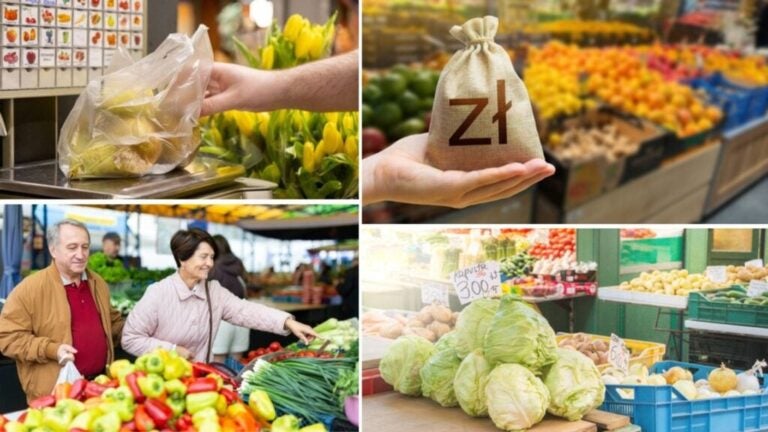
You can find open-air markets almost everywhere in Poland, especially in older neighbourhoods and small towns, along with many family-run shops.
Sklepy spożywcze (grocery shops) and bazary (street markets) sell fresh products from local producers: In cities like Kraków or Lublin, these places also form part of the neighbourhood’s social and cultural life.
Which Are the Best Supermarkets in Poland?
Poland offers a surprisingly wide range of supermarkets for its size. International chains operate alongside beloved local brands. Although prices usually feel affordable, each supermarket follows its own profile: Some chains stand out for constant promotions. Others shine thanks to their fresh food or convenient locations.
In cities like Warsaw, Kraków or Gdańsk, people usually combine several formats. They do the big monthly shop in a hypermarket. Then they top up essentials in a discount store. Finally, they solve emergencies in convenience shops such as Żabka. The most popular supermarkets in the country are Biedronka, Lidl, Carrefour, Auchan and Żabka. Each one has its own approach, prices and advantages. Let’s look at them in more detail.
1- Biedronka
Biedronka (which means ‘ladybird’ in Polish) is, without doubt, the best known and most loved supermarket in Poland. The Portuguese group Jerónimo Martins created the chain, and now it runs more than 3,000 shops across the country. In cities such as Warsaw, Kraków, Poznań or Wrocław, you almost always find one a few streets from home.
Its success follows a simple formula: Low prices, fresh products and good quality own-brand ranges. Biedronka combines the strengths of the discount model with a fairly complete product range. In the aisles you’ll find fruit, vegetables, meat, cleaning products, bakery items and ready meals. In addition, its weekly promotions have become a local classic: The so-called Tanie Tygodnie (“cheap weeks”) offer discounts of up to 50% on selected foods.
Regarding prices, Biedronka ranks among the cheapest chains in the country: One litre of milk costs around 3.50 PLN (€0.81, $0.95), one kilo of fresh bread about 6 PLN (€1.39, $1.63), and one kilo of apples roughly 4 PLN (€0.93, $1.09). Their own-label products also help, with prices around 10% to 20% lower than national brands.
The chain does have one weak point. Not every branch feels the same. Central neighbourhood stores often feel small and crowded.
| Pros | Cons |
|---|---|
| Disadvantages Very low prices and weekly promotions | Small shops in central areas |
| Extensive national coverage | High customer traffic, especially at weekends |
| Affordable private label with good quality | Limited range of imported products |
| Great for basic, everyday shopping | Some branches don’t offer gourmet sections |
Advantages and disadvantages of Biedronka
Important: If you are a frequent traveler and want to stay connected without worrying about expensive roaming or looking for a new SIM at every destination, Holafly’s subscription plans are for you. With a single eSIM, enjoy internet in more than 170 countries for a fixed price and no surprises on your bill. Travel without limits and connect easily and securely! 🚀🌍

2- Lidl
Lidl competes directly with Biedronka and many shoppers rate it highly for product quality and well organised stores. This German chain expanded rapidly across Poland and now operates in almost every city, from Warsaw and Gdańsk to medium-sized towns like Katowice or Toruń.
The main difference compared with Biedronka lies in the shopping experience: The Lidl stores feel more modern, spacious and visually tidy. The in-store bakery also stands out, as staff bake products daily. Lidl regularly runs famous ‘theme weeks’ dedicated to Italian, French or Spanish cuisine, which attract many food lovers.
Regarding prices, Lidl costs slightly more than Biedronka, but many products offer better quality. One litre of milk costs around 4 PLN (€0.85, $1.00), one kilo of fresh bread about 7 PLN (€1.44, $1.70), and one kilo of chicken meat roughly 20 PLN (€4.08, $4.80). In addition, its own-brand label Pilos offers excellent value for money.
Lidl also offers its own app with personalised discounts, plus a growing line of organic (bio) products. Polish consumers choose these items more often every year.
| Pros | Cons |
|---|---|
| Clean, well organised and modern stores | Slightly more expensive than Biedronka |
| Excellent bakery and fresh products | Doesn’t appear in every small town |
| Wide range of international products | Some promotions last only a few days |
| Good selection of bio and healthy items |
Advantages and disadvantages of Lidl
3- Carrefour
Carrefour is another of the best known supermarket chains in Poland, and one of the few that offers so many formats. You’ll find Carrefour Hyper stores in shopping centres and on main avenues. Smaller Carrefour Market and Carrefour Express formats suit quick everyday purchases. The chain has a strong presence in Warsaw, Kraków, Łódź and Gdańsk, along with some medium-sized cities.
Carrefour stands out thanks to its broad product range. Unlike discount chains such as Biedronka or Lidl, its branches stock imported foods, organic items and many international brands. The stores also offer a solid fresh food section and ready meals. You can usually find vegetarian and vegan options without trouble.
Prices at Carrefour sit in the mid-range. A litre of milk costs about 5 PLN (€0.73, $1.20). A kilo of fresh bread costs around 8 PLN (€1.25, $1.90). A dozen eggs usually comes to about 12 PLN (€2.49, $2.90). Weekly promotions and discounts through the Carrefour Polska app help keep prices competitive.
Another useful advantage comes from online shopping with home delivery, which works especially well in large cities. In small towns and rural areas, however, Carrefour shops still appear less frequently.
| Pros | Cons |
|---|---|
| Wide range of products, including imports | Higher prices than discount chains |
| Different formats for different shopping needs | Stronger presence in large cities |
| Weekly promotions and app discounts | Some small shops offer limited stock |
| Online shopping with home delivery |
Advantages and disadvantages of Carrefour supermarkets in Poland
4- Auchan
Auchan ranks among the largest hypermarket chains in the country and many families choose it for big monthly shops. This French brand operates in almost every large Polish city. Most branches occupy big units in shopping centres or sit on the outskirts of town. In Warsaw, Katowice, Poznań or Lublin, many people associate Auchan with wide choice and good bulk prices.
The shopping experience at Auchan feels very complete. You’ll find fresh food, cleaning products, clothing, kitchenware and even technology in one place. The fresh sections for meat, fruit and vegetables enjoy a particularly strong reputation among shoppers. Prices stay competitive, especially for large trolleys or weekly promotions.
For example, one litre of milk costs around 4.50 PLN (€0.94, $1.10), one kilo of fresh bread about 6 PLN (€1.19, $1.40), and one kilo of rice roughly 9 PLN (€1.78, $2.10). Auchan also sells own-brand products under the Auchan name, usually 15% to 25% cheaper than national brands.
The main disadvantage relates to location. Many branches sit far from the city centre, so you need a car or public transport. However, for families or anyone buying in bulk, Auchan remains one of the most convenient choices in Poland.
| Pros | Cons |
|---|---|
| Competitive prices for large shops | Stores often sit far from the city centre |
| Very wide range, including non-food items | Not practical for small or daily purchases |
| Good quality fresh food and affordable own-brand lines | Can feel very crowded at weekends |
| Constant promotions and a complete hypermarket format |
Advantages and disadvantages of Auchan
5- Żabka
If you live in Poland, you’ll spot a Żabka on almost every corner. This convenience store chain feels so common that many people see it as part of the Polish urban landscape. With more than 10,000 branches across the country, Żabka (which means “little frog” in Polish) has become the go-to solution for quick shopping and everyday emergencies. The shops stay small and modern, and they always appear in strategic spots:
Near stations, universities, offices and residential areas. In Warsaw, Kraków and Gdańsk, you often find one every few streets. Customers especially appreciate the long opening hours. Many stores open from 6:00 until 23:00, and some even operate 24 hours.
Żabka sells basics such as bread, milk, fruit, drinks, ready meals and snacks. It also offers takeaway coffee and prepared sandwiches, which work perfectly for quick breakfasts or lunches. However, its prices stay higher than in large supermarkets: A bottle of water costs about 3 PLN (€0.59, $0.70), a fresh bread roll around 2 PLN (€0.42, $0.50), and a takeaway coffee roughly 8 PLN (€1.61, $1.90).
One major advantage comes from the Żappka app, which offers personalised discounts and a points system (Żappsy). You can exchange these points for free products. Because the shops remain small, the stock range feels limited, so they don’t suit big weekly shops.
| Pros | Cons |
|---|---|
| Shops in every neighbourhood and city | Higher prices than large supermarkets |
| Long opening hours, many open 24h | Limited stock and few fresh products in quantity |
| App with discounts and redeemable points | Not suitable for weekly family shops |
| Ideal for emergencies or quick meals |
Advantages and disadvantages of Żabka
Which Other Notable Shops and Stores Can You Find in Poland?

Besides the big supermarkets, Poland offers many specialised stores and low-cost chains that complement your weekly shop. Some focus on hygiene and cosmetics, others on clothing or homeware. Certain chains also sell bulk products, ideal when you want to save money. Here are some of the most popular options.
1- Rossmann
Rossmann is the most popular drugstore chain in Poland, and it quickly becomes essential for many residents. Thousands of branches operate across the country. They sell personal hygiene products, cosmetics, cleaning items, perfumes and baby products. The stores appear both in city centres and residential districts, and they usually feel modern and easy to navigate.
Rossmann offers a major advantage through its wide choice of brands, both local and international, at accessible prices. Their mobile app also provides personalised discounts that change every week.
In general, prices stay lower than in traditional pharmacies and service feels quick. The only drawback is the limited food range. You’ll find some healthy snacks or supplements, but Rossmann doesn’t replace a full supermarket.
2- Pepco
Pepco ranks among the favourite stores for Poles who want cheap clothing, homeware and decoration. The model resembles Primark, with branches in almost every city. Many newcomers see Pepco as a practical choice when they need to equip a new home or refresh their wardrobe without spending too much.
In Pepco, T-shirts start at 15 PLN (€3.06, $3.60). You can also buy blankets, towels and kitchen utensils for under 30 PLN (€5.95, $7.00). The main advantage clearly lies in the price and variety. Quality varies between products, and shops often feel very busy at weekends. Even so, Pepco remains one of the best options for recent arrivals who need basics quickly.
3- Kaufland
Kaufland is a German wholesale-style supermarket chain with strong presence in Poland, especially in Wrocław, Poznań and Katowice. The stores are large and designed for bulk shopping, with prices that compete directly with Auchan and Biedronka.
Its main strength comes from pricing. When you buy in volume, you often pay less than in a traditional supermarket. Kaufland also offers good quality fresh products and a large section of international foods. The disadvantage arises from store size and location.
Because the branches are so big, they usually sit on the outskirts of cities. This layout makes them less convenient for people without a car.
4- Local Markets
Open-air markets form part of Poland’s identity. People know them as bazary, and local producers sell fruit, vegetables, meat and artisan bread there. In cities such as Kraków, Warsaw or Lublin, markets have become real institutions, like Hala Mirowska in the capital or Stary Kleparz in Kraków.
The main advantage lies in the freshness and quality of the products, often arriving directly from the countryside. Markets also give you a chance to practise some Polish and experience local culture from the inside. Prices can sometimes exceed those in discount supermarkets, and not every stall accepts card payments, so carrying cash usually helps.
Supermarkets in Poland: Frequently Asked Questions
In general, the cheapest options are Biedronka, Lidl and Kaufland. Most people choose Biedronka because it balances quality and price very well. Kaufland offers strong discounts when you buy in bulk. Lidl costs slightly more, but it stands out for quality and frequent weekly promotions.
Yes. In Poland, almost all supermarkets and shops, including many local markets, accept debit cards, credit cards and mobile payments such as Blik, Apple Pay or Google Pay. However, in bazary or small family shops, carrying some cash still helps, because a few small vendors don’t accept electronic payments.
This doesn’t happen often, but some Żabka stores and small neighbourhood shops open 24 hours, especially in big cities such as Warsaw or Kraków. Large supermarkets usually close between 21:00 and 22:00. They also stay closed on Sundays because of Polish labour regulations on rest days.
Carrefour, Lidl and Piotr i Pawel (now part of Spar) offer the best options. Lidl organises theme weeks with food from different countries. Carrefour stocks a strong range of imported products. Premium chains also sell very complete organic and vegan lines. In large cities, you’ll also find specialised shops focusing on Asian, Arab and Latin American food.