



 Language


 No results found
Best supermarkets in Milan: Where to go grocery shopping?
Knowing which are the best supermarkets in Milan is key to shopping smart in a city with a high cost of living.

Milan is one of the most expensive cities in Italy and, at the same time, one of the most attractive destinations to live due to its cosmopolitan atmosphere and the job opportunities it offers. In this context, learning to manage your daily budget becomes essential, and knowing where to shop makes a big difference. Fortunately, supermarkets in Milan offer options for every budget: From discount chains with low prices to more specialised stores where quality and gourmet products take the lead.
In a city where dining out can be quite costly, supermarkets become allies to keep spending under control. While economical chains abound in residential neighborhoods like Porta Romana, Lambrate, or Bicocca, medium-sized supermarkets offering higher-end products are predominant in the historic centre and more exclusive areas like Brera or Porta Venezia. Understanding this dynamic is key to organizing your shopping and preventing the cost of living in Milan from rising unnecessarily.
Ready to find out which are the best supermarkets in Milan? Get comfortable and take note of what we have to tell you.
What are the types of stores and supermarkets in Milan?
Milan is an ideal city for a long stay. It will allow you to discover the great gems of northern Italy while working from your computer. If this idea sounds tempting, you’ll first need to find suitable accommodation for a stay. Then, you’ll have to figure out where to shop, among other things.
Luckily, this Italian city offers an interesting mix of traditional Italian chains, international supermarkets, and local markets that still play a major role in daily life.
Milan is divided into neighborhoods with very different profiles. This is reflected in the supermarket offering: Discount stores dominate residential areas, while smaller shops with higher prices and a more gourmet selection are common in the historic centre or more exclusive neighborhoods.
1- Discount Supermarkets
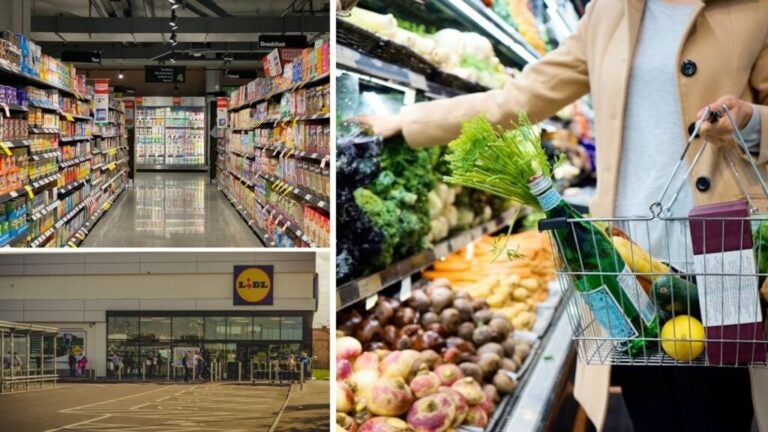
Discount stores like Lidl, Eurospin, and Penny Market are the best option if you want to watch your budget. Lidl has stores in areas like Bicocca and Lambrate, popular among students due to low prices on basic products like pasta, bread, and fruit.
Eurospin, very popular among families, has stores in residential areas in the north and south of the city. It is known for its affordable private-label brands. Penny Market, though with fewer branches, is another affordable option in areas like Porta Romana. In all of them, price-quality ratio takes priority over variety.
2- Standard Supermarkets
Esselunga and Carrefour Market stand out here. Esselunga is an institution in Italy and in Milan, it’s almost synonymous with supermarkets: It has large stores in Città Studi, San Siro, and Porta Vittoria. It has spacious aisles and a wide variety of products, from the basics to fine Italian wines and cheeses.
Carrefour Market, on the other hand, adapts to the urban rhythm with medium-sized stores in central locations, such as Brera or Porta Venezia It is perfect for those living alone or looking for quick shopping with well-known brands and international products.
3- Premium Supermarkets
If your priority is product quality, premium chains like Pam and Naturasì are a great option. Pam is found in upscale neighborhoods, like the Quadrilatero della Moda. It offers a gourmet selection with top-quality fresh produce, Italian cured meats, and international brands.
On the other hand, Naturasì is the reference for organic, eco-friendly, and vegan products. It has branches in Porta Venezia and Isola, and it’s perfect for those following specific diets or looking for healthy alternatives.
4- Local Markets
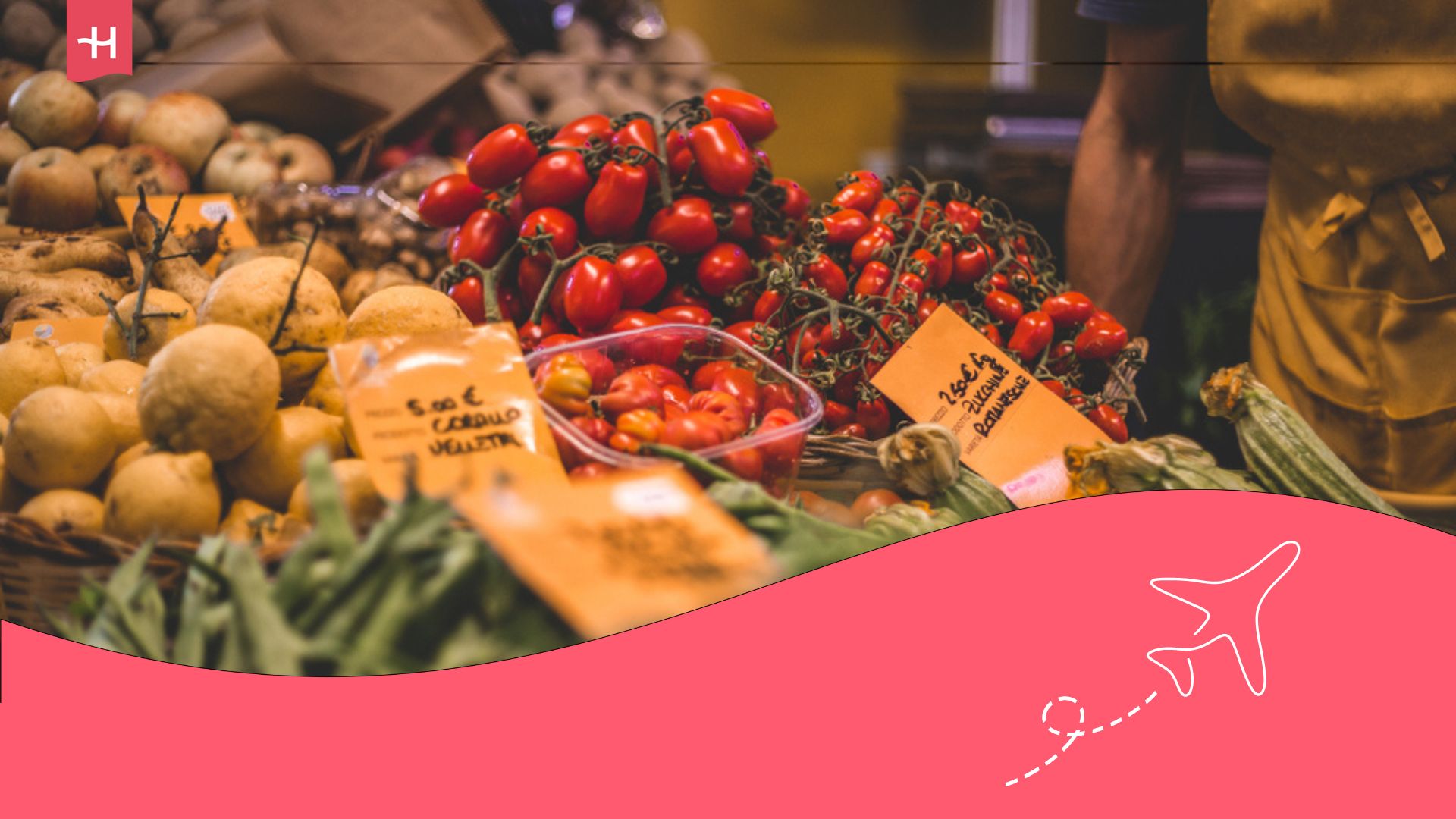
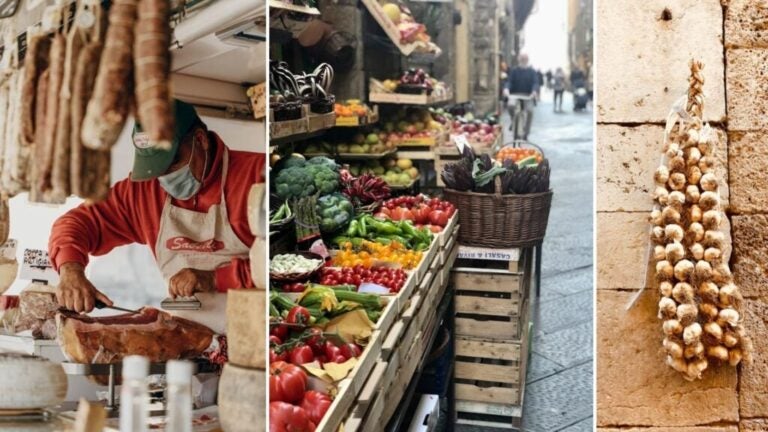
Although Milan is modern and cosmopolitan, traditional markets still hold a central place. The Mercato di Via Fauche, in the Sempione area, is one of the best known. It offers fruits, vegetables, meats, and cheeses directly from local producers.
Mercato Comunale Wagner, in the western area, is another landmark for fresh products at great prices. Mercato di Viale Papiniano, near Porta Genova, is also known for its lively atmosphere and variety, popular among Milanese who want quality without paying premium supermarket prices.
What are the top five supermarkets in Milan?
In a city where the cost of living can be challenging, choosing the right supermarket can make the difference between keeping your budget under control or overspending without realising it. Milan offers options for every profile: From students looking for low prices in discount chains to families preferring to fill their carts at full supermarkets or professionals opting for the convenience of central stores.
Among the most important supermarkets in the city are Esselunga, Carrefour, Lidl, Eurospin, and Pam. Each has its distinct style and presence in different neighborhoods. Some become strategic allies for their prices, others for their variety, and others simply because they are right around the corner. The important thing is to understand the advantages and disadvantages of each to choose the one that best fits your routine in Milan.
1- Esselunga
Talking about supermarkets in Milan without mentioning Esselunga would be impossible. Founded in the 1950s, this Italian chain has become an institution within the city. Its stores are spacious, modern, and very well-stocked, making it a favourite among Milanese families.
Large stores can be found in areas like Città Studi, Porta Vittoria, and San Siro, with sections ranging from fresh products to wines with protected designation of origin, including deli, fishmongery, and prepared meals.
In terms of prices, Esselunga is in the mid-range: More expensive than Lidl or Eurospin, but with greater variety and higher quality in fresh produce. For example, a litre of milk costs around €1.20 ($1.27), a kilo of tomatoes about €2.40 ($2.54), and a decent bottle of Italian wine starts from €4.50 ($4.77). It also offers competitive private-label brands and a good selection of organic products.
Stores are usually open from 8:00 AM to 9:00 PM, with some branches extending their hours until 10:00 PM in busier areas.
| Pros | Cons |
|---|---|
| Wide variety of products, including wines and Italian specialties | Higher prices than discount chains |
| Modern and comfortable stores for large shopping trips | Not always ideal for quick shopping |
| Good presence in key neighbourhoods | Can get very crowded at weekends |
| Organic options and quality private-label brands | You’ll need a larger budget if you’re doing your weekly shopping here |
Advantages and disadvantages of Esselunga supermarkets in Milan
Important: If you are a frequent traveler and want to stay connected without worrying about expensive roaming or looking for a new SIM at every destination, Holafly’s subscription plans are for you. With a single eSIM, enjoy internet in more than 170 countries for a fixed price and no surprises on your bill. Travel without limits and connect easily and securely! 🚀🌍

2- Carrefour
Carrefour is another chain with a strong presence in Milan, and what’s interesting is that it adapts to the rhythm of the city with its different formats.
Carrefour Express stores are located in central neighbourhoods like Brera, Porta Venezia, or Navigli, designed for quick daily purchases: A bottle of water for €0.80 ($0.85), a pack of pasta for €1.10 ($1.17), or fresh fruit trays around €3.00 ($3.18).
On the other hand, Carrefour Market stores and hypermarkets in more residential areas, such as in Bicocca or on the outskirts towards Assago, offer a much wider selection and slightly more competitive prices.
Compared to Esselunga, Carrefour is usually slightly more expensive for fresh produce, but the advantage is its proximity: You’ll likely find a store just a few blocks from your home if you live in the city centre. Also, their hours are longer; many Express locations stay open until 10:00 PM, which is very convenient in a city where not all supermarkets extend their hours that much.
| Pros | Cons |
|---|---|
| Great coverage in the centre with Carrefour Express | Prices at Express are higher than at Market or hypermarkets |
| Formats adapted to different lifestyles | Lower quality in fresh produce compared to Esselunga |
| Wide hours, even until 10:00 PM | Smaller branches offer limited ranges |
| Practical option for quick purchases | Not always the best option for the big monthly shop |
Supermarkets in Milan: Pros and Cons of Carrefour
3. Supermarkets in Milan: Lidl
Lidl is synonymous with savings in Milan and one of the favourite chains for students and young families wanting to keep their budget under control. Its stores are mostly located in residential areas like Lambrate, Bicocca, and Porta Romana, though there are also outlets on the northern outskirts of the city.
This German brand offers simple stores, a basic range, many private-label brands, and an in-store bakery that has gained fame among Milanese. It’s common to pay just €0.99 ($1.05) for a freshly baked baguette, around €0.90 ($0.95) for a litre of milk, and about €1.80 ($1.91) for a kilo of apples.
What makes Lidl attractive are its themed weeks, where you can find international products at low prices: Italian fresh pasta, French cheeses, or even Asian specialties. Compared to Esselunga or Carrefour, the variety is more limited, but the prices make it worth it.
Most of the stores open from 8:00 AM to 9:00 PM, with some extending until 10:00 PM.
| Pros | Cons |
|---|---|
| Very low prices for basic products | Less variety than Esselunga or Carrefour |
| In-store bakery with fresh and cheap products | Not ideal for gourmet or specialized shopping |
| Attractive international themed promotions | Stores tend to be crowded |
| Wide coverage in residential areas | Less presence in the historic centre |
Advantages and disadvantages of Lidl supermarkets
4- Eurospin
Eurospin is another of Italy’s most representative discount chains, and in Milan, it has become the favourite option for many families. Its supermarkets are usually located in residential areas in the north and south of the city, in places like Baggio, Affori, or Precotto, making them very accessible for those looking for low prices without straying too far from home.
Eurospin is known for mainly working with private-label brands, which allows it to offer really competitive prices: A litre of milk costs around €0.85 ($0.90), a 500g pack of pasta just €0.70 ($0.74), and a kilo of tomatoes is about €1.50 ($1.59).
Although it doesn’t have the variety of Esselunga or the convenience of a Carrefour Express, Eurospin covers all the essentials: Fresh fruits and vegetables, basic bakery items, cleaning products, and an increasing selection of organic items. Most of its stores open from 8:00 AM to 9:00 PM, making it a practical option for weekly shopping.
| Pros | Cons |
|---|---|
| Very competitive prices on basics | Limited variety compared to large chains |
| Ideal for families looking to save | Less presence in central neighbourhoods |
| Good range of private-label and organic products | Smaller, simpler stores |
| Wide hours across the city | Fewer international products |
Eurospin supermarkets: Pros and cons of shopping there
5- Pam
Pam is the chain that represents the most premium aspect of supermarkets in Milan. Its stores are usually located in central and high-income neighbourhoods, like the Quadrilatero della Moda, Porta Venezia, or Brera, where the clientele seeks quality and convenience in one place.
Unlike discount chains, Pam offers a more refined shopping experience, with wide aisles, gourmet sections, and a selection of fresh products that includes high-quality meats, Italian cured meats, artisanal cheeses, and wines with protected designation of origin.
In terms of prices, it’s clearly above Lidl or Eurospin. A fresh loaf of bread can cost around €1.50 ($1.59), a kilo of tomatoes €2.80 ($2.97), and a basic bottle of wine starts from €6.00 ($6.36). The advantage is that everything it offers tends to have a higher standard of quality, and it’s a place where it’s easier to find international products and regional specialties.
Its branches generally open from 8:00 AM to 9:00 PM, though in central areas, some extend their hours until 10:00 PM.
| Pros | Cons |
|---|---|
| High-quality fresh products and gourmet sections | Prices are higher than in other chains |
| Good coverage in central neighbourhoods | Not ideal for tight budgets |
| Wide variety of wines, cheeses, and cured meats | Less presence in peripheral residential areas |
| More comfortable and refined shopping experience | May seem exclusive and less accessible |
Advantages and disadvantages of Pam supermarkets in Milan
What other popular shopping options are there in Milan?
Shopping in Milan is quite an experience. And we’re not just talking about food and daily-use products. You’ll find the world’s most sought-after brands here, so the budget can easily skyrocket if you’re not careful with your credit card. But let’s not go that far and take a look at what other options exist in Milan, whether it’s for furnishing an apartment or buying everyday clothes.
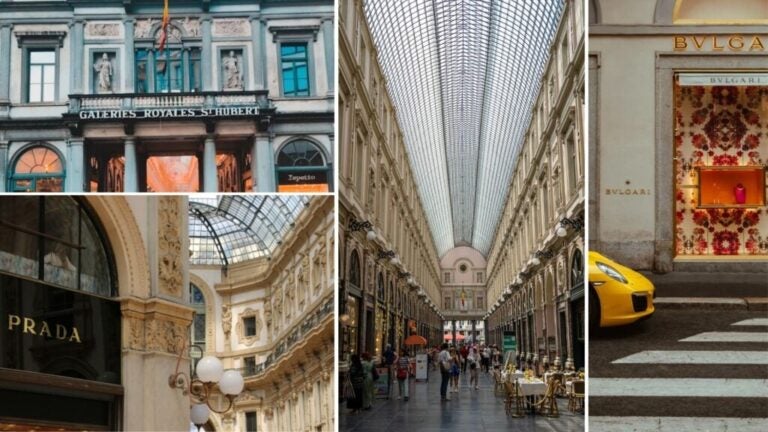
In addition to supermarkets, Milan offers a wide range of stores and department stores that are essential for those moving to the city. From fashion to technology and organic products, these options complement daily life and are part of the Milanese shopping style.
1- La Rinascente
La Rinascente is the city’s quintessential department store. Located in the heart of Piazza del Duomo, it is an iconic place for Milanese, with high-end fashion products, home goods, and a top floor dedicated to gourmet food.
The shopping experience is unique: Walking through its aisles is almost like visiting a trend museum. However, it’s not a place designed for saving; prices are high and it’s more focused on luxury than on everyday items. In other words, it’s perfect for those looking for exclusivity or a special gift, but not for your monthly grocery shopping.
2- MediaWorld
MediaWorld is Italy’s leading chain for everything related to technology and home appliances. In Milan, it has large stores in shopping centres like Portello or Carosello in Carugate, where you’ll find everything from fridges and washing machines to computers, mobile phones, and the latest televisions.
An advantage is that prices tend to be competitive and there are frequent sales, especially during discount seasons. The downside is that many of its stores are located in peripheral areas, meaning you’ll need transportation to get there, and the size of the stores can be overwhelming for those just looking for something specific.
3- Naturasì
Naturasì is the reference for organic and eco-friendly products in Italy, with several branches in Milan, especially in areas like Porta Venezia, Isola, and Porta Romana. Here you can buy organic, vegan, gluten-free food and natural cosmetics.
It’s the perfect place for those prioritising health and responsible consumption, but its prices are much higher than in regular chains. Also, while the quality is excellent, the range of products isn’t as wide as that of a standard supermarket, so it’s usually used as a supplement rather than a primary option.
4- 24-Hour and Convenience Stores
Lastly, 24-hour and convenience stores are found in neighbourhoods like Navigli, Centrale, and Porta Venezia, often run by immigrant families.
They’re very convenient for emergencies or quick purchases outside regular supermarket hours, as you’ll find drinks, snacks, basic fruits, or cleaning products on their shelves. The downside is that prices are significantly higher than in chains like Lidl or Carrefour, and the selection is limited.
In other words, they are the ideal solution if you’ve forgotten something and need it immediately, but they don’t replace a full supermarket.
Final Tips for Shopping in Supermarkets in Milan
Shopping in supermarkets in Milan requires some organisation, especially if you want to keep your budget under control. The first thing is to identify which chains are near your home: If you live in residential areas like Lambrate or Bicocca, Lidl or Eurospin are likely your best allies for saving. On the other hand, in more central areas like Brera or Porta Venezia, Carrefour and Pam are always just around the corner, though at higher prices.
Use weekly deals at Esselunga or Lidl to save on fresh produce and basic essentials. Also, remember that in Milan, like the rest of Italy, supermarkets usually close on Sunday afternoons, so it’s best to plan your big shopping trip on Saturday morning. For high quality and local specialties, choose markets; they offer better products than discounters but at higher prices.
Supermarkets in Milan: Frequently Asked Questions
Discount chains like Lidl and Eurospin are the most affordable. There, you can buy a litre of milk for €0.90 ($0.95), a kilo of pasta for €0.70 ($0.74), and seasonal fruits for €1.50 ($1.58) to €2.00 ($2.11) per kilo. They are perfect for weekly shopping on a tight budget.
The best option is Naturasì, which specializes in organic, vegan, and eco-friendly products. Esselunga and Carrefour also have fairly complete organic sections, although not as specialised.
Carrefour Express stores in central neighbourhoods usually stay open until 10:00 PM, and some locations in Porta Venezia or Navigli extend their hours until midnight. Lidl and Esselunga, however, usually close between 8:30 and 9:00 PM.
Yes. Both Esselunga and Carrefour offer online shopping services with home delivery. In some neighbourhoods, you can also use platforms like Everli (formerly Supermercato24), which allow you to order products from various chains and have them delivered to your home.
The most practical option is Pam, where in addition to fresh products, you’ll find home goods and some basic clothing items. For more varied clothing, there are large department stores like La Rinascente or international chains, but those fall more into the category of specialised stores than supermarkets.