







 Language


 No results found
Best supermarkets in England: Where to go grocery shopping?
Need to go shopping in this country and don't know where? Make a note of these supermarkets in England with their prices, products and opening hours.

If you’re visiting this country or considering moving here for a while, you’ll need to know where to shop in supermarkets in England. You’ll find that you can choose from different types of stores, from large hypermarket chains, medium-sized supermarkets, gourmet shops offering local and organic products, to local markets.
Each store has its own characteristics in terms of product sales, prices, promotions, and offers that, if you know about them, can help you save a bit more on your shopping budget. For this reason, don’t miss the following article, where we share the best supermarkets in England so you can find the greatest variety of food and the best quality. So, are you ready to go shopping?
What Types of Shops Are There in England?
Many foreigners arrive in the country each year, either as English language students, digital nomads who stay to work remotely for a while, or tourists renting an Airbnb who need to do some shopping to cook during their holidays. In a destination with a high cost of living, it’ll be useful to know the following list of the different types of supermarkets in England so you can make the most of your savings:
- Supermarkets: These are the most common stores for weekly shopping. Medium-sized ones can be found in all neighborhoods. They offer fresh products, frozen foods, cleaning items, and personal care products. Some of them include Tesco, Sainsbury’s, Asda, or Morrisons.
- Convenience stores: These are smaller stores, open late, and located in residential areas or transport stations. They sell basic items like bread, milk, drinks, and snacks. Examples: Examples include Tesco Express, Sainsbury’s Local, or Co-op Food.
- Discount supermarkets: These are the best stores for saving, as they offer products at reduced prices, with store-brand or imported items. The most well-known are Aldi and Lidl.
- Specialty shops: These focus on a specific type of product, like fruits and vegetables, meats, organic products, or international goods. Some of these stores are Marks & Spencer Foodhall or local shops offering Eastern European, Asian, or Latin products.
- Farmers’ markets: These markets are very popular in cities like London, Bristol, or Cambridge. They offer fresh produce directly from local producers, such as fruits, vegetables, artisan bread, and prepared food.

Top 5 Supermarkets in England
What do you need to buy? Depending on whether you’re doing a big shop, a quick shop for a specific product, or looking for artisanal foods, you’ll need to choose a different type of store. That’s why we’ve selected a list of the best supermarkets in England, ranging from medium-sized local stores with average prices, supermarkets with big discounts, central markets, or gourmet product shops. Check out our selection and get your shopping trolley ready!
1. Tesco
It’s the most important supermarket chain in England since opening its first store in 1997. Currently, it has around 3,000 stores across the UK in different formats, such as Tesco Extra (hypermarkets), Tesco Metro (medium-sized stores), and Tesco Express (convenience stores). You can visit them from 7:00 AM to 10:00 PM, Monday to Saturday, with reduced hours on Sunday, depending on location.
In addition to offering a wide range of products with international brands and its own store brand, you can also find clothes, accessories, small household appliances, and home décor. It’s safe and reliable.
- Milk (1 L): $1.56 (€1.33)
- Baguette bread (3 loaves): $1.19 (€1.02)
- Eggs (6 pcs): $2.35 (€2.01)
- Chicken breast (650 GR): $6.25 (€5.35)
| Pros | Cons |
|---|---|
| Variedad de productos desde comida hasta ropa | Slightly higher prices than other supermarkets such as Lidl |
| Cheaper own-brand products | Promotions only available with a membership card |
| Different store formats to choose from | Often very busy |
Advantages and disadvantages of Tesco.
2. Sainsbury’s
Founded in 1869 in London, Sainsbury’s is another well-known supermarket in England, particularly among residents. With over 1,330 stores in the country and extended hours from 7:00 AM to 11:00 PM, varying by location, here you can buy fresh products, basics, gourmet food, household items, clothing, or electronics. Here are some example prices:
- Milk (1 L): $1.60 (€1.37)
- Baguette bread (2 loaves): $1.68 (€1.44)
- Eggs (6 pcs): $2.35 (€2.01)
- Chicken breast (320 GR): $3.08 (€2.63)
| Pros | Cons |
|---|---|
| Good balance between quality and price | Not as cheap as discount supermarkets |
| Uses the Nectar loyalty program | Fewer large stores in remote areas |
| Various store formats and convenience stores | Fewer stores than other chains nationwide |
Advantages and disadvantages of Sainsbury’s.
Important: If you are a frequent traveler and want to stay connected without worrying about expensive roaming or looking for a new SIM at every destination, Holafly’s subscription plans are for you. With a single eSIM, enjoy internet in more than 170 countries for a fixed price and no surprises on your bill. Travel without limits and connect easily and securely! 🚀🌍

3. Aldi
Although it’s a German chain, Aldi supermarkets in England have gained great popularity, especially among young people and students, due to their low prices and offers. As of today, there are more than 1,000 stores across the country, having opened their first one in 1990, with general hours from 8:00 AM to 9:00 PM, Monday to Saturday, and shorter hours on Sundays.
Thanks to its simple facilities and store brand, Aldi offers basic products, fresh fruits and vegetables, frozen foods, bakery, cleaning and personal care items, at very affordable prices, between 15% and 25% lower than Tesco or Sainsbury’s, making it ideal for big shops.
- Milk (2 L): $1.48 (€1.27)
- White bread (800 GR): $0.60 (€0.51)
- Eggs (6 pcs): $1.93 (€1.65)
- Pasta (500 GR): $1.00 (€0.86)
| Pros | Cons |
|---|---|
| Competitive prices | Smaller range of brands |
| Cheaper own-brand products | No deli or gourmet sections |
| Simple and easy-to-navigate stores | Some offers run out quickly |
Advantages and disadvantages of Aldi.
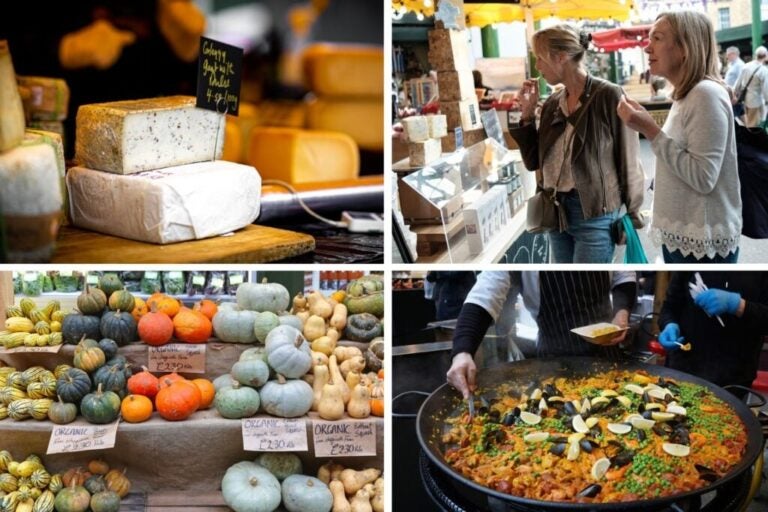
4. Borough Market, Central Market in London
In addition to the supermarkets in England we’ve covered in this guide, you can also visit a central market like Borough Market in Southwark, London, very close to the London Bridge station. It’s one of the oldest and most famous markets in the country, with over 1,000 years of history, and it has become a meeting point for both tourists and locals. The market is open from 10:00 AM to 5:00 PM, Monday to Saturday.
At this market, you’ll find fruits, vegetables, meats, fish, cheeses, breads, spices, wines, and international products. Most of the stalls are managed by small local producers and farmers. While prices aren’t as low as in other stores, the focus here is on handmade products. For example, an artisan bread loaf costs around $4.00 (€3.42), and a local cheese (200 GR) is priced at $8.00 (€6.85).
| Pros | Cons |
|---|---|
| High-quality fresh and artisan products | Prices are higher than other supermarkets |
| Great variety of both local and international goods | Only one location in certain cities |
| Unique gastronomic experience | Short opening hours |
Pros and cons of Borough Market.
5. Waitrose
We finish our tour of the best supermarkets in England with a medium-high-end chain owned by the John Lewis Partnership, founded in 1904 in Acton. This store isn’t as widespread across the country as Tesco, but they focus on areas with higher purchasing power. Their general opening hours are from 7:00 AM to 10:00 PM.
Waitrose is known for offering high-quality products, gourmet varieties, organic items, delicatessen, and specialty imported products, in addition to the essentials. For example, 6 free-range eggs can cost around $4.00 (€3.42), and two litres of organic milk cost $3.30 (€2.82).
| Pros | Cons |
|---|---|
| Superior quality and gourmet products | Higher prices compared to other supermarkets |
| Good selection of organic products | Less coverage across the country |
| Personalised service | Not recommended for large shopping trips |
Advantages and disadvantages of Waitrose.
Other Notable Stores and Retailers in England
We’re still shopping around this destination, but in addition to the supermarkets in England we’ve already covered, there are also other popular types of stores and chains among locals. If you need to buy appliances for your new home, clothing, shoes, or furniture, take a look at the selection we’ve made of these three retailers.
Argos, Everything for the Home
Argos is a British chain founded in 1972, and it now belongs to the Sainsbury’s group, so their supermarkets function as pick-up points for your orders. In these stores, you can find appliances, furniture, garden products, toys, sports goods, mobile phones, and electronics. They have over 700 locations across the country, with general hours from 9:00 AM to 8:00 PM, Monday to Saturday, and shorter hours on Sundays.
| Pros | Cons |
|---|---|
| Wide range of products | Less personalised customer service |
| Great offers | Some products are only available online |
| Option to pick up at Sainsbury’s stores | Store brand quality is lower |
Advantages and disadvantages of Argos.
Primark, Budget Fashion
This Irish fashion chain has a strong presence in England, having opened its first store in 1973. It has over 180 stores across the UK, in cities like London, Birmingham, Manchester, and Leeds, with general hours from 8:00 AM to 8:00 PM, and reduced hours on Sundays.
If you need to renew your wardrobe or decorate your home, here you can find a wide variety of products, from t-shirts for $4.10 (€3.50), jeans from $14.05 (€12.00), shoes from $9.37 (€8.00), or a coat for $26 (€22).
| Pros | Cons |
|---|---|
| Very low prices | Large stores with lots of foot traffic |
| Fashion for the whole family | Clothes can be messy during peak hours |
| Constantly updated collections | Variable quality depending on the product |
Pros and cons of Primark.

John Lewis, Department Stores
John Lewis is the most prestigious department store in the UK, founded in 1864, and is owned by the same group that owns Waitrose supermarkets. They have about 30 stores across the country, including in London, Manchester, or Liverpool, as well as their online platform, with opening hours from 9:30 AM to 8:00 PM, Monday to Saturday, and shorter hours on Sundays.
Shopping at this store means valuing quality over bargains, as their prices are higher than other stores. For example, a two-seater sofa starts at $1,140 (€975), and a shirt costs around $60 (€50).
| Pros | Cons |
|---|---|
| Excellent quality and warranty | Only in large cities |
| Caring customer service | Medium-high prices |
| Wide range of premium products | Very crowded during sales |
Advantages and disadvantages of John Lewis.
Frequently Asked Questions about the Best Supermarkets in England
Aldi and Lidl are the cheapest supermarkets in England, with prices up to 20% lower than other chains like Tesco or Sainsbury’s.
Tesco is the supermarket chain with the most stores across England, with around 3,000 locations in the UK, in various formats,such as Tesco Extra, Tesco Metro, and Tesco Express.
All supermarkets in England are open on Sundays, though with reduced hours due to Sunday trading laws.
We recommend registering for loyalty programs like Tesco or Nectar from Sainsbury’s to access exclusive discounts for members.
Waitrose is one of the most highly regarded supermarkets in England for the quality of its products, as they are fresh, organic, and gourmet.


