Language


 No results found
Best supermarkets in Chile: Where to go grocery shopping?
Are you about to move to Santiago, Viña del Mar, Antofagasta, or Valparaíso? Wherever you go, knowing the best supermarkets in Chile will be very useful.

Shopping in Chile can become quite an experience. In this vast and diverse country, where the desert blends with mountains, glaciers, and the sea, supermarkets in Chile also reflect this variety. It’s not the same to shop at the fast pace of Santiago as it is in a quieter city like Valdivia or Punta Arenas, where customs and prices change considerably.
The interesting thing is that, no matter where you are on the map, Chile maintains a balance between large chains, regional stores, and small neighborhood minimarkets. Supermarkets offer both local products, such as fruits from the central valley or wines from the south, and international brands, with most offering digital services and home delivery.
If you’re planning to move to or spend some time in the world’s longest country, understanding the differences between each chain will help you not only save money but also get a better grasp of Chilean daily life: A blend of modern efficiency and local warmth, even when choosing where to buy your bread.
What types of supermarkets and stores are there in Chile?
Chile has a very well-organised supermarket network, covering everything from large cities to small towns. In cities like Santiago, Valparaíso, Concepción, or Antofagasta, you’ll find huge chains with all sorts of products and digital services. In contrast, in smaller towns in the south or highlands, family-owned stores and minimarkets dominate, remaining the heart of local commerce.
Therefore, the type of supermarket and store for shopping in Chile will depend largely on where you settle. But, in general terms, we can establish the following classification:
Large Supermarkets
Large supermarkets dominate the Chilean market. Chains like Líder (owned by Walmart), Jumbo, and Tottus are the most well-known and have a presence across almost the entire country.
- Líder, with over 300 branches, is particularly strong in Santiago, Antofagasta, and Temuco, offering low prices and a wide range of products, from food to electronics.
- Jumbo, part of the Cencosud group, has a more premium profile and is found in high-income areas such as Las Condes, Providencia, or Viña del Mar, standing out for its service, order, and imported brands.
- Tottus, owned by the Falabella group, is present in most large cities and positions itself as a middle ground between price and quality.
These supermarkets are ideal for large shopping trips, with spacious parking lots, bank promotions, and online shopping options with home delivery.
Medium-Sized or Local Supermarkets
In residential neighbourhoods and medium-sized cities, chains like Unimarc and Santa Isabel dominate, with smaller but very complete stores.
- Unimarc has a strong presence in the central and southern regions of the country, in cities like Valdivia, Osorno, and Puerto Montt, and is known for prioritising national products, especially fruits, wines, and local bakery goods.
- Santa Isabel, also part of Cencosud, has a more urban focus. It’s abundant in Santiago and Valparaíso, with convenient stores and good prices on basic foods.
This type of supermarket is the favourite for those doing weekly shopping or living without a car, as they are just steps away from home and offer moderate prices.
Convenience Stores
In recent years, convenience stores like OK Market and Upa! have multiplied, ideal for emergencies or quick purchases. Most are open 24 hours and are located in Santiago, Viña del Mar, and Concepción, near universities and central areas.
They sell drinks, snacks, bread, cigarettes, and ready-to-eat meals, though prices tend to be higher than in large supermarkets. They’re very popular among young people and expatriates due to their convenience and extended hours.
Neighbourhood Stores and Street Markets
Outside of the large chains, neighbourhood stores remain an essential part of Chilean life, especially in medium-sized cities and towns in the south. These small family businesses sell bread, fruits, vegetables, and groceries, often on credit.
Additionally, all Chilean cities have street markets, where local producers sell fresh fruits, vegetables, and fish. In Santiago, La Vega Central and Lo Valledor markets stand out, while in the south, Valdivia and Puerto Montt’s markets are famous for their seafood.
What are the best supermarkets in Chile?
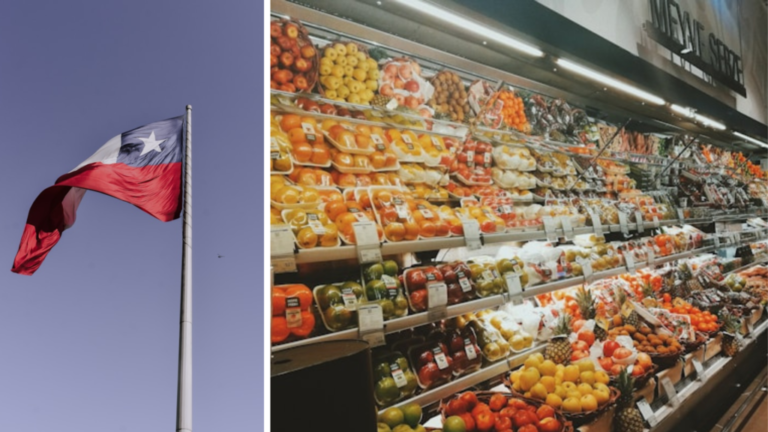
The Chilean supermarket network is very well distributed and adapted to the territory. North: Distances between cities are greater, chains like Líder and Tottus dominate, combining variety with affordable prices. In the centre of the country (especially in Santiago, Valparaíso, and Rancagua), there is the highest concentration of supermarkets, offering everything from premium formats like Jumbo to more popular ones like Santa Isabel.
In the south, supermarkets take on a more local style: Unimarc is the strongest in Valdivia, Osorno, and Puerto Montt, often featuring regional products like honey, fruits, and wines from southern Chile. Overall, prices in Chile are competitive within South America, though they vary depending on the region and type of store.
The most outstanding supermarkets for their coverage, quality, and service are Líder, Jumbo, Tottus, Unimarc, and Santa Isabel, each with its own advantages depending on the shopper’s budget and needs.
1- Líder: The Largest and Most Popular Supermarket in Chile
Líder is the most representative supermarket of Chile and is part of the Walmart Chile group, which explains its enormous expansion and its focus on low prices. It has over 350 branches across the country, with a strong presence in Santiago, Antofagasta, Concepción, Temuco, and Valdivia, in addition to its Líder Express formats for quick shopping.
What sets Líder apart is its “everything in one place” model: It offers everything from food and cleaning products to clothes, electronics, and home goods. It also has a highly developed online shopping platform (Lider.cl), with home delivery or in-store pickup, which has become very popular in Santiago.
As for prices, Líder is one of the most economical chains in Chile. A litre of milk costs around $1,100 CL (€1.05 ($1.20)), a kilo of fresh bread costs around $2,000 CL (€1.90 ($2.10)), and a dozen eggs is about $4,500 CL (€4.30 ($4.70)). Also, its Great Value private label offers alternatives up to 20% cheaper than traditional brands.
The main advantages of Líder are its nationwide coverage, the ability to find all kinds of products in one place, and frequent promotions with bank cards or digital wallets. The downside: Its stores tend to be large and very crowded, especially on weekends, which can make the shopping experience somewhat chaotic.
| Pros | Cons |
|---|---|
| Extensive national coverage | Large and sometimes overcrowded stores |
| Low prices and frequent promotions | Variable service depending on the branch |
| Variety of products, including electronics and textiles | Some peripheral stores have limited stock |
| Excellent online service and shopping app |
Pros and cons of Líder supermarkets in Chile
2- Jumbo: The Premium Supermarket of Chile
Jumbo belongs to the Cencosud group and is the country’s most premium supermarket chain. It caters to those looking for high-quality products, international brands, and a more comfortable, calm shopping experience. While its prices are higher than other chains, its service and variety justify the difference.
Its stores are mainly located in Santiago (Las Condes, Vitacura, La Reina, Providencia), Viña del Mar, Concepción, and some southern cities like Puerto Varas and Valdivia. The supermarkets are spacious, organised, and have well-marked aisles, warm lighting, and personalised service, which is rare in the rest of the sector.
The product range is one of its strongest points. Jumbo has a gourmet and healthy section with imported cheeses, premium wines, selected meats, and organic products. Additionally, its Jumbo Calidad line offers high-quality private-label products at slightly lower prices than traditional brands.
As for prices, a litre of milk costs around $1,400 CL (€1.35 ($1.50)), a kilo of fresh bread costs around $2,500 CL (€2.40 ($2.60)), and a dozen eggs is about $5,000 CL (€4.80 ($5.20)). They also offer exclusive discounts with the Cencosud Scotiabank card and weekly promotions on wines, fruits, and gourmet products.
Among its advantages is the shopping experience: clean, organised, and crowd-free, with a modern app and highly efficient online shopping options. The downside is evident: prices are higher, and its stores are often located in wealthier areas.
| Pros | Cons |
|---|---|
| Excellent service and pleasant atmosphere | Higher prices than the average |
| Wide variety of imported and gourmet products | Limited presence outside large cities |
| Discounts with Cencosud Scotiabank card | Not ideal for tight budgets |
| Quick and well-managed online shopping |
Pros and cons of Jumbo in Chile
3- Tottus: An Intermediate Option Between Price and Quality
Tottus, owned by the Falabella group, is one of the most beloved supermarket chains in Chile due to its good balance between price and quality. With over 70 branches across the country, it’s present in both large cities (Santiago, Antofagasta, La Serena, Concepción, and Temuco) and intermediate areas, where it is often one of the most complete options.
Tottus combines reasonable prices, similar to Líder, and a more organised and modern shopping experience, similar to Jumbo. Its stores are clean, well-lit, and have large sections for fresh products, bakery, and prepared meals. Additionally, it has a private label line called Tottus Ahorro, with basic products priced 15-25% lower than national brands.
As for prices, a litre of milk costs around $1,200 CL (€1.15 ($1.20)), a kilo of fresh bread costs around $2,200 CL (€2.10 ($2.30)), and a dozen eggs is about $4,800 CL (€4.55 ($5.00)). It also often has frequent promotions with CMR Falabella, its associated credit card, and stackable discounts through its app.
The great advantage of Tottus is its balance: It offers good prices without sacrificing quality or convenience. It also has an efficient online platform, ideal for monthly shopping or scheduled deliveries. Its weakness is that in some older stores, the stock may be limited, or the service may be less consistent than in its newer stores.
| Pros | Cons |
|---|---|
| Excellent balance between price and quality | Stock varies by branch |
| Promotions with CMR and Tottus app | Not all stores offer online delivery |
| Good atmosphere and very complete fresh sections | Limited coverage in the southernmost regions |
| Ideal for monthly or family shopping |
Advantages and disadvantages of Tottus
Important: If you are a frequent traveler and want to stay connected without worrying about expensive roaming or looking for a new SIM at every destination, Holafly’s subscription plans are for you. With a single eSIM, enjoy internet in more than 170 countries for a fixed price and no surprises on your bill. Travel without limits and connect easily and securely! 🚀🌍

4- Unimarc, a more regional supermarket with a strong Chilean identity
Unimarc is one of Chile’s oldest and most representative chains. Owned by the SMU group, it has a strong local identity and stands out for its commitment to national and regional products. It’s present throughout the country, though it is most concentrated in the centre and south, in cities like Rancagua, Talca, Valdivia, Osorno, and Puerto Montt.
One of the most valued features of Unimarc is its support for small producers: Many of its branches offer locally-made foods, like honey, jams, wines, or artisanal bread, especially in the south of the country. This gives it a more personal and close feel compared to larger chains.
In terms of prices, Unimarc is mid-range. A litre of milk costs around $1,300 CL (€1.25 ($1.35)), a kilo of fresh bread costs around $2,300 CL (€2.20 ($2.40)), and a dozen eggs is about $4,800 CL (€4.55 ($5.00)). Its Club Ahorro Unimarc loyalty programme allows you to accumulate discounts and take advantage of exclusive promotions, both in-store and online.
The big advantage of Unimarc is that it maintains a connection with local culture, focusing on Chilean products and reasonable prices. Additionally, its stores are clean, well-organised, and have friendly staff. Its main disadvantage is that, compared to chains like Líder or Jumbo, its product range may be more limited, especially for imported or gourmet products.
| Pros | Cons |
|---|---|
| Strong presence in central and southern regions | Less variety of international products |
| Promotes local producers and Chilean foods | Some stores are smaller or older |
| Club Ahorro programme with real discounts | Less competitive on prices than Líder |
| Good customer service and personalised attention |
Advantages and disadvantages of Unimarc
5- Santa Isabel: The Most Convenient and Neighbourly Chain
Santa Isabel is the chain that best represents everyday life in Chilean neighbourhoods. It also belongs to the Cencosud group, just like Jumbo, but caters to a broader audience with more affordable prices. Its strength lies in residential and central areas of cities like Santiago, Valparaíso, Viña del Mar, Rancagua, and Concepción, where there is usually a branch just a few blocks away.
Unlike hypermarkets, Santa Isabel stores are smaller, making them ideal for weekly or daily shopping. Their offering combines basic, fresh, and cleaning products, with a small selection of imported items. They also have their own private label with a good price-quality ratio and frequent promotions through the Cencosud Scotiabank card.
As for prices, a litre of milk costs around $1,200 CL (€1.15 ($1.25)), a kilo of fresh bread costs $2,200 CL (€2.10 ($2.30)), and a dozen eggs is about $4,600 CL (€4.40 ($4.80)). While it’s not the cheapest chain, its stores stand out for their organisation, cleanliness, and friendly service.
Among its advantages is the convenience of its location, its accumulative discount system, and the ability to make quick purchases without wasting time. Its disadvantage is the more limited range: It doesn’t have the variety of Jumbo or the aggressive prices of Líder, but it’s perfect for day-to-day shopping.
| Pros | Cons |
|---|---|
| Well-located stores in central neighbourhoods | Less variety than larger chains |
| Good balance between price and convenience | Not ideal for bulk purchases |
| Discounts with Cencosud Scotiabank card | Prices a bit higher than Líder |
| Ideal for weekly or nearby shopping |
Pros and cons of Santa Isabel supermarkets
Other Notable Stores and Shops in Chile
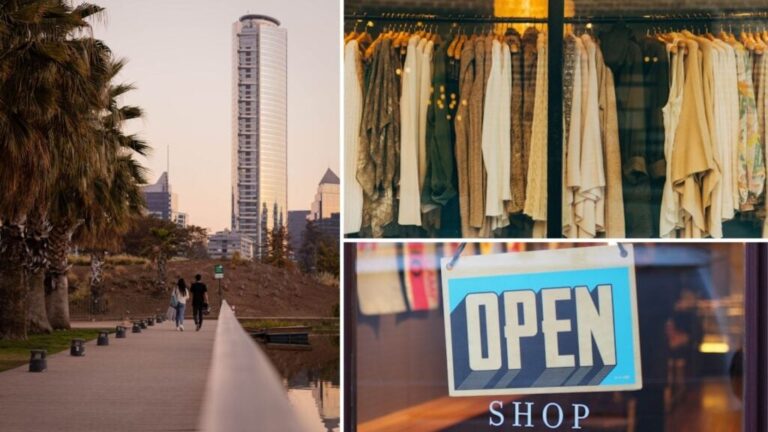
Shopping isn’t limited to large supermarkets in Chile. The country also boasts a wide variety of stores and markets where you can find everything from fresh products to home goods. These options perfectly complement daily shopping and are highly valued by locals for their convenience, prices, and more traditional character.
OK Market
OK Market is one of the most well-known convenience store chains in Chile. It is mainly located in Santiago, Viña del Mar, Concepción, and Antofagasta, designed for those who need to shop quickly at any time of day. Most of the stores are open 24 hours and offer drinks, bread, dairy products, snacks, and basic cleaning goods.
Its main advantage is its convenience and availability: They’re located in strategic places like metro stations, office areas, or residential neighbourhoods. The disadvantage is the price, which can be between 15% and 30% higher than in traditional supermarkets. Still, it’s a very useful option for emergencies or late-night shopping.
Upa!
Upa! is another very popular convenience store in Chile, with a notable presence in Santiago and northern regions, especially near gas stations. It offers a product range very similar to OK Market but tends to have a more modern and cleaner environment.
The advantage is its quick service and good safety standards, as well as its presence in areas without nearby supermarkets. The downside, again, is the higher prices for daily purchases, although reasonable given its convenience.
La Vega Central
La Vega Central, in the heart of Santiago, is an institution in Chilean commerce. This huge market gathers hundreds of small producers and merchants selling fruits, vegetables, meats, fish, and groceries both wholesale and retail. It’s the perfect place to get fresh products at lower prices than in supermarkets.
Its advantages include variety, freshness, and affordable prices, as well as the authentic, multicultural atmosphere that makes it an unmissable experience. The disadvantage is that it tends to be very crowded, with narrow aisles and limited electronic payment options, so it’s advisable to bring cash and some patience.
Falabella and París
Although they are primarily department stores, Falabella and París also play an important role in Chileans’ daily shopping. In their home and supermarket sections (available both online and in select stores), you can buy kitchenware, appliances, non-perishable foods, and cleaning products.
The advantages are product quality, payment facilities, and discounts with their own cards (CMR and Cencosud). The disadvantage is that they aren’t places for basic fresh food shopping, but rather a complement for outfitting your home or taking advantage of offers on long-lasting products.
Supermarkets in Chile: Frequently Asked Questions
In general, Líder is the cheapest due to its low prices and frequent promotions with bank cards or digital wallets. Tottus is also a good alternative for balancing price and quality, while Jumbo and Unimarc tend to be more expensive, although they offer better quality or regional products.
Yes. In Chile, almost all supermarkets and stores accept credit cards, debit cards, and mobile payments like Mercado Pago or FPay. Even at markets like La Vega Central, more and more stalls are using electronic payment readers. However, it’s always a good idea to carry some cash just in case the system doesn’t work or the store is very small.
Large supermarkets like Líder or Jumbo usually don’t open 24 hours. However, OK Market and Upa! convenience stores do, and they are very common in Santiago and Viña del Mar. In addition, in some northern regions and tourist areas in the south, certain supermarkets extend their opening hours during the high season.
The best for digital shopping are Líder and Jumbo. Lider.cl offers quick delivery and in-store pickup, while Jumbo.cl has a large catalogue and a very reliable scheduled delivery system. Tottus has also improved its online service, especially in Santiago and metropolitan regions.