







 Language


 No results found
Vietnamese street food guide: 7 must-try dishes in 2026
The Holafly travel team put their heads together to showcase the best Vietnamese street food the country has to offer, what each dish is about, and where you’ll find these iconic plates.

Vietnam’s street food scene combines centuries-old recipes, French colonial influence, and bold Southeast Asian flavors. From steaming bowls of phở to crispy bánh mì, each dish tells a story of the country’s rich culinary heritage.
This guide covers seven essential dishes, where to find them, and what you’ll pay.
7 Must-try Vietnamese street food dishes
Pack for Vietnam and prepare for the street food scene — elasticated waistbands and comfy walking sneakers are a must if you’re hoping to lap up as much as you can! Here are seven must-try dishes.
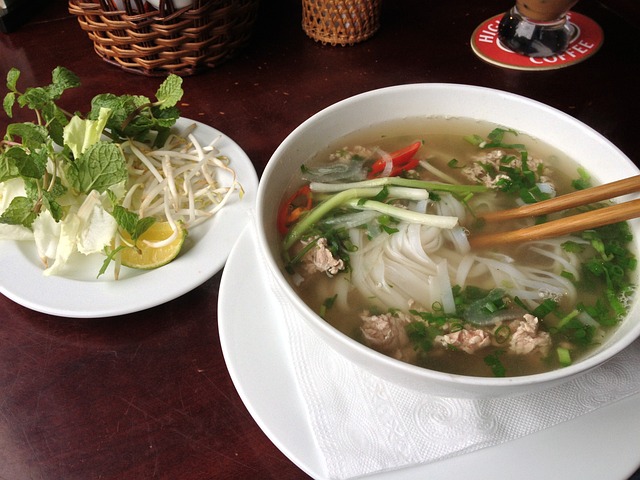
1. Phở
Vietnam’s national dish combines silky rice noodles in aromatic broth—a bowl of soul-warming comfort.
French colonialism introduced beef-eating culture to Vietnam in the early 1900s, transforming traditional soups into the country’s most iconic dish. Today, phở represents more than food—it’s a daily ritual for millions of Vietnamese.
The magic lies in customization. Start with your base (beef or chicken), then add fresh herbs, lime juice, chili sauce, and bean sprouts to match your taste. Each vendor guards their secret broth recipe, simmered for hours with star anise, cinnamon, and roasted ginger.
What you need to know:
- Best cities: Hanoi (northern style, clear broth), Ho Chi Minh City (southern style, sweeter)
- Main ingredients: Rice noodles, beef or chicken broth, meat slices, basil, cilantro, lime, bean sprouts
- Spice level: Mild (you control it)
- Average cost: $1.50-$3
- Best time: Breakfast (6 am-9 am) or late night
- Pro tip: Order “phở bò” for beef or “phở gà” for chicken. Hanoi locals eat it for breakfast.
2. Bánh mì
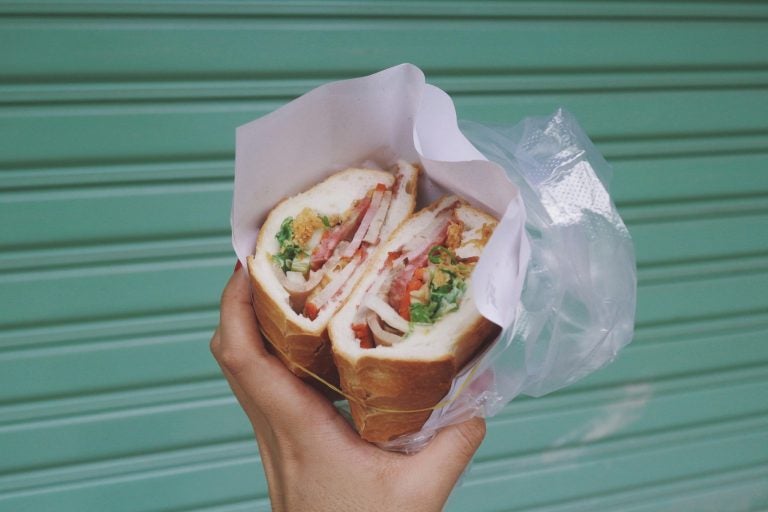
French baguette meets Vietnamese spices in this legendary sandwich fusion.
When French colonizers introduced baguettes to Vietnam, locals stuffed crispy bread with Vietnamese pâté, pickled vegetables, fresh cilantro, and spicy chilies. This fusion became bánh mì—a perfect marriage of French technique and Vietnamese flavor that conquered the world.
The contrast defines the experience: crispy crust against soft filling, tangy pickles cutting through rich pâté, fresh herbs brightening every bite. Each vendor adds their signature twist, from grilled pork to fried eggs.
What you need to know:
- Best cities: Ho Chi Minh City (Bánh Mì Huỳnh Hoa), Hanoi, Hoi An
- Main ingredients: Baguette, pâté, Vietnamese sausage, pickled carrots and daikon, cilantro, chili, mayo
- Spice level: Mild to Medium (ask for less chili)
- Average cost: $0.80-$2
- Best time: Anytime (perfect grab-and-go)
- Pro tip: Point to ingredients you want—vendors will customize on the spot.
3. Gỏi cuốn (Fresh Spring Rolls)
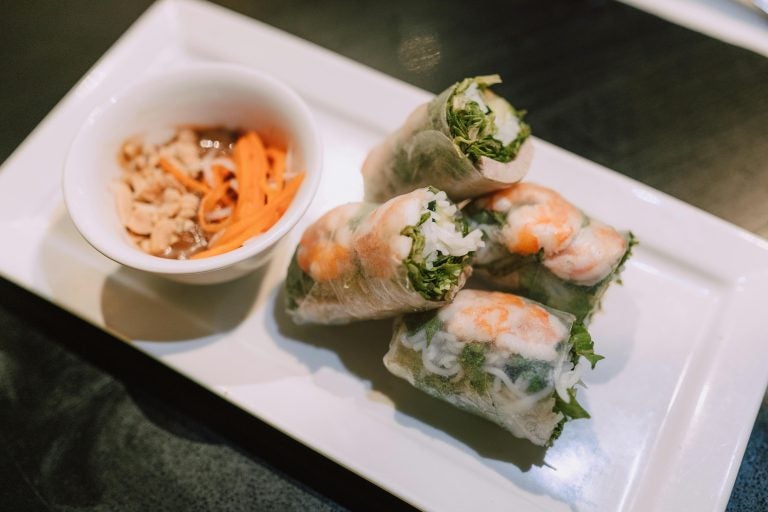
Vietnam’s fresh answer to fried spring rolls—light, healthy, and bursting with flavor.
Families traditionally prepared gỏi cuốn together during festive occasions, symbolizing the communal aspect of Vietnamese dining. Over time, it became a staple enjoyed year-round for its fresh ingredients and balanced flavors.
The translucent rice paper reveals everything inside: sweet shrimp, tender pork, rice vermicelli, and vibrant herbs. Each bite delivers crunch from lettuce, pop from mint and cilantro, and freshness that makes it the perfect summer snack. Dip into sweet-tangy peanut sauce for the complete experience.
What you need to know:
- Best cities: Hanoi, Ho Chi Minh City, Hoi An
- Main ingredients: Rice paper, shrimp, pork, rice noodles, mint, lettuce, carrots, cucumber
- Spice level: Mild
- Average cost: $1.65-$2.90
- Best time: Lunch or snack
- Pro tip: Eat immediately after rolling—rice paper gets sticky if it sits too long.
4. Bánh xèo
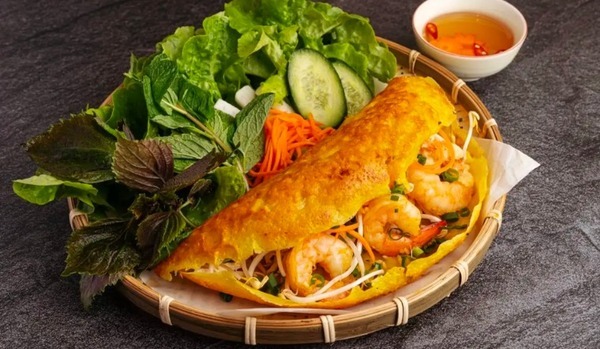
Vietnam’s savory crepe delivers a crispy-meets-soft texture in every bite.
The name means “sizzling pancake,” mimicking the sound rice batter makes hitting the hot pan. Legend traces its origins to Cham culinary traditions, though it’s now beloved across central and southern Vietnam.
Tear off pieces of the crispy turmeric crepe stuffed with shrimp, pork, and bean sprouts. Wrap them in fresh lettuce and herbs, then dip them into tangy fish sauce (nước mắm). The contrast between the crunchy exterior, the soft filling, and the fresh greens creates a perfect balance.
What you need to know:
- Best cities: Ho Chi Minh City, Hue, Da Nang, Hoi An
- Main ingredients: Rice flour, turmeric, coconut milk, shrimp, pork, bean sprouts, herbs
- Spice level: Mild
- Average cost: ~$3
- Best time: Lunch or dinner
- Pro tip: The crispier the better—look for stalls cooking fresh pancakes to order.
5. Chả giò
Golden-brown crispy spring rolls that Vietnam saves for celebrations—and everyday cravings.
Vietnamese families traditionally spent hours preparing chả giò for Lunar New Year celebrations. These rolls were too good to save for special occasions alone, and today they’re regular street food staples found across the country.
The rice paper wrapper fries to golden perfection, creating a crispy shell around savory pork, mushrooms, and vegetables. Served with Vietnam’s staple fish sauce for dipping, each bite delivers satisfying crunch followed by warm, flavorful filling.
What you need to know:
- Best cities: Ho Chi Minh City, Hanoi, Hoi An
- Main ingredients: Rice paper, pork, wood ear mushrooms, carrots, onions, garlic
- Spice level: Mild
- Average cost: ~$0.80
- Best time: Appetizer or snack
- Pro tip: Order in Hoi An and enjoy at one of Vietnam’s UNESCO World Heritage sites.
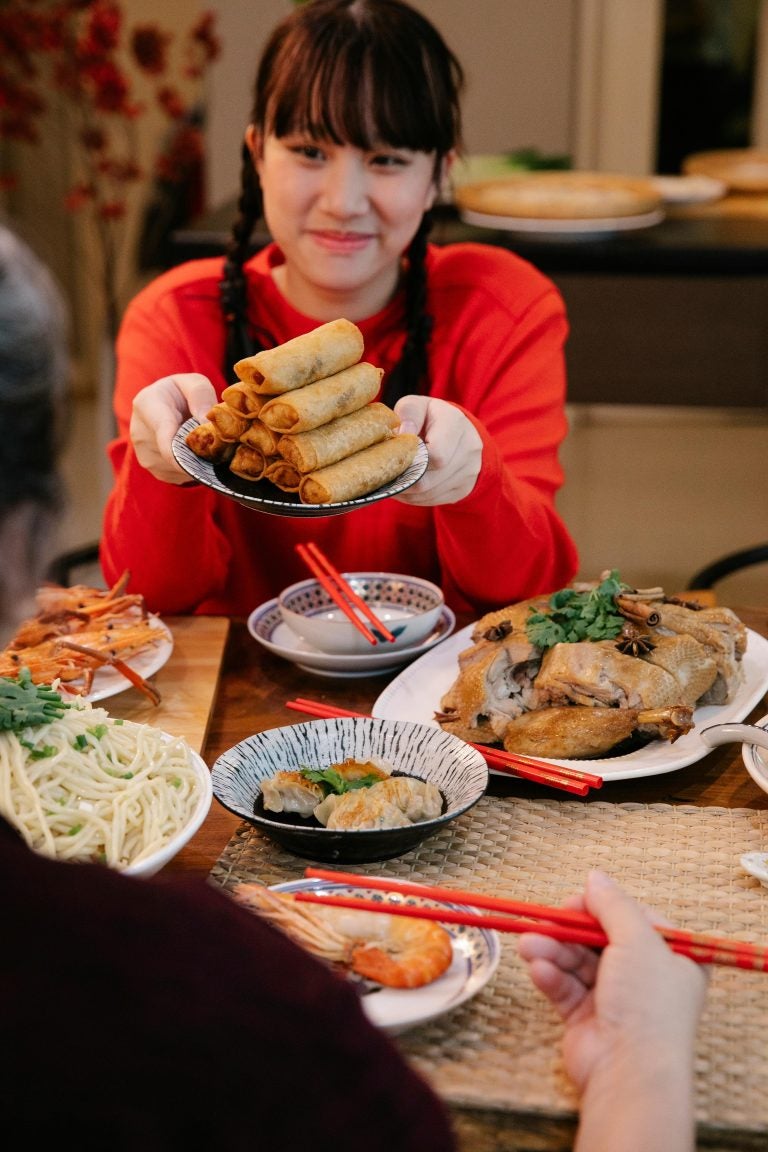
Top tip: Grab this dish in Hoi An and indulge at one of Vietnam’s most iconic landmarks and a UNESCO World Heritage Site.
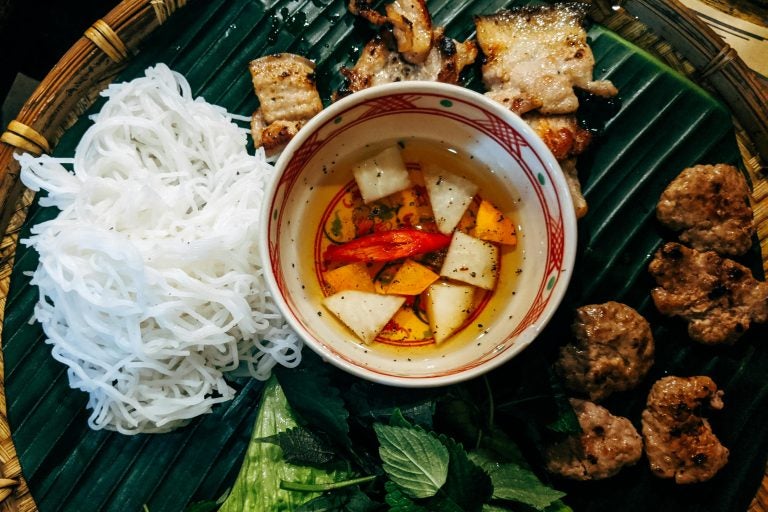
6. Bún chả
Hanoi’s signature lunch combines grilled pork, rice noodles, and herb-packed broth.
This Hanoi-only specialty gained fame when Barack Obama and Anthony Bourdain shared a bowl in 2016. Locals have enjoyed it for generations at Old Quarter sidewalk stalls.
The dish arrives in three parts: vermicelli noodles, fresh herbs, and sweet-savory broth with caramelized grilled pork. Dip the noodles and herbs into the broth for the perfect bite. The sweet, sour, and savory combination with charred meat makes this uniquely Hanoian.
What you need to know:
- Best cities: Hanoi only (Hanoi’s signature dish)
- Main ingredients: Grilled pork patties, pork belly, rice noodles, fish sauce broth, herbs
- Spice level: Mild to Medium
- Average cost: ~$1.50
- Best time: Lunch (11 am-2 pm)—most vendors only open for lunch
- Pro tip: Look for charcoal grills out front—that’s fresh pork grilling.
7. Cà phê trứng (Egg Coffee)
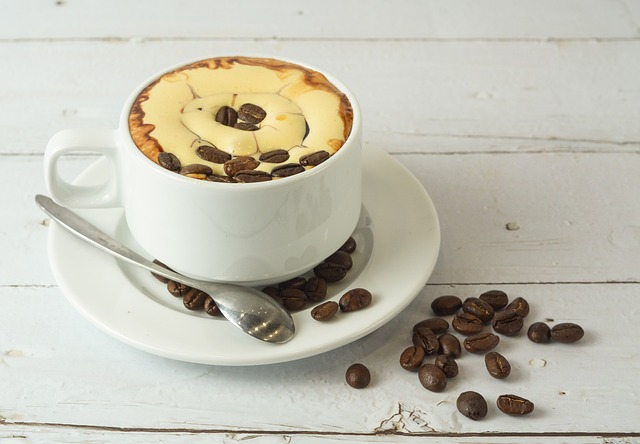
Hanoi’s genius invention: sweet, custardy meringue slowly melting into strong Vietnamese coffee.
During the First Indochina War, milk was scarce. Bartender Nguyen Van Giang at Sofitel Legend Metropole Hotel whipped egg yolks with sugar and coffee to create this genius concoction. Fast-forward to today, and it’s a comforting and indulgent traditional beverage.
The velvety egg foam sits atop robust Vietnamese coffee, creating layers of sweetness and bitterness. As you sip, the meringue slowly dissolves, transforming the coffee’s intensity. You can sip the original at Café Giang in Hanoi’s Old Quarter, where they still use the same recipe.
What you need to know:
- Best cities: Hanoi (birthplace of egg coffee)
- Main ingredients: Vietnamese coffee, egg yolks, condensed milk, sugar
- Spice level: N/A
- Average cost: $1.06-$1.70
- Best time: Breakfast or dessert
- Pro tip: Visit Café Giang (39 Nguyen Huu Huan) for the original recipe from the inventor’s family.
Curious about the cost of these mouthwatering dishes and where to find the best street food spots? Keep reading!
How much is street food in Vietnam?
Some street food dishes in Vietnam, such as Bánh mì and Chả giò, cost as little as $0.80. However, prices vary for each city, stall, and market.
For example, Phở and Bánh xèo can cost up to $3 in prime tourist locations and restaurants.
Usually, there’s no need to haggle because Vietnam has many budget-friendly food options and most stalls have set prices.
Though most vendors and cafes accept card payments, some don’t. It’s wise to carry some local currency (Dong) for quick purchases.
Where to find the best street food in Vietnam
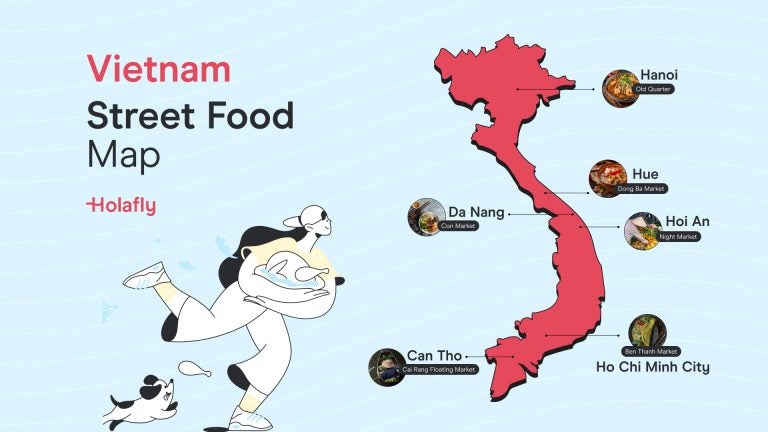
The best places to relish Vietnamese street food are Old Quarter, Ben Thanh Market, Dong Ba Market, Con Market, Cai Rang Floating Market, and Hoi An’s Night Market.
Remember: Waiting times can be longer at some food stalls during peak season. Discover the best time to visit Vietnam, and plan your trip according to your patience.
Hanoi – Old Quarter
You’ll find many family-run Vietnamese street food stalls in the streets between Ma May and Ta Hien of Hanoi’s Old Quarter.
Ho Chi Minh City – Ben Thanh Market
Ben Thanh Market offers a different take on Vietnamese cuisine with more southern flavors. It’s a perfect location to try delicious bánh xèo in the evening.
Hue – Dong Ba Market
A go-to tourist spot to experience authentic Imperial City flavors. Head straight for the bánh section to enjoy Hue’s signature spicy beef noodle soup.
Hoi An – Night Market
Hoi An’s night market is a lantern-lit wonderland stretching along the Thu Bon River with about 50+ food stalls. Street food dishes have northern and southern influences with a Central Vietnamese twist.
Da Nang – Con Market
Da Nang’s oldest market will have you enjoying a hearty breakfast. The food court on the east side is popular for mì Quảng (turmeric noodles) and bánh tráng cuốn thịt heo (pork rolled in rice paper).
Can Tho – Cai Rang Floating Market
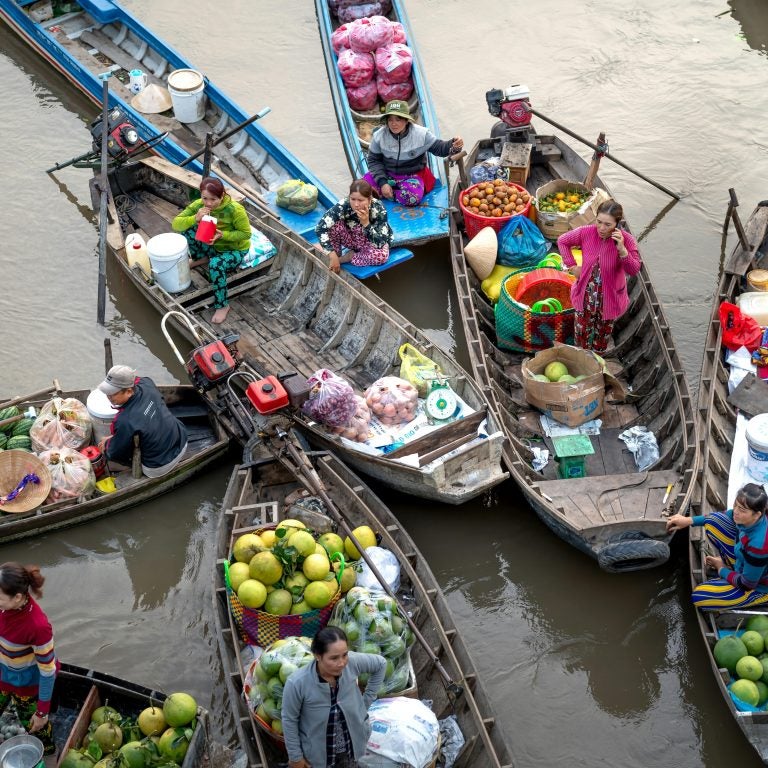
You’ll need to hop on a boat to experience the floating cafes serving phở, southern-style noodle soup, tropical fruits, and Vietnamese coffee.
Make sure you have an eSIM for Vietnam with enough internet data to navigate these locations with Google Maps or to translate Vietnamese menus on the go!
Tips for eating Vietnamese street food safely
Choose busy stalls: High turnover means fresh ingredients. If locals are eating there, it’s usually safe.
Watch the preparation: Sit where you can see your food being cooked. Fresh cooking is safer than pre-made dishes.
Start mild: Vietnamese food can be spicy. Ask for “không cay” (not spicy) if you’re sensitive.
Bring small bills: Most vendors don’t carry change for large notes. 20,000-50,000 VND notes work best.
Learn basic phrases:
- “Bao nhiêu tiền?” = How much?
- “Ngon quá!” = Delicious!
- “Cảm ơn” = Thank you
Stay connected: Use Google Translate and Maps to find vendors and communicate. Holafly’s unlimited data makes this effortless.
Find your next bite with Holafly in hand
Vietnamese street food’s rich flavors and aromas delight the senses. The top three dishes you must add to your bucket list are Phở, Bánh Mì, and Gỏi Cuốn.
While many dishes are mild, some can be pretty spicy for picky eaters. Feel free to ask for less spice if you prefer. The best part? All meals are incredibly affordable.
However, you’ll need reliable connectivity and enough data to explore the local markets, find the best restaurants, and share your Vietnam street food pics on Instagram stories.
So, invest in a Vietnam SIM card or eSIM for your upcoming trip.
If you opt to get an eSIM for Vietnam, you don’t have to swap SIM cards or pay international roaming charges as you likely would if you were using a SIM card from home.
You can buy Holafly’s international eSIM anytime and activate it upon reaching Vietnam. With prepaid plans ranging from 1 to 90 days, Holafly offers unlimited mobile data according to your length of stay.
Plus, you’ll get instant access to mobile networks across Vietnam, including Hanoi, Ho Chi Minh City, Hoi An, Da Nang, and other popular foodie destinations.
Vietnam’s waiting, come hungry. And, get Holafly’s Vietnam eSIM with unlimited internet data to continue hunting the best Vietnamese street food spots hassle-free. Our one request? Save us something sweet!

Stay connected in Vietnam
Plans that may interest you


From London and now living in Barcelona Ray Slater Berry has been working in content and social media within the travel sector for 10+ years. He's worked with some big travel brands: Remote Year, TravelPerk, European Bartender School, to name a few. Ray has always been on the move with his work and believes that you're at your most productive and joyful when you're outside of your comfort zone.

