Language


 No results found
10 Spanish Christmas traditions everyone should experience at least once
Discover 10 Spanish Christmas traditions everyone should experience! From impressive nativity scenes to lively parades and midnight feasts, explore the unique ways Spain celebrates the holidays.

When you envision spending Christmas in Spain, you might think, “It just won’t feel like a real Christmas.”
Sure, Spain is known and loved for its mild, summery winters, but that doesn’t mean it’s any less festive than the rest of Europe. In fact, Christmas here is one of the most joyful, tradition-filled times of the year.
From lively parades to centuries-old rituals and midnight feasts, Spain embraces the holidays with a warmth that goes far beyond the weather.
What’s more, each region has its own customs, meaning Christmas in Northern Spain can look pretty different from Christmas in the south.
Here are 10 surprising Spanish Christmas traditions, foods, and iconic celebrations that might just inspire you to book a ticket and experience them for yourself.
1. El Gordo (Christmas Lottery)
One of the most popular Spanish Christmas traditions is to play the Christmas lottery, with an estimated 70-90% of Spaniards participating in the festive game.
The annual El Gordo is drawn on December 22nd, kicking off Christmas week. Families gather around the TV to watch school kids sing the winning numbers.
El Gordo is the world’s biggest lottery payout with a total prize pool of €2.7 billion. But what makes it so special is that the chance of winning is higher than in other lotteries, as there are thousands of winners rather than just one.
2. Nochebuena (Christmas Eve)
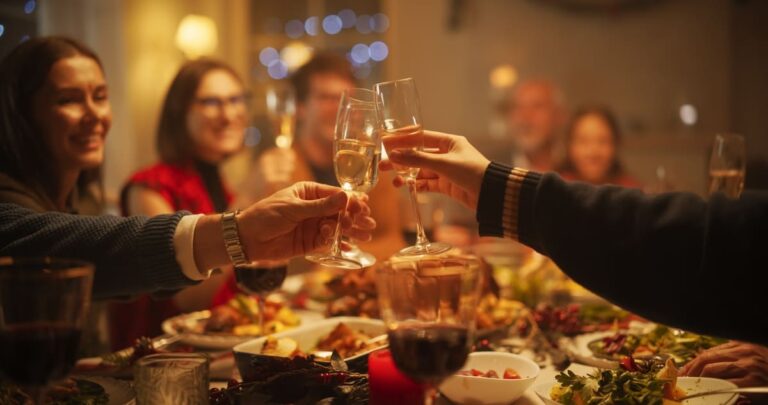
Spaniards’ biggest festive meal is on Christmas Eve, known as Nochebuena. It takes place late in the evening and lasts several hours. The meal consists of various courses and many traditional Spanish Christmas foods, such as roast lamb, suckling pig, seafood, and baked fish.
However, the Nochebuena dinner varies by region, with each part of the country offering its own specialities and variations.
3. Pedir el aguinaldo (caroling)
One of the most charming Christmas traditions in Spain is carol singing. While it’s not as popular nowadays, many families still take their children ‘caroling’ in the neighborhood on Christmas Eve afternoon before Nochebuena.
With this tradition, Spanish kids go door to door singing Christmas songs and playing Spanish instruments like the “zambomba” or the “pandereta” (tambourine). If they manage to warm their neighbors’ hearts, they’re given money or sweets.
4. Día de Navidad (Christmas Day)
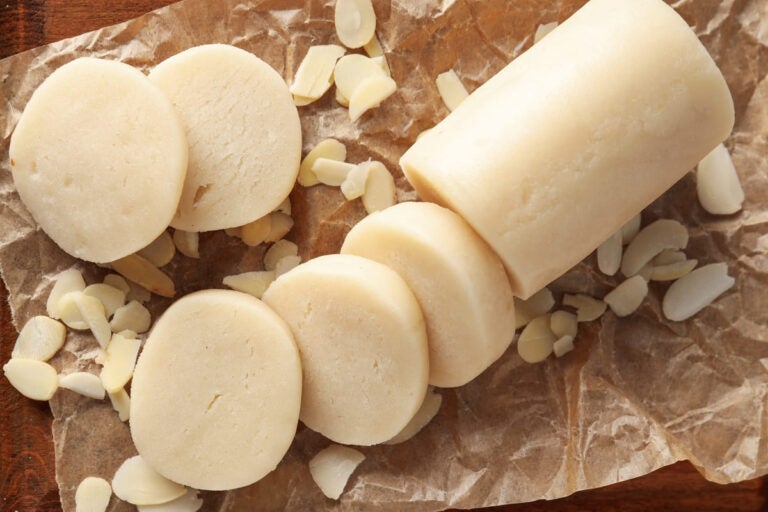
Christmas Day is much more relaxed than Christmas Eve, and is generally about relaxation.
Rather than cook another meal from scratch, many families eat Nochebuena leftovers or whip up some sharing platters of Jamón ibérico and manchego cheese, two of the best foods in Spain!
It’s also common to indulge in festive sweets like turrón (almond nougat), mazapán, and polvorones (almond cookies).
5. Christmas gift-giving customs (Three Wise Men and Papa Noel)
In the past, gifts from Santa Claus were not a tradition in Spain, but in recent years, it has become more popular. While Spanish children receive their main presents on January 6th (Los Reyes Magos), they might get a small gift on Christmas Day or Christmas Eve, depending on the family or the region.
What’s more, some regions have their fictional characters who bring gifts at Christmas, such as Olentzero in the Basque Country, who brings gifts to children on Christmas Eve.
6. Belénes (Nativity Scenes)
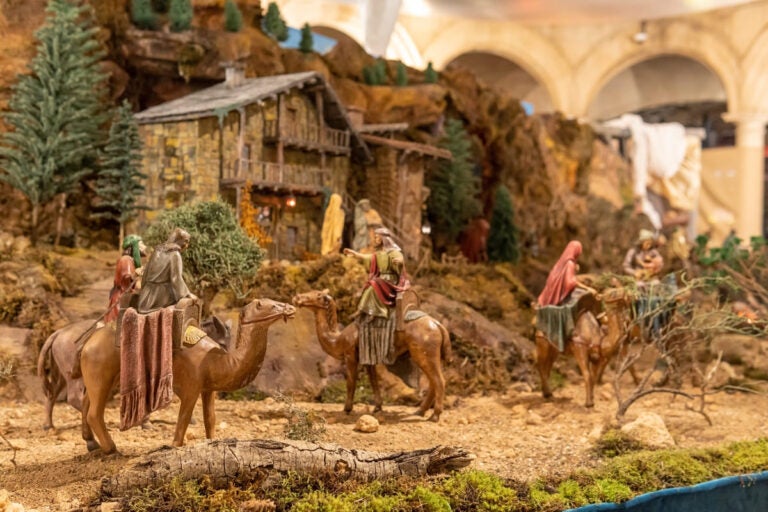
One of the most popular types of Christmas decorations you’ll see in Spain is Belénes (nativity scenes). Homes, churches, and public spaces display scenes of traditional Nativity figures, and some are very detailed and impressive.
Spaniards set up their Belénes at the start of Advent and leave them up until January 6th. The tradition has become so popular that many cities, such as Madrid, Barcelona, and Valencia, have elaborate public belénes that draw visitors from all over. There’s even a museum dedicated to these nativity scenes (Museo de Belénes) in Malaga.
7. El Caganer (Catalonia Tradition)
Many regions have their own variations of belénes (nativity scenes), and some are truly weird and wacky.
For example, an old Catalan custom that is still popular today is ‘El Caganer,’ which translates to “the pooper.” As you might guess, this is a figure of a squatting person with their pants down, usually dressed as a peasant with a red Catalan cap.
Believe it or not, the El Caganer symbolizes good luck and fertility for the coming year, so the figure is often hidden in nativity scenes across Catalonia.
8. Twelve grapes for New Year’s Eve (Las doce uvas de la suerte)
If you thought Spanish Christmas traditions were unique, wait until you hear about their New Year’s customs.
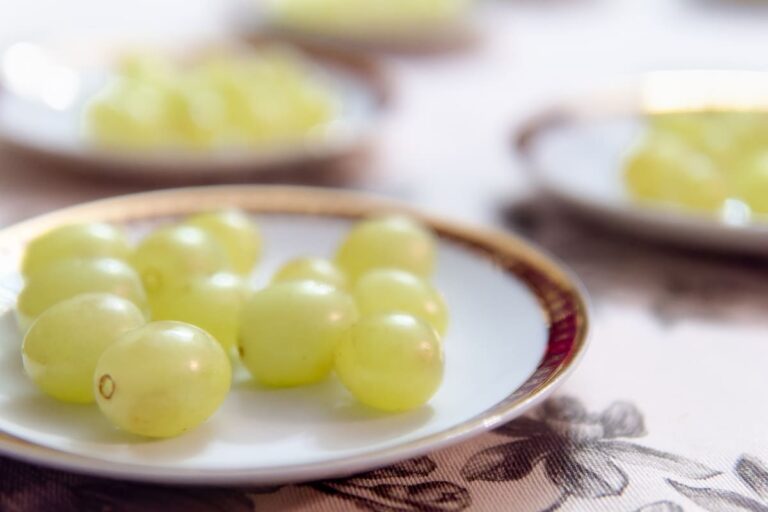
The most iconic ritual is to eat twelve grapes at midnight on New Year’s Eve, and no, it’s not because Spanish people love grapes. The grapes are believed to bring good luck to the coming year, and each grape represents a month.
As the clock chimes 12 times at midnight, Spaniards eat a grape on each chime to bring good fortune during each month. According to superstition, failing to finish all 12 grapes leads to bad luck.d
9. Los Reyes Magos (Three Kings Day)
Unlike many parts of the world, the festive season does not end at New Year’s. In Spain, the holidays last two weeks, concluding on January 6th with Three Kings Day.
Three Kings Day (Los Reyes Magos) is a major Spanish Christmas tradition that commemorates the Three Wise Men’s visit to the baby Jesus and their gift-giving. Hence, the theme of this day is gift-giving.
Children believe that the three kings will visit them early in the morning, so the night before, they leave out their shoes for the kings to fill with gifts. They also leave water and hay for the king’s camels, and turrón and wine for the Kings themselves. The tradition mirrors the way kids in the UK leave out stockings and mince pies for Santa!
10. Three Kings Parades (Cabalgatas)
The night before Three Kings Day (January 5th), many towns and cities have flamboyant street parades called cabalgatas. During these parades, the “Three Kings” ride on floats through the streets and plazas, throwing out candy to the crowds and greeting children.
January 5th is the most magical night of the festive season in Spain, and the parades attract thousands of people. Alicante has the oldest parade in Spain, dating back to 1885, while Madrid’s is the largest, ending with an epic fireworks display. So if you’re traveling in Spain during this time, it’s a spectacular sight to see!
Experience Spain’s Christmas traditions firsthand with Holafly
The best way to enjoy Spain’s festive magic, from dazzling Belénes and to Three Kings parades, is to experience it in person. But don’t let the worry of expensive Spain roaming fees hold you back from enjoying “Navidad”.
With a Holafly eSIM, you can stay connected throughout your trip, share photos of festive feasts, and navigate the parades with unlimited data and a reliable mobile connection.
Get your Holafly eSIM for Spain here.
Peace of mind before you fly
Set up your eSIM before travel and get unlimited data on arrival.
Plans that may interest you

Hey, I’m Mika! I’m an SEO specialist with 7+ years of experience and a passion for travel info that actually helps you explore smarter. I write travel guides and tips backed by SEO insights so you can spend less time searching and more time adventuring.