Language


 No results found
Best supermarkets in Germany: Where to go grocery shopping?
Shopping guide: Discover the best supermarkets in Germany and popular alternatives offering great deals and fresh products for your needs.

Living in Germany means adapting to a culture where organisation and efficiency are also reflected in shopping habits. In this sense, best supermarkets in Germany are a crucial part of everyday life: they offer competitive prices, fresh products, and a discount system that attracts both locals and foreigners.
The country has a broad and varied network of chains, present in almost all its cities, from Berlin to Munich and Hamburg. Some are discount stores, known for their low prices and basic, quality products, while others specialise in premium, gourmet, or organic products.
Knowing which chains are the most important and what they offer is key to organising your budget and routine in your new life in Germany.
What types of stores are there in Germany?
Going to the supermarket in Germany is not just a chore, it’s almost a cultural institution. The country has a very organised system where chains are divided into clear categories: from discount stores, which are part of the daily life of millions of Germans, to bio supermarkets, reflecting the country’s ecological awareness. Here, we briefly explain each one of them.
1- Discount Supermarkets
They are Germany’s great trademark in Europe. Discount stores focus on low prices, efficiency, and their own-brand products. The shopping experience is quick and no-frills: simple aisles, basic packaging, and weekly promotions that act as true hooks for customers.
The Aldi chain pioneered the discount model, with two divisions: Aldi Nord and Aldi Süd, unbeatable prices, and basic products of acceptable quality. Its competitor is Lidl, which has a presence in many European countries, a wider range of products, and a strong focus on fresh bakery goods and seasonal items.
This type of supermarket is ideal for doing your full weekly shop and spending much less than at standard chains.
2- Standard Supermarkets
They represent the middle ground between price and variety. Here, you’ll find national and international brands, larger sections of fruits and vegetables, deli items, bakery, and even ready meals.
Rewe is one of the largest chains, present in all major cities, known for its good service and loyalty programme “Payback”. Edeka, on the other hand, is Germany’s largest supermarket network, with stores ranging from small neighbourhood shops to large hypermarkets. Its strength lies in the quality of fresh produce and the availability of regional products.
Standard supermarkets are the favourite choice for those seeking comfort and variety without paying excessive prices.
3- Premium Supermarkets
Germany also offers high-end shopping experiences. Here, prices are higher, but quality, local sourcing, and customer service are prioritised.
This group includes Tegut supermarkets, highly valued in central Germany for their focus on sustainable and gourmet products, and some large Edeka branches that function as premium stores, with wine, cheese, and delicatessen sections that rival specialised markets.
These supermarkets are popular among middle-high-income families and consumers who enjoy quality gastronomy.
4- Bio and Specialist Supermarkets
Germany has a strong ecological awareness, which is reflected in the number of chains dedicated exclusively to organic products.
One such chain is Alnatura, with more than 100 stores across the country, making it one of the largest bio chains. Another notable one is Denn’s Biomarkt, present in almost all major cities, offering fruits, vegetables, bakery goods, and 100% organic packaged products.
Prices are higher, but they are the first choice for those prioritising health and the environment. Additionally, many cities have “Unverpackt” (package-free) stores where you buy in bulk, bringing your own containers.
What are the top five supermarkets in Germany?
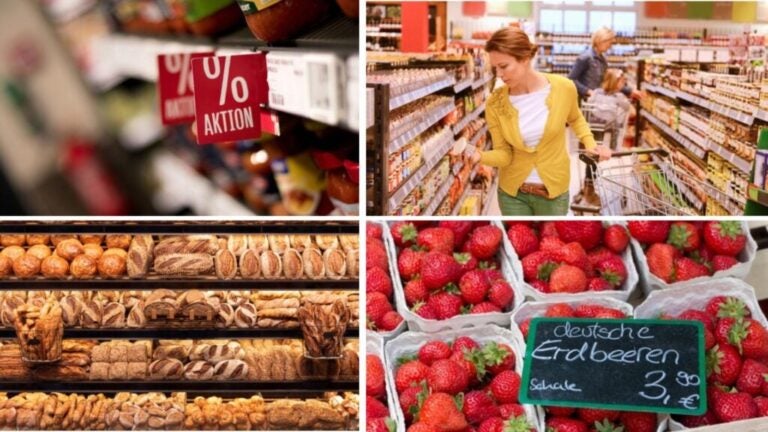
Germany has one of the most complete supermarket networks in Europe. Chains like Aldi, Lidl, Rewe, Edeka, and Kaufland are present throughout the country, though with greater concentration in major cities.
In cities like Berlin, Hamburg, Munich, Frankfurt, and Cologne, it’s common to find several branches of each brand just a few streets apart, while in smaller towns, at least Aldi or Lidl are present as main options.
Each chain has a distinct profile: discount stores like Aldi and Lidl set the pace for low prices, Rewe and Edeka offer more variety and international brands, while Kaufland combines the scope of a hypermarket with competitive prices. Knowing their differences will help you decide where to do your weekly shop and where to look for quality or gourmet specialties.
1- Supermarkets in Germany: Aldi, pioneer of the discount model
Aldi is the pioneer of the discount model in Germany and one of the most influential chains in Europe. Founded in 1946, it is now divided into two main groups, Aldi Nord and Aldi Süd, which divide the country almost in half. Its formula is simple: low prices, basic products, and highly efficient logistics.
Its shelves are dominated by own brands, offering surprising quality for the price. For example, one kilogram of pasta can cost as little as €0.79 ($0.84), one litre of milk around €0.95 ($1.01), and a fresh loaf of bread about €1.20 ($1.27). These prices make a big difference compared to standard chains like Rewe or Edeka. Moreover, Aldi has modernised in recent years, expanding its range with organic, vegan, and fair-trade products, without abandoning its low-cost essence.
In terms of coverage, Aldi has thousands of stores across the country, both in large cities like Berlin and Hamburg and in smaller towns. Most of their branches are open from 8:00 to 20:00, with some in larger cities staying open until 21:00.
Advantages and disadvantages of Aldi supermarkets
| Pros | Cons |
|---|---|
| Very low and consistent prices across the country | Limited variety compared to Rewe or Edeka |
| Wide network of stores in cities and towns | Basic stores, no attractive design or extra services |
| Good own brands with stable quality | Fewer international brands |
| Incorporation of bio and vegan products at affordable prices |
Advantages and disadvantages of Aldi supermarkets in Germany
2- Lidl: A Very Popular Option for Shopping in Germany
Lidl was founded in Germany in the 1930s and is one of the largest discount supermarket chains in Europe. Its concept is similar to Aldi’s (low prices and own brands), but with a slightly more varied offering and a more modern shopping experience.
In its stores, you’ll find everything from basic products like pasta, rice, or dairy to bakery sections with freshly baked goods, which have become one of its hallmark features.
Shopping at Lidl can be very convenient: one kilogram of oranges costs around €1.50 ($1.59), a fresh baguette is about €0.99 ($1.05), and one litre of milk is priced at €0.95 ($1.01). Additionally, each week they run themed promotions with international products (such as “Spanish week” or “Greek week”), attracting both locals and foreigners.
As for coverage, Lidl is present in all major German cities, with multiple branches in Berlin, Hamburg, Cologne, and Frankfurt, and stores in medium and small towns. Most stores open from 8:00 to 21:00, although in large cities, some stay open until 22:00.
Advantages and disadvantages of Lidl
| Pros | Cons |
|---|---|
| Very low prices, comparable to Aldi | Fewer premium or international brands |
| In-house bakery with freshly baked products | Stores can get very crowded during peak hours |
| Weekly promotions with international products | Limited opening hours in small cities |
| Presence across the country, especially in urban areas | Some sections (like fresh produce) are more limited than at Rewe or Edeka |
Pros and cons of shopping at Lidl
3- Rewe: One of Germany’s Largest Supermarket Chains
Rewe is one of the largest supermarket chains in Germany. Focused on the standard segment, it offers an interesting balance between price, variety, and quality. It has thousands of branches across the country and is very popular in large cities such as Berlin, Munich, Hamburg, and Cologne.
Unlike Aldi or Lidl, Rewe offers not only own brands but also a large selection of national and international brands. Therefore, you can do your entire weekly shop here, from fresh fruits and vegetables to gourmet products, beverages, bakery, and deli items.
Prices are competitive. For example, one kilogram of apples costs around €2.20 ($2.33), a 250g pack of Lavazza coffee is usually priced at €3.90 ($4.14), and one litre of extra virgin olive oil starts from €5.50 ($5.83).
Rewe is also heavily invested in digital: many of its stores allow you to shop online and have your order delivered to your home or ready for pick-up in store (Click & Collect), a service highly valued in large cities. As for opening hours, most stores open from 7:00 to 22:00, although in smaller towns they close earlier, around 20:00.
Advantages and disadvantages of Rewe
| Pros | Cons |
|---|---|
| Wide variety of national and international brands | Higher prices than Aldi or Lidl |
| Online shopping and in-store pick-up services | Some small branches have limited stock |
| Good quality in fresh produce, bakery, and deli | Less aggressive promotions than discount chains |
| Great presence in all major cities | Can be expensive for large weekly shops |
Advantages and disadvantages of Aldi supermarkets in Germany
4- Edeka: The Largest Supermarket Chain in Germany
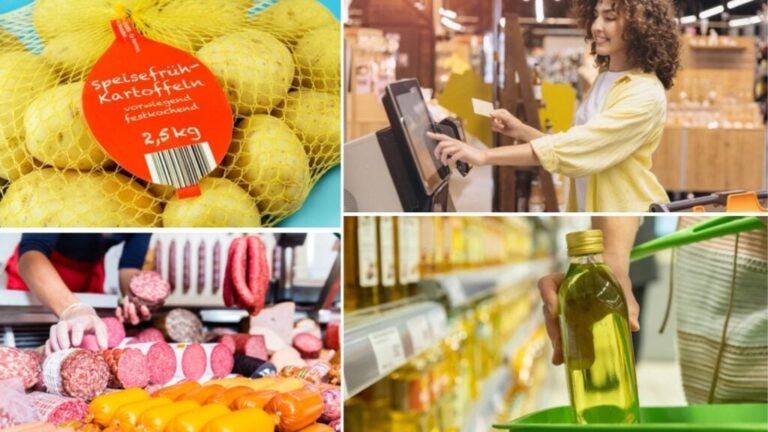
Edeka is the largest supermarket network in Germany, with over 11,000 stores spread across the country. Its model is unique: many stores operate under local management, allowing them to tailor their offerings to the products of each region. This makes it one of the Germans’ favourite options, as it combines the trust of a large brand with the personal touch of a neighbourhood shop.
One of Edeka’s advantages is that they offer almost everything: fresh fruits and vegetables, meats, fish, bakery, and a wide selection of wines and cheeses. Their own-brand products are also very popular, with lines ranging from basic items to gourmet options.
In terms of prices, they are in the medium-high range: one kilogram of tomatoes typically costs around €2.50 ($2.65), a fresh loaf of bread is about €1.30 ($1.38), and one litre of whole milk is around €1.10 ($1.17). What sets Edeka apart is its emphasis on fresh produce and the quality of regional products, which are often prominently featured in each store.
Edeka is present in all major cities, with small shops in central neighbourhoods and large branches on the outskirts. Most stores open from 7:00 to 21:00, though in larger urban areas, it’s common for them to close at 22:00.
Advantages and disadvantages of Edeka
| Pros | Cons |
|---|---|
| Germany’s largest store network | Higher prices than Aldi or Lidl |
| Excellent quality in fresh produce and regional products | Not all stores offer the same selection |
| Wide range of own-brand and gourmet products | Not always the most economical for large shops |
| Stores tailored to each neighbourhood and region | Can be confusing that not all branches are the same |
Advantages and disadvantages of shopping at Edeka
5- Kaufland, A Hypermarket in Germany
Kaufland is part of the same corporate group as Lidl, but operates with a different concept: it is a hypermarket designed for those who prefer to do large shopping in one place. Their stores are huge and are usually located on the outskirts of cities, with spacious parking and highly varied sections that go far beyond food.
In its aisles, you’ll find everything from fresh fruits, vegetables, meats, and fish to appliances, household items, clothing, and toys. Many families opt for Kaufland for their weekly or monthly shopping because it combines good prices with great variety. For example, one kilogram of bananas costs around €1.50 ($1.59), a bottle of table wine starts at €2.50 ($2.65), and a 500g pack of pasta can be found from €0.90 ($0.95). Additionally, compared to Aldi or Lidl, Kaufland offers more international brand options.
In terms of coverage, Kaufland has more than 700 stores across Germany, mostly located in large and medium-sized cities. Opening hours are typically extended: most stores open from 7:00 to 22:00, making it easier to plan shopping after work.
Advantages and disadvantages of Kaufland
| Pros | Cons |
|---|---|
| Wide variety of products, from food to household items | Mainly located on the outskirts, less convenient without a car |
| Competitive prices compared to Rewe or Edeka | Very large stores, which can be overwhelming |
| Great number of international brands | Not as convenient for quick or daily shopping |
| Extended opening hours, until 22:00 in most cities |
Advantages and disadvantages of Kaufland
What Other Types of Stores Are There in Germany?
Supermarkets are the backbone of daily life, but in Germany, there are other chains that complement everyday needs. From drugstores for hygiene and cosmetics to furniture and technology stores, these options are essential for both newcomers and long-term residents.
DM: The Favourite Drugstore of Germans
DM (Drogerie Markt) is the most popular drugstore in the country and is part of the weekly routine for millions of people. It offers personal hygiene products, cosmetics, cleaning supplies, and healthy food, with a special emphasis on organic and vegan options.
Their own brand stands out for its good value for money, which makes it the first choice for buying shampoo, creams, or detergents without spending too much.
- Advantages: low prices, variety of organic and vegan lines, presence in all major and medium cities.
- Disadvantages: doesn’t sell fruits, vegetables, or meats, so it always needs to be complemented with a supermarket.
Rossmann: Discounts and Constant Variety
Rossmann is DM’s big competitor and is known for its weekly discounts and promotions. In addition to hygiene and cosmetics, it has an interesting section of baby products, pet supplies, and even small stationery items.
Their stores are very accessible in medium and small cities, making it a practical alternative outside large urban areas.
- Advantages: frequent promotions, availability of international brands, good coverage even in small cities.
- Disadvantages: some basic products are more expensive than at DM; the variety depends heavily on store size.
MediaMarkt: Technology Within Everyone’s Reach
MediaMarkt is Germany’s leading electronics and household appliances chain. Their stores are huge and are usually located in shopping centres or on the outskirts of cities. There, you can find everything from smartphones and laptops to washing machines, televisions, and coffee makers. Although their prices can be somewhat higher than on Amazon, they offer the advantage of seeing and trying the product before buying it.
- Advantages: a huge catalog of technology, very aggressive offers on Black Friday and seasonal sales, in-store warranty and support.
- Disadvantages: prices are not always competitive compared to online shopping; some cities require travel to the store.
IKEA: Low-Cost Furniture and Décor
IKEA is present in almost all major German cities and is the first choice for those needing to furnish a new apartment. It offers everything from beds and sofas to kitchenware, textiles, and minimalist Scandinavian-style décor. Additionally, many branches have restaurants and cafeterias, making shopping a more enjoyable experience.
- Advantages: excellent value for money, variety for all home needs, delivery and assembly services.
- Disadvantages: stores are located on the outskirts, requiring a car or public transport; assembling furniture can be tedious unless you hire the assembly service.
In summary: DM and Rossmann are your allies for hygiene and cosmetics, MediaMarkt is the go-to place for electronics and appliances, and IKEA is the preferred option for furnishing and decorating your home without spending too much.
Final Tips for Shopping at Supermarkets in Germany
Shopping at supermarkets in Germany is much easier when you understand how the local system works. For everyday shopping, Aldi and Lidl are ideal if you want to save, while Rewe and Edeka offer more variety and international products. If you prefer to do large shopping in one go, Kaufland is the best option, especially due to its extended hours and competitive prices.
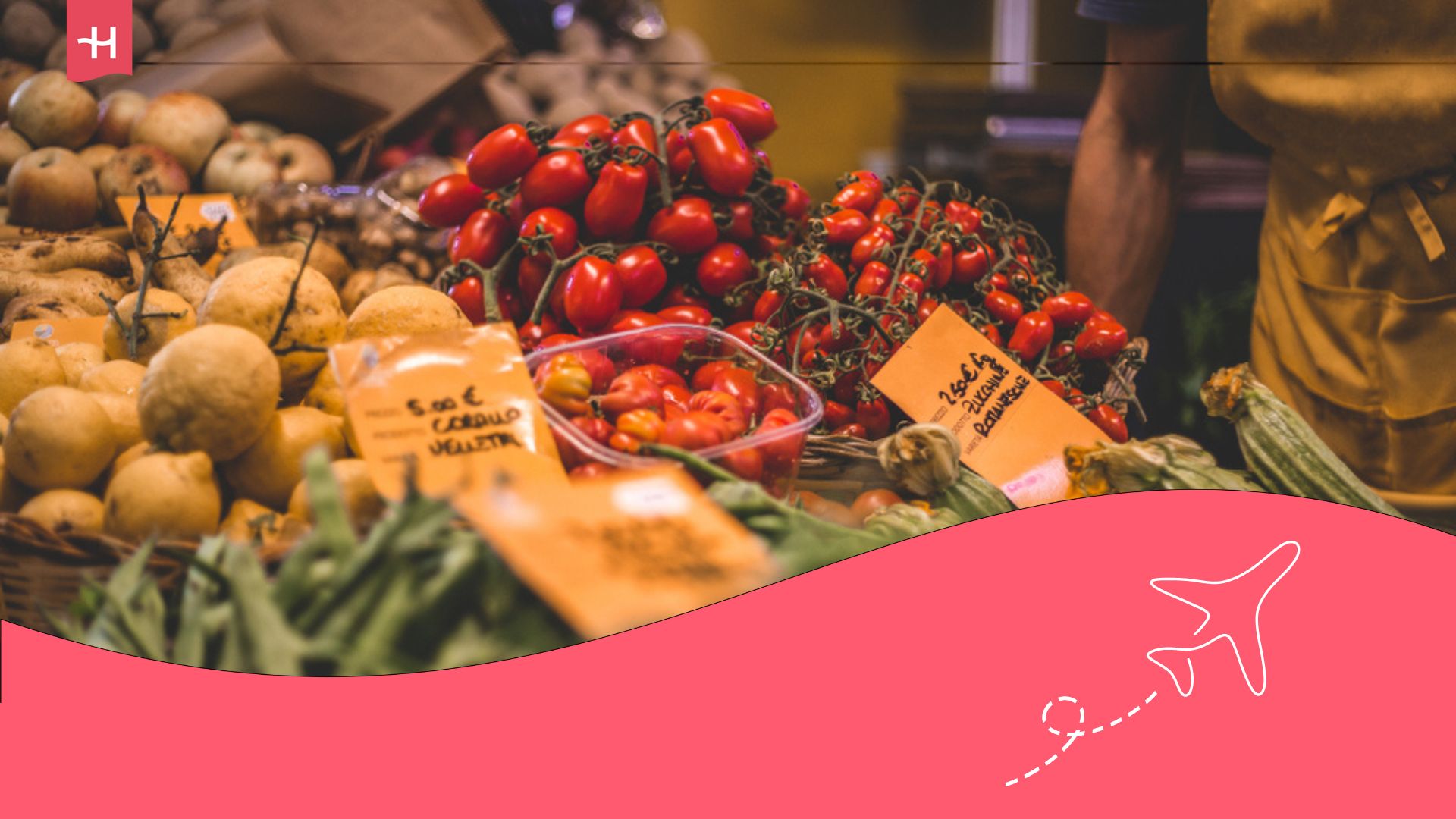
Don’t forget to complement your shopping with chains like DM or Rossmann for hygiene and cosmetics, and visit local markets for fresh and regional products. Additionally, in Germany, it’s very common to bring your own reusable bag: otherwise, you’ll have to pay for each plastic or paper bag at checkout.
Finally, remember that most supermarkets are closed on Sundays, so it’s a good idea to organise your shopping during the week or on Saturday.
Supermarkets in Germany: Frequently Asked Questions
Discount chains like Aldi and Lidl are the cheapest in the country. They offer good-quality basic products, mainly from their own brands, at very low prices compared to Rewe or Edeka.
Chains like Rewe, Edeka, and Amazon Fresh offer online shopping with home delivery in large cities like Berlin, Hamburg, Frankfurt, and Munich. Rewe even allows you to pick up your order in-store with the Click & Collect service. However, in smaller towns, availability is more limited, and it’s more common to visit physical stores.
Hypermarkets like Kaufland are usually located on the outskirts of cities, in areas with easy parking access. There, you’ll find a wide range of products, from food to household items and electronics. In urban centres, smaller formats like Rewe City or Edeka Express are more common.
It depends on what you’re looking for. Supermarkets are more convenient for large weekly shops and packaged products. Local markets, however, are ideal for fresh fruits, vegetables, meats, and cheeses, although prices tend to be a bit higher. A good strategy is to combine both: supermarket for essentials, and market for fresh and regional items.