


 Language


 No results found
Best supermarkets in Budapest: Where to go grocery shopping?
If you have just moved to the Hungarian capital, knowing which are the best supermarkets in Budapest is key to organising your budget.

Moving to Budapest means learning how to organize daily life in a city that is split into two distinct parts: Buda, which is more residential and tranquil, and Pest, dynamic and urban, where most of the shops and services are concentrated. This division is also reflected in the supermarkets in Budapest, as Pest hosts the majority of large chains and convenience stores, while Buda is dominated by medium-sized supermarkets and local markets.
The Hungarian capital blends international chains like Aldi, Lidl, and Spar with local options and traditional markets that remain very popular among residents. Knowing where they are and what each offers can save you time and money, as well as help you integrate into city life more quickly.
What types of shops and supermarkets are there in Budapest?
Daily life in Budapest revolves around a mix of international chains, local supermarkets, and traditional markets. The Hungarian capital has two faces: Buda (more residential and tranquil) and Pest (more urban and commercial).
This distribution influences where you’ll find supermarkets: Large chains and late-night branches dominate Pest, while medium-sized stores and neighbourhood markets are more common in Buda.
Standard Supermarkets
In this category, Spar and Tesco stand out for offering more variety and international brands. Spar has central branches at Deák Ferenc tér, Astoria, and near Nyugati pályaudvar (Western Station), making it very convenient if you live in Pest.
Tesco, on the other hand, is usually found in hypermarket format on the outskirts, such as Budaörs or shopping centres like Arena Mall and Campona. These are convenient for large monthly shopping, with sections for bakery, deli, and international products.
Premium Supermarkets
If you’re looking for something more gourmet, CBA Príma is the top local option. Its branches are mainly located in central districts such as Belváros-Lipótváros (District V) or Újlipótváros (District XIII), offering higher-quality products, Hungarian wines, and regional specialities.
Although the products are more expensive than Aldi or Lidl, they’re still an excellent option for those who prefer select products without leaving the city centre.
Local Markets
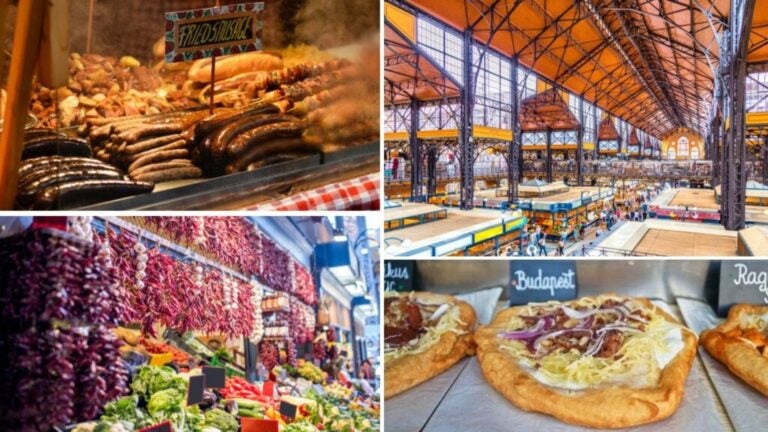
Budapest still preserves its market tradition. The most famous is the Great Central Market (Nagy Vásárcsarnok), located at Fővám tér, where stalls sell local fruits, vegetables, meats, cheeses, and spices such as paprika. In Óbuda (District III), there’s the Óbuda Market Hall, which is smaller but very authentic. In Pest, the Lehel Market in Lehel tér and the Rákóczi Market Hall in District VIII also stand out.
Budapest’s markets are ideal for buying fresh, seasonal products, although prices can be a little higher than in supermarkets. Beyond that, shopping in these places is an experience you should live, at least from time to time.
What are the best supermarkets in Budapest?
There are several supermarket options in Budapest. The most popular chains are Aldi, Lidl, Spar, Tesco, and CBA. Each has its own profile and presence in different parts of the city.
Aldi is one of the most convenient supermarkets for daily needs. It has branches in central districts like Erzsébetváros and Józsefváros. In contrast, Tesco is the best option for large shopping trips. While it has fewer locations in the historic center, it is present in peripheral districts and nearby cities such as Budaörs.
Lidl, a direct competitor of Aldi, is known for its bakery, offering freshly baked goods, and for its themed weeks with international products. Spar is the most visible chain in the city centre. With stores near Deák Ferenc tér, Astoria, and Nyugati Station, it’s the most convenient option if you live in Pest.
Finally, CBA is Hungary’s quintessential chain. Its Príma supermarkets, located in Belváros-Lipótváros and Újlipótváros, offer a more premium experience.
Now, let’s explore each of these supermarkets in Budapest to see what they have to offer:
1- Supermarkets in Budapest: Aldi
Of all the supermarkets in Budapest, Aldi is one of the most practical and accessible options for newcomers. Its has location in central Pest districts like Erzsébetváros and Józsefváros, as well as major shopping centres like Árkád in Pest or Mammut Mall in Buda.
Aldi follows the German low-cost model. Its stores are simple, with high-quality own brands and unbeatable prices. At Aldi, you can pay just €0.95 ($1.05) for a litre of milk, around €0.90 ($0.99) for a fresh baguette, and about €0.80 ($0.88) for a kilo of dry pasta. This pricing policy makes it a go-to for those looking to stick to a budget without sacrificing quality.
While the variety isn’t as wide as in larger chains, Aldi covers the essentials. It also offers an expanding range of organic and vegan products.
Most branches are open from 8:00 to 21:00, making them convenient for both city center and residential district residents.
| Pros | Cons |
|---|---|
| Lowest prices in Budapest | Less variety compared to chains like Spar or Tesco |
| Wide presence in central areas and shopping centres | Small stores with limited stock |
| Good balance between quality and cost with own brands | Doesn’t always offer international products |
| Extended and convenient hours | Can get crowded during peak hours |
Advantages and disadvantages of Aldi supermarkets in Budapest
2- Lidl: An alternative for those on a budget
Lidl is another popular supermarket chain in Budapest and one of the best options if you’re looking to save money without compromising quality. Its stores are spread across both Pest and Buda, with a strong presence in areas like Újbuda (District XI), Kispest (District XIX), and residential areas of Kőbánya (District X). It’s also common to find them on the outskirts, near major avenues and shopping centres.
Lidl’s signature feature is its in-store bakery, the ideal place to get a freshly baked baguette for just €0.99 ($1.09), a pack of sweet pastries for around €1.50 ($1.65), or a large wholemeal loaf for €1.20 ($1.32).
Moreover, the prices of basic items are very competitive: A litre of milk costs around €0.95 ($1.05) and a kilo of oranges is about €1.50 ($1.65). Another draw is its themed weeks, which take place periodically and feature international products such as Spanish tapas, Italian fresh pasta, or Greek ready meals.
Most Lidl stores in Budapest open from 8:00 to 21:00, although some central branches stay open until 22:00, making it very convenient for post-work shopping.
| Pros | Cons |
|---|---|
| Low and competitive prices | Fewer international brands than Spar or Tesco |
| In-store bakery with fresh products daily | Stores can get very crowded during peak hours |
| Weekly promotions with international products | Lower presence in Pest’s historic centre |
| Wide coverage in residential areas | Some stores are smaller with less stock |
Advantages and disadvantages of Lidl
3- Spar: The supermarket chain with the most presence in central Budapest
Spar is probably the most visible chain in central Budapest and one of the most convenient for newcomers to the city. Its supermarkets are spread across Pest, with stores in key locations like Deák Ferenc tér, Astoria, and near Nyugati Station, making it a practical option if you live or work in the central area. It also has a presence in Buda, although stores there are often a little smaller.
Spar is characterised by a greater variety than Aldi or Lidl, with bakery, deli, and ready-to-eat sections, which is very useful if you don’t have much time to cook. In terms of prices, it falls in the middle range: A kilo of apples costs around €2.20 ($2.42), a 250g pack of Lavazza coffee costs about €3.80 ($4.20), and a litre of extra virgin olive oil starts at €5.50 ($6.08).
Their stores generally have extended hours, with some branches staying open until 22:00, which is very convenient compared to cheaper chains.
| Pros | Cons |
|---|---|
| Wide coverage in central Pest | Higher prices than Aldi and Lidl |
| Great variety of international and local brands | Some stores in Buda are smaller with less stock |
| Ready-to-eat sections and fresh bakery | Can be expensive for large weekly shopping |
| Extended hours, even until 22:00 | Central branches tend to be very crowded |
Advantages and disadvantages of Spar supermarkets in Budapest
4- Large supermarket options in Budapest: Tesco
Tesco is one of the most comprehensive chains in Budapest and the preferred choice for those looking to do large supermarket-style shopping.
Although it doesn’t have many locations in the historic centre, it’s widely present in peripheral districts and shopping centres such as Arena Mall in Pest or Campona in the south of the city. The hypermarket in Budaörs, located on the outskirts, is also very popular, where many residents do their monthly shopping thanks to its vast variety and good prices.
Tesco is the perfect place to buy everything you need for daily life. Its aisles offer fruits, vegetables, meats, fish, bakery, drinks, cleaning products, and even clothes or home goods.
Its prices are generally more competitive than Spar, although not as low as Lidl or Aldi. For example, a kilo of fresh chicken costs around €4.50 ($4.95), a litre of whole milk can be found for about €1.00 ($1.10), and a bottle of basic Hungarian wine starts at €2.50 ($2.75).
Another advantage is the store hours, as most large Tesco branches open from 6:00 to 22:00, with some hypermarkets even extending their hours until midnight, which is uncommon in Budapest.
| Pros | Cons |
|---|---|
| Great variety of products, from food to home goods | Lower presence in the city centre |
| Competitive prices for large shopping trips | Requires travelling to shopping centres or outskirts |
| Very extended hours, even until midnight in some hypermarkets | Can be overwhelming for small or quick shopping |
| Chance to find international products and varied brands | Weekends tend to be very crowded |
Supermarkets in Budapest: Pros and cons of Tesco
5- CBA: Budapest’s most traditional supermarket
CBA is Hungary’s quintessential chain and one of the oldest in the country, with locations in almost every district of Budapest. Its supermarkets vary greatly in size: From small convenience stores to CBA Príma, which are its more modern and premium version.
In the city centre, especially in Belváros-Lipótváros and Újlipótváros, CBA Príma has become an attractive option for those seeking quality products, local wines, and a more gourmet selection. There, you can often find Hungarian cold cuts, artisanal cheeses, and Tokaji wines, which are not typically available in international chains.
In terms of prices, CBA is generally more expensive than Aldi or Lidl and is on par with Spar, though it offers a more local experience. A kilo of tomatoes costs around €2.80 ($3.08), a fresh loaf of bread is about €1.30 ($1.43), and a bottle of basic Tokaji wine starts at €5.00 ($5.50).
Its hours are variable: While some neighbourhood stores close at 20:00, CBA Príma typically stays open until 22:00, which is convenient for those needing to shop late in the city centre.
| Pros | Cons |
|---|---|
| Wide coverage across Budapest, including residential areas | Higher prices than Aldi or Lidl |
| Premium version (Príma) with gourmet products and local wines | Quality and selection can vary depending on the branch |
| Great for exploring Hungarian culinary traditions | Small stores can be expensive for large shopping trips |
| Central locations and extended hours in Príma | Fewer international brands than Spar or Tesco |
Advantages and disadvantages of CBA supermarkets
What other notable shops and stores are there in Budapest?
In addition to the most well-known supermarkets, Budapest offers a variety of stores that are essential for daily life. From specialty drugstores to large furniture stores, these options complement weekly shopping and help solve specific needs.
1- DM
DM (Drogerie Markt) is the favourite drugstore of Hungarians and almost a must-visit for those living in the city. Its stores are scattered throughout Budapest, with locations both in the centre (like Deák Ferenc tér) and in shopping centres like Árkád.
In DM, you’ll find a wide selection of personal hygiene, cosmetics, cleaning products, and health foods, including organic and vegan options. The best part is its affordable prices and the quality of its own brands, which are usually cheaper than international brands without losing effectiveness.
As a downside, they don’t sell fresh products. Also, stores in tourist areas can get quite crowded, and international brand prices tend to be slightly higher than at Rossmann.
2- Rossmann
Rossmann is DM’s main competitor and offers a very similar experience, though with more frequent promotions and discounts. Its stores are located on major avenues as well as in residential areas, making it very convenient.
In addition to hygiene and cosmetics, Rossmann has an interesting section for baby products, pet supplies, and stationery, making it a useful stop for supplementary shopping. The value for money is good, though DM tends to be cheaper for some basics.
Among Rossmann’s strong points are frequent promotions and discounts, its wide coverage across the city, including smaller districts, and its useful baby and pet sections. The downside is that some products are more expensive than at DM, some stores may have less stock, and its organic product selection isn’t as large.
3- IKEA
IKEA Budaörs is Budapest’s main furniture store and the ideal solution for those looking to furnish a flat from scratch. By the way, if you’ve just moved to the city or are about to do so and aren’t sure where to stay, we recommend reading this article: Where to stay in Budapest: Options for long stays.
Although IKEA is located on the outskirts in Budaörs, it’s easy to reach by public transport (direct bus from Kelenföld) or car. There, you’ll find everything from beds and sofas to kitchenware, textiles, and Scandinavian-style decor. Its prices are affordable and the variety is huge, plus it has a restaurant and café for a break after a long shopping day.
The only downside is the distance from the city centre and the fact that assembling furniture can be a challenge if you don’t hire the assembly service. Also, keep in mind that the store can get very crowded on weekends (if you want to shop in peace, it’s better to go during the week).
4- Convenience Stores
Finally, Budapest also has 24-hour convenience stores, which is very handy if you’ve just arrived and haven’t yet organised your schedule around closing times. These stores, known as “non-stop” or “ABC,” are usually located in central districts like Erzsébetváros and Józsefváros.
What do they offer? Everything: Drinks, snacks, basic items, and essential products, though at higher prices than in a traditional supermarket. They’re practical for emergencies but not ideal for weekly shopping.
Tips for Shopping in Supermarkets in Budapest
Organising shopping at supermarkets in Budapest is easier than you think, as you only need to combine the different alternatives the city offers. To save money on basic products, Aldi and Lidl are unbeatable, while Spar is very practical in the city centre due to its large number of branches.
For large shopping trips or if you’re used to doing a monthly big shop, Tesco is the best alternative. On the other hand, CBA is ideal for exploring Hungarian products and local wines.
Remember that most supermarkets in Budapest open from 8:00 to 21:00, though Spar branches in the city centre often stay open until 22:00. And a key point: on Sundays, most chains close early, so it’s best to plan your weekly shopping in advance.
Supermarkets in Budapest: Frequently Asked Questions
Discount chains like Aldi, Lidl, and Penny Market are the most affordable. There, basic products are very cheap: For example, a litre of milk costs around €0.95 ($1.05), a kilo of dry pasta is about €0.80 ($0.88), and seasonal fruit typically ranges from €1.50 ($1.65) to €2.00 ($2.20) per kilo. These chains are ideal for weekly shopping if you want to keep your budget under control.
For online shopping, Tesco is one of the best options as it offers home delivery across much of the city and also allows you to pick up your shopping in-store (Click & Collect). Spar has a similar service, though it’s available in fewer areas. Aldi and Lidl currently do not offer online shopping in Hungary. It’s important to note that delivery slots tend to fill up quickly, especially before the weekend.
If you’re looking for international brands or imported products, Spar and Tesco are your best options. There, you can find Lavazza coffee, Italian pasta, Asian sauces, and even American cereals. Additionally, in multicultural areas such as Józsefváros (District VIII) and Újlipótváros (District XIII), there are small shops specializing in Asian, Arab, or Latin products.
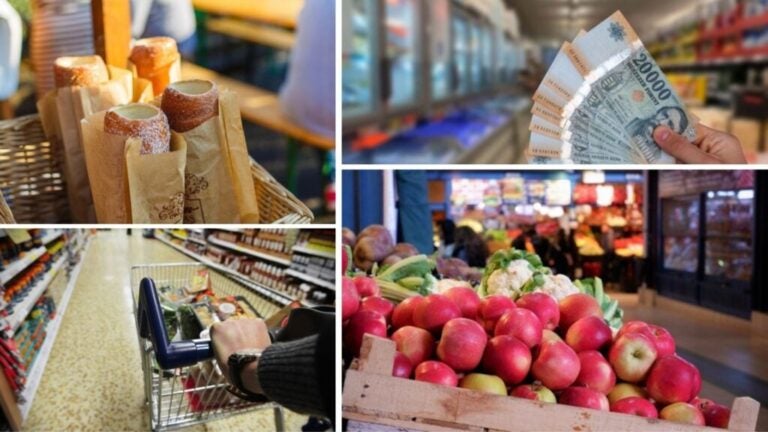
The official currency of Hungary is the Hungarian Forint (HUF), which is used in all supermarkets. Although some tourist shops accept euros, supermarkets always charge in forints. To give you an idea, €1 ($1.20) is approximately equivalent to HUF 390-400 (exchange rates may vary). It’s recommended to use a card or withdraw cash in forints to avoid losing money on unfavourable conversions.