


 Language


 No results found
Surf in Australia: Best beaches and prices
Discover the complete guide to the best places, prices, and seasons to surf in Australia and make the most of your experience.

Australia has something special: the sound of the waves, the relaxed atmosphere, and that sense of freedom you only feel with a board under your arm. Here, surf in Australia isn’t just a sport, it’s a way of life. From the golden beaches of the Gold Coast to the wild landscapes of the west, there are waves for everyone: whether you’re just starting or already mastering the sea.
Australia has something special: the sound of the waves, the relaxed atmosphere, and that sense of freedom you only feel with a board under your arm. Here, surf in Australia isn’t just a sport, it’s a way of life. From the golden beaches of the Gold Coast to the wild landscapes of the west, there are waves for everyone: whether you’re just starting or already mastering the sea.
In this guide, we show you the best places to surf in Australia, how much the experience costs, and the best time to hit the water.
Best Places to Surf in Australia
Australia is a true paradise for surfers: kilometres of coastline, dreamy landscapes, and waves that seem tailor-made. From the warm Pacific waters to the wild Indian Ocean breaks, every region has its own charm and surf style.
Next, we’ll tell you the best places to enjoy surfing in Australia, what makes them special, and why the experience is worth living at each of them.
1. Margaret River (Western Australia)
Located about two and a half hours from Perth, Margaret River is a gem of southwestern Australia, combining wild beaches, vineyards, and unmistakable surfer energy. It’s famous for its powerful and consistent waves, perfect for experienced surfers seeking strong thrills. Spots like Surfers Point or The Box offer challenging breaks with perfect barrels, while beaches like Injidup have gentler waves suitable for learners.
Besides surfing, the natural environment is spectacular: cliffs, forests, and sunsets over the Indian Ocean. Every year, the place comes alive with the Margaret River Pro, an official stop on the world surf championship attracting top surfers worldwide.
2. Gold Coast (Queensland)
Gold Coast is probably the most famous surfing destination in Australia. Its beaches stretch for kilometres and offer waves for all tastes and levels. At Snapper Rocks and Superbank, advanced surfers enjoy very long right-handers and spectacular barrels, while Currumbin Alley is ideal for beginners and surfers seeking softer waves.
The area has perfect infrastructure: surf schools, specialised shops, and a vibrant atmosphere where surfing is part of daily life. Additionally, the Gold Coast Pro is held here, one of the major professional circuit events, filling the beaches with energy and international talent.
3. Noosa (Sunshine Coast, Queensland)
Noosa is the perfect place for those seeking a balance between good waves and tranquility. The beaches stretch within a natural environment protected by Noosa National Park, where the point breaks offer long, gentle waves, perfect for longboarders and intermediate surfers. Its relaxed atmosphere and white sand with crystal-clear water make surfing here almost a spiritual experience. Additionally, the Noosa Surf Festival celebrates classic surf culture every year with competitions, music, and a community vibe reflecting the Sunshine Coast’s soul.
4. Bells Beach (Victoria)
This place is sacred for surfers. It’s the mecca of Australian surfing and one of the most recognised spots worldwide. Its waves are powerful, fast, and break over a rocky bottom, making it a challenge reserved for experienced surfers.
People come here not only to surf but also to feel the sport’s history, as the legendary Rip Curl Pro Bells Beach, the world’s oldest surf championship, takes place every year. Surfing or watching at Bells connects you to the roots of surfing, among cliffs, wind, and the mighty Southern Ocean.
5. Byron Bay (New South Wales)
Byron Bay is the bohemian soul of Australian surfing, a place where waves, nature, and good vibes combine magically. It’s located on the north coast of New South Wales, about an 8-hour drive from Sydney or 2 hours from Brisbane. Beaches like The Pass, Wategos, and Main Beach offer long, soft, and perfectly aligned waves, ideal for beginners and intermediates, although there are also more challenging spots for advanced surfers.
The best time to surf in Byron Bay is from February to June, when north winds and Pacific currents create spectacular conditions. Additionally, the water is usually warm year-round, allowing you to surf without a thick wetsuit.
Advantages include a relaxed atmosphere, a large international surfing community, and opportunities to combine surfing with yoga, hiking, or festivals such as the Byron Bay Surf Festival, one of the most colourful and authentic events in the country. It’s undoubtedly a place where surfing is lived as a lifestyle, not just a sport.

Connectivity while surfing in Australia
In Australia, internet connection is quite good in most coastal areas and cities like Sydney, Melbourne, or the Gold Coast. You can easily check wave forecasts, share your adventures, or work remotely. However, if you plan to surf on more remote beaches or in national parks, the signal may be weak or even nonexistent at times.
To avoid losing connection, a good option is Holafly, which offers eSIM for Australia and coverage in the country’s main areas. Installation is quick—just scan a QR code, and you can activate it as soon as you arrive without searching for a local SIM. You can also share data with other devices and choose from monthly plans, perfect if you move between different surf destinations.
Important: If you are a frequent traveler and want to stay connected without worrying about expensive roaming or looking for a new SIM at every destination, Holafly’s subscription plans are for you. With a single eSIM, enjoy internet in more than 160 countries for a fixed price and no surprises on your bill. Travel without limits and connect easily and securely! 🚀🌍

Recommended seasons for surfing in Australia
Australia has waves all year round, but the best seasons to surf vary by region since the country is vast and the climate ranges from tropical in the north to temperate in the south. Generally, March to May and September to November are the most balanced months: good wave conditions, pleasant temperatures, and fewer crowds than in the peak summer.
- On the east coast (Sydney, Gold Coast, Byron Bay), the best period is usually March to August, when southern winds create more consistent waves and the water remains warm.
- On the south coast (Bells Beach, Victoria), the main season is australian winter, between June and August, with big, powerful waves ideal for advanced surfers, plus events like the Rip Curl Pro.
- The west coast (Margaret River) shines between April and September, with constant Indian Ocean swell and a wilder, quieter environment.
- Finally, the tropical north (Queensland and Noosa surroundings) is perfect between November and March, when warm weather and gentler waves create ideal conditions for beginners.
Traveling during these seasons also brings extra benefits: fewer tourists, lower prices in accommodation and surf schools, and the chance to enjoy other outdoor activities like hiking, local festivals, or road trips with less traffic.
Costs of surfing in Australia
Experiencing surfing in Australia is unique: great waves, quality schools, and prices that can fit different budgets if you plan carefully. Here’s a simple summary to estimate your spending:
- Board rental (1 day): Between $25 and $45 (€23.50-42.30), depending on the type and the beach (tourist areas like Bondi or Byron Bay are usually more expensive).
- Wetsuit rental: From $6 to $20 (€5.60-18.80), sometimes included in lesson packages.
- Group lesson for beginners (1.5–2 h): Between $30 and $50 (€28.20-47), including instructor, theory, and all necessary equipment.
- Private lesson: From $70 to $125 (€65.90-117.90), ideal if you want quick progress with personalised attention.
- 1-week surf camp (with accommodation and meals): Between $1,950 and $2,300 (€1,836-2,166), an intense experience with daily lessons and full surf vibe.
- 4-week surf camp: Between $2,700 and $2,900 (€2,541-2,729), perfect if you want the full “lifestyle” experience.
- Weekly board + wetsuit rental: From $65 to $100 (€61.30-94.30), a convenient option if you plan to surf several days in a row.
Although Australia might seem expensive, the wave quality, safety, and teaching level make every dollar totally worth it.
How to start surfing in Australia
Surfing in Australia is much more than riding a wave: it’s an adventure that connects you with nature and the relaxed lifestyle that attracts travellers worldwide. If you’ve always wanted to try surfing or improve your technique, this is one of the best places on Earth. Beaches are well marked, schools have certified instructors, and the atmosphere makes you feel part of the community from day one.
Next, we explain step by step how to surf in Australia, with practical tips so you can fully enjoy the experience, even if it’s your first time on a board.
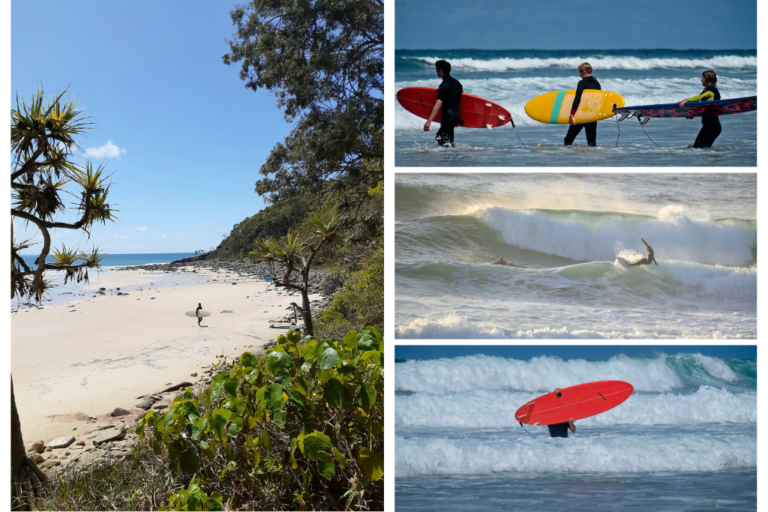
- Choose the right spot for your level. Beginners should look for beaches with schools and lifeguards like Gold Coast, Byron Bay, Noosa, or Bondi. You can also try a wave pool such as Urbnsurf, perfect for practicing technique safely.
- Check your visa before travelling. Unless you’re from New Zealand, you’ll need an authorisation (ETA or similar) to enter. Apply in advance to avoid surprises at the airport.
- Book a reliable school. Choose certified centres that teach safety, basic technique, and use proper equipment. Most beginners manage to stand on the board on their first lesson.
- What to bring to your first lesson. Swimwear, towel, sunscreen, water, and ID. Schools usually provide the board and wetsuit, but check beforehand.
- Learn to identify rip currents. They’re the main danger: swim between the red and yellow flags, and if caught, don’t fight the current; float, signal for help, and swim parallel to shore to escape.
- Start with group lessons, then move to private lessons. Gain confidence and fundamentals first; one or two private lessons help perfect technique and prevent bad habits.
- Train out of the water. Swimming, core, and endurance will give you an advantage. In the sea, observe locals, repeat short sessions, and avoid forcing waves or crowding the peak.
- Respect surf etiquette. The closest surfer to the peak has priority. Be polite, avoid crowded zones if learning, and greet the local community for good advice.
- Start renting equipment. A soft board and wetsuit are enough at first. If surfing several days, ask for weekly discounts and, when ready, get advice on buying your own board.
- Have a Plan B. If the sea is too rough, practice on an artificial wave to improve posture and balance safely.
- Don’t forget insurance. Get one that covers water sports or rescues. Before each session, check conditions and safety plan with your instructor.
Frequently Asked Questions about Surfing in Australia
Not at all. Australia has beaches ideal for beginners and many schools with certified instructors teaching from scratch. Most beginners can stand on the board on their first lesson if they follow the instructor’s guidance.
You only need a surfboard, a leash (safety cord), and depending on water temperature, a wetsuit. Most schools provide all equipment included in the lesson price.
Yes. Some of the most recommended are Bondi Beach (Sydney), Noosa (Queensland) and Byron Bay (NSW). All have lifeguards, gentle waves, and certified schools.
Yes. Australia has waves all 12 months, although intensity changes with the season. Summer has a lively atmosphere and gentler waves; winter offers bigger, more consistent waves, perfect for experienced surfers.
Absolutely. Almost every popular beach has surf shops where you can rent by hours or days, and if staying longer, buy a used or new board. Many schools also advise on the type of board that suits you best.