Language


 No results found
Scuba diving in Punta Cana: Best spots and prices
Experience one of the most fascinating marine activities on this island. We’ll tell you how and where to practice scuba diving in Punta Cana!

If you visit the Dominican Republic, you can’t miss a very popular activity: Scuba diving in Punta Cana. It offers a unique experience where you enjoy crystal-clear waters, coral reefs and an intriguing seabed with shipwrecks. But where can you do it safely? Whether you’re a beginner or consider yourself an experienced diver, this guide helps you plan this ocean adventure.
We’ve prepared a guide with the main diving centres in Punta Cana, the available courses, the best places to explore the seabed and their prices. Ready to dive in?
Diving centres and courses in Punta Cana
It doesn’t matter if you’re in this destination for tourism, as a digital nomad, or as a resident. There’s something you shouldn’t skip, and we recommend doing at least once in your life: Diving in Punta Cana. Every traveller who tries it says it becomes their best experience on the trip. Therefore, let’s see which certified diving centres operate here and the courses you can join, from first-time sessions to advanced programmes with international certification.
- ScubaCaribe: With over 30 years of experience, it operates in several Punta Cana resorts and offers PADI courses, first-time dives, snorkelling and trips to nearby reefs and shipwrecks.
- Dressel Divers: It also has more than 30 years running diving programmes, from beginner sessions to advanced certificates, with a 0% accident rate. This centre is well known in the area and sits inside several hotels.
- SeaPro Divers: This 5-star centre specialises in private excursions and boat trips to places like Catalina Island or Saona Island. You can book it from more than 20 hotels in the area.
- Dolin Dive Center: This independent centre focuses on small groups and offers a more personalised service.
- Ultra Marine Divers: Recommended for certified divers who want to explore wrecks and less-touristic sites.

The most popular diving courses in Punta Cana
In any of the centres listed above, you can join several diving courses in Punta Cana, each one tailored to your level and profile. Take a look at the most popular programmes and choose the right one for you:
| Course | Level | Details |
|---|---|---|
| Try Dive | Beginners | Includes basic theory, pool practice and one open-water dive. |
| Open Water Diver | Experts | International certification (PADI or SSI) allowing you to dive up to 18 metres worldwide. |
| Advanced Open Water Diver | Certified divers | Helps you gain experience through deeper dives. |
| Specialty courses | Intermediate | Night diving, underwater photography or wreck diving. |
| Rescue Diver | Experts | Teaches prevention and self-rescue techniques for emergencies underwater. |
| Divemaster | Experts | With this certification, you can work as a dive guide in diving centres. |
Types of diving courses in Punta Cana.
The 5 best places to dive in Punta Cana
Where would you like to dive in Punta Cana? The island’s coast holds plenty of marine life and many coral reefs where you enjoy this activity. We bring you the five best places to explore its waters, from beginner-friendly spots to deep walls and wrecks for more experienced divers.
1. Bávaro Reef
Bávaro Beach is one of Punta Cana’s most famous beaches. It sits on the northwest coast and offers one of the most popular and accessible reefs. This makes it ideal for your first Caribbean dive. Marine life in Bávaro Reef includes tropical fish, rays, moray eels, sea turtles and both soft and hard coral, with excellent visibility.

2. Catalina Island
Catalina Island is another well-known spot for diving in Punta Cana. It sits about two kilometres off the southeast coast of La Romana. It’s about ninety minutes away by boat, yet we include it here because every diving centre organises trips to this island. They consider it one of the best places to enjoy this sport.
The highlight is the Catalina Wall, a huge underwater cliff that drops more than 100 metres, filled with colourful coral, schools of tropical fish, lobsters, seahorses and giant sponges.
3. Saona Island
You reach Saona Island from the southeast coast after about seventy-five minutes by boat. You can dive in Punta Cana here, inside the East National Park. This protected paradise offers sea turtles, starfish, parrotfish, barracudas and dolphins, as well as well-preserved reefs and untouched beaches. It’s almost uninhabited, with around 500 people living in Mano Juan, a fishing village with wooden houses painted in bright colours.
4. Astron Wreck
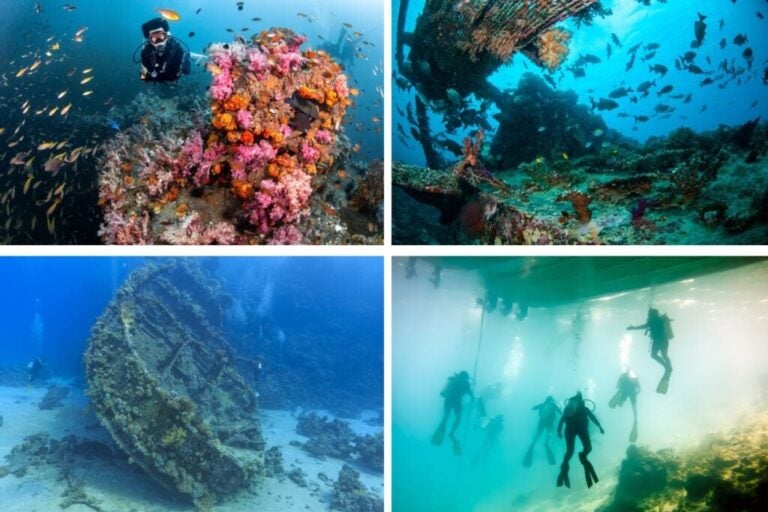
You can also dive in Punta Cana’s shipwrecks. These sites hold boats or fragments of vessels that sank, like the Astron Wreck, a Russian cargo ship that went down in 1979, now resting near the shore with part of its hull above water. You often see nurse sharks, eagle rays, turtles, angelfish, groupers, snappers and many tropical species. Its location near the coast makes it a good option for a first wreck dive.
5. El Canal
If you’re a certified diver and want a more intense spot, El Canal sits between Punta Cana and Cabeza de Toro. It offers stronger currents that attract larger species, such as nurse sharks, moray eels, reef fish and eagle rays. If you enjoy underwater photography, you’ll love this popular place.
Connectivity while diving in Punta Cana
You can’t use your phone underwater yet, but you still need a good internet connection on the island to look for diving courses in Punta Cana, check GPS directions, record content for social media or make video calls to share your experience with friends or family.
If your trip lasts only a few days, the best solution is the Punta Cana eSIM from Holafly. It gives you a stable connection with unlimited data and flexible plans, so you don’t rely on a physical SIM. For longer trips, you can choose the Holafly monthly plans, with two options: 25 GB or unlimited data, with no commitment and the option to connect several devices at once.
Important: If you are a frequent traveler and want to stay connected without worrying about expensive roaming or looking for a new SIM at every destination, Holafly’s subscription plans are for you. With a single eSIM, enjoy internet in more than 170 countries for a fixed price and no surprises on your bill. Travel without limits and connect easily and securely! 🚀🌍

How much does it cost to dive in Punta Cana?
Now that we’ve seen the best places to dive in Punta Cana, the specialised centres you can book and the courses they offer, let’s look at the prices. These vary depending on your experience level and whether you already hold a certification, as well as the season when you plan to dive. Here’s an example of typical course costs:
- Try Dive: At the Discover Scuba Diving centre, beginner courses cost between $90–120 (€77.60–103.40). They include basic theory, pool training and one open-water dive.
- Open Water Diver course: This programme gives you an international PADI or SSI certification. It costs around $380–450 (€327.60–€387) with theory and practice sessions.
- Advanced Open Water Diver course: This specialised course for certified divers costs $300–380 (€258–327.60).
- Diving excursions: Trips to Catalina Island or Saona Island with diving included cost $125–210 (€107.50–181.40). Transport, equipment and meals come included.
- Rescue Diving: This three-day course includes pool sessions and open-water dives. It costs $500 (€430).
Frequently Asked Questions
You don’t need any, because there are beginner courses called ‘Try Dive’.
You can dive in Punta Cana all year. Yet the best season runs from December to May when the sea stays calmer and visibility improves.
You can spot many species, like sea turtles, rays, moray eels, parrotfish, barracudas, lobsters and plenty of tropical fish.
Yes, you can join a Try Dive or take an Open Water Diver course, which gives you an international certification to dive anywhere in the world.
It usually includes theory, pool practice, open-water dives and full diving equipment.