Language
eSIM not working: How to troubleshoot and fix common issues
If your eSIM is not working, you can troubleshoot and fix most common problems by restarting your phone, updating software, or resetting network settings.

If your eSIM is not working, the fix is usually one of four things: data roaming is switched off, the eSIM isn’t set as your active data line, the APN settings are wrong, or your phone is locked to a carrier. Most of these take a few taps to sort out.
Below are the reasons an eSIM stops working and the steps that fix each one, on both iPhone and Android. If you want an eSIM you can trust, look no further than Holafly — with unlimited data and 24/7 customer support included in every plan, you’ll never lose connection.

An eSIM you can rely on
Why is my eSIM not working?
There are a few reasons why your eSIM may not be working. First of all, you need three things for your eSIM card to work: a compatible device, network coverage, and an eSIM data plan.
Let’s look at these one by one.
1. eSIM compatibility
First things first: ensure you have an eSIM-compatible phone.
Most new smartphones support eSIMs—including iPhones from XS/XR onwards and Android models like Google Pixel 7+ or Samsung Galaxy S20+. Double-check if your phone is eSIM-compatible before you buy an eSIM plan.
2. Network coverage
eSIMs work on the same cellular networks as regular SIM cards. So, if you have good cell coverage, your eSIM should work well, too. But if you aren’t seeing any coverage bars, your eSIM won’t work well, or won’t work at all.
To check for coverage, visit your service provider’s website and look for a coverage map. While not all eSIM carriers have detailed maps, most will offer some kind of coverage overview.
3. An eSIM plan
Just having a compatible phone won’t automatically give you eSIM coverage. Whether it’s a monthly plan or a data-only travel eSIM, you need to ensure you have an active eSIM plan. Much like with physical SIM cards, you can have an eSIM that isn’t connected to a data plan. Make sure to get an eSIM plan and activate it before trying to use the eSIM.
How to fix eSIM not working
Have all of the things above, but the eSIM is still not working? Let’s take a look at some of the main issues eSIM users face and how to fix them.
Check if your phone is unlocked
If you bought your device from your cell service provider, it may be locked to the provider’s mobile network. As a result, the eSIM may not work with travel eSIMs or plans from other providers.
Make sure to check if your phone is unlocked before buying your eSIM plan to avoid unexpected issues.
Restart your phone
A glitch in the network settings can sometimes cause connection issues. Restarting your phone — yes, the classic turn it off and on again trick — forces your phone to reconnect to the mobile network and can often solve minor glitches immediately.
Turn airplane mode on and off
Turning airplane mode on and off works similarly to restarting your phone. It disconnects your phone from the mobile network, then reconnects when airplane mode is turned off. This eliminates minor connectivity glitches and can get you eSIM working in seconds.
Make sure data roaming is turned on
If you have coverage but your mobile internet isn’t working, your data roaming might be turned off on your eSIM profile settings.
Make sure your data roaming is switched on. To do this, open your device’s Settings > Mobile/Cellular Data > Mobile/Cellular Data options > Data Roaming. Then go to your eSIM profile and make sure data roaming is turned on there as well.
Update your software
Outdated software often causes connection issues. Make sure your operating system is up-to-date. If not, install the latest version. Here’s how to do this on different devices:
- For Apple or iOS: Connect to WiFi and a power source, then go to Settings > General > Software update > Choose the update you want to install.
- For Android: Go to Settings > System > System update > Select the pending update and follow the steps indicated on the screen.
- For Google Pixel: Open the Settings app > System > System update > Check for update > If an update is available, follow the on-screen instructions to download and install it.
Update APN settings
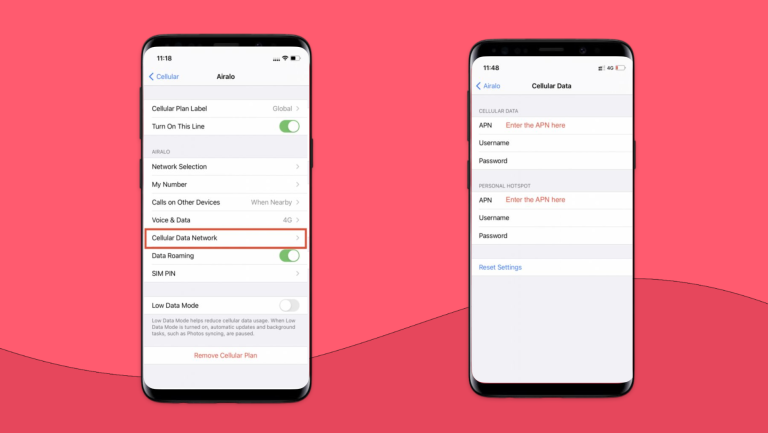
If your eSIM is not working on iPhone, the Access Point Name (APN) is usually the first thing to rule out. Verify that the Access Point Name (APN) entered is correct. In most cases, the APN details fill out automatically when setting up the eSIM. However, sometimes you need to add or adjust them manually.
You’ll receive the correct APN settings via email with your activation QR code.
If it’s missing or incorrect, enter the correct APN details.
Go to your device’s network settings and check the APN configuration.
Manually select a network
Sometimes automatic network selection doesn’t choose the best available network. An iPhone eSIM not working on automatic selection will sometimes connect once you pick a network yourself, so try selecting a different one to see if coverage or speeds improve.
The process for doing so differs depending on your device:
On iOS, go to Settings > Cellular/Mobile Data > Network Selection > turn off Automatic > Select a network manually.
On Android, go to Settings > Connections/Network & Internet > Mobile Networks > Network Operators > Turn off Automatic > Select a network manually.
eSIM network not available
If your phone shows eSIM network not available, the line is installed but isn’t registering on a network. This is different from having no data, and it usually points to one of three things.
Your plan hasn’t started yet. Travel eSIMs often activate on arrival rather than at purchase, so the line stays unregistered until you land and connect to a local network.
The eSIM isn’t switched on. Check that the line is enabled and set as your data source in Settings > Cellular/Mobile Data, since an installed eSIM can sit there turned off.
There’s no coverage where you are. Registration needs a signal, so move outdoors or away from thick walls and give the phone a minute to search.
If none of those apply, resetting network settings usually clears it.
Reset the network settings
If all else fails, resetting your network settings often solves glitches and bugs that restarting doesn’t fix. Here’s how:
On iOS, select Settings > General > Reset > Reset Network Settings.
On Android, select Settings > System > Reset Options > Reset WiFi, Mobile, and Bluetooth.
Doing so will completely refresh all your network connections, including WiFi and Bluetooth. As a result, you may need to manually reconnect to your home WiFi network and pair any Bluetooth devices you use. That said, it sure beats not being able to use your eSIM.
Contact customer support
If none of the troubleshooting steps work, there might be an issue with your service provider instead. Make sure to contact your provider’s customer support, and they should be able to answer your questions and get you back online.
To make things smoother, there are a few things you can prepare before contacting customer support:
- Your eSIM activation confirmation email
- Device model and software version
- Error messages or screenshots
- Steps you’ve already tried
eSIM still not working? Get one you can trust
From travel eSIMs to long-term plans, Holafly offers reliable eSIMs for everyone. Travel eSIMs cover 200+ destinations, with unlimited data and 24/7 customer support included in every plan. This means you won’t run out of data or lose connection when you need it most.
For long-term coverage, Holafly Plans offers a pay-monthly eSIM subscription with coverage in 160+ destinations on a single eSIM. Simply pick your plan, use it to stay connected anywhere, for as long as you need, and cancel anytime.
What’s more, Holafly always has your back with Always On; a perk included with every Holafly eSIM that provides 1 GB of monthly backup data at no extra cost. Just keep your eSIM installed to enjoy instant internet access for emergencies, like calling an Uber or booking a last-minute flight.
An eSIM you can rely on
eSIM not working FAQs
An eSIM that stopped working after months of use has usually run out of data or reached the end of its validity period. Check your remaining balance with your provider first. If the plan is still active, a software update or a network settings reset will fix most sudden drops.
No service means the eSIM isn’t registering on a network. Check that the line is switched on and set as your data source, then toggle airplane mode to force it to reconnect. If you’ve just landed, give it a minute to find a local network before trying anything else.
Start with a restart, then check that data roaming is turned on for your eSIM line. If that doesn’t work, verify your APN settings against the ones in your activation email, then reset your network settings. Between them these fix most eSIM problems.
Data usually fails because roaming is switched off or the eSIM isn’t set as your active data line. Open Settings > Mobile Data and check both. If the line is connected and roaming is on, incorrect APN settings are the next thing to rule out.
Plans that may interest you

A senior SEO writer from Lithuania, combining my passion for writing and travel at Holafly. With years of experience in technical fields, I'm here to answer all of your questions about staying connected. I specialize in turning even the most complicated topics into something everyone can understand.