Language

What is Dual SIM, and How Does It Work?
Dual SIM allows your mobile phone to use two SIM cards or eSIMs simultaneously. This makes it easier than ever to keep your personal and work lines separate. Devices like Samsung and iPhone support this handy feature. In this article, we’ll explain how it works, guide you through the setup process on iOS and Android, and share practical tips to help you make the most of it.

Advantages of having Dual SIM
Discover the benefits of having a dual SIM card on your phone:
- Enjoy the convenience of having two SIMs in one device, so you don’t need to carry two phones.
- Stay connected with a local number without losing access to your main number, helping you avoid high roaming charges with International’s eSIM.
- Easily assign names to each line on your device for quick differentiation between personal and work calls.
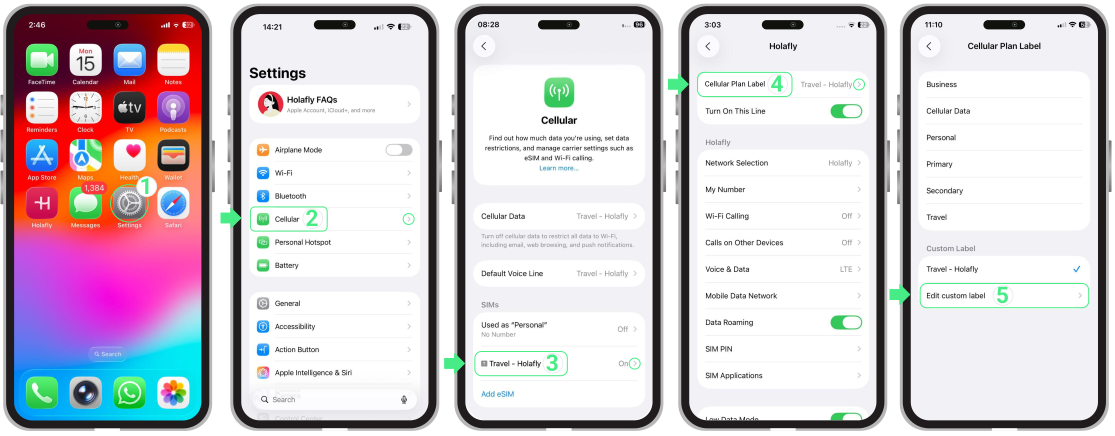
To name your SIMs on your iPhone
- Go to Settings → Tap on Cellular or Mobile Data → Select the SIM you want to label → Then on “Cellular Plan Label” and on CUSTOM LABEL assign a name.
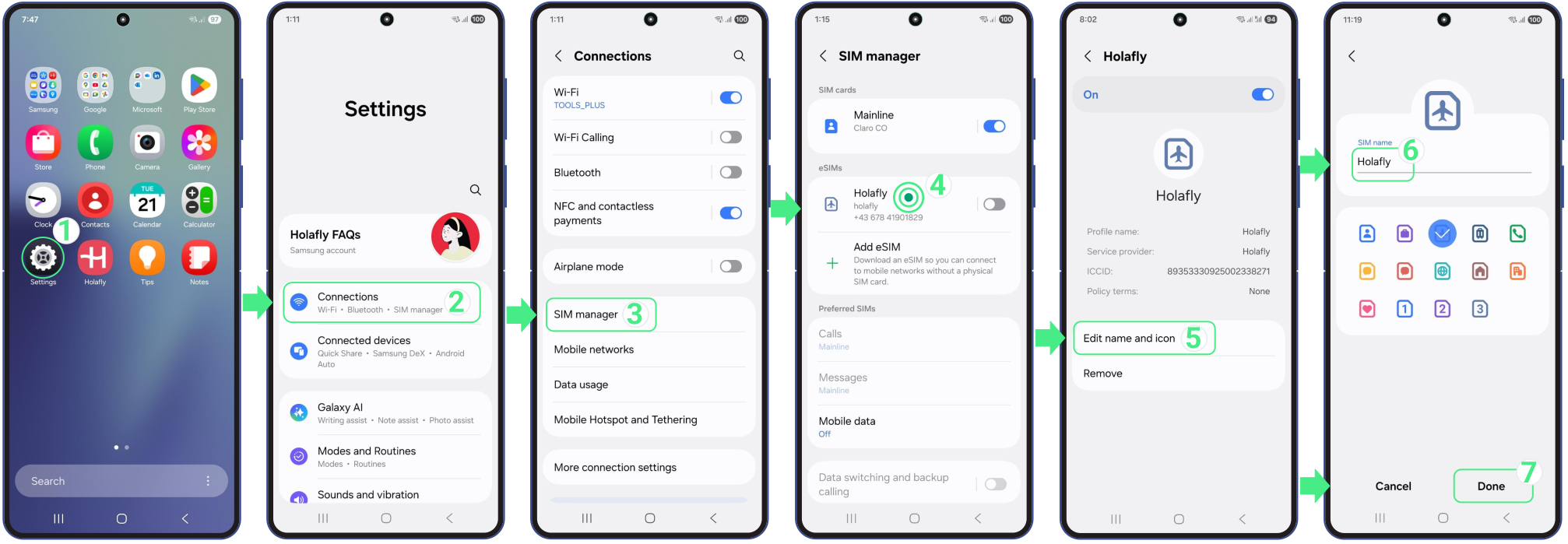
To name your SIMs on your Android
- Go to Settings → Tap on Connections → Select SIM manager → Choose The SIM/eSIM you want to label → Press “Edit name and icon” → Enter the name you’d like to assign to your SIM/eSIM under “SIM name” → Press Done to apply the changes.
Troubleshooting Tips
If you want to set up dual SIM on your iPhone or Android using your main SIM for calls and your Travel eSIM for data at the same time, follow these steps:
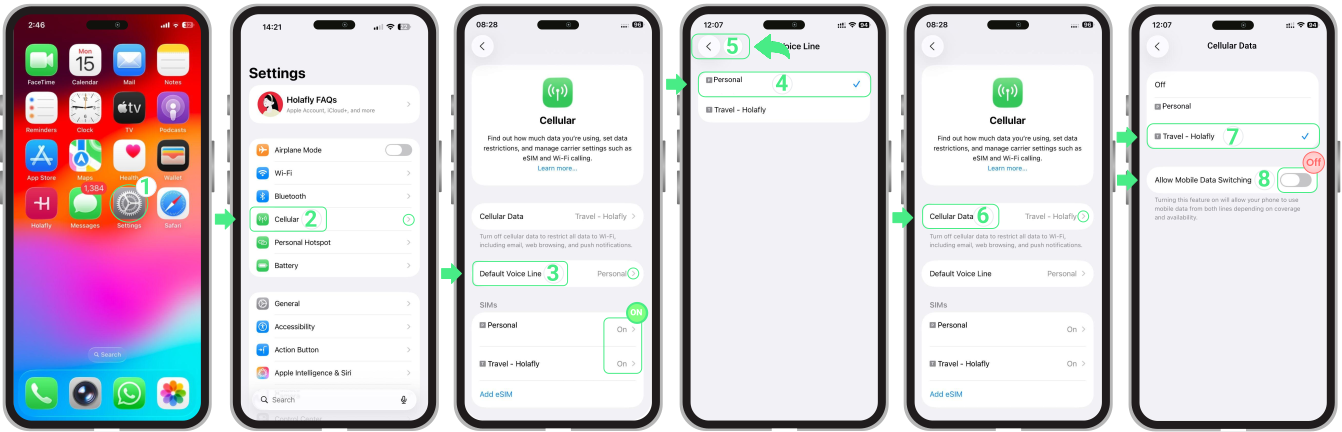
To set up dual SIM on your iPhone
- Go to Settings → Cellular or Mobile Data → Ensure both your SIM and eSIM are active → Select Default Voice Line → Choose your personal line → Return to Cellular or Mobile Data → Tap on Cellular Data and select your Travel eSIM → Finally, make sure “Allow Cellular Data Switching”is turned off, so your phone doesn’t automatically switch between data lines based on signal strength.
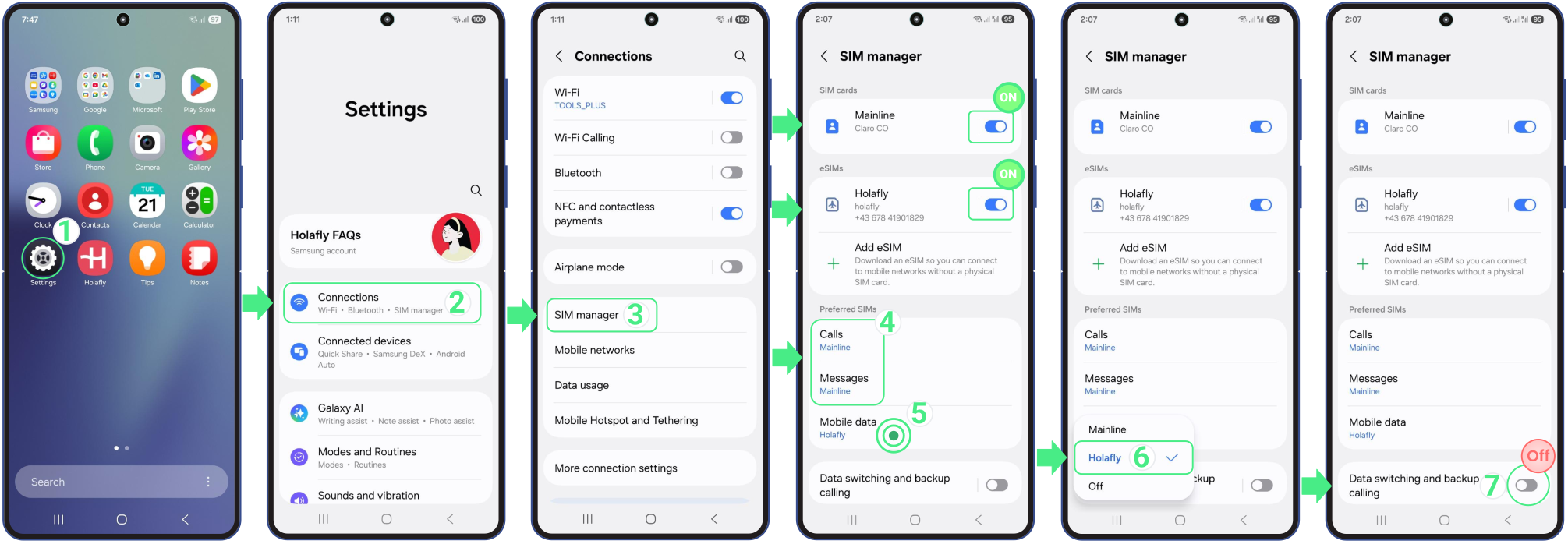
To set up dual SIM on your Android
- Go to Settings → Tap onConnections → Select SIM manager → Ensure both your SIM and eSIM are active → In Calls, confirm that your personal SIM is selected → Choose Mobile Data and select your International eSIM → Finally, make sure “Data Switching”is turned off, so your phone doesn’t automatically switch between data lines based on signal strength.
To keep in mind
If you are planning to use your Dual SIM feature with your personal line and a travel eSIM , follow these recommendations to get the best experience and avoid unexpected costs:
- Your phone must be unlocked to use two different carriers.
- Even if both lines are active, you can only use mobile data from one SIM at a time. You’ll need to select your data line manually in your settings.
- Many newer devices support both lines at once, but older models may require you to turn one off to use the other.
- Most phones use Dual SIM Dual Standby (DSDS). This means that if you are on a call on one line, the other line may lose signal or send calls to voicemail until the call ends.
- Each SIM works as a separate account. You cannot share data or balance between them; you must manage each one independently with its provider.
- Your home carrier may still charge you for incoming calls or SMS on your main line, even if you are using an eSIM for data.
- One advantage of Dual SIM is that you can turn a line off without deleting it. This allows you to keep the eSIM profile for future use and, in some cases, retain extra carrier benefits.