Language
How to transfer SIM to eSIM?
To transfer your SIM to an eSIM, your phone must be compatible and your carrier must support the switch.

To transfer your SIM to an eSIM, request the switch from your carrier and activate the eSIM on your phone, either in your settings or by scanning the QR code your carrier sends. Most major providers, including Verizon, T-Mobile, and AT&T, support this, as long as your phone is eSIM-compatible.
Below, you’ll find what you need, the steps to transfer your SIM to an eSIM on iPhone and Android, and where to get an international eSIM for your next trip.
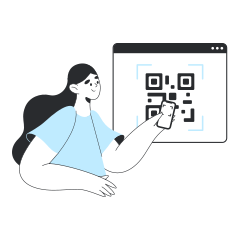
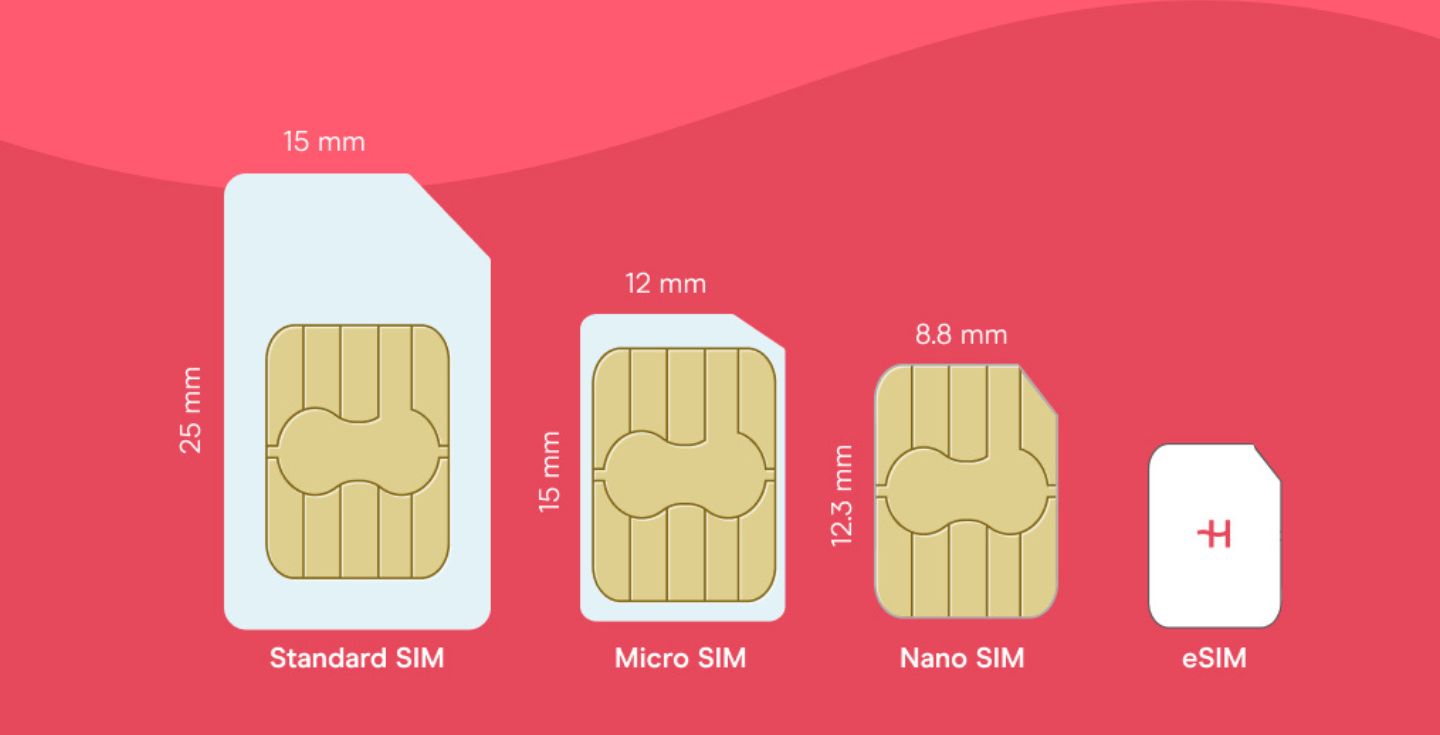
Say goodbye to plastic SIMs
Our eSIMs can't be damaged, broken, or lost – they're the future for every type of traveler.
Can I convert my existing SIM to an eSIM?
Yes. In most cases you can convert physical SIM to eSIM, as long as your phone and carrier support it. Most major mobile providers now offer SIM-to-eSIM conversion, either through your phone settings or with help from their support team.
You can transfer physical SIM to eSIM on most current phones. Newer models, like the iPhone 14 and later in the US, no longer have a physical SIM slot, so an eSIM is the only option. If your phone still has a SIM tray, you can usually switch by requesting it from your carrier.
Before you start, make sure your phone is eSIM-compatible and your carrier supports eSIM activation or SIM conversion. Some carriers let you make the switch instantly with a QR code or app, while others ask you to contact support or meet extra requirements.
How to transfer SIM to eSIM
The steps to transfer SIM card to eSIM are similar across most phone models. You request the eSIM from your carrier, then add it in your phone settings by scanning a QR code or entering the details manually. Menu names differ slightly by device, so here’s the process for iPhone, Android, and Samsung.
How to transfer SIM to eSIM on iPhone
- Open Settings > Cellular.
- Tap Add Cellular Plan.
- Choose Convert to eSIM. If the option doesn’t appear, your carrier doesn’t support it.
- Select Convert Cellular Plan.
- Choose your activation method.
- Scan the QR code from your carrier, or enter the details manually.
- Follow the on-screen steps to finish the setup.

How to transfer SIM to eSIM on Android
Most Android phones follow the same process, though menu names and their location vary slightly by brand. On stock versions of Android:
- Open Settings.
- Go to Network & Internet.
- Select Mobile network > Advanced.
- Choose Carrier, then follow the prompts to add your eSIM.
How to transfer SIM to eSIM on Samsung
Many Android phones are made by Samsung, so here’s how the menu works on those devices:
- Open Settings.
- Select Connections > SIM card manager.
- Choose Add mobile plan, then scan the QR code or enter the details.

How to switch back from eSIM to physical SIM iPhone? On an iPhone, you can’t move an eSIM to a physical SIM by yourself. Contact your carrier and ask for a physical SIM or a SIM swap. Once they send the SIM and activate it, insert it into your iPhone’s tray and your number moves back to the physical card.
Do I have to go in-store to make this change?
No, in most cases you don’t. Most US carriers, like T-Mobile and US Mobile, let you switch to an eSIM for the USA online, usually by scanning a QR code sent to your email. Others, such as Verizon, may ask you to use their official app to finish activation.
In countries like Canada, Freedom Mobile lets you request and activate your eSIM on their website. In Europe, how to convert SIM into eSIM depends on your provider.
If you’re traveling, or you’d rather skip the carrier-specific steps, international eSIM providers like Holafly offer instant delivery and activation across 160+ destinations, with no store visit or support call needed.
Is there a fee for switching from a regular SIM to an eSIM?
Switching from a physical SIM to an eSIM is usually free, especially with major carriers in the US and Europe. Some providers do apply a small one-time activation fee, typically $5-10 USD.
Before you start, check directly with your carrier to confirm whether there’s a charge, how it’s billed, and whether payment is upfront or added to your next invoice.
Can I use an eSIM and a physical SIM at the same time?
Can I use an eSIM and a physical SIM at the same time?
Yes. Many smartphones support Dual SIM, so you can run an eSIM and a physical SIM card at the same time. That’s useful if you want to keep your local number active while using a second line for data abroad.
Some newer phones, like the iPhone 14, 15, and later in the US, support only eSIM and no longer include a physical SIM tray. For most other devices, having both options is still common.
If you’re traveling and want to avoid roaming fees, keep your regular SIM for calls and use a travel eSIM for data. Providers like Holafly cover 160+ destinations, with single-trip eSIMs or a Holafly Plans subscription for frequent travelers. Every eSIM includes Always On, 1 GB of backup data each month across 70+ destinations at no extra cost, so you stay covered even between trips.

SIM swapping is the past
Your eSIM is always on your phone, simply activate it whenever you need mobile data.
FAQs: How to transfer a SIM to an eSIM
Your physical card is replaced by a digital version stored on your phone. You no longer need to insert or carry a plastic SIM, and you can manage your cellular plans directly in your device settings.
Yes, but not directly on your phone. You contact your carrier and request a physical SIM or a SIM swap. They either mail you a SIM or activate one in store, then you move your number and plan back to the plastic card.
Ask your carrier to switch your line from the eSIM back to a physical SIM. This usually means ordering a SIM online, picking one up in store, or using a prepaid activation kit. Once the new SIM is active, insert it and your number moves over.
It usually takes just a few minutes. Some carriers let you instantly complete the switch using a QR code or their official app. Others may require a short activation window or customer support interaction. In most cases, you can do it in under 10 minutes.
That depends on your carrier. Some providers mirror your physical SIM number onto an eSIM, known as number sharing. Others treat each SIM and eSIM as a separate line. Contact your carrier to confirm whether this is available on your plan.
Plans that may interest you

Hi! Leoneska here, your guide to traveling connected. I'm a Venezuelan SEO content specialist with over four years of experience sharing tips and tricks for using mobile internet while traveling and making the most of your adventures. At Holafly, I take care of providing reliable and high-quality information to travelers like you. I hope you enjoy my content and find it useful!