Language
Best places to retire in Costa Rica 2026: Honest guide for all budget
An honest, city-by-city comparison of the best places to retire in Costa Rica, covering cost, safety, healthcare, and lifestyle fit.

Costa Rica suits retirees who want warm weather, nature, good private healthcare, and an established expat community without moving too far from the US. But it’s not the bargain it was 10 or 15 years ago. And housing in popular coastal areas can be surprisingly expensive.
This guide compares the best places to retire in Costa Rica by cost, safety, healthcare access, and lifestyle, so you can narrow down where to look before making the move.
Best places to retire in Costa Rica at a glance
| City/area | Best for | Cost level | Risk factor | Amenity access |
|---|---|---|---|---|
| Atenas | Best overall value | Moderate | N/A | Healthcare, airport |
| Grecia | Budget-conscious retirees | Low | N/A | Local services, healthcare, markets |
| Escazu | Healthcare and convenience | High | N/A | Excellent hospitals, shopping, dining |
| Santa Ana | Suburban living | High | N/A | Healthcare, restaurants, shopping |
| Tamarindo | Beaches | Very high | Heat/dry-season, water pressure | Beach, dining, expat services |
| Playas del Coco | Beaches + easier logistics | High | Heat/dry-season, water pressure | Beach, services, Liberia access |
| Uvita/Ojochal | Nature and quieter living | Moderate | Remote healthcare access | Nature, local services |
| Lake Arenal | Peace and scenery | Moderate | N/A | Basic services, outdoor lifestyle |
The best places to retire in Costa Rica ultimately depend on your lifestyle, budget and priorities.
Best places to retire in Costa Rica: Top picks by lifestyle
Costa Rica has something for different kinds of retirees, from quiet mountain towns and affordable inland communities to beach towns with water sports. Here’s a detailed look at the top 8 places.
Atenas: Best overall
If you want a quieter town with an established expat community, everyday shops and restaurants, and easy access to San José and the airport, Atenas is possibly the one for you. It sits in Costa Rica’s Central Valley, where elevation keeps the climate milder than the Pacific coast. And the median sale price, if you want to buy a house in Costa Rica, is about ₡158 million ($348,335).
Honest note: The trade-off is that Atenas is quieter than San José or the popular beach towns. The nightlife and major entertainment events are limited.
Grecia: Best for budget-conscious retirees
If your priority is stretching your retirement income without giving up the Central Valley’s climate and access to services, Grecia is your best bet. Current property data shows a median sale price of about ₡99.2 million ($218,667). Grecia’s biggest advantage is what you get for the money: A peaceful daily routine, local markets, open spaces, and access to Central Valley’s larger healthcare and shopping infrastructure.
Honest note: English isn’t as widely spoken as it is in more expat-focused towns, and you’ll probably want a car for everyday errands.
Escazu: Best for healthcare and convenience
Escazu is an upscale San José suburb that puts you close to major private medical facilities, shopping centers, restaurants and international services. Hospital CIMA is in Escazu, while Clínica Bíblica and other major private hospitals are also concentrated around San José. You’ll find imported products, upscale restaurants, and newer condos in the area. The median sale price is around ₡140.6 million ($310,000).
Honest note: It’s one of Costa Rica’s more expensive areas, so a fixed retirement income won’t stretch as far as it would in smaller towns.

Santa Ana: Best for suburban living
Santa Ana is another Central Valley option for retirees who want modern housing and easy access to San José without living in the center of the capital. The median sale price is around ₡234.5 million ($517,000), although the number varies considerably by property type. Healthcare is one of Santa Ana’s biggest advantages. Clínica Bíblica operates a Santa Ana facility with 24/7 emergency care, diagnostic imaging, intensive care and specialist services.
Honest note: The catch is affordability. Santa Ana’s not for someone who is specifically looking for the cheapest places to retire in Costa Rica. The city is also car-dependent in many areas.
Tamarindo: Best for beach-loving retirees
Tamarindo has beaches, restaurants, activities, English-speaking businesses and a social scene that makes it easy to meet people. And an American retiree can plug into an established international community easily here. The price of that convenience, however, is substantial. The median asking price for homes is around ₡314.1 million ($692,500).
Honest note: The other trade-off is climate. Guanacaste, the province in which Tamarindo is located, is hotter and drier than the Central Valley, and AC is a must during the summers.
Playas del Coco: Best beaches + easier logistics
Playas del Coco gives you a coastal lifestyle while keeping you relatively close to Liberia and its international airport. The town has restaurants, shops, services and a sizable foreign-resident community. Its proximity to Liberia is particularly useful for retirees who expect regular visits from family or want easier access to flights back to the US. The median asking price is about ₡219.0 million ($482,900).
The trade-off is the same one you face across Guanacaste: Heat, a pronounced dry season and higher coastal housing costs.
Honest note: Safety also deserves a nuanced conversation. Costa Rica’s homicide numbers remain a concern nationally, even though official data shows homicides fell by 8% in 2025 compared with 2024. Property crime and burglaries are also issues retirees should research at the neighborhood level.
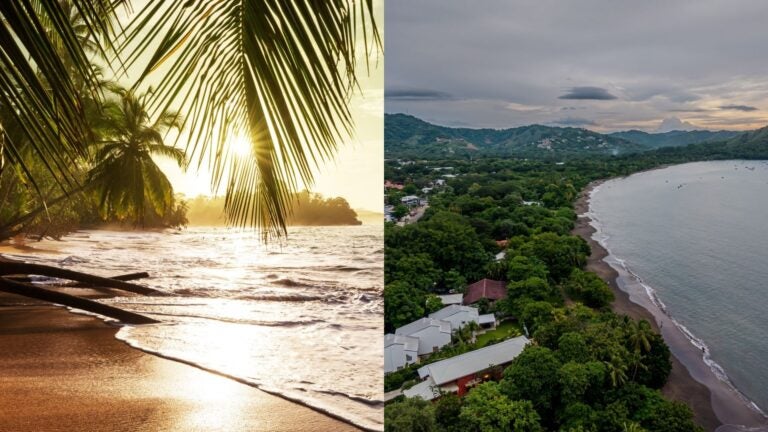
Uvita and Ojochal: Nature and quieter living
The neighboring towns of Uvita and Ojochal are perfect for active retirees who prioritize nature and the outdoors. There’s a rainforest, beaches, and wildlife, plus activities like hiking to waterfalls, whale watching, snorkeling, kayaking, surfing and birdwatching.
The Marino Ballena National Park is right on the doorstep, while the nearby Térraba-Sierpe wetlands offer kayaking and wildlife tours. The median asking price for the Uvita/Ojochal market is about ₡226.7 million ($499,900).
Honest note: The Southern Zone, where these towns are located, is much more remote from Costa Rica’s specialists and private hospitals. Hospital Metropolitano does have a Quepos location, but more complex medical needs can require longer travel.
Lake Arenal: Best for a peaceful retirement
Lake Arenal’s a great choice for retirees who want their days to be slower, quieter and closely connected to nature. The communities around the lake, including Nuevo Arenal, offer a rural lifestyle, with fewer crowds, less traffic and plenty of open space. You can spend your time hiking, fishing, gardening, birdwatching or simply enjoying the lake and Arenal Volcano views.
There’s also an established international community around the lake, so you won’t necessarily feel isolated even though the area is rural. The property market has a median asking price of about ₡159 million ($350,539).
Honest note: You’ll need to be comfortable with fewer restaurants, shops and services. Specialist medical care and major hospitals are also farther away.

Can you retire in Costa Rica on a fixed income?
Yes, but how comfortably you live depends on where you settle, your housing costs and how much you spend on private healthcare, transportation and travel.
For US citizens, Costa Rica’s Pensionado residency category requires proof of a lifetime pension of at least $1,000 per month. That’s an immigration threshold, not a realistic budget for a comfortable retirement.
If you’re working with $3,000 a month, for example, that can be a workable retirement budget in lower-cost areas such as Atenas or Grecia, while you’ll have less breathing room in expensive coastal destinations or upscale suburbs.
Healthcare is another reason the Central Valley appeals to many retirees. Several of the country’s major private hospitals and specialist services are concentrated around San José, including CIMA, Clínica Bíblica and Hospital Metropolitano.
And don’t assume that moving abroad automatically eliminates US tax obligations. Please get advice from a tax professional familiar with US-Costa Rica cross-border situations before making the move.
Why Costa Rica is still worth considering for retirement
Costa Rica’s strongest selling point isn’t simply cheap living. It’s the combination of climate, nature, healthcare, stability and proximity to the US.
- You can choose a cool Central Valley climate, a dry Pacific beach town or a lush Southern Pacific community without leaving the country.
- There are established expat networks, private medical facilities and regular international flights.
- Costa Rica’s tax treatment of foreign-source income can also be attractive, although your personal tax position depends on the type and source of your income.
- Healthcare is particularly compelling for retirees as it’s affordable and a mix of public coverage and private care.
Looking at housing costs, healthcare, climate, and lifestyle side by side can make it easier to narrow down your options.
What to consider before retiring in Costa Rica
Here are some important things to consider before moving to Costa Rica after retirement.
- Costa Rica is no longer uniformly inexpensive. National property data in 2026 puts the median asking price around $425,000, although that figure includes everything from modest homes to luxury properties.
- Costa Rica is not a crime-free retirement haven. On Reddit, some former residents describe burglaries and rising concerns about crime as reasons they reconsidered staying.
- If you’re healthy today, it is easy to underestimate how healthcare might become later. The Central Valley has the country’s strongest concentration of major private hospitals and specialists. Coastal communities have clinics and some private hospitals, but serious or highly specialized care may require a longer trip.
- You should also consider the overall cost of living in Costa Rica. If you arrive expecting everything to cost half as much as it does in the US, you may be disappointed. If you choose the right location and build your budget around actual local costs, the equation can look much better.
If you’re still weighing Costa Rica against retiring in the US, explore retirement options across different parts of the country:
- Best places to retire across the US
- Where to retire in Florida
- Retirement destinations in California
- Best places to retire in Texas
- Where to retire in North Carolina
- Retirement options in South Carolina
- Places to retire in Virginia
- Where to retire in Arizona
- Retirement destinations in Tennessee
- Places to retire in Georgia
- Retirement options in Colorado
- Where to retire in Alabama
- Best places to retire in Pennsylvania
- Retirement destinations in Delaware
- Where to retire in Nevada
- Places to retire in Oregon
- Retirement options in Washington State
And if Costa Rica has you thinking more broadly about retiring abroad, you can also explore:
- Best places to retire around the world
- Where to retire in Mexico
- Best places to retire in Canada
- Where to retire in Europe
- Retirement destinations in Spain
- Places to retire in Portugal
Stay connected wherever you go with Holafly
Retirement in Costa Rica doesn’t necessarily mean staying in Costa Rica all year. You may spend part of the year visiting family in the US, traveling around Latin America or heading home for medical appointments and other commitments.
For occasional trips, an eSIM for Costa Rica can keep you connected without relying on expensive roaming. If you split your time between countries or travel frequently, Holafly Plans is designed for broader international use, with Unlimited and Light options across 160+ destinations. The Unlimited plan also includes a local US, UK or Canada number, which can be useful when you need to stay reachable or receive banking verification codes while abroad.
And if you pause or cancel a plan, Always On provides 1GB of free backup data each month and activates automatically when eligible, so you have a basic connection when you need it.

FAQ: Best places to retire in Costa Rica
Where do most Americans retire in Costa Rica?
There is no single official destination where most Americans retire, but the Central Valley is the country’s main retirement hub. Atenas, Grecia, Escazú and Santa Ana are especially popular because they have expat communities and better healthcare and airport access.
Why are Americans moving out of Costa Rica?
Some Americans leave because Costa Rica has become more expensive, particularly in popular beach towns. Others cite crime, infrastructure frustrations, healthcare distance or simply discovering that everyday life does not match their expectations.
Can I live on $3,000 a month in Costa Rica?
Yes. A couple can live on $3,000 a month in places such as Atenas or Grecia. The same budget becomes much tighter in expensive beach communities such as Tamarindo.
Plans that may interest you

With an MBA degree I used to put to good use in another life, I now write for both passion and profession! When not writing, I'm exploring the world, collecting stories and souvenirs along the way.