Language
Best places to retire in Portugal 2026: Honest guide for every budget
An honest, city-by-city comparison of the best places to retire in Portugal, covering cost, safety, healthcare, and lifestyle fit.

If you want a mild climate, good public and private healthcare, a slower pace of life, and easy access to the rest of Europe, Portugal makes a strong case for retirement. But it’s not as inexpensive as it once was: Housing costs have climbed sharply, particularly in Lisbon and the Algarve region, while tax rules for new foreign retirees have changed.
The best places to retire in Portugal depend on what you value most. And in this guide, we’re comparing 8 locations by housing cost, safety, healthcare access, lifestyle, and the trade offs you’ll want to factor in when you’re living on a pension or fixed income.
Best places to retire in Portugal at a glance
| City | Best for | Cost level | Risk factor | Amenity access |
|---|---|---|---|---|
| Cascais | English speakers and coastal living | Very high | Heat/wildfire | Beach, healthcare, culture |
| Lisbon | City life and healthcare access | Very high | Heat | Hospitals, culture, transport |
| Porto | Culture, food and walkable city life | High | N/A | Healthcare, culture, transport |
| Braga | Value and everyday Portuguese life | Moderate | Heat | Hospitals, shops, walkability |
| Coimbra | Healthcare and university city life | Moderate | Heat | Hospitals, culture, services |
| Setúbal | Coast near Lisbon without Lisbon prices | High | Heat/wildfire | Beaches, services, transport |
| Faro | Algarve convenience and healthcare | High | Heat/wildfire | Airport, healthcare, beaches |
| Tavira | Quiet retirement | High | Heat/water stress | Beaches, old town, expat community |
These are some of the best places in Portugal to retire, but the right one for you depends on your budget, healthcare needs, and tolerance for summers.
Best places to retire in Portugal: Top picks by lifestyle
Cascais: Best for English speakers and coastal living
Cascais is one of the easiest places in Portugal for a foreign retiree to settle into. The 2026 Outpost foreign-buyer ranking placed Cascais first among its selected retirement destinations, citing its established English-speaking community, nearby hospital, and proximity to Lisbon. The city’s median apartment price is about €5,400 per m² ($6,278/m²). So, if a house is 75 m², it’ll cost you approx. €405,000 ($470,900). For this price, you get beaches, restaurants, cultural events, and a train connection into Lisbon.
Honest note: If you’re considering retiring in Portugal, know that Cascais is convenient, but it’s not a bargain. A retiree renting or buying here needs considerably more income than someone settling inland.
Lisbon: Best for healthcare and convenience
If access to hospitals, public transport, and entertainment matters more than having a large home, Lisbon’s perfect for you. But, it also remains Portugal’s most expensive major housing market. The median asking price is €6,227 per m² ($7,240). For that price, you can live without a car, reach hospitals and specialists easily, and fly internationally from Lisbon Airport, making traveling to Portugal from the US pretty straightforward.
Honest note: The downside of retiring to Portugal is more noticeable in Lisbon. Housing costs are high, tourist crowds can be intense, and the hills and busy pace aren’t ideal for everyone. Lisbon works best for retirees who want an urban lifestyle and have enough income to absorb higher rent or property costs.

Porto: Best walkable city
Porto has major hospitals, universities, museums, restaurants, and excellent rail and air connections. It’s also a great base for exploring northern Portugal, all while costing less than Lisbon. The median asking price is €4,324 per m² ($5,028). So, if a house is 75 m², it’ll cost you approx. €324,300 ($377,068).
If you’re considering buying a house in Portugal, remember that the purchase price is only part of the calculation, with taxes, fees, and financing also affecting your budget.
Honest note: Porto has Atlantic winters that can feel grey and damp. That matters only if your ideal retirement includes outdoor living. Porto is a good fit for retirees who want culture, restaurants, and healthcare close by.
Braga: For value and a calmer lifestyle
Want city infrastructure without paying Lisbon or Porto prices? This one’s for you! The median asking price in Braga’s €2,383 per m² ($2770), roughly 62% lower than Lisbon. That makes Braga one of the best places to retire in Portugal for retirees looking for more affordable housing without giving up everyday amenities. It’s a compact place with shops, restaurants, healthcare, and a large university population, giving it more energy than a small retirement town. You can also reach Porto easily.
Honest note: In Braga, English is less spoken outside tourist-facing businesses. And a car’s needed if you want to explore beyond the city. The city suits retirees who want lower housing costs and normal Portuguese city life.
Coimbra: Best for healthcare
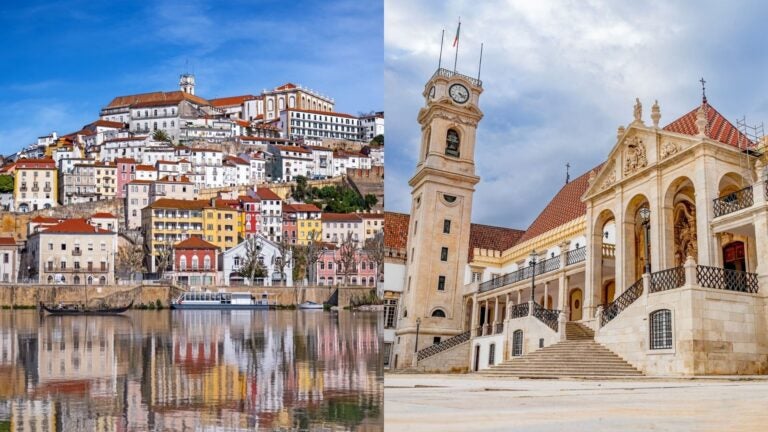
Coimbra’s home to the University of Coimbra and a major university hospital, giving it a stronger medical and educational infrastructure than its size might suggest. Housing remains relatively accessible by Portuguese coastal standards, and the median asking price is €2,442 per m² ($2,839), although prices had risen 15.1% year over year.
Honest note: The city’s hilly, and it lacks large international communities. It’s more suited to retirees who value hospitals, culture, and a walkable city over beach access.
Setubal: Best prices near Lisbon
Setubal’s great for retirees who want beaches as well as access to Lisbon without paying Lisbon’s housing prices. Its median asking price is €3,212 per m² ($3,735), about half the prices in Lisbon. The city has an easy pace of life, and Lisbon remains within reach for specialist services, international flights, and major cultural events.
Honest note: Setubal faces the same increasing heat and wildfire risks affecting parts of southern Portugal.
Faro: Best for the Algarve with great amenities
Faro’s one of the best places to retire in Portugal if you want the Algarve but still need the infrastructure of a working city. It has the region’s international airport, hospitals, shops, and year-round services, rather than relying entirely on seasonal tourism. Moreover, the median asking price is €3,908 per m² ($4,544). You also get beaches, outdoor activities, and a large international community, making Faro one of the best places to retire in Portugal for foreigners.
Honest note: Faro is no longer as inexpensive as some older retirement guides describe. Summer heat and wildfire risk are additional considerations. Faro is best for retirees who want sunshine and access to the Algarve region but don’t want to live in a tiny resort town.
Tavira: Best for a quieter retirement
Tavira offers the Algarve lifestyle without quite as much resort town intensity as Albufeira. Its historic centre, beaches, and established foreign community make it one of the more appealing choices for retirees from the UK and US looking for the best places to retire in Portugal. Its lower housing costs than Cascais, established English-speaking community, and access to Faro Airport add to its appeal. And the median apartment price is about €3,100 per m² ($3,604).
Honest note: Nearby Faro’s healthcare services are sufficient enough, but some specialist care means travelling. Tavira also faces Algarve’s summer heat and increasing pressure on water resources.

Best places to retire in Portugal without the worst heat and wildfire exposure
Portugal does not have one specific climate issue that makes any region universally unsuitable, but heat, drought, water stress, and wildfire deserve more attention. The country experienced major wildfires and extreme heat during 2026, as part of a wider European summer of climate-related events.
For retirees who want to reduce exposure:
- Porto: Northern Portugal is wetter and generally cooler, although the trade off is much cloudier, wetter winters.
- Braga: A northern inland option with lower property prices but no beaches.
- Coimbra: Central location, and strong healthcare services.
- Viana do Castelo: A coastal northern alternative with pocket-friendly housing prices.
Lower climate exposure does not mean zero risk. Location, building quality, and access to services still matter.
Can you retire in Portugal on a fixed income?
Yes, but your location matters as much as your income. A single retiree can live on a modest budget in inland Portugal, while the same income can feel stretched in Lisbon, Cascais, or prime Algarve locations. And if English is your main language, finding the best place to live in Portugal for English speakers may also mean paying more for areas with larger international communities.
A modest single retiree’s budget in inland Portugal is roughly €1,200-1,600 per month ($1,395-1,860), compared with €2,000-2,800 ($2,325-3,255) for a couple in a mid-range coastal city, and €3,000-4,000+ ($3,488-4,650+) for a couple in places such as Cascais or the central Algarve. A retiree who owns a home outright can make a modest pension stretch much further than someone paying monthly rent. Your actual budget will depend on housing, healthcare, food, transport, and lifestyle, so look at the broader cost of living in Portugal before choosing where to settle.
Healthcare also needs to be included in your budget. Legal residents can access Portugal’s public Serviço Nacional de Saúde, while many foreign retirees combine public care with private insurance.
- For healthy people in their early to mid 60s, basic private policies can start around €60-90 ($70-105) a month.
- More comprehensive policies or cover purchased at older ages can cost €120-250 ($140-290) or more depending on the policy and individual circumstances.
Why Portugal is still worth considering for retirement
Portugal can be a good retirement option if you’re looking for a mild climate, access to healthcare, coastal living, and walkable cities. Retirees can enjoy Atlantic beaches, a slower pace of life, and many cities also have established foreign communities.
Safety is another strength; the 2025 Global Peace Index ranked Portugal 7th in the world.
Taxes in Portugal however, deserve professional advice before moving. The old Non-Habitual Resident program that helped make Portugal particularly attractive to foreign pensioners is no longer available to new arrivals. Portugal’s tax system now needs to be assessed based on your residency, pension source, income, and individual circumstances.
For US and UK retirees, currency and tax planning also matter. A Euro-based budget can look very different when your pension arrives in dollars or pounds, so leave room for exchange-rate changes.
If you’re still weighing Portugal against retiring in the US, you can compare what retirement looks like across the USA here.
Southeast USA:
- Best places to retire in North Carolina
- Best places to retire in South Carolina
- Best places to retire in Virginia
- Best places to retire in Georgia
- Best places to retire in Tennessee
- Best places to retire in Alabama
- Best places to retire in Florida
Southwest & Mountain West USA:
West Coast USA:
Northeast USA:
What to consider before retiring in Portugal
Before retiring in Portugal, consider housing costs, climate, healthcare access, and the current residency rules. These factors can affect how much you spend, where you choose to live, and how easily you settle into life in Portugal.
- Housing costs: Portugal’s property market is still rising. Asking prices have increased recently, with cities such as Lisbon, Coimbra, and Faro becoming more expensive.
- Climate: Southern Portugal faces heat, drought, water stress, and wildfire concerns. Northern cities trade sunshine for cooler, wetter weather.
- Healthcare: Public healthcare is available to legal residents, but access is not always instant. Anecdotally, recent discussions among Portugal expats describe waits of several months for some primary-care appointments and longer waits for specialists.
- Golden Visa: Portugal’s Golden Visa has changed. You can no longer get residency by buying a €350,000 apartment in Lisbon.
Still deciding whether Portugal’s the right fit? Compare it with other popular retirement options in our guides to the best places to retire in the US, best places to retire in the world, best places to retire in Mexico, and best places to retire in Spain. Looking at housing costs, healthcare, climate, and lifestyle side by side can make it easier to narrow down your options.
Stay connected wherever you go with Holafly
Retirement in Portugal doesn’t necessarily mean staying in Portugal all year. You might spend part of the year visiting family, return to your country, or travel around Europe while keeping Portugal as your home base.
While an eSIM for Portugal can help you stay connected within the country, if you travel frequently or split your time between countries, Holafly Plans gives you a consistent option across 160+ destinations, with Unlimited and Light tiers. The Unlimited plan also keeps your local US, UK or Canada number, which can be useful when you need bank verification codes while abroad.
Always On provides 1GB of backup data each month and activates automatically when needed. That means you can still get online when you need maps, messages, or an important call.

FAQ: Best places to retire in Portugal
Which part of Portugal is best for retirement?
The Algarve is best for sunshine, beaches and established expat communities. Northern and central cities such as Braga, Porto and Coimbra make more sense if housing costs, healthcare access, and a less tourist-focused lifestyle matter more.
Why are so many expats leaving Portugal?
Portugal has become more expensive, particularly in Lisbon, Porto and popular Algarve locations. Changes to tax benefits, bureaucracy, and healthcare waiting times are other reasons. That said, people are still moving to Portugal, with many choosing smaller towns instead of the most expensive expat hubs.
How much money do you need to retire comfortably in Portugal?
A single retiree living modestly inland may manage on around €1,200-1,600 per month ($1,395-1,860).
What are the pros and cons of retiring in Portugal?
The biggest advantages of retiring in Portugal are safety, climate, healthcare options, access to Europe, and a manageable cost of living outside the expensive areas. The downsides include rising property prices, tax changes, healthcare waiting times and increasing risks of heat and wildfires.
Plans that may interest you


With an MBA degree I used to put to good use in another life, I now write for both passion and profession! When not writing, I'm exploring the world, collecting stories and souvenirs along the way.