Language
Cost of living in Costa Rica 2026: Honest monthly budget guide
Discover what it really costs to live in Costa Rica with honest median figures for rent, food, transport, and healthcare, plus real expat insights.

Living in Costa Rica is more affordable than you might think, although it sits among the higher-cost countries in Central America. A single person living and working in Costa Rica as an average spender can expect to spend around $1,800 a month.
This guide covers the real cost of living in Costa Rica per month across housing, food, transport, healthcare and lifestyle, with city-level notes and expat context so you can judge whether the numbers support the life you intend on living.
Average cost of living in Costa Rica at a glance
These three lifestyle tiers use the same six categories and the same median assumptions that appear in a detailed budget section later. All amounts are in US dollars.
| Category | Low-spender | Average-spender | Big-spender |
|---|---|---|---|
| Rent: 1-bedroom | $500 | $850 | $1,400 |
| Groceries: One person | $240 | $320 | $500 |
| Public transport | $40 | $70 | $250 |
| Utilities | $60 | $90 | $220 |
| Meal at local restaurant (monthly) | $100 | $250 | $400 |
| Private health insurance | $100 | $220 | $350 |
| Estimated total | $1,040 | $1,800 | $3,120 |
Note: Low-spender figures assume a basic apartment outside the city center, local markets, buses only, and CAJA (Caja Costarricense de Seguro Social, also known as the CCSS) contributions only. Big-spender figures reflect an expat-oriented or coastal location, frequent dining out, rideshares or a car, and comprehensive private cover on top of CAJA.
Housing costs in Costa Rica
A one-bedroom apartment in the Central Valley typically costs $500–$1,100 a month, making housing the largest single line in the cost of living in Costa Rica for most newcomers, yet still well below equivalent US city rents.
Renting in San José: Studios and basic one-bedrooms in local neighborhoods often start around $450–$650. Mid-range options in safer, well-connected areas such as Rohrmoser, La Sabana or parts of Escazú commonly land between $750 and $1,100. Many leases include water and some building maintenance; electricity and internet are almost always extra. Landlords frequently ask for one month’s deposit plus the first month up front before you move in.
Renting in secondary towns: Atenas, Grecia, Heredia and smaller communities outside the Greater Metropolitan Area usually cost 20–40% less than San José’s popular zones for comparable space. These towns suit people who want quieter surroundings and lower utility bills. Coastal spots such as Tamarindo or Nosara often run 40–60% higher because of tourist demand and limited long-term stock.
Buying property: Foreigners can buy freehold in most of Costa Rica with few restrictions, though beachfront concessions follow different rules. Transaction costs and legal fees add up, so treat any purchase as a longer-term decision and work with a licensed local attorney. Most new arrivals tend to rent before buying property in Costa Rica.
Note: A local average salary after tax is far lower than a typical US remote or retirement income, so the same rent takes a much larger share of a Costa Rican paycheck than of a dollar salary. Users on Reddit often note that landlords in high-demand areas prefer USD leases and that well-maintained, secure buildings remain in short supply. These are anecdotal observations, not statistics. Rent increases on colón-denominated contracts (where the price is set and paid in Costa Rican colones) are capped by official inflation.
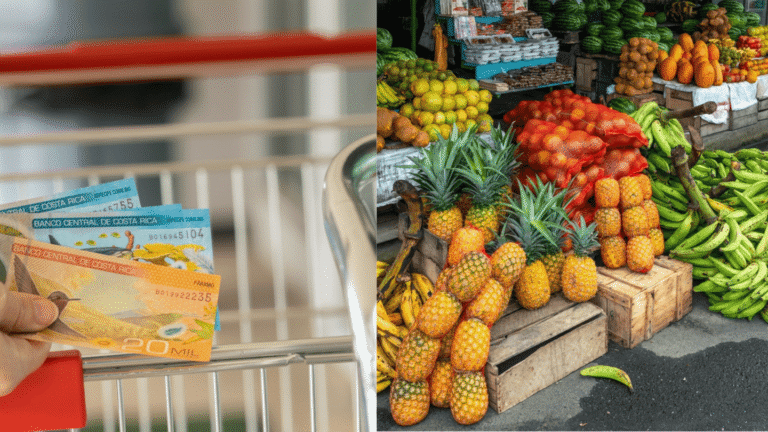
Food and grocery costs in Costa Rica
A single person who shops mainly at local markets and cooks at home can keep monthly grocery spending around $240–$350. This is for typical produce including rice, beans, eggs and chicken.
A full casado (lunch menu) at a neighborhood eatery costs approximately $5–$9. A meal for two at a mid-range restaurant (three courses, without drinks) typically runs $55–$60. Per person, expect $15–$25 for a main course plus a drink. Any preference for imported cheese, wine, or familiar US brands raises the bill quickly. For example, a block of imported cheese often costs $8–$15 and packaged US-brand cereals, snacks, and similar items commonly carry a 50–100%+ markup once import duties and taxes are applied.
Weekly ferias (local farmer’s markets) remain the best way to control food costs. Fresh produce, eggs, and many staples are regularly 30–50% cheaper (sometimes more) than the same items at supermarkets. The National Production Council (CNP) publishes weekly comparisons on Facebook.
Transport costs in Costa Rica
Public transport is realistic as a primary option inside the Central Valley. $40–$70 a month covers regular bus use for most people. Local city buses typically cost $0.60–$1.20 per ride (roughly ₡300–₡700). There is no monthly pass; you pay per trip. Longer intercity buses from San José run higher (e.g. to the coasts $8–$12 one way).
Outside the main urban corridors, a car becomes far more practical. However, this is where costs rise significantly:
- Fuel: around $5.00–$5.30 per gallon
- Annual marchamo (circulation tax + basic mandatory liability insurance): typically $200–$600+ depending on the vehicle’s value
- Full comprehensive insurance: often $600–$1,200 per year
- Routine maintenance: plan $50–$100+ per month on average (parts for popular models are available but imported components cost more)
Taxis and rideshares are affordable yet add up quickly if used daily:
- Short Uber or DiDi rides within San José: usually $4–$8
- Official red taxis on the meter: similar or slightly higher ($3–$7 for short trips)
- Airport (SJO) to downtown: Uber roughly $15–$25, official orange taxi $25–$35
Shared e-scooters and private bike or e-bike rentals appear in some urban and coastal spots for short hops, usually charged a few dollars per ride. Pure public-transport living works well for city-based remote workers but it can become limiting for weekend trips.
Healthcare costs in Costa Rica
Legal residents, including most expats on temporary or permanent residency, must enroll in the public CAJA. Monthly contributions are based on declared income and typically fall in the $80–$250 range depending on the residency category. The system covers doctor visits, hospital care and many prescriptions at no extra point-of-service charge.
Private insurance or out-of-pocket private care is common among expats who want shorter specialist wait times; individual plans often run $100–$250 a month on top of CAJA. Quality is generally high in major private hospitals around San José; rural clinics can be more limited. Long wait times for non-urgent specialists are common. Always verify current rates and coverage with a licensed broker or the CAJA office itself.
Monthly budget breakdown: What does life in Costa Rica actually cost?
The three totals below match the table earlier. They show what each lifestyle feels like rather than introducing new numbers.
Low-spender ($1,040): Basic one-bedroom outside the center, home cooking, buses only, minimal entertainment and CAJA-only coverage. Suits someone living carefully on a modest pension or reduced remote income who can adapt to local rhythms.
Average-spender ($1,800): Comfortable one-bedroom in a safe Central Valley neighborhood, mix of cooking and eating out, occasional taxis, regular small pleasures and standard private insurance alongside CAJA. This is the figure used in the introduction and works for most US remote workers or retirees with solid Social Security or investment income who want balance without excess.
Big-spender ($3,120): Higher-end or coastal apartment, frequent restaurant meals, car or heavy rideshare use, comprehensive private healthcare and more imported goods. Realistic for someone earning a full US salary who wants Western-style convenience, surfing at their doorstep, and is willing to pay the price.
Is Costa Rica cheaper than the US?
Yes. Overall the cost of living in Costa Rica is lower than in the United States for the categories that matter most day to day. Housing, local food, public transport and public healthcare contributions usually deliver the largest savings. Imported goods, brand-name products and housing in the most popular coastal or gated enclaves can approach or exceed US prices.
Currency risk is real for anyone whose income arrives in dollars while many local contracts are denominated in colones. The colón has strengthened in recent years, which reduces the purchasing power of a fixed USD budget.

Stay connected in Costa Rica and beyond with Holafly
If you are planning an extended stay or permanent move to Costa Rica, reliable internet from day one matters. You will likely travel within the region or back to your original home in the US or elsewhere, and managing bank verifications on a familiar number becomes a necessity. As a retiree or remote worker based in Costa Rica, you need connectivity that works across borders without hunting for a new SIM every trip and Holafly is the answer.
Holafly Plans offer a monthly subscription covering 160+ destinations.
The Unlimited Plan includes:
- Unlimited data
- Hotspot use
- A local US, UK or Canada number
The Light Plan suits moderate data needs.
Both include Always On, a free 1 GB monthly backup that activates automatically. No contracts, cancel any time. See our eSIM Costa Rica page.

FAQ: Cost of living in Costa Rica
How much income do I need to live in Costa Rica?
A realistic single-person budget starts around $1,000–$1,200 for a careful local lifestyle and rises to about $1,800 for comfortable average spending in the Central Valley. Couples commonly plan $2,500–$3,500 depending on location and habits. These figures assume legal residency and CAJA enrolment.
Can a US citizen live permanently in Costa Rica?
Yes. US citizens can apply for temporary residency categories such as Pensionado (minimum $1,000 monthly lifetime pension) or Rentista, then move toward permanent residency after meeting time and other requirements. Enrolment in CAJA is mandatory once residency is approved.
Can you live on $10,000 a month in Costa Rica?
Easily. $10,000 a month places you well into the upper tier and supports a spacious home in a desirable area, regular dining out, private healthcare, a vehicle and discretionary travel. Most people live comfortably on far less.
Is Costa Rica a good place to retire?
For many Americans it is. The climate, healthcare access through CAJA plus private options, and lower overall costs appeal to retirees. Success depends on choosing the right location for your budget and lifestyle and on handling residency and banking practicalities carefully.
Sources and methodology
Figures are drawn from the INEC Encuesta Nacional de Ingresos y Gastos de los Hogares 2024, Banco Central de Costa Rica exchange-rate data, and CAJA contribution guidance. Each persona total is the sum of the six listed categories using a single median value per category. Expat forum input supplements the data with practical experience.
- INEC ENIGH 2024 results
- BCCR exchange rates
- Caja Costarricense de Seguro Social (CCSS) – official site
- MIVAH – official rent adjustment page (2026 figures)
- r/CostaRica (2025–2026 threads)
Plans that may interest you


I've been a copywriter for over 12 years, working mostly in the retail industry. I've managed copywriting teams and contributed to major campaigns for F&F at Tesco, TK Maxx, and Dreams. Outside of work, I love to cook, and a fun fact about me is that I have a phobia of bananas—it's the smell!