







 Language
Best places to retire in Spain 2026: Honest guide for US retirees
From Valencia to the Costa del Sol, discover the best places to retire in Spain, with honest takes on costs, visas, taxes, and the best cities for every lifestyle & budget.

The best places to retire in Spain are not always the cities that dominate standard destination lists.
Instead of simply naming famous locations, this guide identifies the specific neighborhoods and nearby towns that work as year-round homes, not just holiday destinations.
You’ll find practical insight into housing, healthcare, transport, climate, and everyday life, alongside honest trade-offs that many retirement guides overlook.
Best places to retire in Spain at a glance
| Place | Region | Best for | Cost level | Walkable | Year-round |
|---|---|---|---|---|---|
| Valencia: Ruzafa / Benimaclet | Valencia | Best overall practical base | Medium | Yes | Yes |
| Cambrils / Salou / Tarragona | Costa Daurada | Affordable coast, real towns | Low to medium | Yes | Yes |
| Costa Brava: Girona, Palafrugell, L’Escala | Girona | Authentic Catalan coast | Low to medium | Partial | Yes |
| Alicante city center | Costa Blanca | Affordable urban coast | Low to medium | Yes | Yes |
| Jávea (Xàbia) | Costa Blanca | Quieter expat coast | Medium | Partial | Yes |
| Almería: El Zapillo / Nueva Almería | Andalusia | Affordable Mediterranean living | Low | Yes | Yes |
| Mijas: Mijas Pueblo / La Cala de Mijas | Costa del Sol | Village charm plus beach access | Medium | Partial | Yes |
| Palma: Santa Catalina / El Molinar | Mallorca | Island city living | High | Yes | Yes |
| Menorca: Mahón / Ciutadella | Menorca | Quieter island | Medium to high | Yes | Yes |
| Bilbao: Indautxu / Getxo | Basque Country | Urban Atlantic | Medium to high | Yes | Yes |
| San Sebastián: Parte Vieja / Gros | Basque Country | Premium Atlantic | High | Yes | Yes |
| Salamanca | Castilla y León | Affordable walkable inland | Low | Yes | Yes |
| Las Palmas: Triana / Ciudad Jardín | Gran Canaria | Year-round urban warmth | Medium | Yes | Yes |
The full breakdown below compares the best places to retire in Spain, focusing on daily life and the trade-offs to consider before choosing.
Why Spain attracts US retirees
Spain ranks third in the 2025 Global Citizen Solutions Retirement Index and first for quality of life. Around 50,600 Americans live there, attracted by strong healthcare, lower everyday costs than in the US, and direct flights from major US cities.
However, Spain ended its Golden Visa program for new applicants in April 2025, including the popular property investment route, making the Non-Lucrative Visa the main pathway for most US retirees. Renewal requires spending more than 183 days per year in Spain.
Those seeking long-term residency after five years face stricter rules: absences generally cannot exceed 10 months across that entire period, limiting snowbird arrangements.
Finances also require planning. Wealth tax rules differ significantly between regions, so location can affect the final bill for retirees with substantial assets.
Dollar-based income also carries currency risk, as a stronger euro reduces the local spending power of Social Security and other US income.
The right way to choose where to retire in Spain
Choosing where to retire in Spain is less about the city’s reputation and more about whether daily life works there throughout the year.
For retirees, choosing the neighborhood before the city often leads to a better fit and avoids areas that become quiet or overly tourist-focused outside peak season.
Look for an established residential population, walkable access to markets, pharmacies, and essential services, and healthcare within practical reach. Reliable public transport or manageable car access also matters.
The most sustainable locations combine an international community with local Spanish life rather than catering almost exclusively to expats.
Best places to retire in Spain: Practical picks by lifestyle
The following locations match different retirement priorities while focusing on the neighborhoods and towns that work best for year-round living.
Valencia: Ruzafa and Benimaclet

Ruzafa combines a walkable street grid and the Mercado de Russafa with a lively, year-round mix of Spanish and international residents.
Benimaclet offers a quieter, more traditional atmosphere and generally better value, although its university population gives some streets a younger feel.
Both neighborhoods have good public transport connections, and Hospital La Fe is within practical reach.
A 700-square-foot apartment would cost approximately $1,520 per month in Ruzafa and $1,275 in Benimaclet at current asking rates, but strong demand means retirees should search early and act quickly after a suitable viewing.
Cambrils, Salou, and the Tarragona coast: Affordable coast with real infrastructure
This stretch of the Costa Daurada offers established towns, practical services, and lower housing costs than Valencia or Barcelona, with current asking rents for smaller apartments typically around $800–1,000 per month in Cambrils and Tarragona.
Cambrils is the strongest all-round choice, combining a working fishing port, municipal market, walkable center, and a residential atmosphere that continues through winter.
Tarragona provides broader urban services and UNESCO-listed Roman heritage, while Salou suits retirees who value a quieter pace from October to May, when advertised rents can fall to around $600–850 per month.
Across all three, the main advantage is access to specialist care at Hospital Joan XXIII, nearby Reus Airport, and trains to Barcelona taking under an hour from Camp de Tarragona station.
Costa Brava: Girona, Palafrugell, and L’Escala
Beyond its summer resorts, the Costa Brava has established Catalan towns with active markets, year-round populations, and access to Girona for major services.
Girona is the practical anchor, with a walkable historic center, Hospital Universitari Doctor Josep Trueta, and current asking rent of around $975 per month for a 700-square-foot home.
Palafrugell offers local shops, regular buses to Girona, and better value than nearby Calella, Llafranc, or Tamariu, while L’Escala provides a quieter fishing-town atmosphere near the Empúries ruins; smaller apartments in both towns generally list for around $900–1,150.
Girona’s high-speed trains reach Barcelona in approximately 37 minutes, placing major healthcare, international flights, and city infrastructure within easy reach without Barcelona housing costs.
Alicante city center: Ensanche and Carolinas Bajas

Central Alicante offers year-round Spanish city life, with an estimated monthly budget of $1,800–2,400 for a single retiree.
Ensanche is the most convenient choice, with wide avenues, Mercado Central, and rents of about $980 for a 700-square-foot apartment, while quieter Carolinas Bajas has a more residential atmosphere and apartments around $900–1,100.
The Hospital General Universitario Doctor Balmis provides specialist care.
Alicante’s extensive bus and TRAM networks make a car unnecessary for daily life in the city center, although one is useful for exploring the wider Costa Blanca.
Jávea (Xàbia): Best for quieter expat coastal living
Protected by the Montgó massif, Jávea combines a mild microclimate with a large international community, English-language services, and a year-round population of more than 30,000.
Its three main areas offer different lifestyles: the old town is the most traditional and averages around $900 for a 700-square-foot apartment, the port is more residential at roughly $1,100, and the livelier Arenal beach area is closer to $1,200.
Hospital de Dénia provides specialist care around 20–30 minutes away, while direct buses connect Jávea with Alicante and Valencia.
A car is essential for moving between the town’s three areas and handling daily life comfortably, as local public transport is limited and Jávea is not a genuinely walkable retirement option.
Almería: El Zapillo and Nueva Almería
El Zapillo draws a livelier, younger crowd with its beachfront setting and active nightlife, while Nueva Almería offers modern apartments, shopping, and strong transport links, making it the better fit for retirees who want quieter, more residential living.
Both benefit from Almería’s lower cost of living, with daily costs running well below Madrid and rent estimated at over 50% lower than the capital. It’s a solid pick for retirees who want genuine Spanish daily life and real savings, without the built-up, English-first feel of the busier Costa del Sol towns.
Mijas: Mijas Pueblo and La Cala de Mijas
Mijas Pueblo delivers the classic whitewashed hilltop village experience, with an established expat community, international schools, and English-speaking health clinics that make daily life easy without losing the authentic Andalusian setting.
La Cala de Mijas, down on the coast, trades the village charm for beach access and a more laid-back resort feel, popular with retirees who want the water closer than the mountains. Together they give this one municipality both a mountain-village and a beach-town option, a rare combination on the Costa del Sol.
Palma de Mallorca: Santa Catalina and El Molinar
Palma is Mallorca’s most realistic full-time retirement base, with year-round services and specialist care at Son Espases Hospital.
Santa Catalina offers a popular market, regular buses, and an active local and international community, with a 700-square-foot apartment costing around $1,530.
Quieter El Molinar offers seaside living for roughly $1,450, while a single retiree should budget $2,800–3,250 per month overall.
Palma Airport provides year-round connections to the US through major European hubs and seasonal nonstop service to the New York area, but Palma is considerably more expensive than comparable mainland cities, with further price pressure during summer.
Menorca: Mahón and Ciutadella
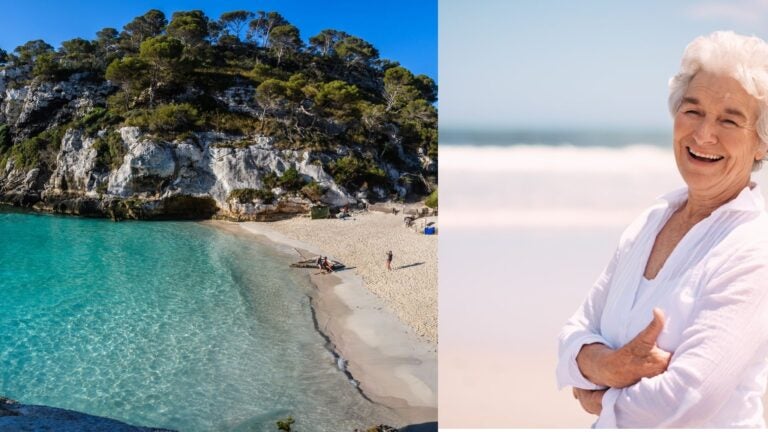
Menorca is the quieter Balearic choice for retirees who want genuine island life without Palma’s crowds or prices.
Mahón offers the island’s strongest infrastructure, including Hospital Mateu Orfila, a weekly market, and a walkable harbor, with long-term rentals generally around $900–1,300 per month.
Ciutadella has a more characterful historic center and stronger Menorcan identity, but rents are now broadly comparable with Mahón; a single retiree should budget roughly $1,800–2,600 monthly in either town.
Winter flights are largely limited to hubs such as Barcelona, Madrid, and Palma, while ferries to the mainland provide a slower alternative, so check current schedules before committing.
Bilbao: Indautxu and Getxo
Bilbao is often overlooked in retirement guides, despite its mild Atlantic climate, strong public transport, and cooler summers than Mediterranean Spain.
Walkable Indautxu offers metro connections, Hospital de Basurto nearby, and easy access to Mercado de la Ribera, with a 700-square-foot apartment costing around $1,260 per month. Coastal Getxo is quieter and around 20–30 minutes away by metro, although comparable rent is only slightly lower at roughly $1,160.
Bizkaia has its own income and wealth tax rules: pensions, interest, dividends, capital gains, and substantial assets may be taxed differently than elsewhere in Spain, so US retirees should have a local specialist assess their income and the US–Spain tax treaty before committing.
San Sebastián: Parte Vieja and Gros
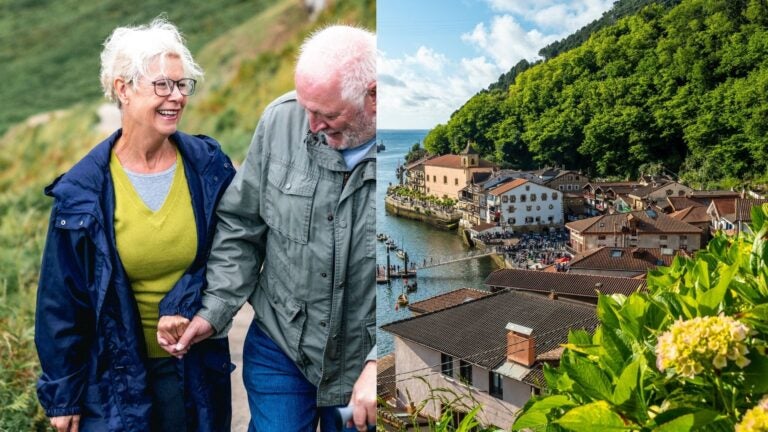
Compact and walkable, San Sebastián combines mild Atlantic weather, excellent bus and Euskotren connections, renowned food, and specialist care at Hospital Universitario Donostia.
Atmospheric Parte Vieja places retirees in the historic center, although nightlife makes it noisier; a 700-square-foot apartment costs roughly $1,510 at current central asking rates. Gros offers a quieter residential setting beside Zurriola Beach, with similar apartments averaging around $1,500 per month.
San Sebastián is among Spain’s most expensive rental markets, and Gipuzkoa has its own income and wealth tax rules, so retirees should examine both housing costs and their tax position carefully.
Salamanca: Best walkable affordable inland city
Salamanca is an underrated retirement base, combining a calm atmosphere with one of Spain’s most beautiful and walkable historic centers.
Hospital Universitario de Salamanca provides specialist care, while markets, pharmacies, and everyday services are generally within walking distance.
Direct trains connect Salamanca with Madrid in as little as 1 hour 40 minutes, although the continental climate brings cold winters, with January lows averaging around 34°F.
A 700-square-foot apartment costs approximately $800 per month, keeping a single retiree’s overall budget near $1,400–1,700 without sacrificing walkability or healthcare quality.
Las Palmas de Gran Canaria: Triana and Ciudad Jardín
Las Palmas is a working city of around 400,000 residents, with year-round mild weather, a genuine city beach at Las Canteras, and specialist care at Hospital Universitario Doctor Negrín.
Walkable Triana offers local markets, frequent buses, and a lively residential mix, with a 700-square-foot apartment costing roughly $970 per month.
Ciudad Jardín is quieter and more residential, with comparable rents around $1,050; across Las Palmas, a single retiree should budget approximately $1,500–2,100 per month.
This is the only destination on the list combining genuine year-round warmth with urban infrastructure at a mid-range cost, although travel to the US requires a connection through Madrid or another European hub.
Best places to retire in Spain by the sea: Practical coastal options
The difference between a good and bad coastal retirement often comes down to whether a town remains active year-round or sees many businesses and services close after October.
- Cambrils: Affordable fishing town with a market and hospital care 15 minutes away.
- L’Escala: Authentic Catalan town near Greek and Roman ruins; a car is helpful.
- Alicante city center: Affordable, walkable urban coast with tram access and year-round life.
- Jávea: Established expat community and quieter pace, but a car is essential.
- El Molinar, Palma: Walkable, residential sea access within a functioning island city.
- Las Canteras, Las Palmas: City beach beside residential neighborhoods with year-round warmth.
Before committing, return in November or February. A winter visit reveals whether local services, social life, and transport remain practical once the summer crowds leave.
Spain retirement visa: What US retirees need to know in 2026

The Non-Lucrative Visa is now the primary legal pathway for US retirees in Spain after the Golden Visa closed to new real estate applicants in April 2025.
Applicants must demonstrate funds equal to 400% of IPREM, currently around $2,780 per month, plus roughly $695 for each dependent. They also need Spanish-authorized health insurance covering care without copayments, deductibles, waiting periods, or coverage limits.
Applications are submitted through the appropriate Spanish consulate or visa center in the US before departure.
The initial permit lasts one year and can be renewed before qualifying for long-term residency after five years. To preserve continuity for that status, absences generally cannot exceed six consecutive months or 10 months in total across five years.
If you spend more than 183 days a year in Spain, you will usually become a tax resident, so review our guide toSpain taxes for expats before setting your retirement budget.
Requirements vary by consulate, so verify them before applying.
Pitfalls of retiring to Spain from USA
Spain is an excellent retirement destination, but several pitfalls catch US retirees off guard that most guides do not cover honestly.
- Wealth tax: Location matters. Madrid and Andalusia offer broad relief, although the state large-fortunes tax can apply; other regions use different allowances and rates.
- Basque tax regime: Bilbao and San Sebastián follow separate foral systems, requiring locally qualified tax advice.
- The 10-month absence rule: Long-term residency applicants generally cannot spend more than 10 months outside Spain across five years, making regular extended US stays difficult.
- Bureaucracy: Visa decisions may take three months, with apostilles, translations, and NIE procedures adding delays.
- Currency risk: With the euro near $1.16, a weaker dollar makes the same Spanish lifestyle more expensive.
- Rising rents in popular areas: Asking rents in coastal cities such as Valencia and Alicante rose roughly 7–9% annually in 2026.
Spain is only one of several options available to US retirees. Explore our guide to the best places to retire in the world and compare it with these retirement destinations in the US and Mexico:
- Best places to retire in Florida
- Best places to retire in California
- Best places to retire in Texas
- Best places to retire in North Carolina
- Best places to retire in South Carolina
- Best places to retire in Virginia
- Best places to retire in Arizona
- Best places to retire in Tennessee
- Best places to retire in Georgia
- Best places to retire in Colorado
- Best places to retire in the US
- Best places to retire in Mexico
Stay connected in Spain and beyond with Holafly
For US retirees based in Spain, reliable mobile access matters when visiting family, traveling around Europe, or managing American bank accounts from abroad.
An eSIM for Spain provides unlimited data and can be installed by QR code before departure, avoiding a store visit on arrival.
Frequent travelers may prefer Holafly Plans, a contract-free monthly service covering more than 160 destinations.
The Unlimited Plan includes unlimited data and hotspot use, plus a US, UK, or Canadian number for bank and verification codes, while the Light Plan provides 25GB for moderate use. Both can be cancelled at any time.
Always On adds a useful safety net, automatically providing 1GB of backup data that refreshes every month.

FAQ: Best places to retire in Spain
What part of Spain is best to retire to?
For most US retirees, Ruzafa in Valencia offers the strongest balance of walkability, services, climate, and cost. Choose Cambrils or Girona for authentic Catalan life, Alicante for an affordable urban coast, Salamanca for low-cost walkability, Las Palmas for year-round warmth, or Bilbao and San Sebastián for an Atlantic lifestyle.
How much money do I need to retire comfortably in Spain?
A single retiree should budget approximately $1,700–2,800 per month for a comfortable lifestyle in Spain. San Sebastián and Palma sit near the upper end, while Salamanca and Cambrils are closer to the lower end; Non-Lucrative Visa applicants must currently demonstrate around $2,780 in monthly funds regardless of their actual spending.
Where is the cheapest place to retire in Spain?
Salamanca is the cheapest well-equipped option in this guide, with a comfortable monthly budget of roughly $1,400–1,700 for one retiree. The Tarragona coast, Alicante city center, and Las Palmas are affordable alternatives for those who want coastal living without giving up hospitals, transport, and year-round services.
What are the pitfalls of retiring to Spain?
The main pitfalls are regional wealth taxes, separate Basque tax rules, and Spain’s 10-month absence limit. Retirees should also prepare for slow bureaucracy, rising coastal rents, and exchange-rate movements that reduce the value of dollar-based income.
Plans that may interest you


Hi! I'm a Spanish-English copywriter working with Holafly, helping bring travel content to life for curious travelers. As a digital nomad with a passion for exploring, I'm always adding new spots to my bucket list. If you love to travel like me, stick around because you're in the right place to find inspiration for your next trip! ✈️🌍
