Language
Best places to retire in Colorado 2026: Honest guide for every budget
From Fort Collins to Pueblo, discover the best places to retire in Colorado, with our takes on costs, taxes, and the most affordable picks for every type of retiree.

The best places to retire in Colorado have almost everything a retiree could ask for. There’s outdoor access, strong healthcare, and an excellent tax setup. In fact, Colorado ranks 4th nationally in WalletHub’s 2026 retirement ranking. And its sunny climate remains a major draw. But, the state’s not cheap.
This guide breaks down the best places to retire in Colorado by lifestyle and budget, from Fort Collins and Colorado Springs to Pueblo and Grand Junction. It also covers the financial case for retirement here, the downsides many guides just gloss over, and which cities make the most sense on a fixed income.
Best places to retire in Colorado at a glance
| City | Best for | Cost level | Mountains | Near water |
|---|---|---|---|---|
| Fort Collins | Best overall value | Medium | Close | No |
| Colorado Springs | Affordable Front Range | Medium | Yes | No |
| Pueblo | Most affordable overall | Low | Close | Yes |
| Boulder | Premium active retirement | Very high | Yes | No |
| Durango | Southwest mountain lifestyle | High | Yes | Yes |
| Montrose | Budget mountain gateway | Low to medium | Yes | No |
| Grand Junction | Budget western slope | Low to medium | Yes | Yes |
| Loveland | Affordable Front Range arts | Medium | Close | No |
These are some of the best places in Colorado to retire, but the right one for you depends on your budget, healthcare needs, and tolerance for winter.
Best places to retire in Colorado: Top picks by lifestyle
The best places in Colorado to retire depend on what you value most. Our top picks cover everything from active college towns and mountain communities to affordable cities where your retirement budget can stretch further.
Fort Collins: Best overall value
Fort Collins is the best city to retire in Colorado if you want an active college town without paying Boulder prices. Colorado State University keeps the city lively, while its cycling network, arts scene, and access to healthcare through UCHealth Poudre Valley Hospital make daily life easy for retirees. The median home sale price is about $560,000.
Honest note: The trade off is that Fort Collins has become considerably more expensive as its popularity has grown.
Colorado Springs: Best affordable Front Range city
Colorado Springs is Colorado’s second largest city and one of the best places to retire in Colorado if you want quick access to mountains without paying Denver’s housing costs. Pikes Peak provides the backdrop, while Fort Carson, Peterson Space Force Base and NORAD give the city a strong military and veteran community. UCHealth Memorial Hospital ranks 2nd among Colorado hospitals. Homes are significantly more affordable too, with a median sale price of about $450,000.
Honest note: The trade off is the city’s sprawling layout. Most neighborhoods are car dependent, and walkability is limited outside a few central areas.
Pueblo: Most affordable overall
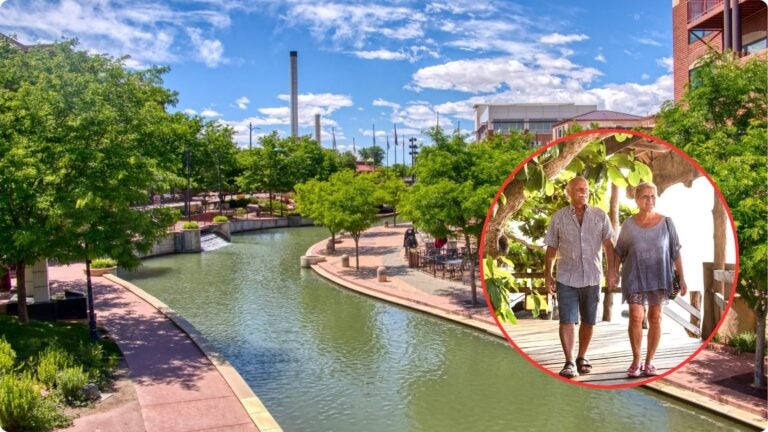
Pueblo comes with amazing views, and you won’t even have to pay Colorado’s typical housing prices; homes here cost about $245,000. The Arkansas River runs through the city, Pueblo Reservoir offers boating and fishing opportunities, and the Riverwalk and local arts scene give the city more to do than what you might expect.
Honest note: Healthcare is limited, although Colorado Springs is roughly 45 minutes north if you want specialized medical services.
Boulder: Best for premium active retirement
Boulder is perfect for retirees who want hiking, cycling, fitness, and culture woven into everyday life. The Flatirons, Boulder Creek Path, and the University of Colorado offer an active environment. And the city has access to major healthcare providers. The median home sale price is about $854,000.
Honest note: Housing costs make it one of the least practical choices on this list.
Durango: Best for southwest mountain lifestyle
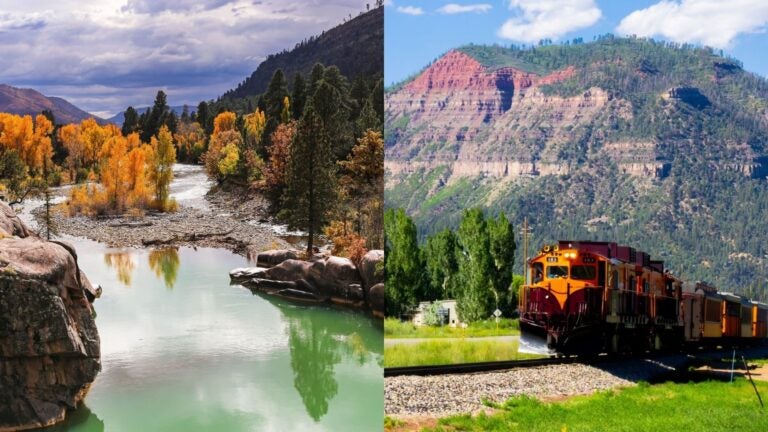
Durango is the best city to retire in Colorado if you want that classic mountain retirement lifestyle without being a ski resort town, you know what I mean? The Animas River runs through downtown, while the San Juan Mountains, Mesa Verde National Park and the historic Durango and Silverton Narrow Gauge Railroad give retirees plenty to explore. The city has a growing retiree population, but it’s considerably more expensive than eastern Colorado cities. Homes have a median sale price of about $705,000.
Honest note: Durango has fewer health specialist services than larger Colorado cities. Albuquerque, New Mexico is the nearest major medical center, which is roughly 3 hours south.
Montrose: Best budget mountain gateway
Montrose is one of the best places to retire in Colorado if you want mountain access without paying resort town prices. The city’s a gateway to Black Canyon of the Gunnison National Park, and the Uncompahgre Plateau. Montrose Regional Health provides a growing healthcare network. Homes have a median sale price of about $439,000, making Montrose considerably more affordable than nearby mountain communities.
Honest note: Montrose is a smaller city with fewer cultural and entertainment options than Colorado’s larger cities. But, Telluride is about 65 miles away, giving you access to skiing when you want it without having to live there.
Grand Junction: Best for budget western slope living
Grand Junction’s perfect if you want outdoor access, wine country, and relatively manageable housing costs. The Colorado River, the Colorado National Monument, and the Grand Valley vineyards provide plenty to do, while St. Mary’s Medical Center serves as an important regional healthcare provider. The median sale price is about $429,000.
Honest note: Temperatures climb above 95°F in the summers, and the landscape feels more desert-like than mountain towns.
Loveland: Best affordable Front Range arts community
Loveland is a smart middle ground for retirees who want Front Range amenities without paying Fort Collins or Boulder prices. Known as the Sculpture Capital of the U.S., it has hundreds of outdoor sculptures, while the Big Thompson River, and nearby Loveland Ski Area offer plenty of recreational activities. The median home sale price is about $500,000.
Honest note: Specialist healthcare is limited. But, its location about 15 miles south of Fort Collins gives you access to a larger healthcare network.
Best places to retire in Colorado on a budget
Affordable retirement in Colorado means looking south of Denver along the Front Range or west toward the Western Slope. This is where housing costs are generally lower than Denver, Boulder and the state’s mountain resort towns.
Pueblo: Housing’s well below the Colorado norm. Plus it’s got the Arkansas River, Pueblo Reservoir, and an active arts scene.
Montrose: A practical base for exploring Black Canyon and the San Juan Mountains.
Grand Junction: A western slope option with river access, vineyards, and warmer winters.
Loveland: A budget-friendly Front Range choice, with Fort Collins close enough to fill gaps in healthcare and entertainment.
But these cities require realistic budgeting. Pueblo is unusually affordable, with overall living costs about 7% below the national average, but much of Colorado remains more expensive than the country overall. For a broader comparison, see our guide to cost of living in the US.
Is Colorado a good state to retire in financially?
Yes, but only if you choose your city carefully, and take advantage of its retirement tax breaks. The state does not impose an estate or inheritance tax, and qualifying retirees can receive deductions for Social Security, pensions, and annuities.
Colorado’s current tax advantages include:
- Social Security: People 65 and older can subtract taxable Social Security benefits, while those 55 to 64 can claim the full subtraction when federal adjusted gross income is $75,000 or less for single filers, or $95,000 or less for joint filers.
- Pensions and annuities: The subtraction is up to $20,000 for qualifying taxpayers under 65, and $24,000 for those 65 and older.
- Low income seniors: Colorado also offers a Property Tax, Rent and Heat rebate for qualifying older residents.
What is the downside of living in Colorado?
The biggest downsides are altitude, housing costs, wildfire exposure, and winter weather. None automatically rules out the state, but each deserves attention before you buy a home.
- Altitude: Denver sits at about 5,280 feet, while other mountain cities and towns are much higher. Anyone with health conditions that could be affected by altitude should discuss a move with their doctor and spend time at the intended elevation before committing.
- Cost: Colorado’s affordable cities are the exception rather than the rule. Boulder and Durango can be especially difficult to justify on a fixed retirement income.
- Wildfire risk: Mountain and foothill properties need extra scrutiny because wildfire exposure can affect both insurance availability and premiums. Colorado introduced a FAIR Plan as a last resort for eligible homeowners who cannot obtain coverage through the private market.
- Winters: Front Range cities have milder winters, but retirees who want warm weather year round may find Colorado frustrating.
If you’re comparing the best places to retire in the US, these guides may help you make a more informed decision:
- Best places to retire in Florida
- Best places to retire in California
- Best places to retire in Texas
- Best places to retire in Virginia
- Best places to retire in Arizona
- Best places to retire in South Carolina
- Best places to retire in North Carolina
- Best places to retire in Tennessee
- Best places to retire in Georgia
Stay connected wherever you go with Holafly
For those who use Denver International Airport to escape winter or travel internationally, staying connected does not have to mean buying a SIM every time.
A destination Holafly eSIM lets you install your connection before departure with a QR code, so there is no store visit or physical SIM swap. For frequent travelers, Holafly Plans cover 160+ destinations, with an Unlimited option that includes unlimited data, hotspot and a local U.S., UK, or Canadian number for eligible plans. The Light option provides 25GB for moderate users, and both can be cancelled anytime.
There’s also Always On, which automatically provides 1GB of free backup data every 30 days at no extra cost. If you’re staying in Colorado, see the Colorado eSIM options.

FAQ: Best places to retire in Colorado
Where do most retirees live in Colorado?
Most live along the Front Range, particularly around Fort Collins, Colorado Springs, Denver’s suburbs and Loveland. This is where healthcare and everyday services are easier to access. Mountain towns attract active retirees with larger budgets, and western slope cities such as Grand Junction and Montrose appeal to people seeking outdoor access at a lower cost.
Is Colorado a good state to retire in financially?
Colorado can work well financially because it has no estate or inheritance tax, and offers significant deductions for qualifying Social Security, pension and annuity income. The trade off is that housing and living costs remain high in many of the state’s most desirable communities.
Where is the cheapest and safest place to live in Colorado?
Pueblo’s a strong choice for affordability, Montrose’s a quieter alternative with access to mountain recreation, and Grand Junction’s another strong western slope option. But, please compare current neighborhood level crime, insurance, and housing data rather than relying on a statewide ranking.
What is the downfall of living in Colorado?
The biggest drawbacks are altitude, housing costs, wildfire risk, and winter weather.
Plans that may interest you

With an MBA degree I used to put to good use in another life, I now write for both passion and profession! When not writing, I'm exploring the world, collecting stories and souvenirs along the way.