Language
Best places to retire in North Carolina 2026: Honest guide for every budget
From Asheville to Wilmington, find the best places to retire in North Carolina, with honest takes on costs, taxes, and which cities work on a budget.

If you’re looking for the best places to retire in North Carolina, you’ll be pleased to know that North Carolina ranks among the more attractive US retirement states thanks to: Cost of living a few points below the national average, no state tax on Social Security, a mild four-season climate, and landscapes that stretch from the Blue Ridge Mountains to Atlantic beaches.
This helpful guide covers best places to live in North Carolinaby by lifestyle and budget, with clear notes on home prices, healthcare access, taxes, and the trade-offs that matter once you actually live in North Carolina as a retiree.
Best places to retire in North Carolina at a glance
Here’s a quick overview of the best cities to retire in North Carolina we cover in this guide. Full details and current median home prices follow below.
| City | Best for | Cost level | Near water | Mountains |
|---|---|---|---|---|
| Asheville | Mountain arts & outdoors | Medium-high | Rivers | Yes – Blue Ridge |
| Wilmington | Coastal retirement | Medium | Yes – beaches | No |
| Charlotte | Big-city amenities | Medium | Lakes nearby | Close to foothills |
| Raleigh | Healthcare & learning | Medium | No | No |
| Pinehurst | Golf & mild climate | Medium-high | No | No |
| Hickory | Budget foothills | Low to medium | Lakes nearby | Foothills of Appalachians |
| Winston-Salem | Affordable culture | Low to medium | No | Close |
| Fayetteville | Budget & military-friendly | Low | No | No |
Best places to retire in North Carolina: Top picks
Each of these cities in North Carolina offer a different mix of cost, climate, and daily lifestyle.
Asheville: Best for mountains and an outdoorsy lifestyle
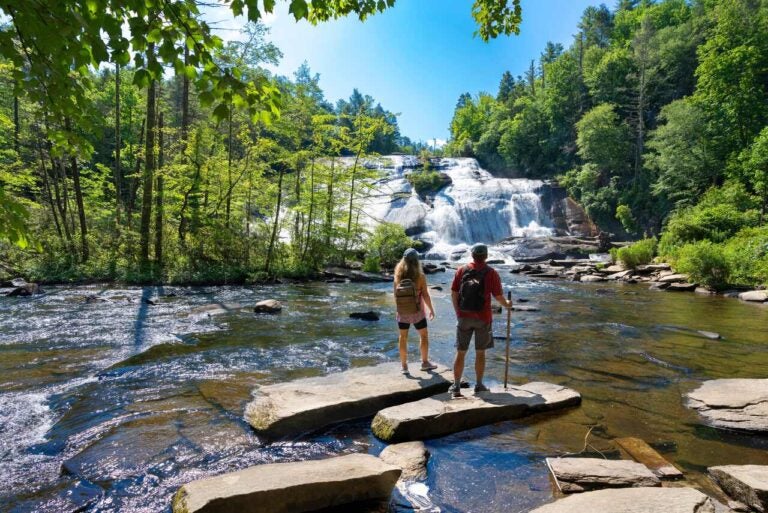
Asheville sits in the Blue Ridge Mountains and remains the most talked-about mountain retirement destination in the Southeast. Downtown is walkable, packed with independent restaurants, galleries, and a lively food scene that uses local ingredients. The Blue Ridge Parkway runs right past the city, and Great Smoky Mountains National Park is within easy reach. July highs average around 82°F, which makes summer outdoor time comfortable.
Median home prices run in the mid-$400,000s, which is higher than most of the state, and the cost of living sits a few points above the national average. Healthcare is solid for a city of this size, though specialist wait times can stretch during peak seasons.
If you want four-season scenery, a creative community, and trail access without driving hours, Asheville still delivers. Just keep these points in mind:
- Home prices and short-term rental demand have pushed many retirees toward nearby Hendersonville or Brevard for a similar mountain feel at a lower cost.
- Specialist care is available, but wait times can lengthen in high season.
Wilmington: Best for coastal retirement

Wilmington gives you Atlantic beaches, including Wrightsville, Carolina, and Kure, without the extreme hurricane insurance costs that hit some Florida markets. The historic downtown sits along the Cape Fear River with shops, restaurants, and a growing arts scene. Winters stay milder than inland cities, and the pace feels more relaxed than the major metros. Median home prices land near $400,000, and overall cost of living runs a few points below the national average.
Healthcare access is good for a mid-size coastal city, though complex care sometimes means a drive to Raleigh or Charleston. Beach communities carry real storm risk, so check current insurance quotes carefully before you buy. For retirees who want sand, mild winters, and a walkable historic core, Wilmington is the strongest coastal option in the state.
Note: Flood-zone maps and homeowners insurance availability shift after major storms. Verify both before committing.
Charlotte: Best for big-city amenities
Charlotte is the largest city in North Carolina and delivers the full range of urban amenities including professional sports, museums, performing arts, and a strong hospital network. Cost of living sits near or slightly below the national average, and median home prices hover in the low-to-mid $400,000s depending on the neighborhood.
Banking and corporate headquarters create volunteer and part-time work options that some retirees appreciate. You’re also within an easy drive of the foothills and a few hours from both mountains and coast.
Traffic is real, especially in the growth corridors, and some neighborhoods feel more suburban than walkable. If you want major-city healthcare, culture, and services without the price tag of Raleigh’s pricier suburbs, Charlotte remains a strong choice.
Raleigh: Best for healthcare

Raleigh sits at the heart of the Research Triangle with Duke, UNC Chapel Hill, and NC State nearby. That university cluster brings world-class hospitals, continuing-education options (NC State lets residents 65+ audit many courses tuition-free), and a highly educated community. Median home prices run in the mid-$400,000s, and the overall cost of living is competitive with other mid-size Southern metros.
Greenways, parks, and a lively downtown make daily life active without requiring a car for every errand. Healthcare is one of the strongest draws thanks to Duke University Hospital and UNC Hospitals ranking among the best in the region. The trade-off is higher demand for housing near the universities and a faster growth pace than smaller cities. For retirees who prioritize medical access and intellectual stimulation, the Triangle is hard to beat.
Pinehurst: Best for golf
Pinehurst and the surrounding Sandhills towns form one of the most established golf-focused retirement areas in the US. Roughly 40 courses lace the region, led by the historic Pinehurst Resort. The climate is mild, winters are short, and the village itself has a quiet, planned feel. Median home values sit in the mid-$400,000s, higher than many smaller North Carolina towns but still below comparable golf destinations in Florida or Arizona.
Healthcare access is solid for the size of the community, and the air quality and low crime rates consistently score well. If golf is central to your retirement vision, few places match the depth of courses and the supporting infrastructure.
Hickory: Best budget Foothills option
Hickory sits in the foothills of the Appalachians about an hour from both Charlotte and Asheville. It offers mountain access and lower housing costs without full rural isolation. Median home prices are in the mid-$200,000s.
- Cost of living runs well below the national average.
- Lakes for boating and fishing, plus trails into the mountains.
- Quieter pace than the bigger metros.
- Healthcare costs rank among the lower figures in the state.
The arts scene is modest but active and the surrounding furniture and manufacturing heritage gives the area an unpretentious character.
Note: Specialist care for complex conditions usually means a drive to Charlotte or Winston-Salem. Local specialist networks are thinner than in the Triangle or Charlotte which means it’s best you confirm Medicare Advantage plan coverage before you move.
Winston-Salem: Best affordable cultural city

Winston-Salem sits between the mountains and the coast with a diversified economy, solid healthcare, and a lower cost of living than Raleigh or Charlotte. Median home prices hover around the mid-$250,000s. The city has a notable arts and music scene, nearby vineyards in the Yadkin Valley, and a growing food culture. It’s large enough for good hospitals and restaurants yet small enough that daily life doesn’t feel overwhelming. Cost of living runs several points below the national average, which stretches retirement income further.
If you want urban amenities without the higher prices of the Triangle or Charlotte, Winston-Salem offers a balanced middle ground.
Fayetteville: Best budget option
Fayetteville is one of the more affordable mid-size cities in the North Carolina state, with median home prices in the low $200,000s and a cost of living several points below the national average. The presence of Fort Liberty (formerly Fort Bragg) creates a large community of military retirees and strong VA healthcare access. The Sandhills setting is flat and warm, with easy drives to both the coast and the Piedmont.
Amenities are solid for the price because you have parks, museums, and a growing downtown, but the overall cultural and dining scene is quieter than in Charlotte or Asheville. For veterans and anyone prioritizing low housing costs plus reliable medical access, Fayetteville remains a practical choice.
Best places to retire in North Carolina near water
If water access is high on your list, North Carolina offers both ocean and inland options.
- Wilmington and the surrounding beaches give the strongest Atlantic access with a historic downtown and milder winters.
- New Bern sits at the confluence of the Trent and Neuse Rivers with a lower price point and a historic small-city feel.
- Lake Norman area (north of Charlotte) offers inland lake living with stronger infrastructure and fewer hurricane concerns.
Note: Coastal properties carry storm and flood risk. Inland lakes trade ocean views for lower insurance complexity in most years.
Best places to retire in North Carolina in the mountains
The Blue Ridge and Appalachian foothills draw retirees who want cooler summers and four-season scenery.
- Asheville remains the cultural and outdoor hub, with the highest prices and the densest concentration of restaurants and trails.
- Hickory and surrounding foothill towns deliver mountain access at a noticeably lower cost.
- Hendersonville and Brevard sit close to Asheville with a quieter pace and often better value on housing.

North Carolina taxes and cost of living for retirees
North Carolina does not tax Social Security. Other retirement income is taxed at a flat 3.99% rate for 2026. There is also no estate or inheritance tax. Property taxes (set locally) average 0.6–0.9%, lower than many Northern states.
Homeowners 65+ (or permanently disabled) with income under ~$38,800 may claim the Elderly or Disabled Homestead Exclusion, removing the greater of $25,000 or 50% of appraised value. A circuit-breaker program can further cap taxes as a percentage of income. You can confirm details with the county tax office.
Cost of living in North Carolina runs a few points below the national average, mainly from lower housing outside major metros. Healthcare is near or slightly above average in medical centers. Overall, the state is competitive for budget-conscious retirees.
What to consider before you retire in North Carolina
A few practical points help most people decide whether a specific city will actually fit once they live there year-round.
- Climate variety: Mountains stay cooler in summer; the coast stays milder in winter. The Piedmont (Charlotte, Raleigh, Winston-Salem) sees hotter, more humid summers.
- Healthcare access: The Triangle and Charlotte offer the deepest specialist networks. Smaller towns and foothill cities usually require travel for complex care.
- Insurance and storms: Coastal and some river-adjacent properties face higher flood and wind insurance costs. Check quotes early.
- Growth and traffic: Raleigh, Charlotte, and parts of the coast have seen rapid population growth. Visit during weekday rush hours if that matters to you.
- Visit in different seasons: Summer humidity in the Piedmont and winter fog or ice in the mountains catch some people by surprise. A multi-season visit pays off.
If you’re comparing the best places to retire in the US, these guides may help you make a more informed decision:
- Best places to retire in Florida
- Best places to retire in California
- Best places to retire in Texas
- Best places to retire in Virginia
- Best places to retire in Arizona
- Best places to retire in South Carolina
- Best places to retire in Tennessee
- Best places to retire in Georgia
- Best places to retire in Colorado
Staying connected as a retiree in North Carolina with Holalfly
As a retiree in North Carolina, you may still want to travel, whether to visit family in other states, spend a few winter weeks somewhere warmer, or explore the mountains and coast within the state. Stay connected without the stress.
Holafly offers two clear solutions:
Destination eSIM: Single-country coverage with unlimited data. Activate by QR code before you leave. No store visit needed. It works from the moment you land.
Holafly Plans: A monthly subscription covering 160+ destinations under one profile. No contracts, cancel any time.
The Unlimited Plan includes:
- Unlimited data
- Full hotspot sharing
- A local US, UK, or Canadian phone number
- Two-factor authentication codes
The Light Plan suits moderate users who want continuous coverage without a heavy data commitment.
Both options include Always On: 1 GB of free monthly backup data that activates automatically when the eSIM is installed and refreshes every month for as long as it stays on your device. No action needed.

FAQ: Best places to retire in North Carolina
Best places to retire in North Carolina on a budget?
Fayetteville, Hickory, Winston-Salem, and Greensboro offer the strongest combination of low housing costs and usable amenities. Median home prices in these cities often sit in the $220,000–$270,000 range.
Best places to retire in North Carolina near the beach?
Wilmington is the most complete coastal city with beaches, a historic downtown, and solid services. Smaller options such as New Bern or communities around Morehead City and Emerald Isle offer quieter waterfront living at varying price points. Always factor in flood insurance and storm history.
Is $400,000 enough to retire at 65 in North Carolina?
Yes, $400,000 can be enough to retire at 65 in North Carolina if you also receive Social Security and keep housing costs low. Using the 4% rule, it provides about $16,000 per year from savings. Lower-cost cities stretch the budget further than Asheville, Charlotte suburbs, or the Triangle.
Does North Carolina tax Social Security?
No. North Carolina does not tax Social Security benefits. Other retirement income is subject to the state’s flat income tax rate (3.99% for 2026).
Where do retirees go for milder winters in North Carolina?
The coastal plain and southern Piedmont stay milder than the mountains. Wilmington and the surrounding beaches, along with the Sandhills around Pinehurst and Fayetteville, see fewer hard freezes and shorter cold snaps than Asheville or the higher areas.
Plans that may interest you

I've been a copywriter for over 12 years, working mostly in the retail industry. I've managed copywriting teams and contributed to major campaigns for F&F at Tesco, TK Maxx, and Dreams. Outside of work, I love to cook, and a fun fact about me is that I have a phobia of bananas—it's the smell!