Language
Best places to retire in Canada 2026: Honest guide for every budget
An honest, city-by-city comparison of the best places to retire in Canada, covering cost, safety, healthcare, and lifestyle fit.

Canada can work surprisingly well for retirement if you choose the right city. Housing is relatively affordable in parts of Atlantic Canada and the Prairies, healthcare is publicly funded for eligible residents, and you get everything from lakeside towns to lively cities. But Canada is not automatically a cheap retirement destination, and foreign retirees face an important immigration hurdle.
In this guide, we’re covering 8 best places to retire in Canada that balance housing, healthcare, safety, climate and everyday convenience. Without further ado, let’s dive in.
Best places to retire in Canada at a glance
| City | Best for | Cost level | Risk factor | Amenity access |
|---|---|---|---|---|
| Saint John, New Brunswick | Overall value | Low | Winter and coastal storms | Healthcare, waterfront, nature |
| Moncton, New Brunswick | Budget + convenience | Low | Winter severity | Healthcare, shopping, airport |
| Halifax, Nova Scotia | Best Atlantic city | Moderate | Coastal storms | Healthcare, culture, airport |
| Kingston, Ontario | Healthcare + culture | Moderate | Winter severity | Major hospital, services |
| Tillsonburg, Ontario | Small town charm | Moderate | Winter severity | Local services, nearby cities |
| Norfolk County, Ontario | Quieter lakeside living | Moderate | Winter severity | Nature, healthcare, services |
| Winnipeg, Manitoba | Urban value | Low | Winter severity | Healthcare, culture, services |
| Québec City, Quebec | Safety + culture | Moderate | Winter severity | Healthcare, transit, culture |
Each place offers a different retirement experience. Here’s a look at the pros, trade offs, and what makes these some of the best places to retire in Canada on a budget.
Best places to retire in Canada: Top picks by lifestyle
Saint John: Best value overall
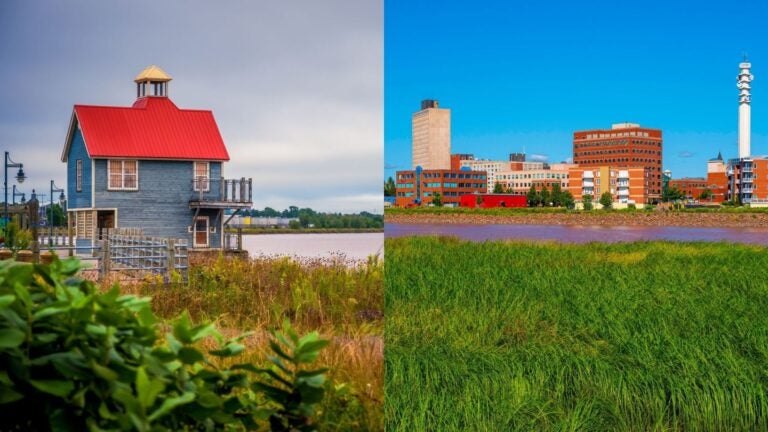
Saint John’s one of the strongest options if your retirement budget is tight. Local market trends show C$354,000 ($255,771) as median sale price. That puts it well below Canada’s national average home price of C$674,819. The city also had a 2025 Crime Severity Index of 70.0, below Canada’s 75.0. It’s best for retirees who want affordable housing without moving to an isolated rural community.
Honest note: The trade off of living in Saint John is healthcare access, and climate. New Brunswick, the province where Saint John is located, has some of Canada’s longer waits for healthcare. And the winters here are cold, and coastal storms are a consideration.
Moncton: Best for budget and convenience
Moncton gives you access to day to day conveniences while remaining relatively affordable. You also get an airport, plenty of places to shop, excellent restaurants, plus access to healthcare services. And while winters can be cold, its milder climate for much of the year makes it a good choice for someone looking for one of the best places to retire in Canada for weather. The median sale price is C$370,000 ($267,331).
Honest note: Safety’s a bit of a concern. Moncton’s police reported Crime Severity Index (CSI) rose to 105.6 in 2025, well above the national average of 75. Check the crime stats of the neighborhoods you’re considering before moving.
Halifax: Best Atlantic city
One of the main reasons to consider Halifax for retirement is its access to healthcare. The city is Nova Scotia’s main healthcare hub, with major hospitals and specialist services. Halifax also has an international airport, universities, cultural attractions, and a large retiree population. And the median sale price for single family homes is C$585,000 ($422,672).
Honest note: Halifax is considerably more expensive than Saint John or Moncton, particularly when it comes to housing. The city’s 2025 Crime Severity Index was 68.6, below Canada’s national average of 75, but housing costs can still make Halifax a less suitable choice for retirees on a tight budget.
Kingston: Best for healthcare and culture
The Kingston Health Sciences Centre serves as Southeastern Ontario’s regional hospital hub. And the Queen’s University’s Isabel Bader Centre hosts music, theatre, and other performances, while the city’s calendar includes Kingston Writers Fest, the Kingston Blues Festival, and the annual Intercultural Arts Festival. The median sale price for single detached homes is C$632,700 ($457,137).
Honest note: Kingston’s not the easiest city for retirees who want to live completely car free. There’s public transport, and it does cover the city, but there are gaps in service frequency and reliability.
Tillsonburg: Small town charm
Tillsonburg works well for retirees who want a peaceful lifestyle without giving up basic amenities. The town has its own hospital, Tillsonburg District Memorial Hospital, with emergency, surgical, diagnostic imaging, cardiac and other services. The Trans Canada Trail runs through town, and Lake Lisgar, several parks, and walking routes encourage an active lifestyle. The town also has a dedicated senior centre with fitness classes, arts and crafts, games, and social activities. And the median sale price for a single detached home is C$615,000 ($444,348).
Honest note: Tillsonburg is projected to grow by roughly 25% between 2026 and 2035. While that could bring more services and amenities, retirees drawn to its small town charm should expect it to become busier over time.
Norfolk County: For quieter lakeside living
Norfolk County suits retirees who want a slower, outdoor focused lifestyle. Walking, cycling and hiking trails make it easy to stay active, while Port Dover offers a waterfront with a beach, marina, restaurants and harbour. The county is also within driving distance of larger southwestern Ontario centres, giving you access to bigger city amenities without living in one. The median sale price for a single detached home is C$585,000 ($422,672).
Honest note: You’ll find local healthcare services, but specialist care means travelling outside Norfolk county.
Winnipeg: Best urban value
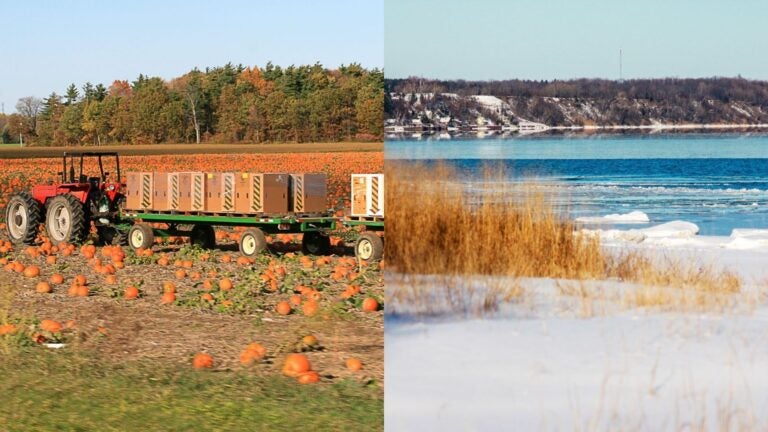
Winnipeg is not the obvious retirement choice in Canada, but the numbers make a case for it. The median sale price for a single detached home is C$450,000 ($325,132), while the median for an apartment is C$240,000 ($173,404). You’ll also have access to major hospitals, theatres, museums, restaurants and universities, giving you plenty to do without paying Toronto or Vancouver prices.
Honest note: Winnipeg winters are genuinely severe. From December through February, average daytime temperatures stay below freezing, with nighttime temperatures often falling to around -20°C (-4°F) or lower.
Quebec City: Best for safety and culture
Quebec City’s UNESCO listed Old Québec, museums, cafés, restaurants and historic architecture give retirees plenty to explore without living in a huge metropolis. The city also has a busy cultural calendar, including the Québec Winter Carnival, Fête de Québec and the Québec City Summer Festival. For day to day life, the city has an established public transit network, and plenty of parks and outdoor spaces. Then there’s access to hospitals, specialist services, shopping and cultural facilities. It’s one of the best places to retire in Canada for retirees who want an active lifestyle. The median sale price is C$485,000 ($350,420) for single family homes.
Honest note: The trade off is language. French is important for everyday life, healthcare and administration, so English only retirees may face some issues. Winters are also long and cold.
Can you retire in Canada on a fixed income?
Yes you can retire in Canada on a fixed income, but your location matters. A fixed income will stretch much further in Saint John or Moncton than in Halifax or Kingston, mainly because housing costs vary significantly. Your overall cost of living in Canada will also depend on transportation, healthcare, and everyday expenses.
For Canadians, one source of retirement income is the Canada Pension Plan (CPP), a government pension based on contributions made while working in Canada.
For new beneficiaries starting at age 65, the average CPP retirement pension is C$877.01 ($634) a month, while the maximum is C$1,507.65 ($1,089). That alone would not provide a comfortable retirement for most people. Retirees from the USA should also note that you cannot simply move to Canada and start collecting CPP. Your retirement budget needs to come from your own pension, investments, Social Security, or other income.
Immigration’s another thing you’ll have to tackle. Canada does not have a dedicated retirement visa, so you need to qualify through an existing immigration route, such as family sponsorship, Express Entry, a provincial program or another eligible pathway. Also note that Canada restricts permanent residency for individuals who might place a heavy burden on its publicly funded healthcare system.
Why Canada is still worth considering for retirement
Canada has some real advantages for retirees, and while the trade offs are worth knowing, they don’t cancel out the benefits.
- Lifestyle choice: Canada lets you choose the kind of retirement that suits you. You can settle in a small community, enjoy lakeside living, or opt for a larger city.
- Healthcare access: Eligible residents receive publicly funded medically necessary hospital and physician services. However, access and wait times can be excruciating.
- Everyday convenience: Reliable public services, excellent public transport, shopping, restaurants, libraries and cultural venues are just some of the few conveniences you’ll get here.
- Retirement communities: Many Canadian communities have programs, recreation facilities, senior services, and active adult housing that make it easier to meet people and stay busy.
If Canada isn’t the right fit, you can compare it with other destinations in our guides to the best places to retire in Mexico and the best places to retire in Spain.
What to consider before retiring in Canada
Safety, climate and immigration rules are some of the biggest factors to consider before retiring in Canada.
- Safety: Look at city level data rather than assuming Canada is uniformly safe.
- Climate: Most of the country has cold winters, while coastal British Columbia has much milder winters, with more rain than snow. Southern Ontario and Quebec can have warm, humid summers, while Atlantic Canada tends to have cooler summers.
- Immigration: Do not buy a home first and assume residency will follow. As mentioned above, Canada’s current permanent residence routes are program specific.
Still deciding where to retire? Canada is only one option. If you’re still comparing destinations, you can also explore our guides to the best places to retire in the US, and the best places to retire in the world.
If you’re considering staying in the US, you can also compare these excellent retirement options:
Southeast USA:
- Best places to retire in North Carolina
- Best places to retire in South Carolina
- Best places to retire in Virginia
- Best places to retire in Georgia
- Best places to retire in Tennessee
- Best places to retire in Alabama
- Best places to retire in Florida
Southwest & Mountain West USA:
West Coast USA:
Northeast USA:
Stay connected wherever you go with Holafly
If Canada’s your retirement base but you still visit family, travel back to your home country, or spend part of the year elsewhere, keeping a reliable connection can make life easier. For occasional trips, an eSIM for Canada can handle your data needs.
If you travel frequently, Holafly Plans covers 160+ destinations with Unlimited and Light options. Unlimited also includes a local US, UK or Canada number, which can be useful when you need to receive bank verification codes while abroad.
If you pause your plan between trips, Always On provides 1GB of free backup data each month and activates automatically.

FAQ: Best places to retire in Canada
What are the worst places to retire in Canada?
There is no single worst place to retire in Canada. For a retiree on a fixed income, the biggest problem is usually a combination of high housing costs, expensive rent, and limited access to services. Vancouver and Toronto can be excellent places to live, but their housing costs make them harder to justify on a modest retirement budget.
Where in Canada do most Americans move to?
Proximity makes Ontario and British Columbia the best place for Americans to move to, while Atlantic Canada can be appealing to retirees prioritizing affordability. The bigger question, however, is whether you qualify to live in Canada long term.
Is $500,000 enough to retire in Canada?
$500,000 can be enough, particularly if it is your housing budget rather than your entire retirement budget. It could buy a home around the current median in several of the cities above, but buying the home would leave little capital for living costs.
How much money do you need to retire comfortably in Canada?
You need an average of C$55,000-70,000 ($39,738-50,576) a year for a comfortable retirement in Canada. Housing is the biggest variable. A homeowner with a paid off property in a lower cost city can live on considerably less than a renter in Halifax, Kingston or another expensive market.
Plans that may interest you

With an MBA degree I used to put to good use in another life, I now write for both passion and profession! When not writing, I'm exploring the world, collecting stories and souvenirs along the way.