







 Language
Best places to retire in Europe 2026: Honest guide for all budget
An honest, city-by-city comparison of the best places to retire in Europe, covering cost, safety, healthcare, and lifestyle fit.

Europe suits retirees who want good healthcare, varied lifestyles, and easy access to other countries. Portugal and Spain appeal to warm weather seekers, Malta works well for English speakers, while Sweden offers excellent infrastructure and safety. The caveat? Housing, insurance, taxes, and climate risks can push up retirement costs.
This guide compares the best places to retire in Europe by housing costs, safety, healthcare, lifestyle, and overall affordability, so you can see which destinations fit your budget and priorities.
Best places to retire in Europe at a glance
| City | Best for | Cost level | Amenity access |
|---|---|---|---|
| Athens, Greece | All round lifestyle | Moderate | Healthcare, culture |
| Porto, Portugal | Culture, food and walkable city life | Moderate | Healthcare, culture, transport |
| Valencia, Spain | All round lifestyle | Moderate | Beaches, healthcare, public transport |
| Lecce, Italy | Slower living | Moderate | Culture, dining, beaches |
| Montpellier, France | Gateway to the Mediterranean | High | Healthcare, culture, public transport |
| Split, Croatia | Adriatic coastal living | High | Beaches, healthcare, ferries |
| Sliema, Malta | English speakers | High | Healthcare, dining, waterfront |
| Stockholm, Sweden | Safety and infrastructure | Very high | Healthcare, culture, public transport |
The 2026 International Living Global Retirement Index puts Greece 1st globally, followed by Portugal at No. 4, Italy at No. 6, France at No. 7 and Spain at No. 8. Croatia and Malta also make the index, ranking No. 19 and No. 12 respectively. Scandinavia deserves a place in a Europe-wide retirement comparison because it scores highly for safety, healthcare and quality of life.
Best places to retire in Europe: Top picks by lifestyle
The best places to retire in Europe for you ultimately depend on your lifestyle, budget and priorities. Here are our top picks.
Athens, Greece: Best overall
Greece has a strong argument for the top spot. International Living ranked it No. 1 in the world for retirement in 2026, scoring destinations on factors including climate, healthcare, housing, cost of living and residency.
Athens makes sense for retirees who want access to a major city without giving up Greece’s Mediterranean lifestyle. The capital has large hospitals, an international airport, museums, and restaurants. Buying an apartment costs roughly €3,485 ($4,053)/sq. mt. in the centre. So, if the apartment’s approx. 60 sq. mt., it’ll cost you about €209,100 ($243,182). The city is perfect for retirees who want a warm climate, city amenities and relatively manageable costs.
Honest note: Watch out for extreme summer heat, wildfire risk, and the Greek residency income requirements. For example, the Financially Independent Person route can require substantial documented income.
Porto, Portugal: Best walkable city
Porto is appealing because it has major hospitals, an international airport, good public transport and a large cultural scene. It’s also compact enough that many retirees can live without driving every day. The median asking price is €4,324 per sq. mt. ($5,028). So, if a house is 60 sq. mt., it’ll cost you approx. €259,440 ($301,727).
Honest note: Porto’s Atlantic winters can feel grey and damp. So if you’re someone who loves the outdoors, this is something you should factor in.
There are plenty of other Portuguese cities worth considering in our guide to the best places to retire in Portugal.
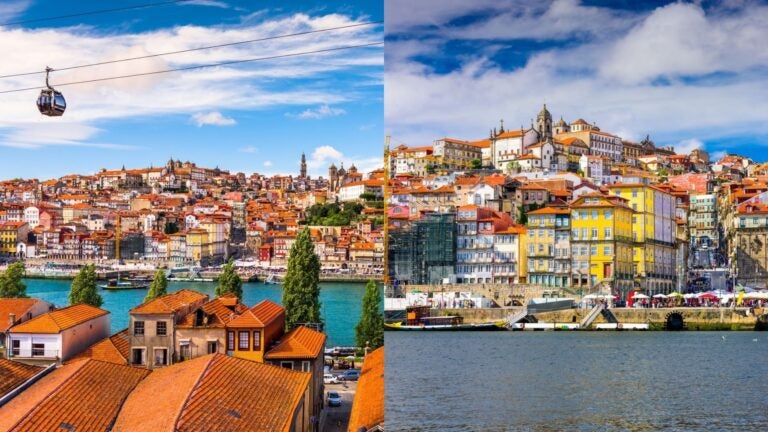
Valencia, Spain: Best all round lifestyle
Valencia has a little bit of everything: Beaches, public transport, healthcare, restaurants, culture, and a proper city infrastructure. Property isn’t cheap anymore, though. The average asking price in Valencia is around €3,469/sq. mt. ($4,035), up 6.1% year over year.
For US retirees, the housing cost isn’t the only number to consider. Spain also has a clear residency route for financially independent retirees. Its non-lucrative residence visa is designed for people who want to retire to some of the best places in Spain without working. In 2026, the financial requirement is €2,400 a month for the main applicant, plus €600 for each dependent family member.
Honest note: Watch out for hot summers. July and August average around 30°C (86°F) during the day, with temperatures staying around 22°C (72°F) at night. That’s manageable for retirees used to warm climates, but may feel hot if you’re coming from a cooler country.
Lecce, Italy: Best for culture and slower living
Lecce has baroque architecture, a strong food culture and easy access to the Adriatic and Ionian coasts. It’s also considerably less expensive than the country’s more popular cities of Rome, Florence and Milan.
Housing is one of Lecce’s advantages. Asking prices are roughly €1,600/sq. mt. ($1,861), making it dramatically cheaper than many popular Western European retirement places.
Honest note: The downside is infrastructure. Southern Italy, where Lecce’s located, can mean slower bureaucracy, fewer English speakers, and less convenient transport outside the main towns.
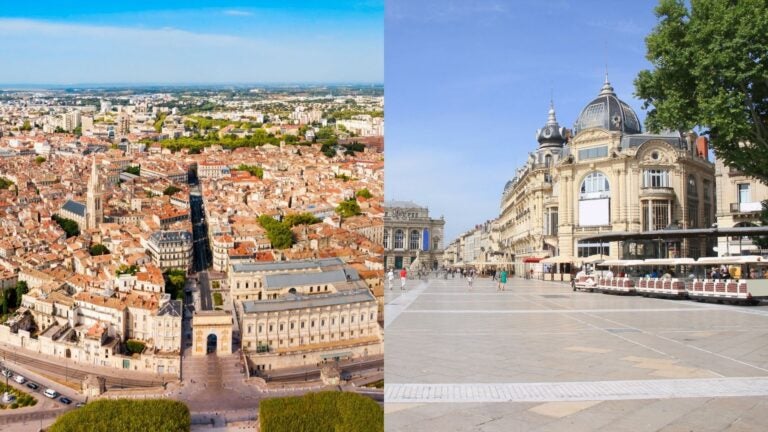
Montpellier, France: Gateway to the Mediterranean
Montpellier makes more sense for retirement than Paris if you want sunshine, outdoor space, and a smaller city feel. It has universities, hospitals, a large medical network and excellent rail connections. The Mediterranean coast is also just 6 miles southeast of the city center. And the purchase price is around €4,517 ($5,253) per sq. mt. in the city centre.
Honest note: The biggest drawback, not just for the city but for the whole country as well, is the complexity of its tax system. So please check income tax, pension taxation, property taxes and residency rules before moving.
Split, Croatia: Coastal living
Split offers Mediterranean coastal living along with an international airport, major hospitals, ferry connections, and access to the islands. Apartment purchase prices average €6,300/ sq. mt. ($7,327). Just note that property in tourist hotspots tends to command higher prices, and apartments with sea views can be pretty expensive.
Honest note: Watch out for seasonal tourism, and expensive property in the popular coastal areas.
Sliema, Malta: Best for English speakers
If your biggest concern is language, Malta deserves your consideration. English is an official language here, alongside Maltese, and it is widely used in everyday life. That can make everything from opening a bank account to arranging healthcare feel less intimidating for an English speaking retiree.
Sliema is especially convenient because it has plenty of shops, restaurants, healthcare providers, and ferry connections to Valletta. You can also live a relatively car-free lifestyle. Seafront properties range between €4,500-6,500+ per sq. mt. ($5,233-7,560)
Honest note: Sliema is small, densely populated and heavily dependent on imported goods.
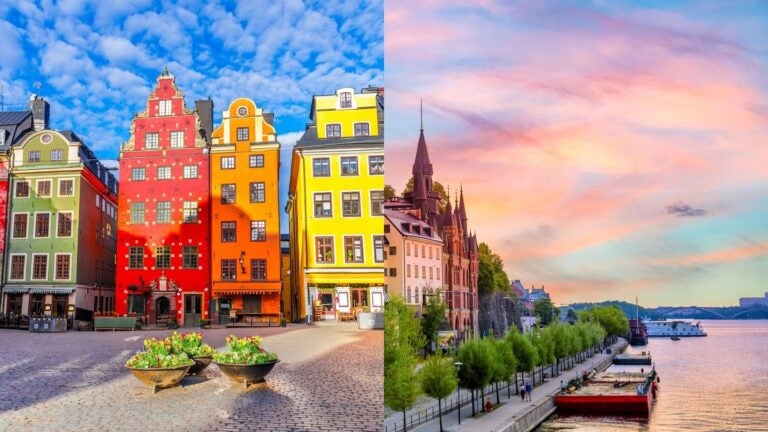
Stockholm, Sweden: Best for safety and infrastructure
If your priorities are safety, public transport, infrastructure, digital services, and access to high quality public systems, Stockholm’s a great place to retire in Europe. It won’t win a competition for the cheapest place in Europe. It probably won’t win the sunshine category either! But, the city’s strong quality of life trumps over these drawbacks. For retirees who want museums, cafés, clean public spaces, reliable transport, and a highly organized society, Stockholm’s a better fit.
Buying property in the centre averages 112,000 SEK/sq. mt. ($11,667).
Honest note: It’s an expensive city. Factor in housing costs, taxes, and everyday expenses before moving. Also consider the long winters.
Can you retire in Europe on a fixed income?
Yes, you can, but it depends on where you retire in Europe and what your budget is.
A rough way to think about it is:
- Around $1,000 a month: A single retiree can manage in smaller towns with very modest housing costs, but this is not a budget to plan a comfortable European retirement around.
- Around $1,500 to $2,000: Possible in lower cost areas with careful spending, particularly for a single person.
- Around $2,500 to $3,000: Much more workable in places such as Portugal, Greece, southern Italy or parts of Spain.
- $3,500+: A much wider range of European destinations becomes realistic, although expensive capitals can still require more.
The important thing is not to confuse a country’s average cost of living with your personal retirement budget. Housing, private health insurance, taxes, transportation, and travel back to the US can add to the calculation.
If you’re considering options beyond Europe, here are the best places to retire in the US across each region, from the Northeast and South to the Midwest and West.
- Best places to retire in North Carolina
- Best places to retire in South Carolina
- Best places to retire in Virginia
- Best places to retire in Georgia
- Best places to retire in Tennessee
- Best places to retire in Alabama
- Best places to retire in Florida
- Best places to retire in Arizona
- Best places to retire in Texas
- Best places to retire in Colorado
- Best places to retire in California
- Best places to retire in Pennsylvania
Why Europe is still worth considering for retirement
The biggest reason is variety. You can have Mediterranean weather in Greece, Portugal, Spain or the southern part of France. You can live beside the Adriatic in Croatia. You won’t face a language barrier in Malta. And you can get excellent Scandinavian infrastructure.
Healthcare is another major draw. Europe is also good for retirees who want to travel. Living in one country does not mean being stuck there. Trains, ferries and low cost flights make weekend trips across borders super easy.
If you’re planning to spend several weeks or months moving between European destinations, an eSIM for Europe can make staying connected easier while moving between countries.
What to consider before retiring in Europe
Here are some things to consider before retiring in Europe:
- Residency comes before real estate. So don’t buy a home first and figure out residency later. European countries have different rules for retirees, financially independent residents and property owners. Check your choice of country’s rules before buying a house.
- European healthcare is not automatically free for every American retiree. You may need private health insurance when you first arrive or while your residency application is being processed.
- Tax treatment depends on the country you move to, your tax residency, the type of pension you receive and the relevant tax treaty. EU guidance specifically notes that there is no EU wide rule governing cross border pensions. Domestic tax law and bilateral agreements determine the outcome.
- Warm weather sounds wonderful until you’re living through a heatwave every summer. That does not mean you should avoid Europe. It does mean you should factor building construction, air conditioning, water availability, wildfire exposure and insurance costs into your decision.
- Rent for several months before buying property. A city can look perfect during a 2-week holiday and feel completely different when you move there.
Not sure whether Europe’s right for your retirement? Compare it with other popular options, including the best places to retire in the US, best places to retire in Canada, and best places to retire in Mexico.
Stay connected wherever you go with Holafly
Retirement abroad often means more than moving to one country and staying there forever. You might spend winters in Spain, summers in France and a few weeks visiting family in the US.
And a local SIM for every country is annoying, while relying entirely on hotel WiFi can leave you without a connection when you step out.
That’s where Holafly Plans offers a more consistent option, with plans covering 160+ destinations. Unlimited and Light tiers let you choose the level of data you need. And Unlimited even includes a local US, UK or Canadian number that can be useful for staying reachable and receiving bank verification codes.
Both plans have Always On, which provides 1GB of free backup data each month when a plan is paused.

FAQ: Best places to retire in Europe
Which European country is easiest to retire in?
Spain is one of the strongest options because it has a clear non-lucrative residence visa for people who can demonstrate sufficient financial means. “Easiest” still depends on your nationality, income, healthcare needs and tax situation.
Where do the happiest retirees live?
There isn’t one definitive ranking of the happiest retirees. The bigger question is what makes you happy. A retiree who wants beaches and sunshine may be miserable in Stockholm, while someone who values public transport and safety may prefer it to a Greek island.
Is Spain or Portugal better to retire?
Both have their strengths and weaknesses. Portugal appeals to retirees who want established expat communities and a relatively budget-friendly retirement. Spain offers greater geographic variety, larger cities and excellent infrastructure. For a US retiree, compare residency rules and tax treatment before making the decision.
Can I retire in Europe for $1,000 a month?
It is possible to live very frugally in some parts of Europe on $1,000 a month, particularly for a single person who rents inexpensive accommodation. It is much harder for a couple and would leave little room for private healthcare, travel, emergencies or unexpected costs.
Plans that may interest you

With an MBA degree I used to put to good use in another life, I now write for both passion and profession! When not writing, I'm exploring the world, collecting stories and souvenirs along the way.

