Language

Best time to see the northern lights in Iceland: 2026 guide
The best time to see the northern lights in Iceland is from late August/September to April, when nights are dark. Know the best months, spots, and tips.
The best time to see the northern lights in Iceland is from late August/September to April, when nights are dark enough and no longer washed out by summer daylight. Below, you’ll find which months work best, what time to head outside, and where to go for the clearest views.
Traveling during this season, however, still doesn’t guarantee a sighting. Cloud cover and solar activity matter as much as darkness, and Iceland’s weather can turn fast. Keep your plans flexible so you can head out whenever the sky clears.

An eSIM you can rely on
Join over 10 million Holafly customers and get connected with our trusted, global services.
Northern lights in Iceland at a glance
| Item | Description |
|---|---|
| Season | Late August to mid-April |
| Best months | September and March for clearer skies and equinox activity; November to January for the longest nights |
| Best time of night | Around 10 p.m. to 2 a.m. |
| How long to stay | Four or five nights, a week if you can |
| Where to go | Anywhere away from streetlights: Grótta Lighthouse, Thingvellir, Vík, Jökulsárlón, Kirkjufell |
| What to check | Cloud cover first, then aurora activity, on the Icelandic Met Office forecast |
When can you see the northern lights in Iceland?
You can see the northern lights in Iceland from about late August to mid-April, so this is the best time to visit Iceland if that’s what you’re after. The aurora is active all year, butin summer, the midnight sun makes it impossible to see.
Around the June solstice, the sun sets in Reykjavík close to midnight and rises again about three hours later. The sky stays in twilight even then, and on Grímsey, on the Arctic Circle, the sun doesn’t set at all for a few days.
What is the best month to see the northern lights in Iceland?
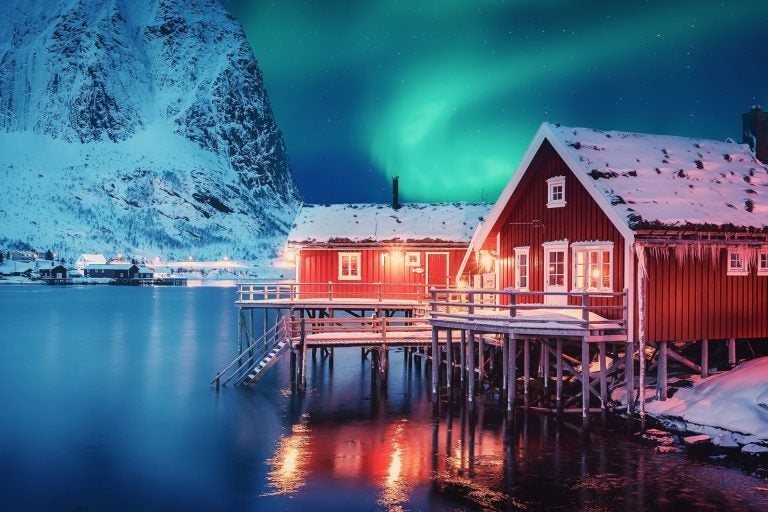
The best month depends on whether you want the most darkness or a better balance of darkness, activity, and weather. Here’s how the season compares:
| Month | Daylight | Temp (high/low) | Days with rain or snow | Sunny share of daylight | Aurora chances |
|---|---|---|---|---|---|
| Late August | 16 hrs | 12°C/7°C | 18 | 29% | Low: only a short dark window around midnight |
| September | 13 hrs | 9°C/4°C | 18 | 29% | Good: nights darken fast, clearer skies, equinox activity |
| October | 10 hrs | 6°C/1°C | 20 | 24% | Good: long nights, but the wettest month |
| November | 6 hrs | 2°C/-2°C | 17 | 17% | Good: plenty of darkness, more cloud |
| December | 4 hrs | 1°C/-4°C | 19 | 9% | Good: the most darkness, but the cloudiest month |
| January | 6 hrs | 1°C/-4°C | 18 | 13% | Good: long nights, frequent clouds |
| February | 9 hrs | 2°C/-3°C | 17 | 17% | Very good: long nights, skies starting to clear |
| March | 12 hrs | 2°C/-3°C | 19 | 25% | Very good: dark evenings, clearer skies, equinox activity |
| April | 15 hrs | 5°C/-1°C | 18 | 28% | Low to moderate: early April only |
December and January have the longest nights, but they’re also the cloudiest. In December, Reykjavík sees sun for only about 9% of its daylight hours. Around the September and March equinoxes, the nights are shorter, but skies tend to be clearer, and geomagnetic activity usually rises.
Quick picks:
- Most darkness: November to January
- Best balance of darkness and clear skies: September and March
- Mildest weather: September
What is the best time of night to see the northern lights in Iceland?
The northern lights are usually strongest in the hours around midnight, roughly 10 p.m. to 2 a.m. local time. On nights with a strong aurora forecast, you might see them earlier in the evening or later toward morning, but displays outside the midnight window are usually fainter.
That means most of your aurora watching will happen late at night. Have an early dinner, rest if you can, and plan to be somewhere dark before 10 p.m. If the forecast looks strong, start checking the sky earlier in the evening. If clouds rule out the night, check out other things to do in Iceland.
What are the best places to see the northern lights in Iceland?
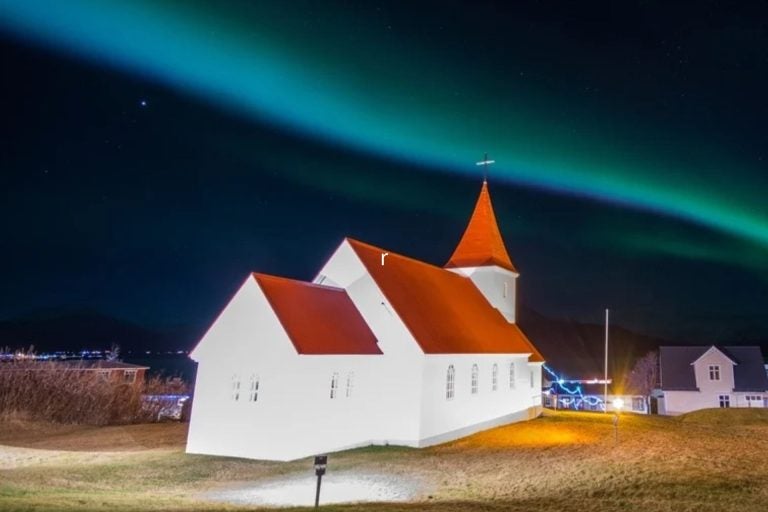
The best places to see the northern lights in Iceland range from quiet corners of Reykjavik to remote beaches and glacier lagoons. But wherever you go, look for spots away from streetlights and buildings. Here are a few to try:
| Spot | Region | Why go |
|---|---|---|
| Grótta Lighthouse | Reykjavík | The darkest easy spot in the capital, about 15 minutes from the city center, facing north over the sea |
| Thingvellir National Park | Golden Circle | Much darker than Reykjavík with wide, open views, about 45 minutes away |
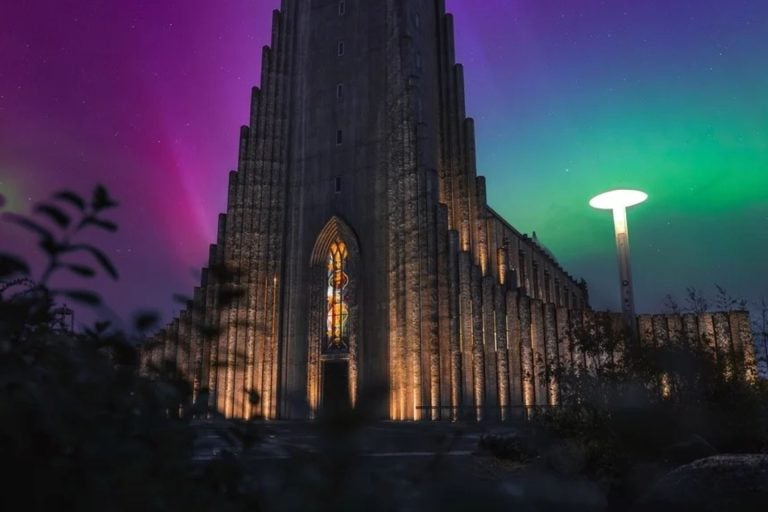
| Vík | South Coast | Black sand beach by the ocean, with the village church in the foreground |
| Jökulsárlón | Southeast | Very dark skies, quiet on winter nights, and the lagoon can reflect the lights |
| Kirkjufell | West | One of Iceland’s most photographed mountains and a classic aurora backdrop |
Can you see the northern lights in Reykjavik?
Yes, on strong, clear nights, but city lights make fainter displays hard to see. If you’re staying in town, head to one of the darker spots at the edge of the city:
- Grótta Lighthouse: On the Seltjarnarnes peninsula, it looks north over the sea, away from the city glow.
- Öskjuhlíð: The wooded hill around Perlan, a few minutes from downtown.
- Sun Voyager (Sólfar): A waterfront sculpture within walking distance of downtown. It’s brighter than the other spots, so it works best on really strong nights.
How do you check the northern lights forecast in Iceland?
You can check the northern lights forecast on the Icelandic Meteorological Office’s official website. Its aurora forecast combines a cloud cover map with an activity rating, so you can see both on one page:
- Cloud cover: A map of Iceland with clear areas in white and cloudy areas in green. Check this first, since even strong northern lights won’t show through thick cloud.
- Aurora activity: A score from 0 to 9 for how strong the northern lights are expected to be around midnight. The higher the number, the better your chances.
Many aurora apps also show the Kp index. This global scale from 0 to 9 measures how much the solar wind is disturbing Earth’s magnetic field, which is what creates the northern lights.
A higher Kp usually means a stronger display, but treat it as a rough guide only. It doesn’t tell you how bright the lights will look in Iceland or whether clouds will block them. Forecasts change quickly, so check often.
How many days do you need to see the northern lights in Iceland?
Plan for at least four or five nights, and a week if you can. Iceland’s weather is famously changeable, and a single cloudy night can block even a strong display.
With only one or two nights, one bad spell of weather can cost you your only chances. A longer stay gives you more nights to catch clear skies and aurora activity. It also gives you time to move around, so if one region is cloudy, you can drive to another with clearer skies.
Check out the usual costs in Iceland so you can plan accordingly.
Tips for seeing and photographing the northern lights in Iceland
A little preparation can go a long way, especially when you’re out in the cold and dark. Check out the tips below so you can stay comfortable, safe, and ready to get the shot:
- Join a tour or drive yourself: If you’re not used to driving on winter roads, a guided tour is easier. If you’d rather drive, check the road conditions before you set off. You can also try public transport in Iceland.
- Pull over safely: If you spot the lights while driving, don’t stop on the road. Wait until you reach a safe place to park to avoid collisions.
- Dress warmly: You’ll spend a lot of time standing still, so wear thermal layers, a windproof jacket, warm boots, a hat, and gloves.
- Pack a hot drink: A thermos of coffee or hot chocolate helps when you’re waiting in the cold. Know what else to pack in our Iceland packing list.
- Give your eyes time to adjust: Avoid looking at your phone screen, since bright light makes it harder to see faint auroras.
- Use manual mode: Start at f/2.8, ISO 800–3200, and a 15–30 second exposure, with focus set to infinity. Then adjust from there.
- Bring a tripod: Northern lights photos need long exposures, so your camera has to stay completely still. Use the self-timer so pressing the button doesn’t shake it. If you’re using your phone, turn on night mode and rest it against something steady.
Stay connected in Iceland with Holafly
Chasing the aurora means checking the forecast from wherever you are, often late at night and far from town. Install a Holafly eSIM for Iceland before you leave and connect as soon as you land, with unlimited data, speeds up to 5G, and 24/7 customer support.
When your trip ends, keep the eSIM on your phone. Holafly eSIMs are reusable, so next time you only need to add a new plan. Until then, Always On: 1 GB of monthly backup data keeps you connected at no extra cost, which helps if weather delays your flight home.

Get an unlimited data eSIM
Use code MYESIMNOW5 for 5% off at checkout
FAQs about seeing the northern lights in Iceland
Your chances are good between late August/September and mid-April, especially if you stay at least four or five nights. You just need a dark sky, clear weather, and aurora activity. Keep in mind that sightings are never guaranteed, but more nights give you more chances.
The best places to stay in Iceland for the northern lights include Vík on the South Coast, Grundarfjörður near Kirkjufell on the Snæfellsnes Peninsula, and the countryside around Thingvellir on the Golden Circle.
If you’d rather be in Reykjavík for its restaurants and tours, you can still head to Grótta Lighthouse on the edge of the city when the skies are clear.
Tromsø usually has the edge. It sits directly beneath the auroral oval, the area where the lights appear most often, and its weather tends to be more stable. Reykjavík is still a convenient base for Iceland’s dark-sky spots.
Plans that may interest you


哈囉我是來自台灣的 Wen,平常最喜歡旅遊,也喜歡將旅遊的種種化成文字跟大家分享,希望大家能在我的文章中找到有用的資訊,加上 Holafly 的 eSIM,讓你的旅程更美好!✈️✈️✈️ Hi! I'm Wen, a passionate content writer and travel enthusiast from Taiwan. I transform my wanderlust adventures into engaging stories and practical guides, helping fellow travelers make the most of their journeys.Through my articles, I strive to provide travel tips while introducing how our eSIM technology can enhance your travel experience - keeping you connected wherever your adventures take you!